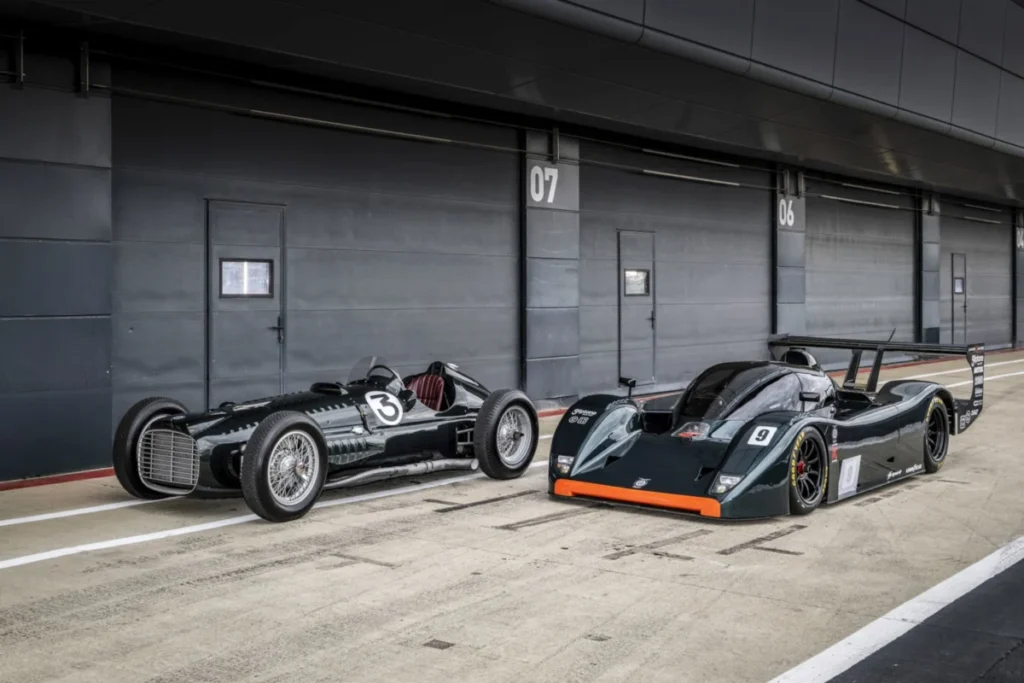
Sometimes, a racing car that looks exceptionally promising on paper never gets the chance to truly shine and reach its full potential. The annals of motorsport are replete with such cautionary tales, where a confluence of factors – abrupt rule changes, troubled development stages, persistent reliability issues during maiden races, or even the financial collapse of a manufacturer midway through a project – conspire to relegate a potentially great machine to the realm of "what ifs." One such poignant example is the British Racing Motors (BRM) P351, a car meticulously engineered to compete in what is widely regarded as the most fiercely contested era of endurance racing: Group C. Powered by a potent Weslake V12 engine, the P351 was envisioned as a triumphant comeback for BRM, an illustrious British marque renowned for its innovative and often audacious creations, including the thunderous V16, the eccentric H16, and the Formula 1 World Championship-winning P57.
The Glorious, Volatile Legacy of British Racing Motors
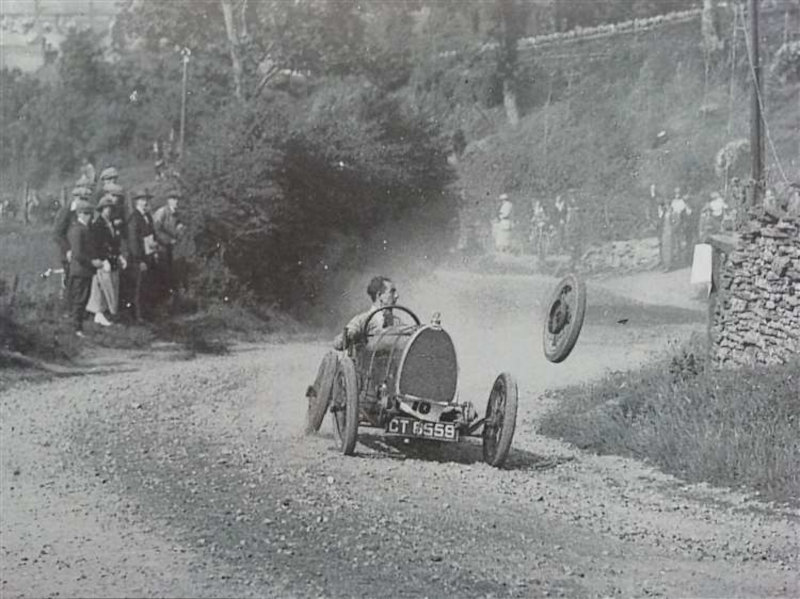
British Racing Motors, or BRM, stands as a titan in the pantheon of historic British Formula 1 teams. Founded in 1945 by the visionary duo of Raymond Mays and Peter Berthon, the company emerged from the ashes of pre-war motorsport, carrying forward a legacy of engineering ambition. Mays, a seasoned racer and astute engineer, had prior experience with ERA, a marque he co-founded with Berthon and Humphrey Cook. His early career was marked by daring exploits, famously captured in a photograph of his Bugatti Type 13 shedding a wheel during the 1924 Caerphilly Hill Climb. Peter Berthon, another pivotal figure behind ERA, was equally instrumental, though his contributions leaned more towards the meticulous art of design and engineering than outright competitive driving.
BRM’s foray into Formula 1 began in 1951, and the team quickly established a reputation for a rather unconventional, often daring approach to engineering. This led to the development of some of the most extraordinary engines ever to grace the Grand Prix circuit. Among these mechanical marvels, the BRM V16 MKII stands out. This supercharged 1.5-litre V16 engine, capable of producing an astonishing 600 horsepower, captured the imagination of enthusiasts worldwide. Pink Floyd’s legendary drummer, Nick Mason, a renowned car collector and motorsport aficionado, owned one such V16 and featured it prominently in his seminal book, "Into the Red." The accompanying CD included a captivating seven-and-a-half-minute recording of the BRM V16 MKII lapping Donington Park, a visceral testament to its raw power and unique character. The recording vividly illustrates the engine’s journey from a rumbling idle in the pits to its frenzied crescendo at the redline, even capturing the occasional misfire as it was pushed to its absolute limits. The sheer auditory drama of this engine is, by any measure, utterly incredible.
While the V16 was a powerhouse, producing approximately double the output of its contemporaries, its complexity proved to be its Achilles’ heel. The engine was notoriously delicate and prone to starting issues, significantly hindering its race-winning potential. Despite its lack of outright success on the track, the V16’s extraordinary story and its unforgettable sound have cemented its status as a cult classic among motorsport historians and enthusiasts alike.
Following the V16 era, BRM developed the P25, powered by a more conventional 1.5-litre V8. This iteration proved to be more reliable and competitive. Jean Behra piloted the P25 to a third-place finish at the 1958 Dutch Grand Prix, and Joakim "Jo" Bonnier secured a victory at the 1959 Dutch Grand Prix, showcasing the V8’s capabilities. This success paved the way for the BRM P57, which retained the 1.5-litre V8 but repositioned the engine behind the driver. With the formidable talents of Graham Hill at the helm, BRM achieved its greatest triumph. Hill dominated the 1962 Formula 1 season, winning four out of nine races and clinching the World Drivers’ Championship. The team continued its strong performance, finishing second in the constructors’ standings for the subsequent three seasons. However, despite fielding some of the era’s most talented drivers, BRM’s fortunes gradually began to wane.
The team’s characteristic penchant for innovation led to the development of the 3.0-litre P75 H16 engine, a highly unconventional and arguably over-engineered powerplant. This engine, essentially two flat-eight engines stacked atop one another, was designed for the P83 Grand Prix car. The unique configuration demanded a complex array of ancillary systems, including dual water pumps and fuel pumps, and special balancing mechanisms, effectively doubling its complexity and introducing significant reliability concerns. Over the two years the H16 powered BRM’s F1 efforts, the car rarely finished races, with many retirements occurring even before the checkered flag. The sole highlight for the H16 was the 1966 Belgian Grand Prix, where Sir Jackie Stewart masterfully guided the P83 to a second-place finish.
BRM’s forward-thinking designs, while often pushing the boundaries of automotive engineering, frequently struggled to compete against the more conventional setups favoured by the majority of the field. The team officially withdrew from Formula 1 in 1977, having accumulated 17 race victories from 197 Formula 1 entries. Beyond its Formula 1 endeavors, BRM also contributed to other significant motorsport projects. These included the innovative gas-turbine-powered Rover-BRM, which famously competed at the 24 Hours of Le Mans in 1963, and the Bluebird-Proteus CN7 world land speed record project spearheaded by Donald Campbell. The BRM name lay dormant for many years until the ambitious BRM V16 MKII Continuation Program was launched in 2021, breathing new life into the legendary marque. This revival now sees a spiritual successor of sorts emerge with the recreation of the P351 Le Mans prototype.
The Ambitious P351 Program: A Bid for Endurance Glory
The genesis of the P351 program was rooted in a fervent desire to re-establish the BRM name on the global motorsport stage, specifically by challenging the pinnacle of endurance racing. At the time of its conception, the Group C era was in full swing, representing a golden age of prototype racing characterized by fierce competition among multiple factory teams vying for supremacy in some of the fastest endurance machines ever conceived. Throughout the 1980s, Porsche’s iconic 956 and its successor, the 962, had largely dominated the landscape. However, the German marque was not entirely invincible. Towards the close of the decade, formidable rivals such as Peugeot, Jaguar, and Sauber emerged, each managing to conquer the legendary 24 Hours of Le Mans at least once during the Group C heyday.
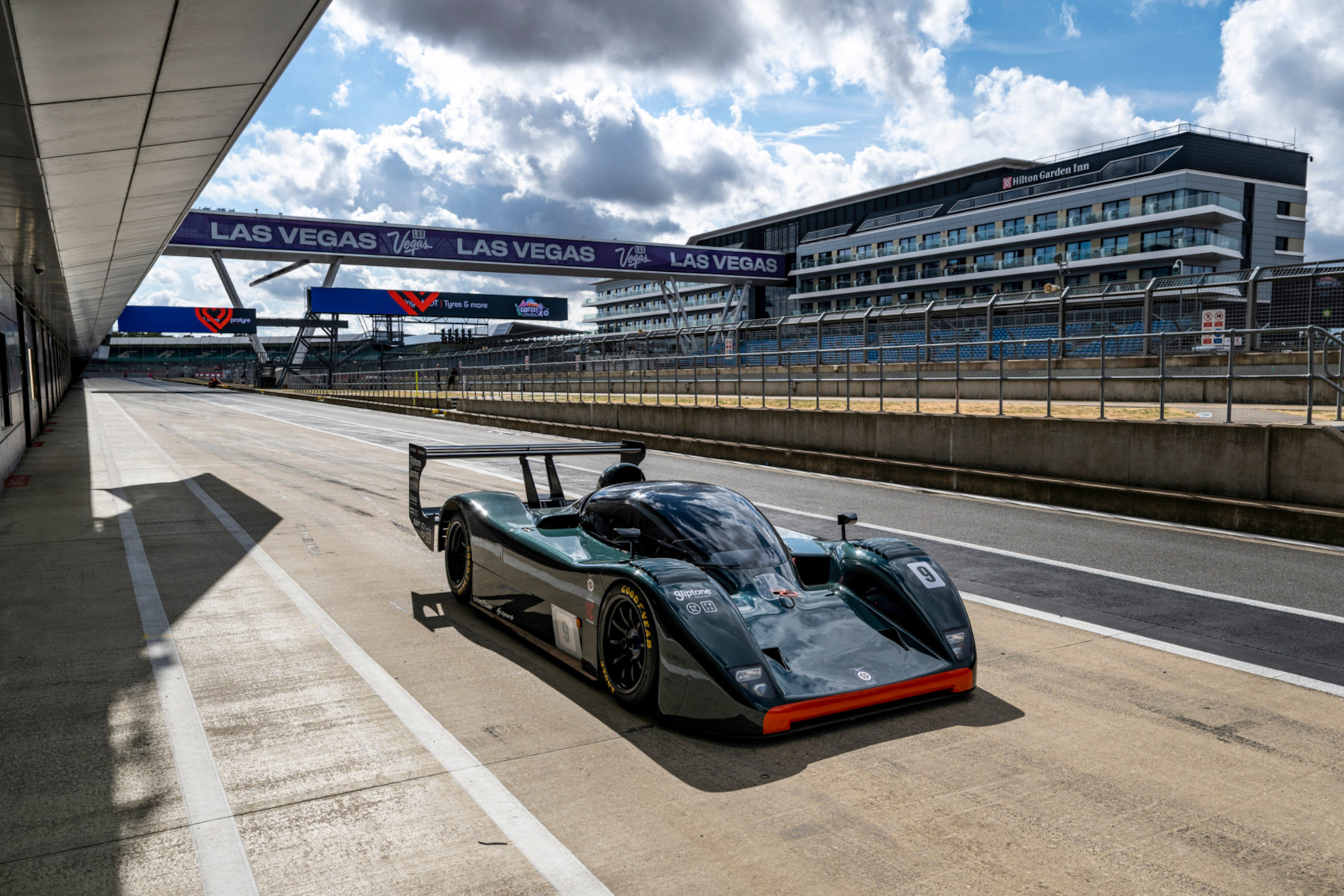
The revival of BRM was spearheaded by the Alfred Owen family, whose patriarch, a former BRM employee and entrepreneur, had guided the company from the early 1950s until his passing in 1975. A strategic alliance was forged with entrepreneur John Mangoletsi, paving the way for the brand’s return. The BRM name alone carried significant historical weight, instantly recognizable to anyone with even a passing familiarity with motorsport’s golden eras, which proved instrumental in facilitating the fundraising efforts necessary for such an ambitious undertaking. To lead the engineering charge, former Zakspeed chief engineer Paul Brown was enlisted. His initial work focused on developing a cutting-edge carbon composite monocoque chassis. The P351, resplendent in metallic British Racing Green with the distinctive orange BRM nose cone, was first unveiled in January 1991. Its heart was a Weslake-based V12 engine, a choice that evoked memories of past glories.
This naturally aspirated 3.5-litre engine was derived from the successful Weslake V12 Formula 1 engine that had powered the AAR Eagle MK I Gurney-Weslake to notable achievements in earlier years. The V12 was engineered to produce approximately 620 horsepower, placing it on par with the power outputs of the leading Group C contenders of the era. Despite the promising specifications, the P351 proved to be uncompetitive and plagued by reliability issues from its very inception. High expectations surrounded the car’s maiden race at Silverstone, the second round of the 1992 World Sportscar Championship. However, a series of persistent issues prevented the car from even starting the 500 km race, a deeply disappointing debut.
The ultimate test of any endurance racer is the 24 Hours of Le Mans. For the P351’s assault on the French classic, Richard Jones was recruited as the third driver, joining the established pairing of Wayne Taylor and Harri Toivonen. Transmission problems, a recurring theme for the P351, surfaced once more during qualifying. While Taylor managed to set a somewhat competitive lap time, securing a grid position, the fundamental issues with the drivetrain were a stark warning sign. Just twenty laps into the grueling 24-hour race, disaster struck again. The persistent transmission problems resurfaced, forcing the car’s premature retirement and marking another significant setback for the program.

The team then shifted its focus to the United States, entering an IMSA Camel GT race at Watkins Glen. The undulating and bumpy nature of the circuit necessitated raising the car’s ride height, which inadvertently pushed it beyond the permissible limits set by IMSA regulations. In a race against time, Paul Brown ingeniously proposed a solution: cutting the roof scoop. While this modification allowed the car to comply with the regulations, its racing fortunes remained unchanged. Merely five laps into the race, electrical gremlins brought the P351 to a halt, marking its third consecutive DNF. This string of failures effectively sounded the death knell for the ambitious, yet ultimately ill-fated, P351 program. Although the team registered for the subsequent round of the World Sportscar Championship at Donington Park, the car never materialized on the grid. Following this, BRM ceased all operations related to the P351, and the car was returned to the Owen family.
A Second Act: The P301 and a Lingering Hope
Three years later, the P351 resurfaced under new ownership, acquired by Keith Wiggins of Pacific Racing. Rebranded as the P301, the car was reconfigured into an open-top Barchetta style and fitted with a twin-turbo Nissan V6 engine. It made its debut in the opening race of the 1997 International Sportscar Racing Series (ISRS) at Donington Park. Despite qualifying sixth out of nine entries in its class, the P301’s debut was marred by electrical issues, forcing another early retirement.
The P301’s journey continued to Le Mans in the same year, but history repeated itself. The car was the first to retire from the race, completing a mere six laps. The following year, the P301 returned to the ISRS, but its reliability woes persisted. It was sidelined after just four laps in its sole race appearance that season. Although it qualified for the subsequent round at Donington Park, the car failed to make the starting grid altogether.

The Restoration and the Dream of Redemption
Now, some thirty years after its initial, unfulfilled promise, the sole BRM P351 chassis has undergone a comprehensive, top-to-bottom restoration. In 2024, the BRM company reacquired the car and entrusted it to Ian Dawson, a figure who had direct involvement with the car during its Pacific Racing P301 iteration. The restoration process meticulously brought the car back to its original closed-cockpit P351 configuration, complete with a fully rebuilt 3.5-litre Weslake V12 engine and a period-correct gearbox.
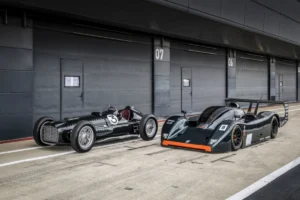
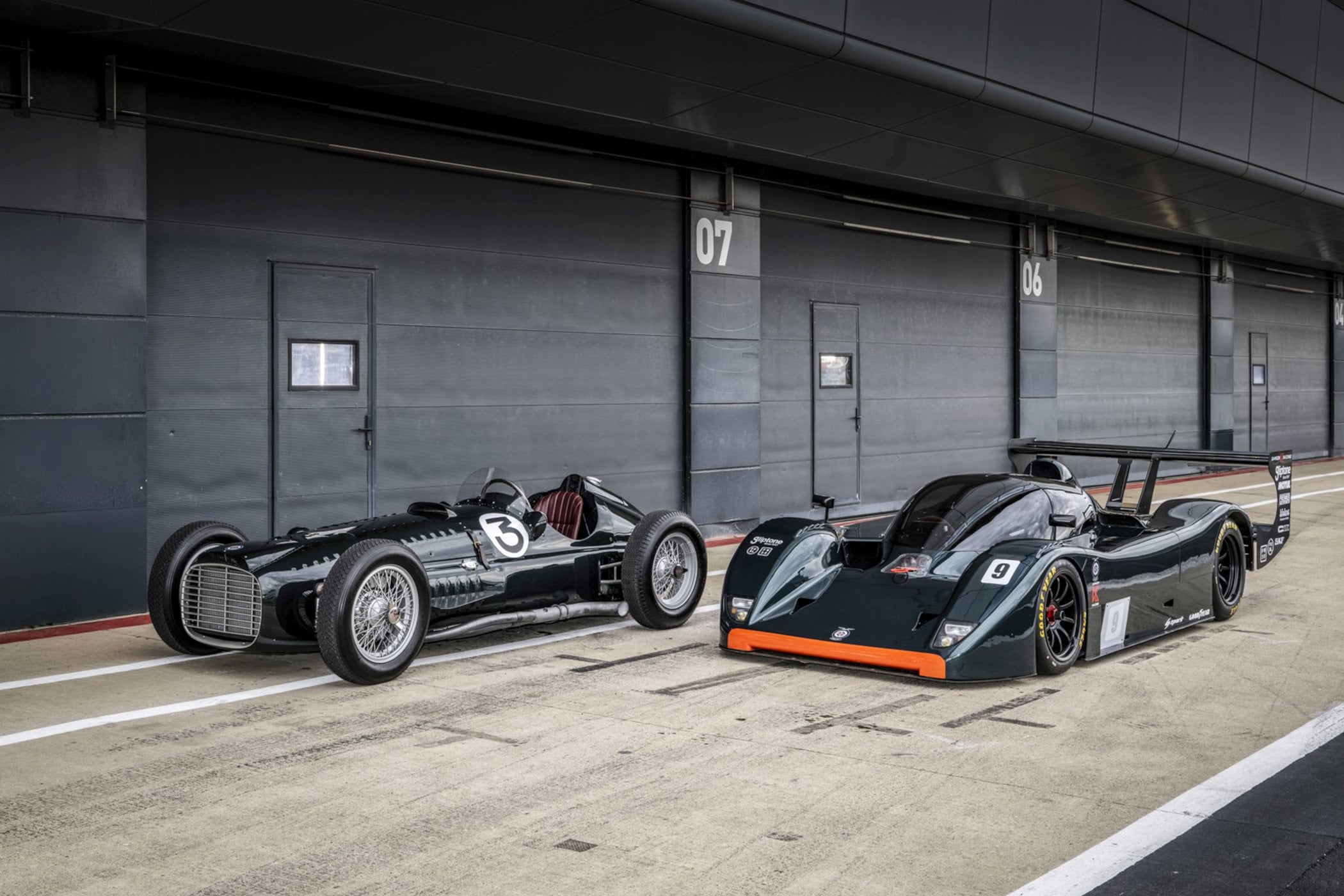
The restored P351 made its public debut at Silverstone, alongside the legendary BRM V16, marking a significant moment for the marque. The car is slated to undertake its first testing kilometres soon, signaling a renewed hope for its racing future. The overarching objective of this project is clear: to finally take the car racing and allow it to demonstrate the competitive potential that was tragically curtailed during its initial racing life. This endeavor represents not just a mechanical restoration but a chance to write a new, triumphant chapter in the storied, albeit often turbulent, history of British Racing Motors.
For further details and historical context, interested parties are encouraged to visit BritishRacingMotors.co.uk.

Editorial Note: The information and images utilized in this article have been sourced with permission from The Petrolhead Agency, the official media partner for British Racing Motors, unless otherwise indicated.