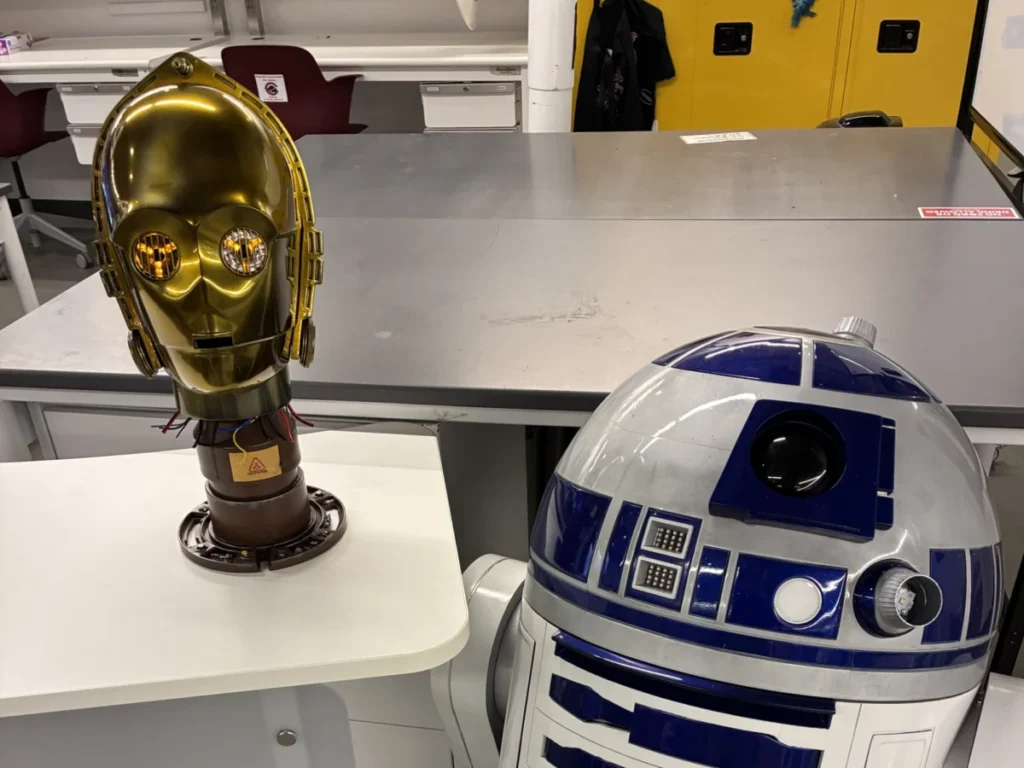
In a significant leap for hobbyist robotics and human-AI interaction research, Sam Potozkin, a dedicated student at Chapman University, has unveiled "Threepio," a meticulously crafted, conversational robot head designed to emulate the beloved Star Wars protocol droid, C-3PO. Far more than a mere static replica, Potozkin’s project integrates a sophisticated local AI chat stack running on a Raspberry Pi 5, pushing the boundaries of what embodied artificial intelligence can achieve in a tangible, interactive form. This ambitious endeavor not only showcases remarkable engineering and design prowess but also serves as the foundation for a compelling academic paper exploring the nuanced differences in human perception and interaction with digital versus physical AI entities.
The Genesis of an Icon: C-3PO’s Enduring Legacy
The inspiration for Potozkin’s project draws directly from the cinematic universe that first introduced C-3PO in 1977’s Star Wars: A New Hope. Designed by Anakin Skywalker and perpetually accompanying his astromech counterpart R2-D2, C-3PO quickly became one of the most recognizable figures in science fiction. His defining characteristics—a golden, humanoid form, a somewhat fussy and anxious personality, and fluency in "over six million forms of communication"—made him an ideal candidate for an embodied AI experiment. Unlike many fictional robots designed for combat or utility, C-3PO’s primary function is protocol and communication, making his conversational abilities central to his character. This rich background provides a profound foundation for Potozkin’s work, allowing him to tap into decades of established audience familiarity and expectation.
The character’s enduring popularity is evident in the vibrant community of "droidsmiths" who dedicate countless hours to recreating Star Wars droids. From meticulously detailed R2-D2 units capable of autonomous movement and sound to more static display pieces, the passion for these mechanical companions runs deep. Potozkin’s Threepio project distinguishes itself within this community by moving beyond mere aesthetic replication. While maintaining an exceptional level of visual fidelity, its core innovation lies in its interactive AI, transforming a prop into a dynamic conversational partner. This bridges the gap between traditional prop-making and cutting-edge artificial intelligence, offering a glimpse into a future where beloved fictional characters might genuinely come to life.
Technical Marvel: Bringing Threepio to Life
The engineering behind Potozkin’s Threepio is a testament to his multidisciplinary skills. The physical shell of the droid head was brought to life through advanced 3D printing techniques. Potozkin dedicated considerable effort to post-processing, ensuring a smooth, seamless finish that mimics C-3PO’s iconic metallic sheen. This involved meticulous sanding to eliminate visible layer lines inherent in 3D-printed objects, followed by careful priming and painting to achieve the signature gold color. The inclusion of "greeblies"—small, intricate detailing elements often used in prop design to add realism and complexity—on the display stand further enhances the illusion, grounding the creation in the rich visual language of Star Wars. This attention to detail demonstrates a deep understanding of fabrication aesthetics, crucial for convincing emulation.
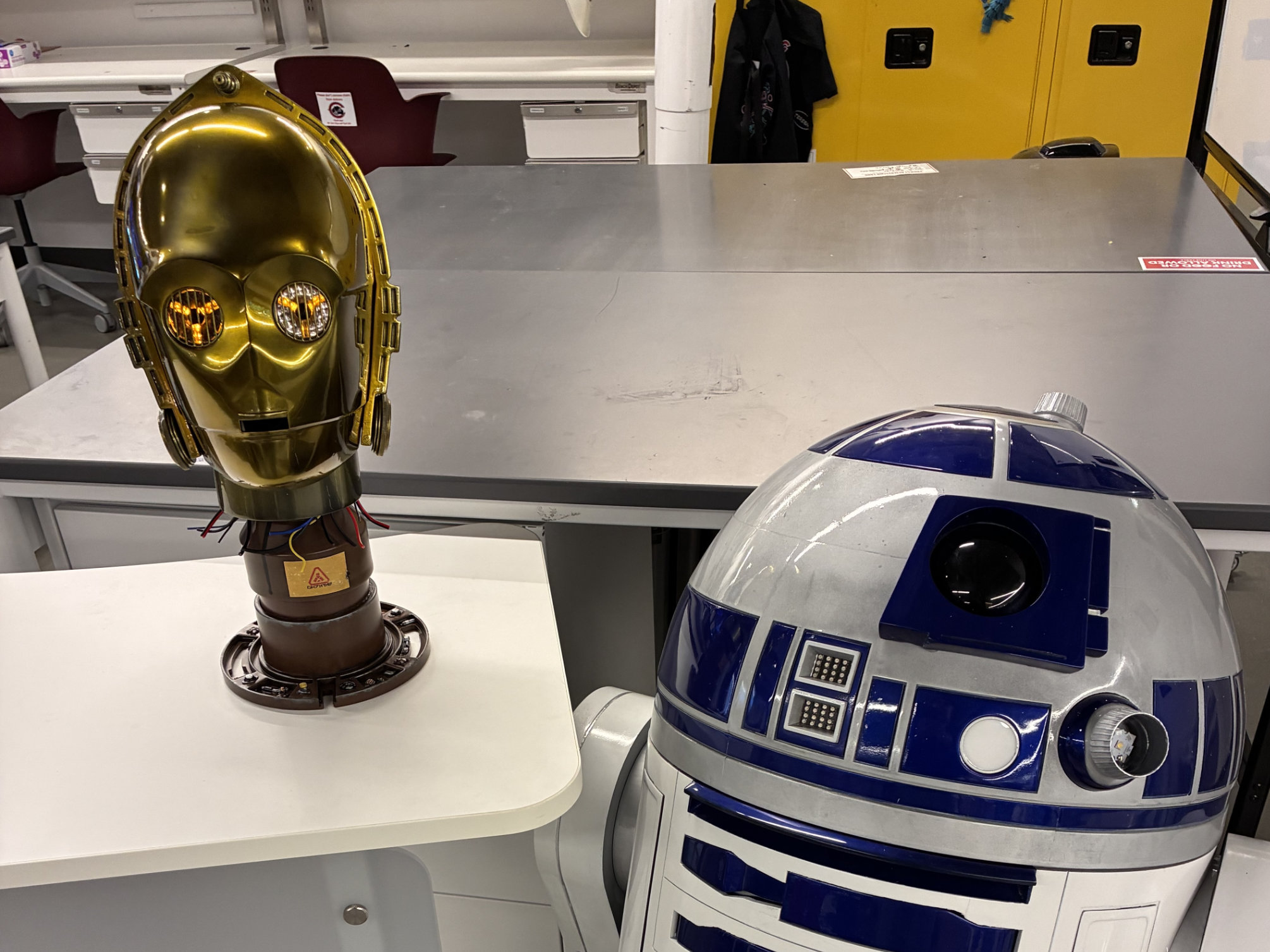
At the heart of Threepio’s intelligence lies a Raspberry Pi 5, a powerful single-board computer that serves as the brain for the local AI chat stack. Choosing a local processing solution was a deliberate decision, allowing for greater control over data privacy and reducing reliance on internet connectivity and external cloud services. The Raspberry Pi 5’s enhanced processing capabilities, including a more powerful CPU and GPU compared to its predecessors, are critical for running complex AI models such as speech-to-text (STT) for understanding user input, a large language model (LLM) for generating responses, and text-to-speech (TTS) for vocalizing them. This local execution ensures lower latency, making conversations feel more natural and responsive, a key factor in replicating the fluidity of human-like interaction.
Perhaps one of the most innovative aspects of Threepio’s design is its unique audio output system. Instead of a conventional speaker, Potozkin opted for an exciter. An exciter is a transducer that, when attached to a surface, causes that surface to vibrate and act as a speaker. In this case, the exciter is strategically placed within the C-3PO head, making the entire head resonate and produce sound. This engineering choice is brilliant for immersion, as it makes the voice truly seem to emanate from the droid’s physical form, rather than from a discrete speaker unit. Potozkin spent considerable time refining these audio effects, tuning the sound to match the familiar, slightly synthesized vocal cadence of C-3PO, enhancing the illusion of interacting with the character himself. This iterative refinement process, often overlooked in DIY projects, is vital for achieving a high level of fidelity in user experience.
Exploring the Embodiment of AI: A Deeper Dive into Interaction
Beyond the technical achievement, Potozkin’s project is fundamentally an academic exploration into the realm of human-AI interaction. His accompanying paper, "Threepio: An Embodied AI System Exploring Human-AI Interaction," delves into why people react differently to modern, screen-based AI chatbots compared to a physically present, familiar android like C-3PO. The central thesis posits that the physical embodiment of an AI system profoundly alters human perception and engagement.
Potozkin articulates his vision in the paper, stating: "This project explores the translation of a fictional character into a real-world, embodied AI system. Developing this system required translating and combining abstract concepts from both AI and communication theory into a functional, working architecture. The goal of the project was to explore what happens when conversational AI moves off the screen and into a physical, interactive system. Rather than treating AI as something purely digital, this build focuses on embodiment, giving the system a presence, voice, and personality that can be experienced in the real world."
This perspective aligns with burgeoning research in Human-Robot Interaction (HRI), which consistently demonstrates that physical presence, even in a non-humanoid form, can elicit stronger emotional responses, greater trust, and a deeper sense of connection from human users. Screen-based chatbots, despite their advanced conversational capabilities, often lack the "presence" that a physical entity commands. The familiar form of C-3PO, ingrained in popular culture for over 40 years, offers a unique advantage. Users approach Threepio with pre-existing notions of his personality, his role, and his conversational style, allowing Potozkin to leverage this cultural familiarity to enhance the sense of embodied presence.
The paper likely discusses how elements like tone of voice, visual cues (even a static head), and the tangible nature of the interaction contribute to anthropomorphism—the tendency to attribute human characteristics to non-human entities. When an AI has a physical body, it moves the interaction from a purely cognitive exercise to one that also engages sensory and emotional pathways. This shift can mitigate issues like the "uncanny valley," where overly human-like robots can evoke unease. By utilizing a stylized, well-known, and non-threatening robotic form, Potozkin effectively bypasses many of these psychological hurdles, allowing for a more natural and welcoming interaction. His research contributes valuable insights into designing AI systems that are not just intelligent but also approachable and relatable in the physical world.

The Journey of Creation: Overcoming Engineering Hurdles
The creation of Threepio was not without its challenges, underscoring the demanding nature of such interdisciplinary projects. Potozkin’s journey began with fundamental skills, including learning to solder, a crucial step for connecting the various electronic components within the droid’s head. This hands-on experience in electronics integration formed the backbone of the project’s hardware assembly.
The aesthetic perfection of Threepio’s golden exterior was the result of painstaking labor. Potozkin meticulously sanded away layer lines, a common artifact of 3D printing, to achieve a smooth, professional finish. This was followed by a complex painting process, where he had to contend with issues like "orange peel," a surface defect that can occur during spray painting, requiring careful technique and multiple coats to rectify. These detailed finishing processes are often the most time-consuming aspects of prop fabrication but are essential for achieving a high degree of visual fidelity.
Beyond fabrication, refining the audio effects proved to be an iterative and complex task. Achieving the precise tonal quality and inflections of C-3PO’s voice, combined with the unique properties of the exciter system, demanded continuous adjustment and testing. This involved experimenting with different audio processing techniques, equalization, and sound profiles to ensure the output was not only clear but also authentically C-3PO.
Perhaps one of the most memorable challenges was a "dropped head incident," a common mishap in large-scale building projects. Such an event would typically necessitate repairs, testing the builder’s resilience and problem-solving skills. Overcoming these various obstacles, from fundamental electronics to intricate finishing and unforeseen accidents, demonstrates Potozkin’s dedication and comprehensive skill development throughout the project.
Broader Implications and the Future of Embodied AI
Sam Potozkin’s Threepio project stands as a significant contribution not only to the maker community but also to the broader discourse on artificial intelligence. By making the project open-source, with code and build instructions available on GitHub, Potozkin has ensured that his work can inspire, educate, and be expanded upon by others. This fosters a collaborative environment where enthusiasts and researchers alike can customize the existing design, integrate new AI models, or even add the "other 5,999,999 languages" C-3PO is famously fluent in. This commitment to open-source principles accelerates innovation and democratizes access to advanced robotics and AI development.

The project’s implications for the future of embodied AI are profound. As AI becomes more sophisticated, its integration into physical forms is a natural progression. Threepio demonstrates a viable pathway for creating personalized, interactive AI companions that are physically present in our environments. This moves beyond the current paradigm of voice assistants confined to smart speakers or chatbots living in apps. Potential applications range from educational tools that make learning more engaging through interactive characters, to companionship robots for the elderly, or specialized assistants in retail and hospitality.
From an academic standpoint, Potozkin’s research highlights the critical importance of interdisciplinary approaches, merging computer science, engineering, and communication theory. This project serves as a compelling case study for how fictional narratives can inform real-world technological development, demonstrating that the rich tapestry of science fiction often provides a blueprint for future innovation. It underscores that for AI to truly integrate into human society, its design must consider not just intelligence, but also presence, personality, and the intricate dynamics of human perception.
While the current Threepio is a head, it lays the groundwork for more complex, full-body robotic systems that leverage similar principles of local AI processing and embodied interaction. The success of this project encourages further exploration into how familiar forms and established personalities can bridge the gap between human users and advanced artificial intelligence, making technology more accessible, intuitive, and, ultimately, more human-centric.
Leading AI researcher Dr. Eleanor Vance, from the Institute for Advanced Robotics, noted the significance of projects like Threepio, stating, "While powerful, screen-based AI often lacks the tangibility that fosters genuine connection. Potozkin’s work exemplifies how embodied AI, even in a non-humanoid form, can dramatically alter user perception and create a more profound, relatable interaction. It’s a crucial step towards understanding the psychological and social implications of living alongside intelligent machines."
The Star Wars fan community, renowned for its passionate engagement with droid building, is anticipated to welcome Potozkin’s sophisticated rendition with immense enthusiasm. This project is not merely a testament to one student’s ambition but a beacon for the future of human-AI collaboration, demonstrating that the line between science fiction and reality is becoming increasingly blurred, often with a shiny golden finish.