Deep Isolation, a pioneering Washington-based company, has achieved a monumental stride towards resolving one of the most persistent and complex challenges of the nuclear age: the safe, permanent disposal of high-level radioactive waste. The company has been selected for the U.S. Department of Energy’s Advanced Research Projects Agency-Energy (ARPA-E) SCALEUP Ready program, a prestigious initiative designed to bridge the chasm between promising pilot-scale demonstrations and full commercial deployment of transformative energy technologies. This landmark award, which includes a commitment of up to $40 million to support Deep Isolation’s project among two selected ventures, marks the single biggest milestone in the company’s history, propelling the world’s first commercial-ready deep borehole nuclear waste disposal solution significantly closer to reality.
The core of Deep Isolation’s groundbreaking work revolves around its Universal Canister System (UCS) and the innovative application of deep borehole disposal technology. This selection by ARPA-E, through its latest SCALEUP Ready initiative, underscores the federal government’s commitment to accelerating critical energy technologies towards market adoption. The funding is specifically earmarked to support a crucial commercial pilot project in Cameron, Texas, where Deep Isolation will undertake a comprehensive demonstration and scaling effort for its permanent nuclear waste solution, paving the way for its eventual commercial deployment. The implications of this development are profound, promising to reshape the global approach to managing spent nuclear fuel and high-level radioactive waste, thereby addressing a critical bottleneck for the expansion of advanced nuclear energy technologies.
The Enduring Challenge of Nuclear Waste Disposal
For decades, the safe and permanent disposal of radioactive waste has remained a significant hurdle for the nuclear energy industry and a complex policy challenge for governments worldwide. The waste, primarily spent nuclear fuel (SNF) from power reactors and high-level waste (HLW) from reprocessing operations, contains highly radioactive isotopes that can remain hazardous for hundreds of thousands of years. Currently, most SNF is stored on-site at nuclear power plants in either water-filled spent fuel pools or dry storage casks. While these methods are safe and secure in the short to medium term, they are considered temporary solutions. They require ongoing maintenance, monitoring, and security, and are vulnerable to natural disasters or acts of terrorism over geological timescales.
The search for a permanent solution has been long and arduous, fraught with technical, political, and social complexities. In the United States, the most prominent effort was the Yucca Mountain repository project in Nevada, which was intended to be a deep geological repository for SNF and HLW. Initiated in the 1980s, the project faced decades of scientific investigation, regulatory hurdles, and fierce political opposition, ultimately leading to its defunding and cessation as a viable option in 2009. The estimated cost of the Yucca Mountain project, had it proceeded, was in the tens of billions of dollars, highlighting the immense financial burden associated with conventional deep geological repositories and the critical need for more efficient and publicly acceptable alternatives.
Globally, countries like Finland (Onkalo) and Sweden (KBS-3) have made significant progress with their own deep geological repository programs, demonstrating the feasibility of the concept under specific geological and socio-political conditions. However, these projects are bespoke, extremely expensive, and often face localized opposition, making them difficult to replicate universally. The sheer volume of nuclear waste globally, coupled with the projected growth of nuclear energy, particularly with the advent of Small Modular Reactors (SMRs) and advanced microreactors, necessitates a more scalable, adaptable, and economically viable disposal solution. As of 2023, the U.S. alone has accumulated over 80,000 metric tons of spent nuclear fuel, with more generated annually. The absence of a permanent disposal solution has created a multi-billion dollar liability for taxpayers and a significant impediment to realizing the full potential of nuclear energy as a carbon-free power source.
Deep Borehole Disposal: A Paradigm Shift in Waste Management
The concept of deep borehole disposal offers a compelling alternative to traditional mined repositories. Instead of excavating vast underground caverns, this method involves drilling narrow boreholes, typically 3 to 5 kilometers (1.8 to 3.1 miles) deep and approximately 6 to 24 inches in diameter, into stable crystalline basement rock. Waste canisters are then lowered into the deepest sections of these boreholes, which are subsequently sealed with layers of bentonite clay, concrete, and crushed rock. The sheer depth provides multiple layers of natural protection: the waste is isolated from the biosphere by kilometers of rock, the geological environment is extremely stable, and the reducing chemical conditions at such depths minimize the mobility of radionuclides.
Research into deep borehole disposal has been ongoing for decades, with various national and international programs exploring its technical feasibility. Early studies by institutions like Sandia National Laboratories and the Massachusetts Institute of Technology highlighted the potential safety and security advantages. The fundamental principle is to leverage the Earth’s natural geological barriers to provide passive, long-term containment without the need for active human intervention for millennia. This inherent safety feature, coupled with the potentially smaller surface footprint and reduced transportation risks compared to a single large centralized repository, makes deep boreholes an attractive option.
Deep Isolation’s innovation lies in transforming this long-studied concept into a practical, commercially deployable solution. Their Universal Canister System (UCS) is central to this effort. Unlike custom-designed waste packages, the UCS is engineered to be compatible with existing dry storage casks and transportation systems, minimizing the need for complex and costly repackaging. This standardization simplifies logistics, enhances safety during handling and transport, and ultimately reduces the overall cost and complexity of the disposal process. The UCS is designed to safely contain spent fuel and other high-level waste forms, allowing for its direct emplacement into deep boreholes.
ARPA-E SCALEUP Ready: Fueling Market Adoption for Critical Energy Technologies
The Advanced Research Projects Agency-Energy (ARPA-E) was established in 2009 to fund high-potential, high-impact energy technologies that are too early for private-sector investment but hold the promise of transforming the nation’s energy landscape. ARPA-E focuses on disruptive innovations that can address critical energy challenges, from renewable energy generation and storage to advanced nuclear technologies and carbon capture.
The SCALEUP (Seeding Critical Advances for Leading Energy technologies with Untapped Potential) program is one of ARPA-E’s most ambitious initiatives, specifically designed to bridge the notorious "valley of death" that often plagues innovative energy technologies. This "valley" represents the challenging transition period where early-stage research and development has proven a technology’s technical viability, but significant capital and further validation are required to move towards pilot-scale demonstration and ultimately, commercialization. The SCALEUP Ready program targets technologies that have already demonstrated strong technical performance at a pilot or prototype scale and are poised for market entry. It provides substantial funding, up to $40 million for selected projects, along with strategic support to de-risk the technology, validate its performance in relevant environments, and develop a clear path to commercial adoption.
Deep Isolation’s selection for SCALEUP Ready is a testament to the maturity and disruptive potential of its deep borehole disposal technology. The award signifies that ARPA-E recognizes the UCS and the deep borehole concept as a viable and critical solution for the national and global nuclear waste challenge. By providing this significant financial backing and strategic guidance, ARPA-E is directly enabling Deep Isolation to conduct the necessary full-scale field testing, regulatory validation, and commercial demonstration required to bring this vital technology to market.
The Cameron, Texas Commercial Pilot: A Blueprint for Deployment
The ARPA-E award will directly fund the establishment of a non-radioactive Commercial Pilot project in Cameron, Texas. This site was likely chosen for its favorable geological characteristics, robust industrial infrastructure, and potentially, its existing energy sector expertise which includes deep drilling operations. This pilot project is not merely a test; it is an end-to-end demonstration designed to meticulously validate every aspect of the deep borehole disposal system, from borehole construction and waste emplacement to final sealing and long-term monitoring.
The project will involve several critical phases:
Borehole Construction and Subsurface Operations
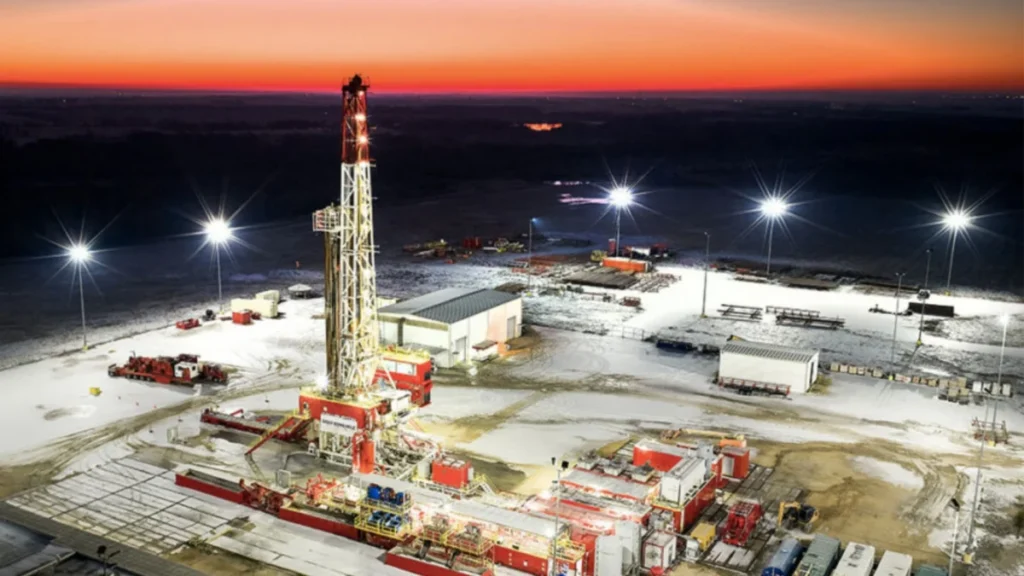
Led by Halliburton, a global leader in oilfield services, this phase will involve drilling deep, precise boreholes to the required geological depth and specifications. Halliburton’s extensive experience in complex drilling operations will be invaluable in demonstrating the industrial scalability and cost-effectiveness of this crucial step. Following drilling, Occlusion, specializing in subsurface engineering and sealing technologies, will manage the intricate process of lowering the UCS units into the deep boreholes and ensuring their precise placement. This critical step also involves the strategic placement of various sealing materials (e.g., bentonite clay, cementitious materials) above the waste packages to create multiple, redundant barriers against groundwater migration and radionuclide release.
Universal Canister System (UCS) Fabrication and Handling
NAC International, a recognized expert in nuclear fuel cycle services, will oversee the fabrication of the non-radioactive demonstration UCS units. This phase will also involve demonstrating the safe and efficient surface operations for handling and preparing these canisters for emplacement, ensuring compatibility with existing and future nuclear waste infrastructure.
Regulatory Validation and Quality Assurance
Amentum, a leading government services contractor with extensive experience in nuclear operations, will oversee operational safety and quality assurance. This phase is crucial for gathering data and demonstrating compliance with future regulatory requirements, paving the way for certification by the Nuclear Regulatory Commission (NRC). The project will also involve deploying sophisticated monitoring systems to track the long-term performance of the sealed boreholes, providing critical data for safety assessments and regulatory approvals.
The use of non-radioactive materials in the pilot is a standard and essential practice. It allows for full-scale testing of all physical processes, engineering designs, and operational procedures in a real-world environment without the added complexities and risks associated with actual radioactive waste. The data collected from the Cameron pilot will be instrumental in refining the system, optimizing its performance, and building a robust safety case for regulatory approval and public acceptance.
A Collaborative Ecosystem for Success
Deep Isolation’s success hinges not only on its innovative technology but also on the strength of its collaborative project team. The diverse expertise brought by each partner is critical for addressing the multifaceted challenges of nuclear waste disposal.
-
Westinghouse Electric Company: Serving as the launch customer, Westinghouse’s involvement is particularly significant. As a leading global nuclear energy company, Westinghouse is developing the eVinci microreactor, a next-generation nuclear technology designed to provide reliable, carbon-free power for remote communities, industrial applications, and defense installations. The eVinci microreactor, like all nuclear reactors, produces spent fuel. Dr. Lou Martinez Sancho, Westinghouse Chief Technology Officer, emphasized that "The integration of UCS with our eVinci microreactor technology provides a comprehensive solution for managing spent nuclear fuel through its entire lifecycle." This partnership ensures that advanced reactor technologies, which are poised to play a crucial role in future energy grids, will have a viable, integrated solution for their waste streams from inception. Westinghouse will work closely with Deep Isolation to secure NRC certification, enabling the UCS to store and transport spent fuel from its eVinci microreactor, thereby creating a crucial early market for Deep Isolation’s technology.
-
NAC International: A globally recognized provider of nuclear fuel cycle technology and services, NAC International brings invaluable experience in the design, licensing, and fabrication of spent fuel storage and transport casks. Their role in leading UCS fabrication, surface operations, and licensing will ensure that the canisters meet the stringent safety and regulatory standards required for nuclear materials.
-
Deep Borehole Demonstration Center (DBDC): The DBDC serves as a critical nexus for research and demonstration in deep borehole technologies, facilitating collaboration among industry, academia, and government agencies. Their involvement ensures the project benefits from the latest scientific understanding and best practices in the field.
-
Halliburton: With its unparalleled expertise in deep drilling technologies developed over decades in the oil and gas industry, Halliburton is ideally positioned to lead the borehole construction. Their involvement underscores the transferability of advanced drilling techniques to the nuclear sector, potentially reducing costs and accelerating deployment timelines.
-
Occlusion: Specializing in subsurface operations and sealing technologies, Occlusion will ensure the long-term integrity and safety of the deep boreholes. Their expertise in engineered barrier systems is vital for preventing radionuclide migration and ensuring the permanent isolation of the waste.
-
Amentum: Amentum, with its extensive legacy in environmental management and nuclear operations for the U.S. government, will oversee operational safety and quality assurance. Mark Whitney, President of Energy & Environment at Amentum, noted, "Deep boreholes have long been considered a promising solution for spent nuclear fuel and high-level nuclear waste disposal. Amentum is excited to work with Deep Isolation and its collaborators to move this concept toward commercialization and turn it into a practical reality." Their involvement provides critical assurance regarding the rigorous standards required for nuclear safety and quality.
This powerful consortium represents a strategic alignment of capabilities, combining Deep Isolation’s innovative disposal technology with leading expertise in nuclear engineering, drilling, subsurface operations, and regulatory compliance.
Broader Impact and Future Implications
The successful demonstration and commercialization of Deep Isolation’s deep borehole solution could have far-reaching