Hyundai has officially revealed two striking new electric vehicle (EV) concepts, the IONIQ Earth and IONIQ Venus, marking a significant step in the brand’s strategy to expand its all-electric offerings, particularly within the crucial Chinese market. These concepts, presented shortly after the unveiling of the IONIQ Boulder SUV concept at the New York Auto Show, offer a glimpse into the future of Hyundai’s premium EV line, emphasizing advanced technology, distinctive design, and a holistic mobility ecosystem approach. The introduction of Earth and Venus underscores Hyundai’s commitment to innovation and its ambition to lead in the rapidly evolving global EV landscape.
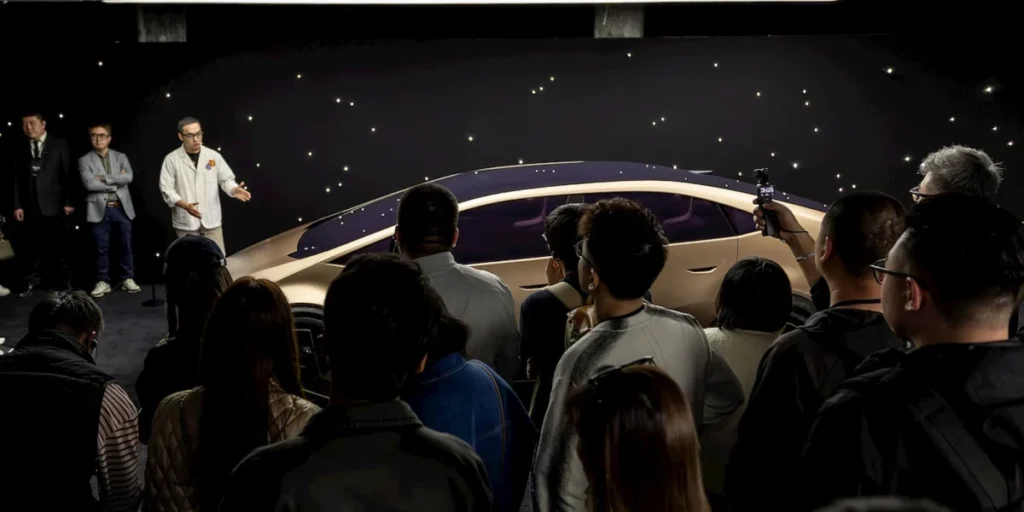
The dual reveal, which occurred during Hyundai’s IONIQ brand launch event in Beijing ahead of the Beijing Auto Show, was accompanied by the evocative tagline, "The new journey of IONIQ begins." This statement signifies a strategic pivot, suggesting that the IONIQ brand is evolving beyond merely a portfolio of vehicles to encompass a more comprehensive mobility solution tailored to consumer demands. The company aims to capture the imagination of Chinese consumers by integrating "smart driving and smart cabin experiences" seamlessly into its production models.
A Strategic Offensive in the Chinese Market
The timing and location of the IONIQ Earth and Venus unveil are not coincidental. China remains the world’s largest automotive market and the leading territory for EV adoption. Hyundai, like many global automakers, recognizes the imperative to strengthen its presence and appeal in this competitive arena. The new concepts are explicitly designed with the preferences and expectations of Chinese consumers in mind, reflecting a deep understanding of local market trends and technological demands.
![Hyundai unveils two new IONIQ EV concepts, an electric sedan and family SUV [Images]](https://i0.wp.com/electrek.co/wp-content/uploads/sites/3/2026/04/Hyundai-new-IONIQ-EVs-4.jpeg?resize=1200%2C628&quality=82&strip=all&ssl=1)
Li Fenggang, president at Beijing Hyundai, articulated this focus during the launch event. "Built on IONIQ’s uncompromising principles of world-class safety and quality, we will soon introduce production models that seamlessly combine the smart driving and smart cabin experiences that Chinese consumers demand," he stated. This sentiment highlights a dual approach: leveraging Hyundai’s established reputation for safety and quality while simultaneously embracing cutting-edge digital integration that is increasingly becoming a prerequisite for vehicle desirability in China.
Design Philosophy: "Lead, Don’t Follow"
Both the IONIQ Earth and Venus concepts embody Hyundai’s design ethos of "Lead, don’t follow." This philosophy is visually represented through their distinctive "single-curve silhouettes," a design language that aims to set them apart from conventional automotive forms. This approach prioritizes aerodynamic efficiency and a clean, minimalist aesthetic, aligning with contemporary design trends in both the automotive and consumer electronics sectors.
The IONIQ Venus, envisioned as a "trend-setting sedan," draws inspiration from its celestial namesake. Hyundai describes its high-tech exterior, showcased in a striking "Radiant Gold" finish, as embodying "the brightest planet’s timeless beauty." While its design language aims for distinctiveness, observers have noted a visual resonance with Kia’s Vision Meta Turismo concept, particularly in its sleek profile and slim LED headlights. This contrasts with the signature pixelated lighting that has become a hallmark of other IONIQ models, such as the popular IONIQ 5 and the upcoming IONIQ 9. This divergence in lighting signature could indicate a subtle differentiation in design intent or a future evolution of the IONIQ brand’s visual identity.
In contrast, the IONIQ Earth is presented as a "bold and powerful family SUV." Its design is characterized by sharp, futuristic lines, projecting an image of robustness and capability. A particularly innovative feature highlighted is its "air-hug" seats, conceptualized as being constructed from soft air modules. This suggests a focus on passenger comfort and a potentially revolutionary approach to interior ergonomics and material science within the cabin.
![Hyundai unveils two new IONIQ EV concepts, an electric sedan and family SUV [Images]](https://electrek.co/wp-content/uploads/sites/3/2026/04/Hyundai-new-IONIQ-EVs-4.jpeg?quality=82&strip=all&w=1400)
Technological Advancements: The Pleos System and Software-Defined Mobility
Beyond aesthetics, Hyundai is placing a strong emphasis on the technological prowess of its future EVs, particularly through its advanced software platform, codenamed Pleos. The IONIQ Earth and Venus are anticipated to be equipped with this new system, which is designed to manage everything from the vehicle’s core operating system (OS) to its infotainment and hardware.
The Pleos system is described as an end-to-end software platform, and its Android-based architecture, known as Pleos Connect, aims to replicate the intuitive and seamless user experience found in modern smartphones. This approach mirrors Tesla’s successful integration of advanced digital interfaces, which have set a benchmark for in-car technology. By adopting a similar philosophy, Hyundai seeks to offer a "smart cabin" that is not only functional but also engaging and user-friendly, adapting to the evolving expectations of digitally native consumers.
This focus on a software-defined approach is critical for Hyundai’s long-term strategy in China. The company envisions the IONIQ brand in China evolving "beyond a product lineup into a broader mobility ecosystem." This implies a future where vehicles are continuously updated, personalized, and integrated with a wider range of digital services, potentially including autonomous driving features, advanced connectivity, and personalized in-car entertainment. This ecosystem approach is crucial for fostering customer loyalty and creating ongoing value beyond the initial vehicle purchase.
A Celestial Naming Convention for a New Era
![Hyundai unveils two new IONIQ EV concepts, an electric sedan and family SUV [Images]](https://electrek.co/wp-content/uploads/sites/3/2026/04/Hyundai-new-IONIQ-EVs-Venus-Earth.jpeg?quality=82&strip=all&w=1024)
A unique and conceptually rich element of Hyundai’s strategy for the Chinese market is its adoption of a celestial naming system for future IONIQ models. All upcoming vehicles launched in China under the IONIQ banner will be named after planets. This naming convention serves as a powerful metaphor, symbolizing how each vehicle "orbits around the driver," emphasizing a driver-centric approach to design and functionality. This thematic consistency is likely to resonate with consumers and create a distinct brand identity within the crowded EV segment.
Broader Implications and Future Outlook
The unveiling of the IONIQ Earth and Venus concepts is more than just a showcase of new models; it represents a strategic recalibration for Hyundai in one of the world’s most important automotive markets. The company is betting on a combination of cutting-edge design, advanced software integration, and a deep understanding of local consumer preferences to drive its growth.
The success of these concepts in translating into compelling production vehicles will be a key determinant of Hyundai’s future performance in China. The automotive industry is undergoing a profound transformation, with EVs rapidly replacing internal combustion engine vehicles. For established automakers like Hyundai, adapting quickly to this shift is paramount.
The emphasis on a "smart cabin" and a "mobility ecosystem" suggests that Hyundai is not just aiming to sell cars but to offer integrated mobility solutions. This forward-thinking approach is vital for staying competitive against both traditional rivals and agile new entrants.
![Hyundai unveils two new IONIQ EV concepts, an electric sedan and family SUV [Images]](https://electrek.co/wp-content/themes/ninetofive/dist/images/google-preferred-source-badge-dark.png)
Furthermore, the global rollout of Hyundai’s IONIQ lineup, including the upcoming IONIQ 3 slated for a reveal at Milan Design Week, indicates a coordinated global strategy. While the Earth and Venus concepts are specifically tailored for China, their underlying technological and design principles are likely to influence future IONIQ models worldwide.
Looking Ahead: Beijing Auto Show and Beyond
Hyundai is set to provide further details on the Earth and Venus concepts, as well as its broader electrification plans, during a press conference at the Beijing Auto Show on April 24. This event will offer an opportunity for industry analysts and consumers alike to gain a deeper understanding of the technologies and features that will define these new vehicles.
In parallel, the automotive world eagerly awaits the reveal of the IONIQ 3, a highly anticipated EV hot hatch, which is scheduled to be showcased during Milan Design Week later this month, running from April 20-26. The simultaneous unveiling of these diverse concepts highlights Hyundai’s multifaceted approach to electrification, catering to different market segments and design preferences across the globe.
The journey of IONIQ is indeed just beginning, and the Earth and Venus concepts serve as powerful harbingers of Hyundai’s ambitious vision for the future of electric mobility, driven by innovation, design, and a profound commitment to the evolving needs of drivers worldwide. The company’s strategic focus on China, coupled with its global EV aspirations, positions it as a formidable contender in the race to shape the future of transportation.