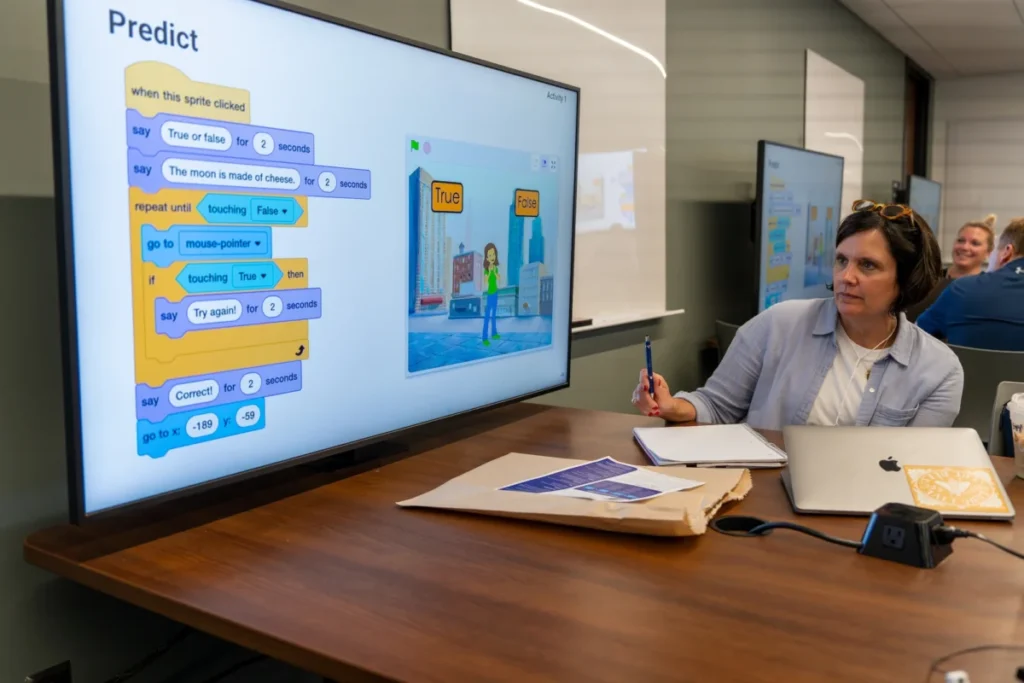
The Raspberry Pi Foundation has officially announced the completion of its Experience CS curriculum, a milestone marked by the release of the final six units in a series designed to transform how computer science is taught in primary and middle schools. With this latest release, the Experience CS platform now offers a total of 18 cross-curricular, project-based units specifically tailored for students in grades 3 through 8. This comprehensive suite of resources provides educators with a robust, standards-aligned framework to integrate computing into the classroom, regardless of their prior technical expertise. By offering these high-quality resources free of charge, the initiative seeks to dismantle barriers to entry for schools and districts across the United States, fostering a more inclusive environment for digital literacy and technical education.
The completion of this curriculum is the result of an intensive, year-long development cycle characterized by rigorous classroom testing and iterative design. Since its initial debut in mid-2025, the Experience CS team has collaborated closely with educators to ensure the materials meet the practical demands of modern teaching environments. The curriculum is built on the philosophy that computer science should not be an isolated subject but rather a foundational tool that enhances learning across all core disciplines. By weaving computing concepts into science, mathematics, and the arts, the program helps students understand the relevance of technology in the real world while simultaneously building critical thinking and problem-solving skills.
A Strategic Response to the Digital Education Gap
The release of the full Experience CS suite arrives at a critical juncture for American education. As state mandates for computer science education increase, many schools face a significant hurdle: a shortage of specialized computer science teachers. According to recent educational data, while the demand for computing skills is at an all-time high, a substantial percentage of K-12 schools lack the resources or the trained personnel to offer a dedicated CS program. Experience CS addresses this gap by providing "non-specialist" teachers—those whose primary training may be in English, history, or general elementary education—with the confidence and tools necessary to lead coding and logic-based lessons.
The curriculum is meticulously aligned with national standards, including the CSTA K-12 Computer Science Standards and various state-specific requirements. This alignment ensures that districts adopting the program can do so with the assurance that they are meeting rigorous academic benchmarks. Furthermore, the inclusion of a school-safe version of Scratch, the block-based coding language developed by MIT, provides a secure environment where students can experiment with code without the privacy concerns often associated with open-access social platforms.
Chronology of Development and Iteration
The journey toward the completion of Experience CS has been a phased rollout designed to incorporate user feedback at every stage.
- June 2025: The Initial Launch. The program debuted with its first six units, focusing on foundational concepts such as basic sequencing and simple algorithms. These initial resources allowed early adopters to test the cross-curricular model in diverse classroom settings.
- Late 2025: Feedback and Expansion. Based on educator feedback, the development team expanded the resource library. This phase saw the introduction of more comprehensive teacher guides, slide decks for classroom presentation, and student workbooks designed to facilitate independent learning.
- Early 2026: Enhancing Accessibility. Recognizing the need for diverse instructional methods, the team added video guides to support both teachers and students. During this period, the program also focused on securing Data Privacy Agreements (DPAs) with various states to streamline district-wide adoption.
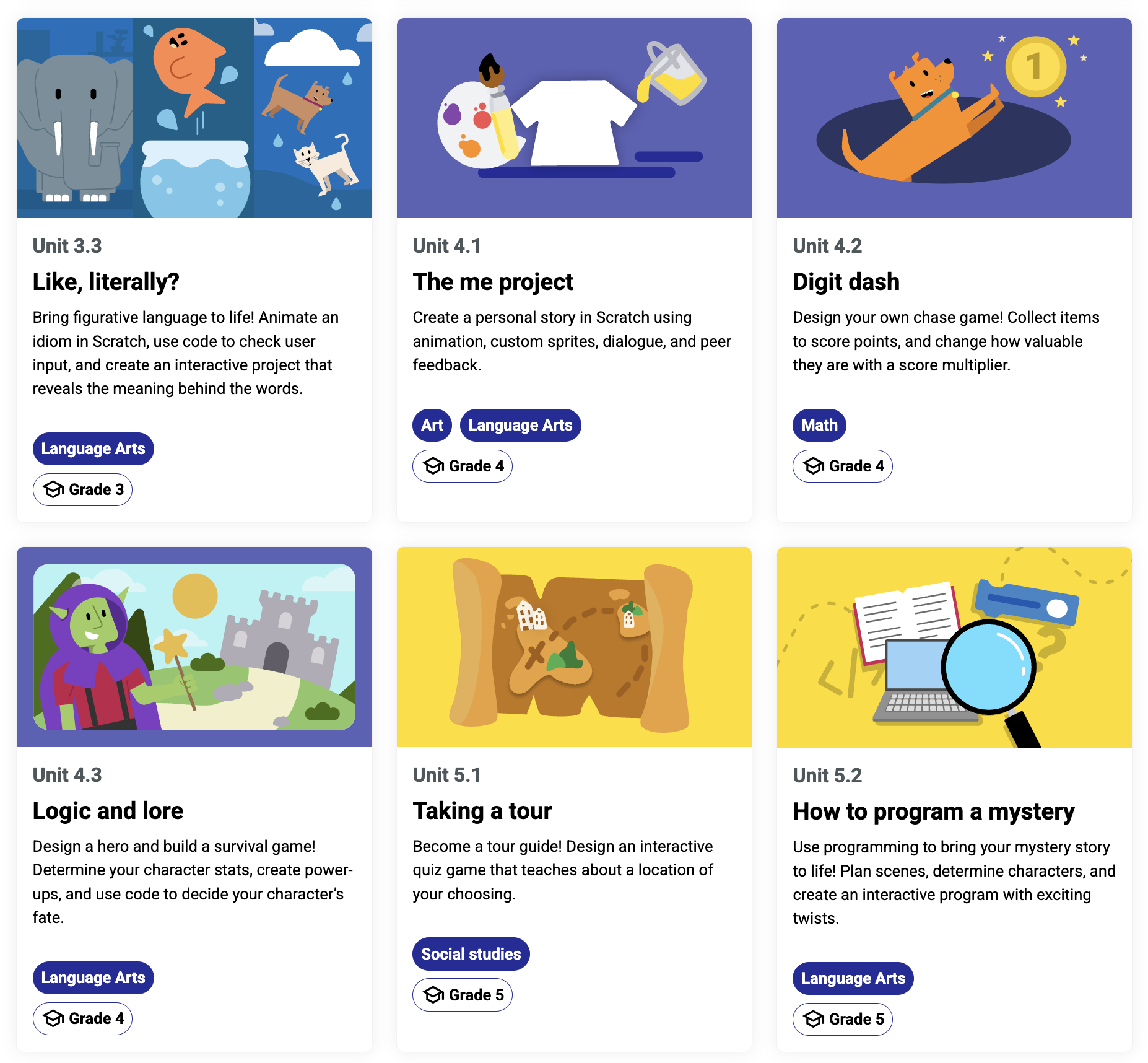
- April 2026: The Final Milestone. The release of the final six units completes the 18-unit arc. These concluding units delve into more complex themes, including cybersecurity, network infrastructure, and advanced data manipulation, providing a sophisticated capstone for middle school students.
Detailed Breakdown of the Curriculum Components
Every unit within the Experience CS library is structured to provide a "plug-and-play" experience for the classroom. Each of the 18 units includes a suite of materials designed to minimize prep time and maximize student engagement:
- Comprehensive Lesson Plans: Step-by-step instructions that guide the teacher through the pedagogical goals and technical requirements of each session.
- Interactive Slide Decks: Visual aids designed to keep students focused and to simplify complex concepts like loops, conditionals, and variables.
- Student Workbooks: Printable or digital materials that allow students to track their progress, brainstorm project ideas, and reflect on their learning.
- Formative and Summative Assessments: Tools to help educators measure student understanding and ensure that learning objectives are being met.
- Project-Based Learning Outcomes: Every unit culminates in a creative project, ranging from digital art and interactive stories to scientific simulations and mathematical models.
The final six units, in particular, focus on applying computational thinking to contemporary challenges. Students are encouraged to explore the mechanics of the internet, the importance of digital security in an interconnected world, and the ethical implications of data collection. By tackling these high-level topics through the lens of project-based learning, the curriculum demystifies technology that students interact with daily but may not fully understand.
Addressing Data Privacy and School Adoption
A significant hurdle for any digital curriculum in the United States is compliance with strict data privacy laws, such as the Family Educational Rights and Privacy Act (FERPA) and the Children’s Online Privacy Protection Act (COPPA). The Raspberry Pi Foundation has prioritized these concerns by establishing Data Privacy Agreements (DPAs) in multiple states. These agreements provide school districts with the legal framework necessary to adopt Experience CS without compromising student data.
For districts looking to scale the program, the "school-safe" Scratch environment is a major selling point. Unlike the standard Scratch community, which includes social networking features, the Experience CS version is optimized for the classroom. It allows for creative expression and coding exploration while maintaining a controlled environment that adheres to district safety protocols. Educators and administrators with questions regarding DPAs or technical integration are encouraged to contact the organization’s support team to facilitate a smooth implementation process.
Professional Development and Community Engagement
The completion of the curriculum is not the end of the project, but rather the beginning of a massive outreach effort. Throughout the remainder of 2026, the Experience CS team will host a series of professional development (PD) events across the United States. These sessions are designed to build teacher efficacy and foster a community of practice where educators can share success stories and troubleshooting tips.
Key upcoming events include:
- Experience CS Webinar (April 30, 2026): A deep-dive session scheduled for 3 p.m. CT / 4 p.m. ET, specifically highlighting the newly released units and offering a roadmap for implementation in the upcoming school year.
- Conference Appearances: The team is slated to present at major educational technology conferences throughout the spring and summer, including appearances at ISTE (International Society for Technology in Education) and the CSTA (Computer Science Teachers Association) Annual Conference.
- Local Workshops: Regional workshops will provide hands-on training for teachers, allowing them to work through the curriculum projects themselves before introducing them to their students.
Analysis: The Broader Impact on STEM Education
The release of a free, high-quality, and complete CS curriculum for the middle-grade bracket has significant implications for the future of STEM (Science, Technology, Engineering, and Mathematics) education. By targeting grades 3–8, Experience CS intervenes at a pivotal moment in student development. Research indicates that interest in STEM subjects often wanes during the middle school years, particularly among underrepresented groups. By integrating computing into "non-tech" subjects like the arts and social studies, Experience CS helps students see themselves as creators and innovators, potentially reversing the trend of disengagement.
Furthermore, the "cross-curricular" nature of the program addresses the crowded school day. Teachers often feel pressured to prioritize core subjects like math and literacy at the expense of electives. By showing how coding can actually support math standards or enhance a science experiment, Experience CS removes the "either/or" dilemma, making computer science a permanent fixture in the general education classroom.
As school districts look toward the 2026-2027 academic year, the availability of a full, 18-unit curriculum offers a turnkey solution for those seeking to modernize their offerings. The Raspberry Pi Foundation’s commitment to keeping these resources free ensures that the "zip code effect"—where a student’s access to quality education is determined by their geographic location—is significantly mitigated.
Conclusion and Call to Action
The Experience CS curriculum stands as a testament to the power of collaborative educational design. By providing a clear, structured, and engaging pathway for students to explore the world of computing, the program is setting a new standard for K-12 technical education.
Educators, curriculum coordinators, and school administrators are invited to explore the full suite of 18 units at the official website, experience-cs.org. Whether a school is looking to introduce a single unit as a pilot or seeking to overhaul its entire middle-grade CS strategy, the resources are now fully available to support that journey. With the final units now live, the focus shifts from development to adoption, promising a future where every child has the opportunity to understand and shape the digital world around them.