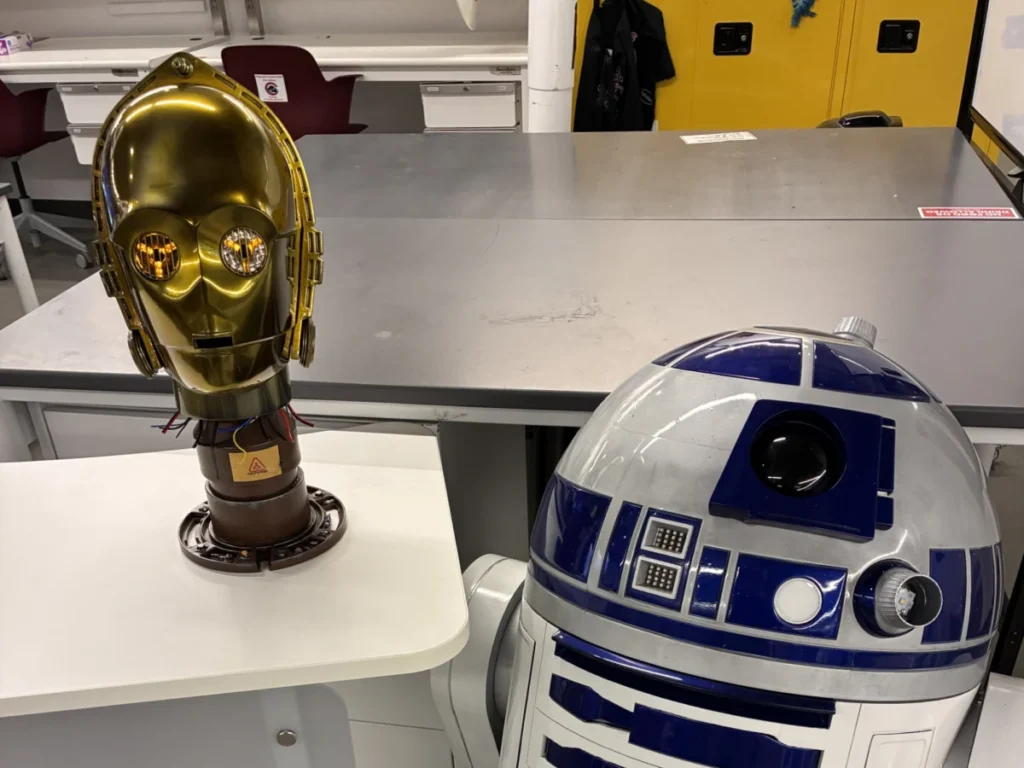
Potozkin, a student at Chapman University, undertook this endeavor with the explicit goal of transcending mere functional conversation, aiming instead to foster a genuine sense of familiarity and engagement that mirrors the enduring appeal of the original 1977 film character. His work goes beyond a simple chatbot in a custom shell, delving into the intricacies of physical embodiment, auditory realism, and nuanced personality to create an AI system that resonates more deeply with human users than its purely digital counterparts.
The Genesis of an Embodied AI: From Film to Function
The inspiration for Potozkin’s Threepio project is, as expected, rooted in the cultural phenomenon of Star Wars: Episode IV – A New Hope. Released in 1977, the film introduced audiences to C-3PO, a gleaming golden protocol droid fluent in "over six million forms of communication" and characterized by his fastidious, often anxious, yet ultimately loyal demeanor. This rich characterization provided a fertile ground for Potozkin to explore the translation of fictional personality into a real-world, interactive AI. The project’s inception was driven by a fundamental question: what happens when conversational AI moves off the screen and into a physical, interactive system?
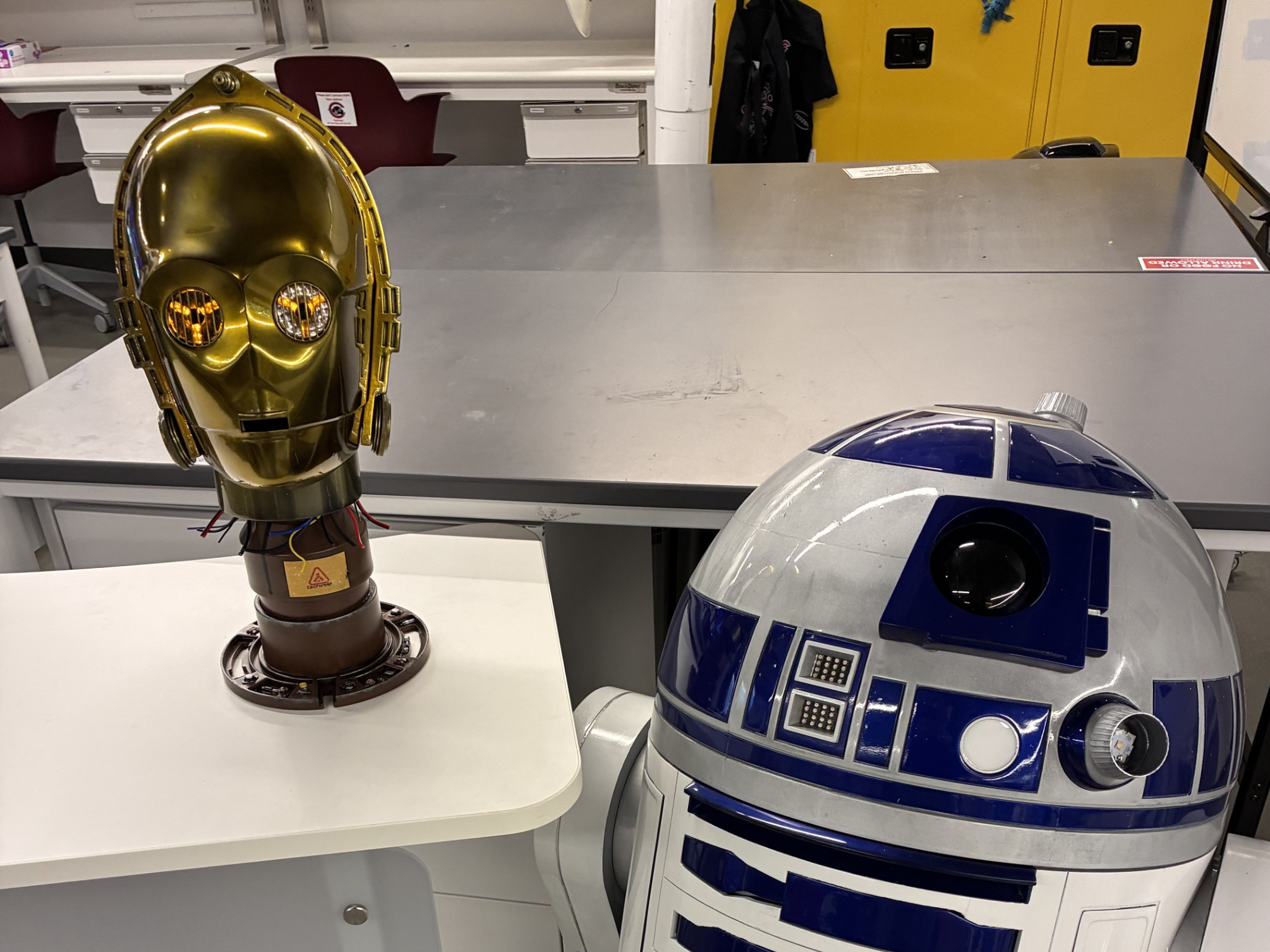
The journey began with the meticulous construction of the droid’s physical form. Potozkin utilized 3D printing technology to create the head and upper torso of C-3PO. Achieving the smooth, polished finish characteristic of the original droid required considerable effort in post-processing, including sanding and finishing techniques to eliminate visible layer lines and imperfections often associated with 3D-printed objects. This dedication to aesthetic fidelity extended to the display stand, which was enhanced with "greeblies"—small, intricate details that lend a sense of complex machinery and realism, further anchoring the project in its cinematic inspiration. Such attention to detail in the physical manifestation is crucial for an embodied AI, as it directly influences initial human perception and willingness to engage.
Technical Acumen: Bringing Threepio to Life
The technological core of Potozkin’s C-3PO is powered locally by a Raspberry Pi 5, a significant choice given the increasing reliance on cloud-based AI processing. By hosting the AI chat stack directly on the device, Potozkin not only demonstrates a mastery of embedded systems but also addresses concerns regarding data privacy and network latency often associated with remote AI services. The Raspberry Pi 5, with its enhanced processing power and memory compared to previous iterations, provides a robust platform capable of running complex AI models for local inference, making it an ideal choice for a project demanding real-time conversational capabilities.
A standout feature of the Threepio project is its innovative approach to audio output. Instead of a conventional speaker, Potozkin employed an exciter, a device that vibrates a surface to produce sound. By attaching the exciter directly to the droid’s head, he achieved a unique auditory effect where the voice appears to emanate from the entire structure, lending an organic and immersive quality to C-3PO’s speech. This technique significantly contributes to the illusion of a sentient entity, as the sound doesn’t appear to come from a discrete, hidden component but rather from the very "being" of the robot. Refining these audio effects, including modulation and tone, was a painstaking process, ensuring the voice accurately captured C-3PO’s distinctive cadence and vocal personality. The challenges encountered during this phase, from learning advanced soldering techniques to fine-tuning sound profiles, highlight the multi-disciplinary skill set required for such a sophisticated build.
The Philosophical Core: Exploring Human-AI Interaction
Beyond the impressive engineering and craftsmanship, the Threepio project is fundamentally a research endeavor. Sam Potozkin authored a comprehensive paper, available on GitHub, that delves into the theoretical underpinnings of human-AI interaction. His research posits that people react differently to modern, disembodied AI systems (like screen-based chatbots) compared to the familiar, anthropomorphic androids depicted in fiction, such as the nearly 50-year-old C-3PO. This disparity, he argues, underscores the critical role of embodiment in fostering connection and trust between humans and AI.
Potozkin’s paper explores the translation of abstract concepts from both AI and communication theory into a functional, working architecture. He states: "This project explores the translation of a fictional character into a real-world, embodied AI system. Developing this system required translating and combining abstract concepts from both AI and communication theory into a functional, working architecture." He further elaborates on the project’s goal: "The goal of the project was to explore what happens when conversational AI moves off the screen and into a physical, interactive system. Rather than treating AI as something purely digital, this build focuses on embodiment, giving the system a presence, voice, and personality that can be experienced in the real world."
This perspective aligns with growing academic interest in embodied cognition and the psychology of human-robot interaction. Research from institutions like Stanford University’s Social Robotics Lab consistently demonstrates that people attribute more agency, intelligence, and even emotional capacity to robots with physical presence compared to virtual agents. The uncanny valley phenomenon, while often discussed in terms of visual realism, also extends to behavioral and conversational realism, suggesting that a well-designed embodied AI can bridge psychological gaps that purely digital interfaces cannot. Potozkin’s Threepio serves as a practical, open-source testbed for these theoretical frameworks.
The Evolution of Conversational AI and Embodiment
The development of conversational AI has a rich history, beginning with early programs like ELIZA in the 1960s, which simulated human conversation through pattern matching. Decades later, with advancements in natural language processing (NLP) and machine learning, chatbots became more sophisticated, leading to the rise of virtual assistants like Siri, Alexa, and Google Assistant in the 2010s. These systems, while powerful, primarily exist as disembodied voices or text on a screen.
The emergence of large language models (LLMs) in the 2020s, exemplified by systems like GPT-3 and GPT-4, has dramatically increased the fluency and coherence of AI conversations. However, even these advanced models, when confined to a screen, lack the physical presence that often defines human interaction. This is where embodied AI projects like Threepio carve out a crucial niche. The shift from purely digital interaction to physical embodiment represents a significant paradigm change, moving AI from a tool on a computer to a potential entity in the world.
The concept of giving AI a physical form is not new; humanoid robots have been a staple of science fiction for decades, with C-3PO being a prime example. Early robotics research focused heavily on locomotion and manipulation. However, the integration of advanced conversational AI with sophisticated physical platforms is a more recent phenomenon, driven by miniaturization of hardware, increased computational power, and accessible development tools. Potozkin’s project exemplifies this convergence, bringing complex AI models into a tangible, interactive form using readily available maker technologies.

The Enduring Cultural Impact of Star Wars Droids
The choice of C-3PO as the subject for this embodied AI project is not arbitrary. Star Wars droids, particularly C-3PO and his counterpart R2-D2, have achieved an unparalleled level of cultural recognition and affection. They are not merely machines but characters with distinct personalities, emotional depth, and often, comic relief. C-3PO’s fussy, anxious, yet ultimately benevolent nature makes him an ideal candidate for exploring human empathy and attachment to non-human entities.
The widespread familiarity with C-3PO immediately provides a pre-existing mental model for interaction. Users approach the Threepio project with established expectations of how such a droid might behave, communicate, and react. This pre-contextualization significantly reduces the cognitive load typically associated with interacting with novel AI systems. It leverages decades of storytelling to create an instant rapport, making the AI feel less like a cold algorithm and more like a character from a beloved narrative. The maker community, a vibrant ecosystem of hobbyists and professionals, frequently draws inspiration from popular culture, and Star Wars droids have consistently been a popular subject for robotics projects, ranging from full-scale R2-D2 replicas to custom BB-8 builds. This deep engagement within the maker space underscores the cultural resonance of these characters.
The Maker Movement and Open-Source Innovation
Sam Potozkin’s project is a testament to the power of the modern maker movement and the open-source ethos. The project is designed to be customizable and extensible, with its code and build instructions available on GitHub. This open-source approach invites other enthusiasts and researchers to adapt, improve, and expand upon Potozkin’s work. As he notes, others can "put their spin on it, or add in the other 5,999,999 languages" — a nod to C-3PO’s famous linguistic capabilities.
The democratization of advanced robotics and AI through platforms like Raspberry Pi, readily available 3D printers, and open-source software libraries has fueled an explosion of innovation. What once required significant institutional resources can now be achieved by dedicated individuals in home workshops. This collaborative environment accelerates learning, problem-solving, and the overall pace of technological advancement. Projects like Threepio demonstrate that cutting-edge research and development are no longer confined to academic labs or corporate R&D departments but are increasingly driven by a global community of makers. The sharing of knowledge and resources, including troubleshooting guides for common issues like "orange peel" texture in 3D prints or recovering from a "dropped head," is a hallmark of this community.
Broader Impact and Implications for Future AI
The implications of projects like Potozkin’s Threepio extend far beyond a single impressive build. They contribute significantly to our understanding of human-AI interaction and the design principles for future embodied AI systems.
Firstly, the project highlights the critical role of aesthetics and perceived personality in user acceptance and engagement with AI. An AI system that looks and sounds appealing, and embodies a consistent character, is more likely to be accepted and interacted with positively than one that is purely functional but devoid of personality. This has significant implications for sectors like customer service, education, and elder care, where the human-like qualities of an AI companion could enhance effectiveness.

Secondly, Threepio serves as a tangible example of localized AI processing. As concerns over data privacy and the environmental impact of large, centralized AI data centers grow, the ability to run sophisticated AI models on edge devices like the Raspberry Pi 5 becomes increasingly valuable. This approach could lead to more secure, responsive, and sustainable AI applications, particularly in contexts where internet connectivity is unreliable or data sensitivity is high.
Thirdly, the project contributes to the academic discourse on embodied cognition. By demonstrating how physical presence and sensory feedback (like the unique audio emanating from the head) can alter human perception and interaction with AI, Potozkin’s work provides empirical insights for researchers studying the cognitive processes involved in human-robot relationships. This can inform the design of more intuitive and effective human-robot interfaces.
Finally, the open-source nature of the project fosters innovation and education. It provides a blueprint for aspiring engineers, AI developers, and makers to learn about 3D printing, electronics, embedded systems, and AI development. Such accessible projects democratize advanced technologies, inspiring a new generation of innovators to push the boundaries of what’s possible.
Expert Perspectives and Future Outlook
Experts in human-robot interaction and AI ethics often emphasize the importance of transparent design and understanding user expectations. Projects like Threepio, by clearly drawing from a fictional character, manage expectations effectively while still pushing the boundaries of what a physical AI can achieve. Dr. Kate Darling, a leading expert on robot ethics, has often discussed how humans readily anthropomorphize robots, even simple ones, and how this tendency can be leveraged for positive human-robot relationships, provided ethical considerations are paramount. Potozkin’s work taps into this inherent human trait, exploring its potential benefits.
Looking ahead, the Threepio project hints at a future where personalized, embodied AI companions could become more common. Imagine AI systems tailored not just to individual preferences in conversation, but also to specific physical forms or personalities that resonate most deeply with their users. The ability to customize an AI’s appearance, voice, and even its core personality traits, as suggested by the open-source nature of Threepio, could lead to a new era of highly personalized and emotionally engaging AI experiences. While the complexities of scaling such projects and addressing ethical concerns around AI sentience and dependency remain, Sam Potozkin’s Threepio stands as a remarkable achievement, demonstrating the profound potential of blending cutting-edge AI with the enduring appeal of beloved fictional characters in a physically present, interactive form. It is a testament to the ingenuity of the maker community and a significant step forward in our journey to understand and shape the future of human-AI relations.