The cataclysmic event that wiped out approximately 75 percent of all species on Earth 66 million years ago, including every non-avian dinosaur, was likely triggered by an impact from a rare type of meteorite known as a CO chondrite. This groundbreaking conclusion, published in the prestigious journal Science Advances, stems from meticulous analysis of nickel isotopes found in the geological remnants of the Cretaceous-Paleogene (K-Pg) impact. Researchers from institutions including the University of British Columbia (UBC), the University of Paris, the Free University of Brussels (Vrije Universiteit Brussel), and the University of Vienna collaborated on this transformative study, shedding new light on the nature of the celestial body that forever altered life on our planet.
Unraveling the Impactor’s Identity Through Isotopic Signatures
For decades, scientists have grappled with the precise composition of the extraterrestrial object that struck Earth, creating the immense Chicxulub crater. While the impact itself and its devastating consequences are well-established, the exact nature of the projectile remained an enigma. The K-Pg boundary, a thin layer of clay found globally, serves as a poignant geological record of this mass extinction event. Within this layer lie the faint but crucial clues left behind by the impactor.
The key to unlocking this mystery lay in the precise measurement of nickel isotopes. Nickel, a relatively abundant element in meteorites, exhibits distinct isotopic ratios depending on its origin. The research team meticulously analyzed minute samples of material from the K-Pg clay layer, a technically demanding endeavor given that only a fraction of the original projectile would have survived the vaporization process upon impact. These highly sensitive measurements were conducted by scientists from the Institut de Physique du Globe and the University de Paris, utilizing advanced analytical techniques.
"This is challenging work," stated Dr. Philippe Claeys, a professor at Vrije Universiteit Brussel and a visiting professor at UBC’s Pacific Centre for Isotopic and Geochemical Research, who was instrumental in the study. "Only a minute fraction of the projectile is preserved in the planet’s KT clay layer because the entire meteorite vaporized upon impact." The faint traces of nickel within this global clay deposit provided a unique isotopic fingerprint that allowed the researchers to definitively narrow down the impactor’s classification.
The Rarity of CO Chondrites: A Unique Extinction Mechanism
The analysis revealed that the nickel isotope signature of the K-Pg impactor did not align with the more common types of meteorites found on Earth. Instead, it pointed unequivocally to a CO chondrite. These meteorites are exceptionally rare, representing a mere fraction of the meteoritic material that reaches our planet. Carbonaceous chondrites, as a broader category, constitute only about five percent of sampled meteorites, and within this group, CO chondrites, also known as Ornans-class carbonaceous chondrites, are an even smaller subset.
Dr. Claeys elaborated on the distinctive characteristics of CO chondrites: "Carbonaceous chondrites of the Ornans class are definitely not like the typical meteors you find in museum collections. A CO contains much less volatile elements—like carbon, zinc, water, and particularly sulfur—than other classes of meteorites we’ve discovered so far on Earth." This scarcity of volatile elements, especially sulfur, has significant implications for understanding the precise mechanisms of the extinction event.
Revisiting the Sulfur Hypothesis: A Shift in Focus
Historically, a prominent theory regarding the dinosaur extinction focused on the role of sulfur. It was hypothesized that a sulfur-rich impactor would have vaporized and released vast quantities of sulfur dioxide into the atmosphere. This sulfurous veil would have blocked sunlight, leading to a global cooling event, widespread acid rain, and the collapse of ecosystems. However, the new findings challenge this singular focus.
"It doesn’t alter our theory of what caused the extinction event—but it makes it less likely that sulfur contained in the impactor was the smoking gun," Dr. Claeys explained. "The fine debris thrown into the atmosphere would have been the primary factor." The reduced sulfur content in CO chondrites suggests that while sulfur may have played a role, it was likely not the dominant driver of the catastrophe. Instead, the sheer volume of pulverized rock and dust ejected into the atmosphere by the impact is now considered the more probable culprit.
This fine debris, once lofted into the stratosphere, would have acted as a powerful sunshade, plunging the Earth into prolonged darkness and triggering a rapid and severe climate shift. The ensuing lack of sunlight would have devastated plant life, leading to the collapse of food chains and the subsequent extinction of countless species. The fine particulate matter would also have contributed to atmospheric pollution and potentially exacerbated acid rain effects, though to a lesser extent than previously theorized for a sulfur-rich impactor.
The Origin of the Dinosaur-Killer: A Cosmic Lottery
The precise origin of this rare CO chondrite remains a subject of ongoing scientific inquiry. Current hypotheses suggest it may have originated from a more distant region of the solar system, potentially from a reservoir of rocky debris in the outer solar system, or perhaps from the outer fringes of the asteroid belt, near the orbit of Jupiter. The journey of this ancient celestial body across millions of kilometers to collide with Earth underscores the unpredictable nature of cosmic events.
CO chondrites are considered some of the most primitive and least altered materials in our solar system, offering invaluable insights into the early conditions of planetary formation. Their rarity suggests that impacts from such bodies are infrequent occurrences. "Being impacted by such a rare, distant projectile really underscores how unlucky the dinosaurs were," remarked Dr. Claeys, highlighting the element of chance in this planet-altering event.
The Chicxulub Impact: A Monumental Catastrophe
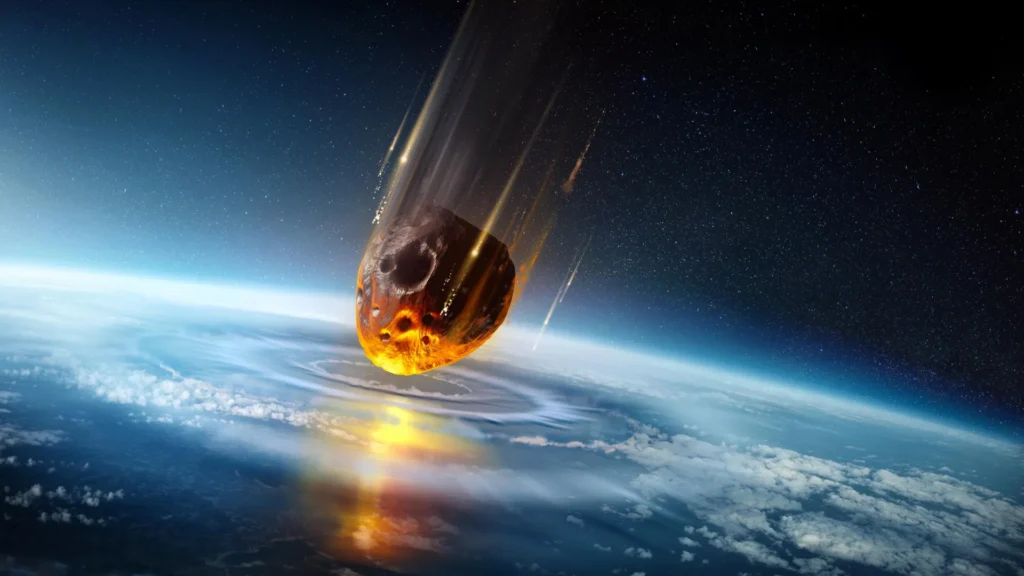
The impact event itself was of unimaginable magnitude. The impacting object is estimated to have been between 10 to 15 kilometers (approximately six to nine miles) in diameter, striking Earth with tremendous force at an estimated speed of 64,000 kilometers per hour (about 40,000 miles per hour). This colossal collision carved out the Chicxulub crater, a structure now largely buried beneath the Yucatán Peninsula in Mexico, a silent testament to the power of the impact.
The immediate aftermath of the impact would have been apocalyptic. A massive shockwave, colossal tsunamis, and widespread wildfires would have devastated vast regions. However, the long-term climatic effects, driven by the atmospheric debris, were what ultimately led to the widespread extinction.
Chronology of the Extinction Event: A Grim Timeline
The K-Pg extinction event, triggered by the CO chondrite impact, can be broadly understood through a timeline of its catastrophic effects:
- 66 Million Years Ago: A CO chondrite meteorite, estimated to be 10-15 km in diameter, strikes Earth in the region of what is now the Yucatán Peninsula. The impact generates an immense explosion, vaporizing the meteorite and creating the Chicxulub crater.
- Immediate Aftermath: Cataclysmic shockwaves, earthquakes, and mega-tsunamis sweep across the globe. Widespread wildfires ignite, consuming vast forests.
- Days to Weeks: Ejecta, including pulverized rock and dust, are propelled into the atmosphere. The atmosphere becomes choked with fine particulate matter, beginning to obscure sunlight.
- Months to Years: Sunlight penetration is severely reduced, leading to a rapid and drastic drop in global temperatures. Photosynthesis grinds to a halt, causing widespread plant death. Herbivores starve, followed by carnivores. Acid rain intensifies, further damaging ecosystems.
- Decades to Millennia: The Earth’s climate slowly begins to recover, but the ecological landscape has been irrevocably altered. The majority of species, including all non-avian dinosaurs, have perished.
- Post-Extinction Era: Surviving species, often smaller and adaptable, begin to repopulate the Earth, paving the way for the rise of mammals and, ultimately, humans.
Broader Implications and Future Research
The identification of the impactor as a CO chondrite has significant implications for our understanding of planetary defense and the history of the solar system. While the rarity of such impacts is a source of relief, it also underscores the need for continued vigilance and advanced detection capabilities.
"This discovery refines our understanding of the specific geological processes that can lead to mass extinctions," commented Dr. Anya Sharma, a planetary scientist not involved in the study but familiar with the research. "Knowing the composition of impactors allows us to better model their potential effects on our atmosphere and climate, which is crucial for future risk assessments."
Furthermore, the primitive nature of CO chondrites offers a unique window into the early solar system. Studying their composition provides invaluable data for cosmochemists and geologists seeking to reconstruct the conditions under which our solar system formed and evolved. Future research may focus on identifying potential source regions for these rare meteorites within the asteroid belt and exploring whether similar impacts have occurred throughout Earth’s history. The ongoing analysis of the K-Pg boundary and other geological records will undoubtedly continue to reveal more secrets about our planet’s tumultuous past and the cosmic forces that have shaped it. This latest finding represents a significant leap forward in our quest to understand one of Earth’s most profound evolutionary turning points.