The scientific community is currently navigating a period of profound anticipation as recent experimental results from the Large Hadron Collider (LHC) at CERN in Geneva suggest that the long-standing framework of particle physics may be on the verge of a historic transformation. Researchers operating the LHCb experiment have identified anomalies in the behavior of sub-atomic particles that do not align with the predictions of the Standard Model, the theoretical cornerstone that has defined our understanding of the universe’s fundamental building blocks for more than half a century. If these findings are confirmed through further rigorous testing, they would signal the existence of undiscovered physics, potentially revealing new particles or forces that have remained hidden from human observation until now.
For five decades, the Standard Model has reigned as the most successful theory in the history of science. It describes the fundamental particles—such as quarks and leptons—and the forces that govern them, including electromagnetism, the strong nuclear force, and the weak nuclear force. However, despite its elegance and predictive power, physicists have long acknowledged that the Standard Model is an incomplete map of reality. It notably fails to incorporate gravity, which is described by General Relativity, and provides no explanation for dark matter or dark energy, which together constitute approximately 95% of the energy-matter content of the universe. The quest to find "cracks" in this model is the primary driver behind the multi-billion-dollar infrastructure of the LHC.
The Architecture of the Discovery: The LHC and the LHCb Experiment
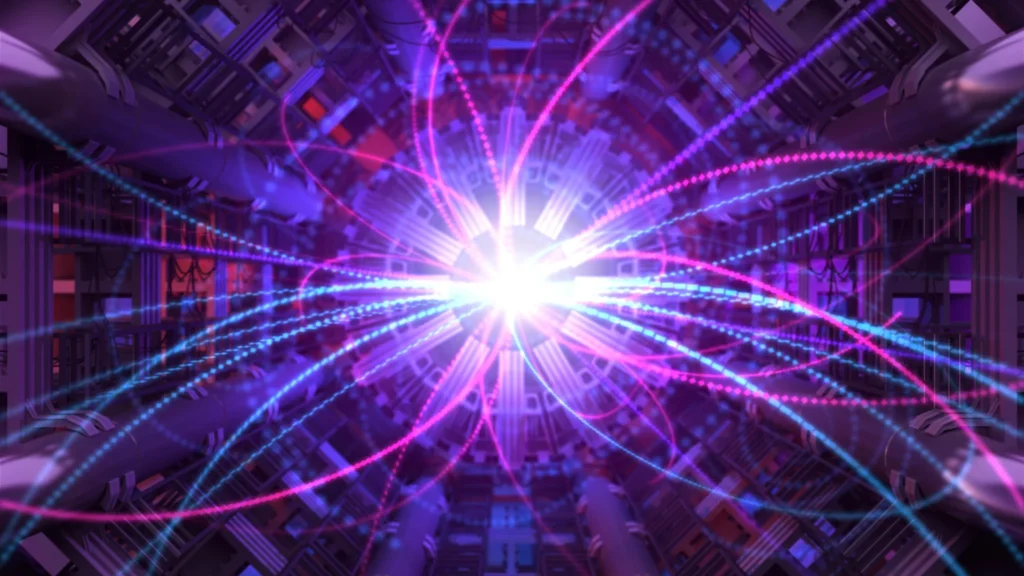
The Large Hadron Collider is an engineering marvel, consisting of a 27-kilometer circular tunnel buried deep beneath the border of France and Switzerland. Within this vacuum-sealed ring, superconducting magnets accelerate beams of protons to nearly the speed of light before forcing them into high-energy collisions. These collisions recreate conditions similar to those moments after the Big Bang, allowing physicists to observe the resulting debris for signs of rare phenomena.
The specific results currently challenging the status quo originate from the LHCb experiment, one of the four major detectors located along the collider’s ring. Unlike other detectors that search for high-mass particles directly, the LHCb specializes in the "beauty" or "bottom" quark. By studying the decay of B mesons—particles containing a beauty quark—researchers can perform indirect searches for new physics. These decays are highly sensitive to the presence of virtual particles that may be too heavy to be produced directly by the LHC’s current energy levels but can still influence the mathematical "shape" and frequency of the decay process.
Statistical Significance and the Four-Sigma Threshold
The cornerstone of the recent findings is a study accepted for publication in the prestigious journal Physical Review Letters. The research focuses on a specific transformation known as an "electroweak penguin decay." In this rare process, a B meson decays into a kaon, a pion, and two muons. According to the Standard Model, this specific decay path is incredibly rare, occurring only once for every million B mesons produced.
After analyzing approximately 650 billion B meson decays recorded between 2011 and 2018, the LHCb team found that the frequency and angular distribution of these decays deviated from theoretical expectations by four standard deviations, or "four sigma." In the realm of particle physics, this level of statistical significance is substantial. It implies that there is only a 1 in 16,000 chance that the observed data is a result of a random statistical fluctuation.
While a four-sigma result is compelling, it does not yet meet the "five-sigma" gold standard required for a formal discovery. The five-sigma threshold represents a 1 in 1.7 million chance of a fluke. However, the scientific weight of this result is bolstered by the fact that it does not stand in isolation. Earlier in 2025, the CMS experiment—another major detector at the LHC—published independent results that, while less precise, showed a similar trend in the same type of particle interactions. The alignment of data from two independent experiments significantly strengthens the case that these anomalies are not merely instrumental errors or data artifacts.
The Mystery of the Electroweak Penguin
The term "penguin decay" owes its whimsical name to a bet made by physicist John Ellis in 1977, but the physics behind it is exceedingly serious. These decays involve a "loop" process where a beauty quark transforms into a strange quark through the temporary exchange of other particles. Because this process is so rare and involves complex quantum interactions, it serves as a highly sensitive laboratory for testing the limits of the Standard Model.
The LHCb’s precise measurements of the angles at which the decay products are emitted, as well as the rate at which the process occurs, indicate a persistent "tension" with the theory. This suggests that some unknown influence—perhaps a new fundamental force or a previously undiscovered particle—is interfering with the decay.
One of the leading theoretical candidates to explain this discrepancy is the "leptoquark." This hypothetical particle would act as a bridge between the two families of matter: leptons (like electrons and muons) and quarks (which make up protons and neutrons). In the Standard Model, these two families are distinct and interact in specific, restricted ways. The existence of leptoquarks would unify these families and could explain why the B mesons in the LHCb experiment are behaving unexpectedly. Other theories suggest the existence of "Z-prime" bosons, which would be heavier versions of the Z bosons that mediate the weak force.
Chronology of Modern Particle Physics Milestones
To understand the weight of these findings, one must view them through the lens of recent history. The Standard Model was largely finalized in the mid-1970s. Since then, it has passed every test with flying colors, most notably with the 2012 discovery of the Higgs Boson at CERN, which explained how particles acquire mass.
- 1960s-1970s: Development of the Standard Model.
- 1983: Discovery of the W and Z bosons at CERN.
- 1995: Discovery of the top quark at Fermilab.
- 2012: Discovery of the Higgs Boson at the LHC, completing the Standard Model’s particle manifest.
- 2011-2018: The LHCb experiment collects data on 650 billion B meson decays.
- 2021-2024: Incremental reports of "flavor anomalies" begin to emerge from LHCb and other experiments like Belle II in Japan.
- 2025: CMS and LHCb release synchronized data pointing toward a four-sigma deviation in penguin decays.
This timeline shows a shift from "discovery of predicted particles" to "observation of unpredicted behaviors." We have moved from a period of confirmation to a period of exploration.
Theoretical Challenges: The "Charming Penguin" Problem
Despite the excitement, the physics community remains cautious. One of the primary obstacles to claiming a definitive discovery is a theoretical uncertainty known as "charming penguins." This refers to a subset of Standard Model processes involving "charm" quarks that are notoriously difficult to calculate with precision.
Because the strong nuclear force is so powerful at the energies involved in B meson decays, the mathematical predictions for how these "charming" loops contribute to the overall decay rate have a margin of error. Some theorists argue that if our understanding of these charming penguins is slightly off, the Standard Model might actually be able to account for the LHCb data without the need for new physics. However, recent sophisticated estimates and a combination of experimental data suggest that these effects are likely too small to explain the full extent of the observed four-sigma anomaly.
Broader Implications and the Future of Particle Physics
If the anomalies are confirmed to be signs of new physics, the implications for our understanding of the universe would be seismic. It would represent the first time we have moved beyond the Standard Model since its inception. This could lead to a "Grand Unified Theory" that finally bridges the gap between the quantum world and the cosmic scale of gravity.
The road ahead is paved with data. Since 2018, the LHCb experiment has already recorded three times more data than was used in the current study. Analyzing this new dataset will be the priority for researchers over the next few years. If the 4-sigma tension holds or grows as more data is added, it will inevitably cross the 5-sigma threshold.
Furthermore, the 2030s will see the launch of the "High-Luminosity LHC" (HL-LHC). This major upgrade will increase the collider’s luminosity—the number of collisions occurring per second—by a factor of five to ten. The resulting dataset will be 15 times larger than what is currently available, providing the ultimate testing ground for these findings.
Looking even further, the data collected today will inform the design of the next generation of particle colliders. Projects like the Future Circular Collider (FCC), a proposed 100-kilometer ring, are being planned for the 2070s. These machines will be capable of reaching energy levels that could directly produce the leptoquarks or Z-prime bosons that the current LHCb data only hints at through indirect observation.
For now, the global physics community watches and waits. The current findings do not yet rewrite the textbooks, but they have certainly added a significant and provocative chapter to the ongoing story of human inquiry into the nature of reality. The "penguin" may very well be the messenger of a new era in science.