The year 2026 has proven to be a landmark occasion for Rolex at Watches and Wonders Geneva, a prestigious event that sets the tone for horological innovation. While the industry buzzed about the much-debated Rolesium and enamel Daytona, the reimagined Yacht-Master II, and the introduction of the exclusive "Jubilee Gold" alloy for the Day-Date, Rolex also made significant, albeit less overtly publicized, enhancements to its iconic Oyster Perpetual Datejust collection. Beyond the much-anticipated special edition steel and gold Oyster Perpetual 100th Anniversary models, available in 41mm, 36mm, and 31mm, and the bold multi-colored Jubilee dial Oyster Perpetual also offered in multiple sizes, the Crown has quietly expanded its Datejust offerings with a substantial refresh, introducing over 100 new references. This extensive update includes a particularly profound redesign of models featuring Roman numerals and the debut of a captivating new green ombré dial.
Rolex’s strategy at Watches and Wonders Geneva 2026 for the Datejust collection was characterized by a dual approach: highlighting a visually striking new dial option while simultaneously rolling out a sweeping modernization of existing configurations. The brand chose to prominently feature the new green ombré dial, a decision that speaks volumes about its aesthetic appeal and market potential. This gradient effect, previously seen on the more exclusive Day-Date, now graces the brand’s quintessential timepiece, bringing a contemporary flair to its classic design.
The Alluring Green Ombré Dial: A New Horizon for the Datejust
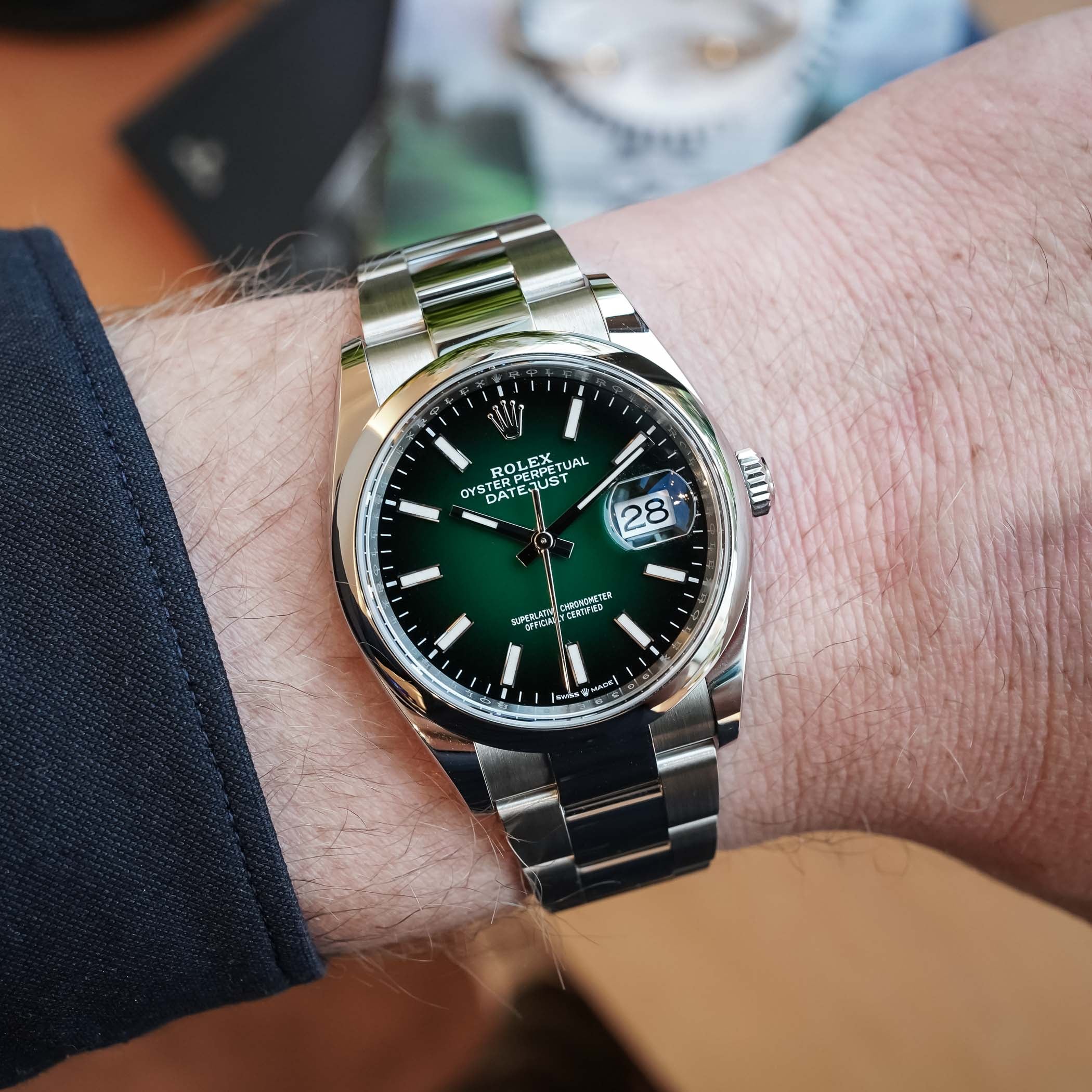
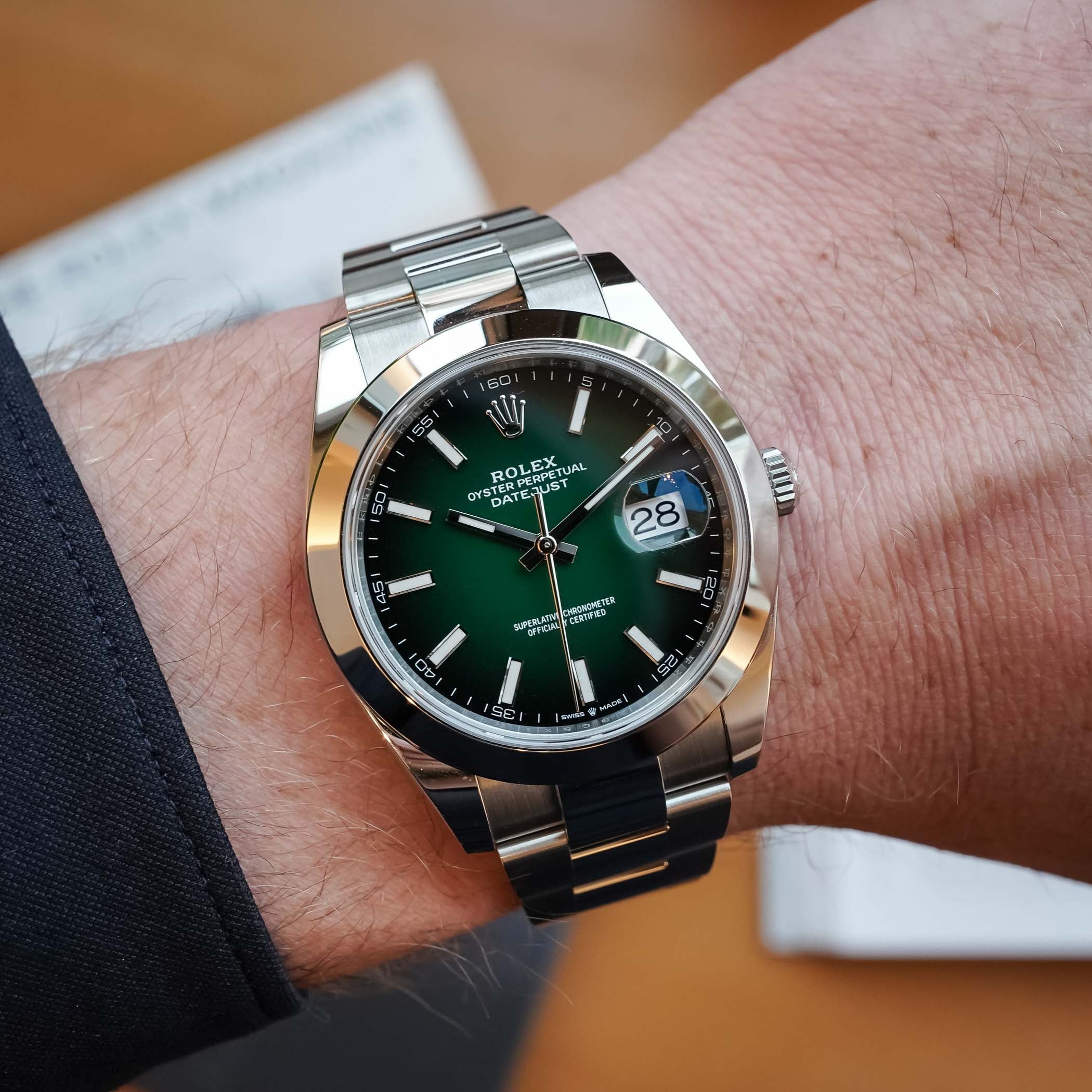
The introduction of the green ombré dial has quickly become a focal point for enthusiasts and collectors. This sophisticated gradient, a signature of Rolex’s "smoked" or "fumé" dials, transitions seamlessly from a lighter hue at the center to a darker shade at the periphery. While Rolex initially showcased a 41mm version in steel with a white gold fluted bezel and Oyster bracelet, the actual availability is far more extensive. This captivating dial is now incorporated into eight distinct references, spanning both 36mm and 41mm case sizes, and offered with either an Oyster or Jubilee bracelet, as well as smooth or fluted bezels.
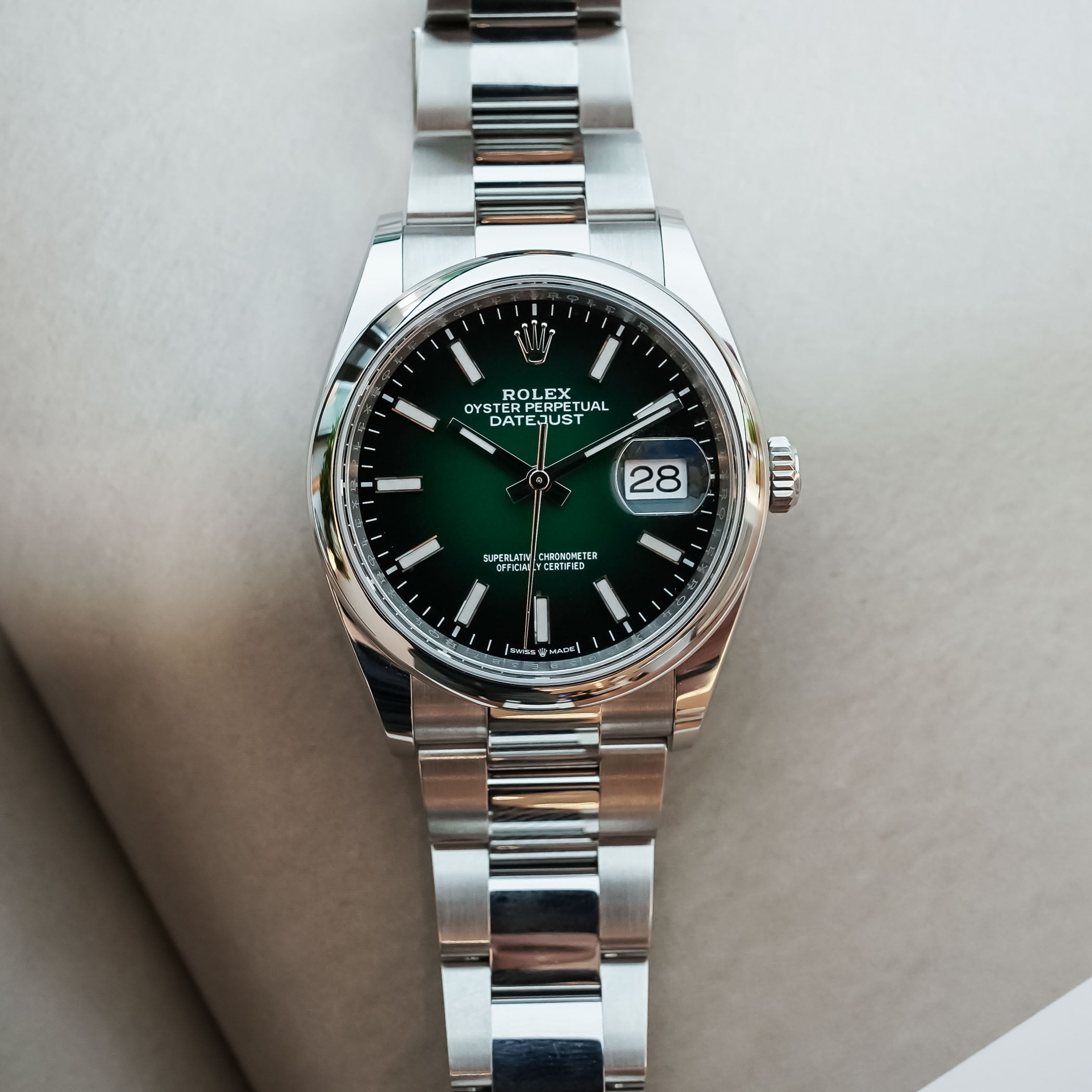
The craftsmanship behind this ombré dial represents a significant technical achievement for Rolex. It is achieved through a meticulous lacquering process. Green lacquer is first applied to the base plate, followed by a precise spraying of black lacquer in concentric motions to create the signature gradient effect. This method, a first for an ombré dial since its reintroduction in 2019, results in a dial that is both subtly colored and remarkably dynamic. The outcome is a watch that feels modern, fresh, and undeniably elegant, appealing to a broad spectrum of discerning watch buyers.
During hands-on sessions at Rolex’s Brussels headquarters, the versatility of this new dial was evident. Observers were able to examine 36mm and 41mm variants, both equipped with smooth steel bezels and Oyster bracelets. Mechanically, these watches remain consistent with their predecessors, retaining the robust Calibre 3235 movement that has powered Datejust models since its introduction in 2016 and 2017. This ensures the renowned precision, reliability, and power reserve that Rolex is celebrated for. The classic white gold baton markers and handset, accented with luminous material, maintain the watch’s timeless appeal while harmonizing perfectly with the new gradient dial.
Size Matters: A Comparative Look at the 36mm and 41mm Datejust
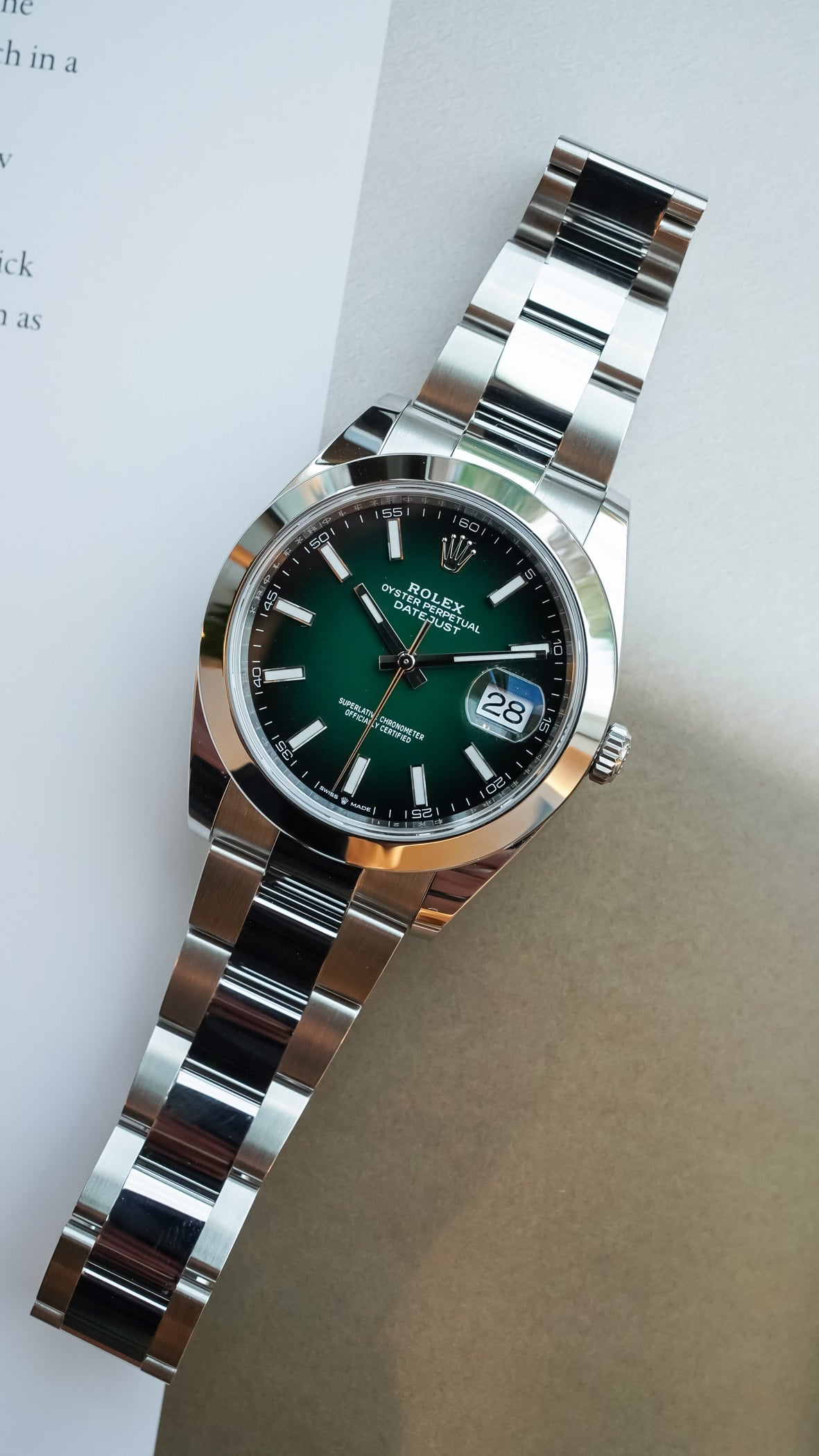
The opportunity to photograph and compare multiple Datejust models side-by-side offered a valuable insight into the distinct personalities of the 36mm and 41mm versions. Far from being mere scaled-down versions, these two case sizes present remarkably different wearing experiences and visual aesthetics. This distinction is crucial for potential buyers aiming to select the perfect fit for their wrist and style.
The objective specifications reveal some differences. The 36mm model measures 11.8mm in thickness (excluding the Cyclops lens), has a lug-to-lug distance of 43.1mm, and a lug width of 20mm. Its dial opening measures 30mm. In contrast, the 41mm variant is 11.6mm thick, features a lug-to-lug span of 47.4mm, a 21mm lug width, and a more expansive 32mm dial opening. Despite these variations, both models share the same highly capable Calibre 3235 movement and maintain a water resistance of 100 meters.
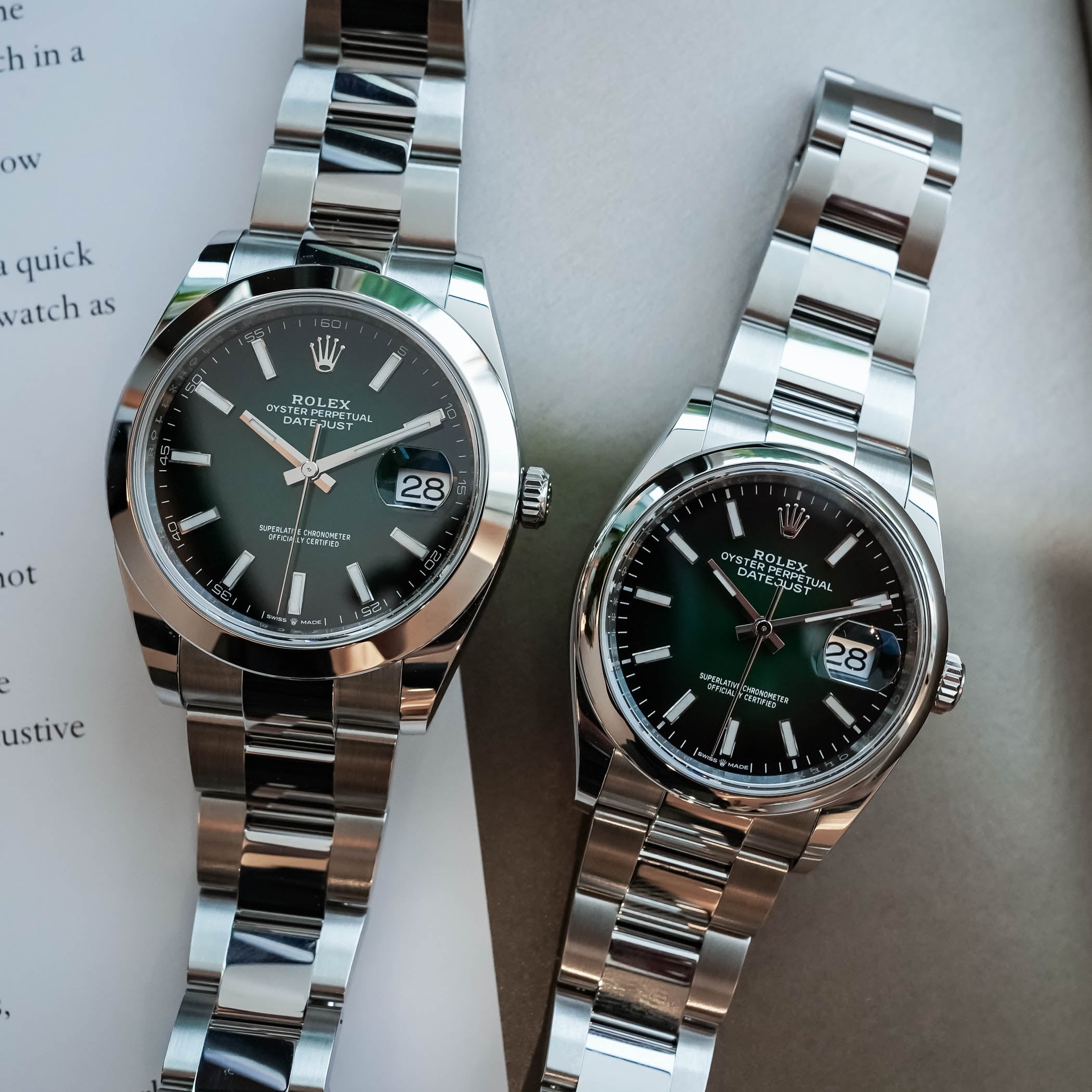
However, the visual impact is where the divergence truly becomes apparent. The 41mm model projects a bolder, more substantial presence. Its bezel, particularly when fluted, appears wider and flatter, contributing to a sharper overall profile. This is further accentuated by the larger difference between the dial opening and the case’s total diameter – a 9mm gap for the 41mm versus a 6mm gap for the 36mm. The smooth steel bezel on the 36mm model, by contrast, features a more domed profile, visually reducing its perceived size and creating a softer aesthetic. The ratio of case size to lug width on the 41mm also contributes to a feeling of greater heft on the wrist. Conversely, the 36mm model exhibits a more fluid continuity between the case and bracelet, with narrower lugs that enhance its lightness and elegance. The more rounded flanks of the 36mm case further contribute to this refined and sophisticated feel.
Dial Details: Subtle Yet Significant Variations
The differences extend to the dial detailing, particularly the minute track. The 41mm versions are equipped with a minute scale that includes numerals, lending a slightly sportier edge to the design. The 36mm models, on the other hand, feature a more minimalist minute track composed of small markers. While personal preference and wrist size are paramount in choosing between the two, a direct visual comparison often highlights the more understated and classic appeal of the 36mm variant for many.
The Overhaul of Roman Numeral Dials: A Modern Renaissance
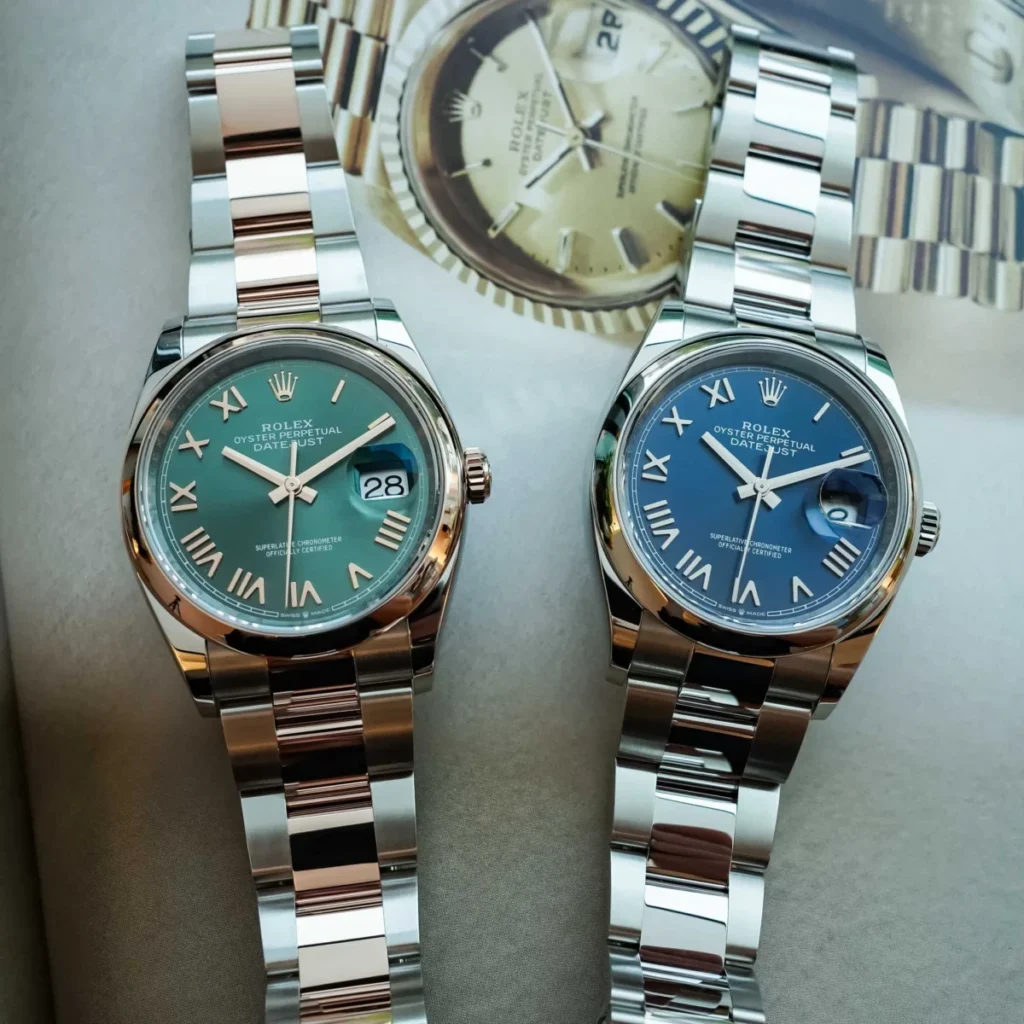
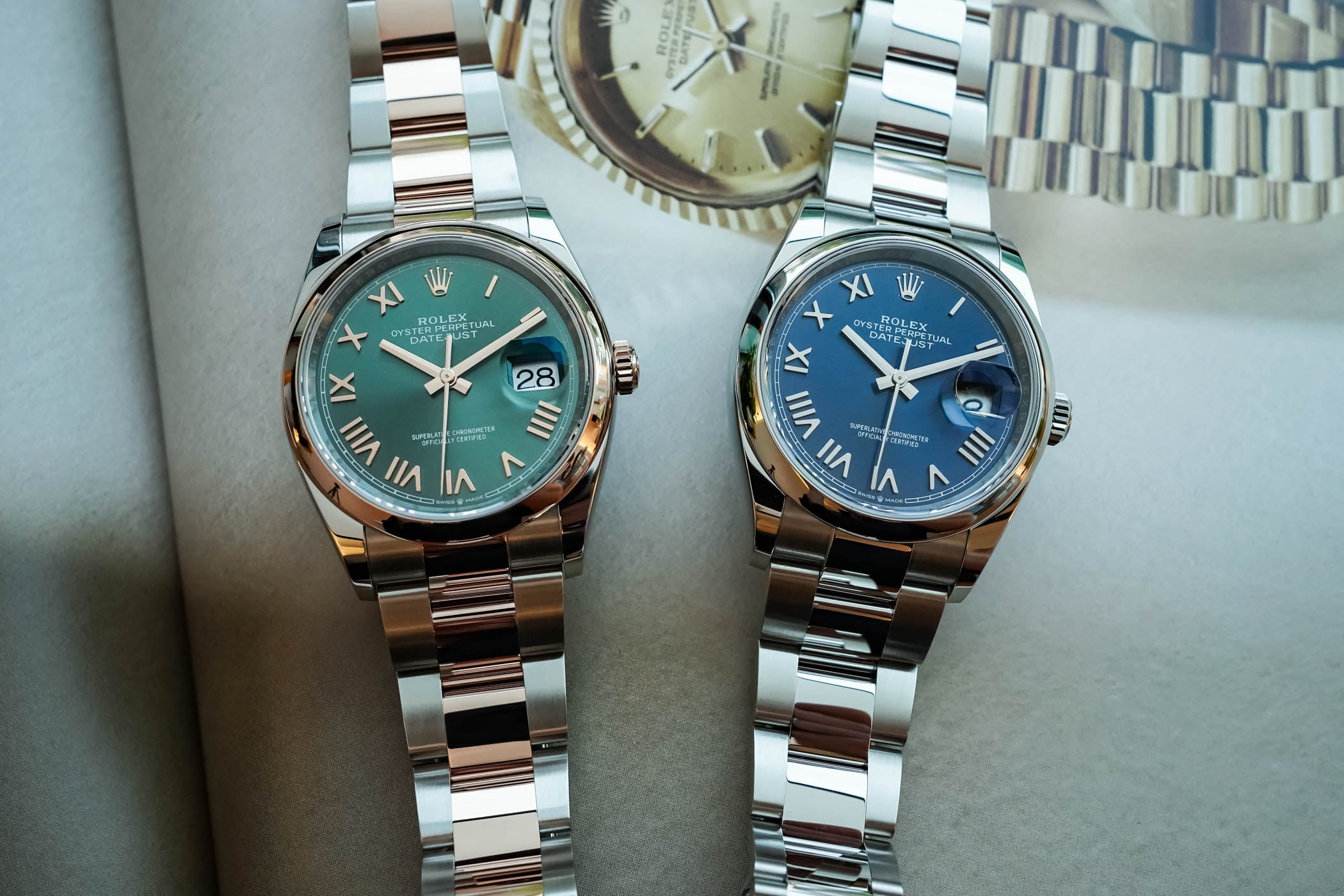
Perhaps the most comprehensive, yet least overtly advertised, update from Rolex in 2026 concerns the Datejust collection’s Roman numeral dials. Excluding the iconic Wimbledon model, nearly all existing Roman numeral configurations across the 36mm and 41mm lines have been revamped. This extensive update encompasses models in steel, white Rolesor, yellow Rolesor, and Everose Rolesor, available with either Oyster or Jubilee bracelets, leading to the addition of well over 100 new references to Rolex’s catalogue. Concurrently, many older dial designs featuring Roman numerals, such as those found on previous iterations of the Azzuro and Wimbledon models, have been phased out.
The core of this significant redesign lies in the applied Roman numerals themselves. Rolex has engineered a more contemporary and refined aesthetic, drawing inspiration from the applied markers found on the prestigious Day-Date. The new numerals are sharper, sans-serif, and possess a distinct angularity and increased thickness compared to their predecessors. A notable change is the construction of each numeral: previously a single element, they are now composed of multiple, precisely crafted components. For instance, the Roman numeral ‘II’ is now formed from two baton elements, and ‘VIII’ from three. Furthermore, the traditional baton marker at the 9 o’clock position has been replaced by a Roman numeral, creating a more cohesive and integrated dial design. This meticulous redesign results in a dial that is simultaneously more intricate in its construction and sleeker in its overall appearance, marking a clear departure towards a more modern horological language.
A Unified Minute Track and a Spectrum of Colors
Complementing the redesigned numerals, all Roman numeral Datejust models now feature a unified minute track. This "railroad-style" track runs continuously around the dial, presented in either white or black, depending on the dial’s color. This standardization contributes to a cleaner and more harmonious aesthetic across the entire range.
The color palette for these updated Roman numeral dials is exceptionally broad, reflecting Rolex’s commitment to offering extensive personalization options. For the 41mm models, available colorways include glossy white, as well as new mint and olive green options, specifically utilized on Everose Rolesor and yellow Rolesor configurations, respectively. Black and blue dials are also offered for the 41mm size. These dials are meticulously paired with hands and markers that match the chosen bezel material, ensuring a cohesive visual presentation. Importantly, the beloved Azzuro model, distinguished by its sunray-brushed blue dial, remains available within the updated collection.
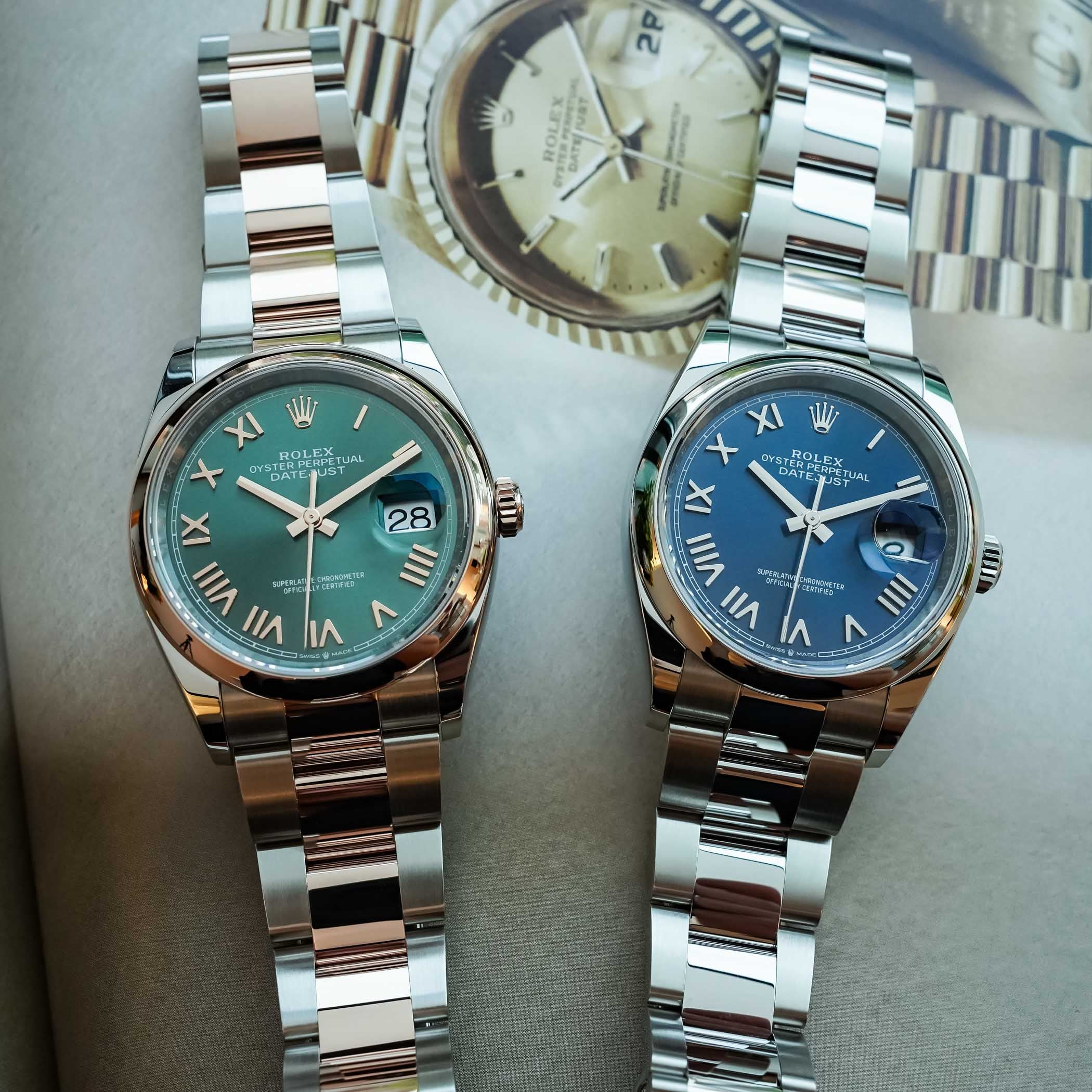
The 36mm Datejust further expands the chromatic offering, featuring all the aforementioned colors and introducing an even wider array of options. These include dark grey, aubergine, pink, silver, chocolate, slate, and salmon hues. A select number of these variants are further embellished with diamonds adorning the applied Roman numerals at the 6 and 9 o’clock positions, adding a touch of luxury and exclusivity.
Conclusion: An Evolution, Not a Revolution
In summary, Rolex’s 2026 releases for the Oyster Perpetual Datejust collection represent a significant evolution rather than a radical revolution. The introduction of the striking green ombré dial offers a fresh, contemporary aesthetic, while the comprehensive redesign of the Roman numeral dials imbues the collection with a renewed sense of modernity and sophistication. These updates, coupled with the continued excellence of the Calibre 3235 movement and the distinct character of the 36mm and 41mm case sizes, ensure that the Datejust remains one of the most compelling and versatile timepieces in the luxury watch market. The sheer volume of new references underscores Rolex’s strategy of offering a vast array of choices to cater to individual tastes and preferences, solidifying the Datejust’s enduring appeal as a cornerstone of the brand’s portfolio. For those seeking further details or wishing to explore the complete spectrum of new dials, the official Rolex website provides comprehensive information.