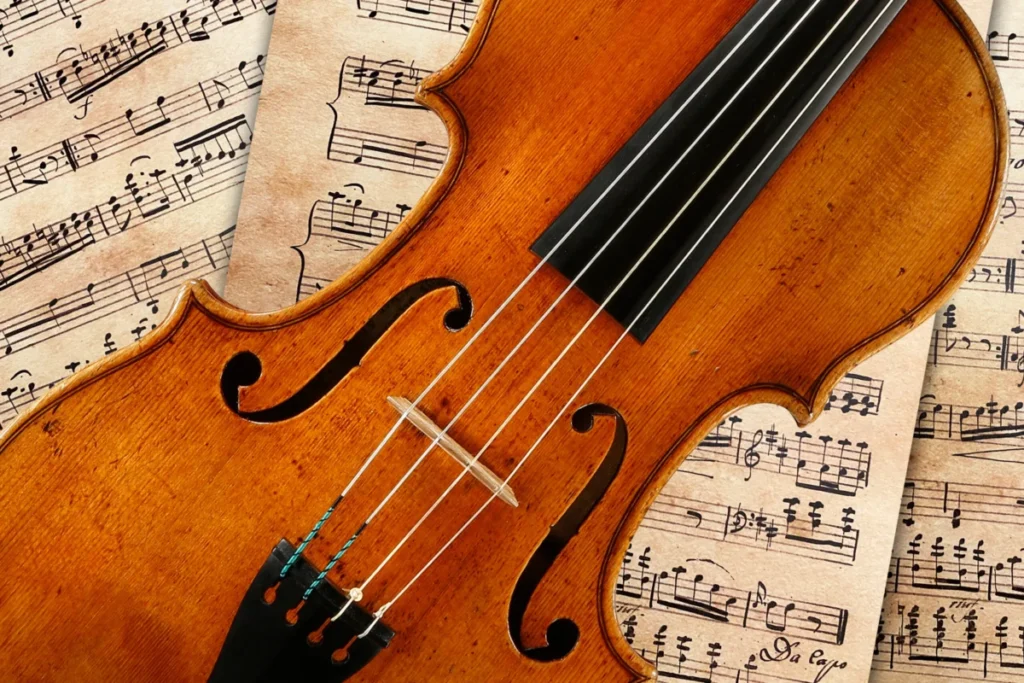
The centuries-old art form of violin-making, known as luthiery, demands a unique confluence of talents: the acute ear of a musician, the precise skill of a craftsperson, and the deep historical appreciation of lessons painstakingly learned over generations. Central to this demanding discipline is an inherent element of trust and patience; luthiers often invest countless hours in carving, shaping, and assembling an instrument before its true sonic character can be revealed. This traditional, iterative process, while yielding masterpieces, is inherently slow, costly, and heavily reliant on empirical knowledge passed down through apprenticeships. However, a groundbreaking new tool developed by engineers at the Massachusetts Institute of Technology (MIT) is poised to fundamentally alter this paradigm, allowing luthiers to explore and refine a violin’s acoustic properties and design nuances even before the first piece of wood is carved.
Published in the esteemed journal npj Acoustics, the MIT team’s innovation introduces a "computational violin"—a sophisticated computer simulation meticulously engineered to capture the intricate physics governing the instrument. This virtual counterpart realistically reproduces the sound of a violin when its strings are plucked, offering an unprecedented level of predictive acoustic modeling. Unlike many existing software programs and plug-ins that simulate virtual violins by relying on extensive libraries of sampled and averaged notes from actual instruments, the MIT computational violin takes a fundamentally different, physics-based approach. Its sound generation is rooted in the precise way the instrument, encompassing its vibrating strings and resonant body, physically interacts with the surrounding air, creating a truly authentic digital acoustic representation.
The Intricate Dance of Art and Science in Luthiery
For centuries, the creation of a violin has been shrouded in a mystique born from the fusion of artistic intuition and empirical science. Master luthiers like Antonio Stradivari and Giuseppe Guarneri del Gesù, whose instruments from the 17th and 18th centuries remain unparalleled in their sonic brilliance and projection, developed their craft through meticulous observation, experimentation, and an almost alchemical understanding of materials. The selection of wood—often spruce for the top plate and maple for the back, sides, and neck—the precise graduation of plate thickness, the arching of the belly and back, the varnish composition, and the placement of the sound post and bass bar all contribute to the complex acoustic fingerprint of an instrument. Each minute adjustment can profoundly influence the violin’s timbre, resonance, and playability.
The challenge for contemporary luthiers remains formidable. Crafting a new violin involves a lengthy process, often taking hundreds of hours. Evaluating design modifications typically necessitates building a physical prototype, a time-consuming and expensive endeavor. If a luthier wants to experiment with a slightly thicker back plate, a different wood density, or a modified f-hole design, the only way to truly understand its sonic impact has historically been to build the instrument and then listen. This trial-and-error cycle has limited innovation, favoring cautious, incremental changes over radical departures, and preserving the iterative nature of the craft. The MIT computational violin directly addresses this bottleneck, offering a virtual sandbox for experimentation.
A Deep Dive into the Computational Model’s Architecture
The development of the computational violin represents a significant leap forward in acoustic modeling. The foundation for this sophisticated simulation was laid, in part, by earlier collaborative scientific endeavors aimed at demystifying the secrets of historical instruments. A notable precursor was the Strad3D project, initiated in 2006, which undertook the monumental task of subjecting a rare Stradivarius violin—specifically, the "Tuscan" Stradivari of 1715, crafted during the master’s "Golden Age"—to a comprehensive CT scan. This non-invasive imaging technique generated an astonishing 600 "slices," or detailed cross-sectional views, providing an unprecedented anatomical blueprint of the legendary instrument. These invaluable CT scans were subsequently made publicly available, serving as critical data for researchers worldwide.
The MIT team, led by senior research scientist Yuming Liu and Nicholas Makris, a professor of mechanical engineering, with contributions from Arun Krishnadas PhD ’23, former postdoc Bryce Campbell, and Roman Barnas of the North Bennet Street School, leveraged this publicly available data. Their process began by importing the CT scans into a robust solid modeling software program. This step allowed them to construct an incredibly detailed, three-dimensional digital model of the Stradivarius violin, capturing its exact dimensions and internal structures.
Following the creation of the 3D model, the researchers employed a technique known as finite element simulation. This powerful computational method involves discretizing the entire violin structure into millions of tiny, individual geometric units, or "elements"—analogous to millions of miniature cubes. For each of these myriad elements, the team meticulously assigned specific material properties. For instance, an element within the violin’s back plate would be defined by the characteristics of maple wood, while an element in the soundboard would be characterized as spruce. Similarly, the strings were defined by their material composition, whether steel or natural fibers.
Crucially, the MIT team then applied a complex set of physics-based equations governing stress and motion to predict how each of these material elements would interact and move in relation to every other element across the entire instrument. This intricate network of interactions accounts for the structural dynamics of the violin. Simultaneously, a similar finite element approach was applied to the air surrounding the virtual violin. A roughly cubic-meter volume of air was divided into its own set of elements, and acoustic wave equations were applied to predict how each minute parcel of air would move, vibrate, and ultimately contribute to the generation and propagation of sound waves. Krishnadas aptly describes this comprehensive modeling as "a matrix of millions of individual elements," where "the entire thing is a three-dimensional being, which is the violin and the air all connected and interacting with each other."
Simulating Sound: From Pluck to Perception
With the computational model meticulously constructed, the team proceeded to simulate how the virtual violin would sound when played. Their initial focus was on "pizzicato," the technique of plucking the strings, which, while complex, is less challenging to model than the continuous friction of bowing. When a violinist plucks a string, they displace it sideways and release it, initiating a specific pattern of vibration. These vibrations are then transmitted through the bridge to the violin’s body, causing the wooden plates and the air inside the instrument to resonate. The amplified vibrations then radiate outward into the surrounding air, where they are perceived by a listener as musical sound.
In the computational simulation, the engineers replicated a simple string pluck by digitally "stretching" one of the virtual violin’s strings and then allowing it to rebound. The simulation then computed all the resultant motions and vibrations of the millions of structural and air elements, calculating the precise sound that the pluck would produce. To simulate notes that require finger placement on the fingerboard, the team incorporated a condition where the string was held fixed at the virtual point of contact, accurately reflecting the shortening of the vibrating string length.
To demonstrate the capabilities of their computational violin, the researchers virtually "performed" two short musical excerpts: a section from Johann Sebastian Bach’s "Fugue in G Minor" and measures from "Daisy Bell." The inclusion of "Daisy Bell" served as a historical nod, as it was the first song ever produced by a computer-synthesized voice, thereby connecting the MIT team’s work to the broader lineage of digital sound creation. While the current pizzicato simulation produces a somewhat "mechanical" sound, as Makris, himself a lute player, acknowledges, this is primarily due to the application of a uniform plucking function for each note. He notes that "a musician will adapt the way they’re plucking, to put a little more feeling on certain notes than others," suggesting future refinements could incorporate such nuanced human expressiveness.
A Chronology of Acoustic Discovery and Digital Evolution
The journey towards a physics-based computational violin is built upon a rich history of scientific inquiry into acoustics and the steady advancement of computational power.
- 19th Century: Hermann von Helmholtz, a German polymath, made seminal contributions to the understanding of acoustics and the physics of music, laying theoretical groundwork for how musical instruments produce sound.
- Early 20th Century: Researchers began to systematically study the vibrational modes of violin plates and bodies, using experimental techniques to understand their resonance characteristics.
- 1960s: The advent of early digital computers led to the first experiments in computer-synthesized music, with pioneers like Max Mathews at Bell Labs developing algorithms for sound generation, culminating in the famous rendition of "Daisy Bell."
- 1970s-1990s: Finite Element Analysis (FEA) gained prominence in engineering, allowing for the simulation of complex structures. Early applications in acoustics focused on simpler geometries.
- 2006: The Strad3D project provided an unprecedented dataset of a master violin’s internal structure, a critical enabler for detailed computational modeling.
- 2000s-Present: Exponential growth in computing power and refinement of numerical methods have made it feasible to simulate highly complex coupled systems, such as the interaction between a violin’s structure and the surrounding air, as demonstrated by the MIT team.
Broader Impact and Transformative Implications
The implications of the MIT computational violin extend far beyond a novel scientific curiosity. Its potential to revolutionize various aspects of music, craftsmanship, and technology is profound.
For Luthiers and Instrument Makers: The most immediate and tangible impact will be on the design and manufacturing process. As Yuming Liu emphasizes, "These days, people try to improve designs little by little by building a violin, comparing the sound, then making a change to the next instrument. It’s very slow and expensive. Now they can make a change virtually and see what the sound would be." This translates to:
- Accelerated Innovation: Luthiers can rapidly iterate through countless design variations—experimenting with different wood types, plate thicknesses, arching profiles, and f-hole designs—and instantly hear the sonic consequences. This vastly reduces the time and material costs associated with traditional prototyping.
- Deepened Understanding: By correlating specific physical parameters with precise acoustic outputs, the tool can help demystify some of the intuitive "secrets" of master luthiers, translating empirical knowledge into quantifiable physics. This doesn’t diminish the artisan’s magic but rather provides a scientific lens through which to appreciate and potentially replicate it.
- Customization and Personalization: The ability to simulate various designs could lead to highly personalized instruments tailored to a musician’s specific playing style, acoustic preferences, or even physical attributes.
- Preservation and Restoration: The model could assist in the restoration of antique instruments by predicting the acoustic impact of repairs or material replacements, ensuring historical fidelity.
For Music Technology and Performance:
- Advanced Virtual Instruments: The physics-based approach could pave the way for a new generation of highly realistic virtual instruments for composers, producers, and game developers, moving beyond sampled libraries to truly dynamic, responsive digital instruments.
- Educational Tools: Students of acoustics, music performance, and instrument making could use the simulation to gain an intuitive understanding of how physical changes translate into sonic differences, enriching their learning experience.
- New Musical Interfaces: The underlying physics engine could inspire new types of digital musical instruments or controllers that interact with sound in novel ways.
For Scientific Research and Engineering:
- Validation of Acoustic Theories: The model serves as a powerful testbed for validating existing and developing new theories in structural acoustics and fluid dynamics.
- Application to Other Instruments: The methodology developed for the violin can be adapted and extended to simulate other complex musical instruments, such as cellos, guitars, pianos, or even wind instruments, opening up new avenues for research and design across the entire orchestral spectrum.
- Materials Science: Insights gained from the simulation could inform the development of new materials specifically engineered for acoustic applications, potentially leading to lighter, stronger, or more resonant instrument components.
Bridging the Gap: Artistry and Algorithm
Nicholas Makris succinctly captures the ethos behind this innovation: "We’re not saying that we can reproduce the artisan’s magic… We’re just trying to understand the physics of violin sound, and perhaps help luthiers in the design process." This statement underscores a crucial point: the computational violin is not intended to replace the artistry, intuition, or hands-on skill of the luthier. Instead, it serves as a powerful augmentative tool, a sophisticated digital assistant that empowers artisans with predictive capabilities previously unimaginable.
The partnership with Roman Barnas of the North Bennet Street School, a renowned institution for traditional craft education, further exemplifies this collaborative spirit. It bridges the academic rigor of MIT with the practical, time-honored wisdom of master craftsmen, ensuring that the tool remains relevant and beneficial to the community it aims to serve. While the current model excels at pizzicato, the researchers are already envisioning the next step: incorporating a realistic model of bowing, a significantly more complex interaction involving continuous friction, pressure, and speed. Success in this endeavor would unlock the full expressive potential of the computational violin, allowing for the simulation of bowed melodies with unprecedented realism.
The MIT computational violin stands as a testament to the enduring quest to understand and master the intricate relationship between physical form and acoustic beauty. By providing a physics-based foundation for understanding and manipulating violin sound, this innovation promises to usher in a new era of instrument design, where ancient craft meets cutting-edge computational science, fostering both preservation of tradition and unprecedented innovation. This work was supported, in part, by an MIT Bose Research Fellowship, underscoring the foundational research investment in this transformative project.






