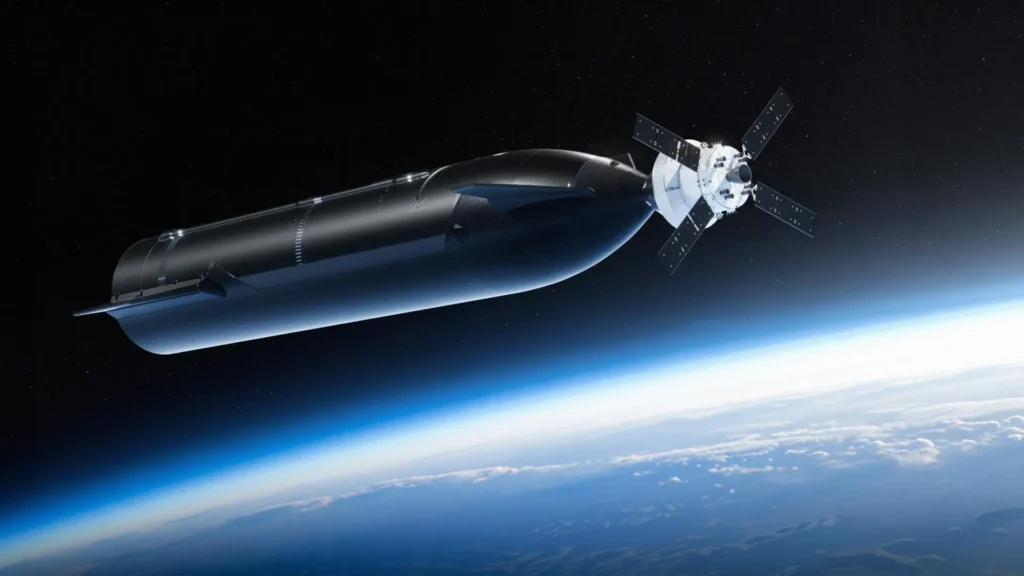
NASA is meticulously orchestrating a pivotal orbital rehearsal in 2027, a critical step in its ambitious Artemis program aimed at returning humans to the lunar surface. This demonstration mission, dubbed Artemis III, will feature astronauts in space and ground control teams on Earth practicing complex rendezvous and docking maneuvers between the Orion spacecraft and two distinct, commercially developed lunar landers. This high-stakes exercise is designed to refine procedures, gather invaluable data, and ultimately ensure the safety and success of the first crewed lunar landings scheduled for 2028.
The information meticulously collected during Artemis III, alongside data from forthcoming uncrewed lunar demonstrations, will be instrumental in NASA’s ongoing efforts to enhance astronaut safety and mitigate risks. This comprehensive approach underscores the agency’s commitment to a methodical and secure path toward sustained human presence on the Moon.
Two Commercial Giants Partner for Lunar Descent Capabilities
A cornerstone of the Artemis program’s innovation lies in its strategic partnerships with the private sector. NASA has engaged with industry leaders SpaceX and Blue Origin to develop advanced human landing systems (HLS) capable of safely transporting astronauts from lunar orbit to the Moon’s surface and back. For the Artemis III demonstration, both companies will deploy uncrewed test articles—precursors to their full-fledged crewed landers. These prototypes will be launched into space via commercial rockets, while the Artemis III astronauts will embark on their journey to low Earth orbit aboard NASA’s formidable Orion spacecraft, propelled by the Space Launch System (SLS) rocket.
Sharpening the Edge: Preparing Hardware for Lunar Exploration
NASA has been engaged in close collaboration with both human landing system providers, diligently defining the mission objectives and technical specifications for Artemis III. As the mission date draws nearer, SpaceX and Blue Origin are actively refining their operational plans, taking into account the availability of their respective hardware and the specific capabilities each spacecraft can demonstrate during the rehearsal.
SpaceX is expected to utilize its Starship Version 3, the latest iteration of its groundbreaking design and the foundational architecture for its future Starship HLS. Concurrently, Blue Origin plans to test the crew cabin intended for its human landing system. Both companies will leverage this critical demonstration to glean essential lessons learned, which will inform and guide subsequent uncrewed and crewed missions to the lunar realm.
"Each human landing system provider has taken a different approach to the Artemis III mission," stated Steve Creech, program manager for the Human Landing System Program at NASA’s Marshall Space Flight Center in Huntsville, Alabama. "Ultimately, SpaceX and Blue Origin have put forward a list of aggressive objectives and goals intended to complement upcoming uncrewed demonstration missions at the Moon so that we can gain both understanding and confidence in the spacecraft and launch vehicles prior to a crewed landing. The lander prototype designs will inform future development efforts and will continue to mature over the next year."
Blue Origin’s Blue Moon: Testing the Crewed Cabin Environment
Blue Origin’s test lander, designated "Blue Moon," will be engineered based on the company’s current Mark 2 crew lander architecture. This prototype will incorporate key avionics, flight software, and control systems essential for validating future crewed lunar operations. During the Artemis III demonstration, up to two astronauts, clad in their orange Orion crew survival system suits, will egress from Orion to enter the Blue Origin test lander. The fully operational crewed version will necessitate an array of sophisticated systems and subsystems, including a robust Environmental Control and Life Support System (ECLSS), a dedicated crew cabin, and advanced avionics.
The Blue Origin spacecraft will also be equipped with an instrumented lunar surface spacesuit mass simulator. Similar to the "Moonikin" manikin that successfully completed its journey aboard Orion during the uncrewed Artemis I mission, this low-fidelity simulator will transmit real-time data regarding the conditions within the Blue Moon cabin. This data will be crucial for assessing the environmental factors that future astronauts will encounter.
Starship Integration: A Nose-to-Nose Encounter with Orion
SpaceX’s test article will be based on Starship Version 3, a spacecraft currently undergoing rigorous construction and testing. A specially designed docking system will be integrated onto the nose of the impressive 171-foot (52-meter) spacecraft. This configuration will enable NASA and SpaceX to meticulously study the dynamic behavior of Orion and the Starship test lander when operating as a single, interconnected vehicle. The mission will also focus on critical tests related to communications protocols and spacecraft control. Notably, during this phase of the demonstration, Artemis III astronauts will remain safely within the Orion spacecraft and will not enter the Starship prototype.
A Symphony of Rockets: Three Powerful Launches in Close Succession
The Artemis III mission is poised to be a remarkable display of modern rocketry, with NASA, SpaceX, and Blue Origin planning to launch three of the world’s most powerful rockets within a compressed timeframe. This demanding launch sequence will serve as a rigorous test for launch crews, ground processing systems, launch facilities, mission control centers, and complex communication networks spanning multiple major sites across the United States.
Orion will undertake two distinct rendezvous and docking sequences, one with each lander prototype. Upon the successful completion of these crucial tests, the Artemis III astronauts will safely return to Earth aboard Orion, culminating in a planned splashdown.
"Artemis III will be a highly choreographed dance with a demanding launch sequence across multiple launch pads and equally demanding mission operations for our ground and flight crews, making it one of the most complex and ambitious missions NASA has ever undertaken," remarked Jeremy Parsons, Artemis program manager. "The demonstration mission will set the stage before our next giant leap. NASA’s expertise in systems engineering and integration, as well as launch and mission operations in low Earth orbit, will bring the mission together."
Rehearsing the Future: A Dual Launch Campaign Simulation
The Artemis III mission is designed to simulate the operational cadence of future crewed lunar missions, which will involve a "dual launch campaign." In this future scenario, the lunar lander will be placed into lunar orbit first, where it will await the arrival of astronauts aboard Orion, launched on the SLS rocket. By launching three powerful rockets in close succession during Artemis III, NASA and its commercial partners will gain invaluable experience in practicing the intricate launch preparations and precise operational timing required for this future mission architecture.
Blue Origin’s test lander is anticipated to be the first to launch. Its design allows for an orbital duration of up to 30 days, providing ample time for inspection and testing of its systems before the SLS rocket carrying Orion lifts off from Launch Complex 39B at NASA’s Kennedy Space Center in Florida. The Blue Origin spacecraft will then follow a predetermined trajectory into a designated "parking" orbit, allowing for thorough system checks.
Following the completion of Blue Origin’s rendezvous and docking tests, and after the Artemis III crew has launched aboard SLS, SpaceX will then launch its Starship test article into orbit. Starship will subsequently rendezvous with Orion for the second phase of docking and testing. Orion will maintain a stable circular orbit throughout the entire mission. Operating within Earth orbit, rather than undertaking the longer transit to the Moon, provides these three powerful rockets with a broader window of potential launch opportunities. Furthermore, each rocket will be capable of reaching its required orbital altitude in a single launch.
Orion’s Role: The Chaser Spacecraft in Orbital Rendezvous
During each docking and undocking sequence, the lander prototype will serve as the target vehicle, while Orion will act as the "chaser" spacecraft. This operational configuration is intended to mirror the arrangement NASA plans to utilize during future missions that will carry astronauts to the lunar surface. Prior to the commencement of Artemis III, NASA will conduct comprehensive verifications to ensure that both lander test articles are mission-ready and pose no safety risks to the crewed Orion spacecraft. These rigorous reviews will meticulously examine whether the hardware and software meet all performance requirements and whether appropriate hazard controls are effectively implemented. These stringent checks are paramount to safeguarding the Artemis III astronauts who will remain within Orion during both docking tests.
Groundwork for Success: Docking Systems Undergoing Rigorous Testing
Both SpaceX and Blue Origin have diligently conducted extensive ground testing of the docking systems developed for their respective landers. SpaceX successfully qualified its docking capability in 2023, demonstrating its readiness for integration. Blue Origin, meanwhile, completed developmental ground tests of its pressurized docking system earlier this year.
The two commercial landers will connect to Orion using distinctly different methodologies. Orion will dock to the side of the Blue Origin Blue Moon test lander, proximate to its crew cabin. In contrast, during the SpaceX test phase, the much larger Starship will connect with Orion in a nose-to-nose configuration.
Testing Interoperability: How Different Spacecraft Collaborate
The Artemis III demonstration will critically assess the ability of Orion and the commercial lander prototypes to utilize their respective software systems to achieve precise rendezvous and docking at the designated time and location. Following Orion’s docking with the Blue Moon lander, Orion’s onboard software will assume control of the combined spacecraft. Conversely, during the Starship portion of the mission, the SpaceX test article will be responsible for controlling the interconnected vehicles.
NASA and its commercial partners will meticulously analyze both docking phases to gain a comprehensive understanding of how the spacecraft hardware and software function in tandem. They will also closely examine the movement and dynamic behavior of each combined Orion and lander configuration in the unique environment of space.
Through the overarching Artemis program, NASA aims to not only return astronauts to the Moon for groundbreaking scientific discovery and economic advancement but also to lay the essential groundwork in experience and technology required for the eventual first crewed missions to Mars, ultimately benefiting all of humanity. The Artemis III orbital rehearsal represents a significant stride forward in achieving these ambitious long-term objectives.