A groundbreaking innovation from the University of Cambridge’s Yusuf Hamied Department of Chemistry is poised to revolutionize the chemical industry, a sector responsible for approximately 6% of the world’s total carbon emissions. Led by Professor Erwin Reisner, a team of researchers has developed a novel "semi-artificial leaf" capable of transforming sunlight, water, and carbon dioxide into formate – a clean fuel and crucial chemical feedstock – using entirely non-toxic components. This breakthrough, detailed in the prestigious journal Joule, represents a significant stride towards de-fossilizing a vital global industry and building a truly circular, sustainable economy.
The chemical industry, an indispensable cornerstone of modern society, underpins countless aspects of daily life. From the medicines that keep us healthy and the fertilizers that feed populations to the plastics, paints, electronics, cleaning agents, and toiletries we use daily, its products are ubiquitous. However, this vast and complex sector is heavily reliant on fossil fuels, both as a primary energy source for its intensive processes and as fundamental raw materials (feedstocks) for synthesis. This deep dependency translates into a substantial environmental footprint, contributing significantly to global greenhouse gas emissions and driving the urgent need for sustainable alternatives.
Professor Reisner, articulating the gravity of the challenge and the scale of the opportunity, emphasized, "If we’re going to build a circular, sustainable economy, the chemical industry is a big, complex problem that we must address. We’ve got to come up with ways to de-fossilize this important sector, which produces so many important products we all need. It’s a huge opportunity if we can get it right." The Cambridge team’s work directly tackles this imperative, offering a tangible pathway towards a greener future for chemical manufacturing.
The Genesis of Artificial Photosynthesis: A Quest for Sustainable Chemistry
The concept of artificial photosynthesis has long captivated scientists as a means to mimic nature’s most fundamental energy conversion process. Plants, through photosynthesis, harness sunlight to convert water and carbon dioxide into sugars (energy) and oxygen. Replicating this process artificially, particularly to produce valuable fuels and chemicals, holds immense potential for sustainable energy and industrial feedstock production, effectively closing the carbon loop.
Professor Reisner’s research group has been at the forefront of this endeavor, specializing in the development of artificial leaves designed to convert sunlight into carbon-based fuels and chemicals without relying on finite fossil resources. Early designs, while promising, often faced significant hurdles. Many relied on synthetic catalysts or inorganic semiconductors that either degraded rapidly, were inefficient in capturing the full solar spectrum, or contained toxic elements such as lead, rendering them unsuitable for widespread, environmentally benign application. These limitations underscored the need for a new approach that prioritized both efficiency and ecological compatibility.
A Biohybrid Leap: Marrying Organic Polymers with Bacterial Enzymes
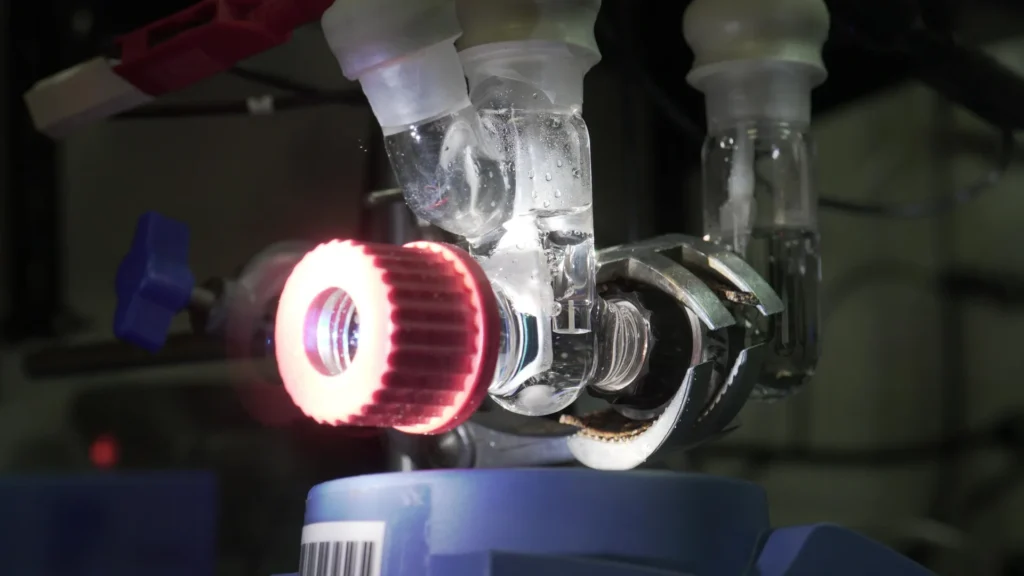
The Cambridge team’s latest iteration represents a profound evolution in artificial leaf technology. Their breakthrough lies in the creation of a sophisticated hybrid device that ingeniously combines light-absorbing organic polymers with highly efficient bacterial enzymes. This novel synergy enables the system to transform common, abundant resources – sunlight, water, and carbon dioxide – into formate, a versatile clean fuel and chemical precursor.
This "semi-artificial leaf" operates entirely on its own power, a testament to its self-sustaining design. Unlike many previous designs that struggled with issues of toxicity or instability, this new biohybrid model addresses these critical concerns head-on. By utilizing non-toxic materials, it eliminates environmental hazards associated with heavy metals or other harmful substances. Furthermore, the system demonstrates enhanced operational efficiency and remarkable stability, performing reliably without the need for additional, often unsustainable, chemical additives or buffers.
Dr. Celine Yeung, a co-first author who completed this research as part of her PhD in Reisner’s lab, highlighted the strategic design choice: "If we can remove the toxic components and start using organic elements, we end up with a clean chemical reaction and a single end product, without any unwanted side reactions. This device combines the best of both worlds – organic semiconductors are tuneable and non-toxic, while biocatalysts are highly selective and efficient." This ‘best of both worlds’ approach leverages the strengths of both synthetic organic chemistry and biological systems, overcoming the individual limitations of each. The integration of organic semiconductors with enzymes from sulfate-reducing bacteria facilitates the crucial splitting of water into hydrogen and oxygen, or the conversion of carbon dioxide into formate, depending on the desired output.
Overcoming Buffering Challenges and Enhancing Stability
A persistent challenge in many enzyme-based systems is their requirement for chemical additives, known as buffers, to maintain optimal operating conditions for the enzymes. These buffers can degrade quickly, limiting the system’s overall stability and lifespan. The Cambridge researchers ingeniously addressed this by embedding a helper enzyme, carbonic anhydrase, into a porous titania structure. This innovative step allowed the system to function effectively in a simple bicarbonate solution – akin to sparkling water – completely eliminating the need for unsustainable, consumable additives. This design choice significantly enhances the long-term viability and environmental friendliness of the technology.
Dr. Yongpeng Liu, a postdoctoral researcher in Reisner’s lab and also a co-first author, reflected on the intricate development process: "It’s like a big puzzle. We have all these different components that we’ve been trying to bring together for a single purpose. It took us a long time to figure out how this specific enzyme is immobilized on an electrode, but we’re now starting to see the fruits from these efforts." This sentiment underscores the complexity of bio-integrated systems, where precise engineering at the molecular level is paramount. Yeung further elaborated on the meticulous design: "By really studying how the enzyme works, we were able to precisely design the materials that make up the different layers of our sandwich-like device. This design made the parts work together more effectively, from the tiny nanoscale up to the full artificial leaf." This hierarchical design approach, from nanoscale interactions to the macro-scale device, was crucial for achieving high performance.
Laboratory Success and Future Potential: From Formate to Pharmaceuticals
The efficacy of the semi-artificial leaf was rigorously tested in laboratory conditions. The results were highly encouraging: the device produced high currents, indicative of robust electron flow, and achieved near-perfect efficiency in directing these electrons into fuel-making reactions. Crucially, the device successfully operated for over 24 hours, more than twice the operational lifespan of many previous designs. This extended stability is a critical factor for practical applications, as it reduces downtime and maintenance needs.
Beyond simply producing formate, the team demonstrated a direct and valuable application of this clean fuel. They successfully used the generated formate in a "domino" reaction to synthesize a valuable compound widely utilized in pharmaceuticals. This sequential reaction achieved both high yield and purity, showcasing the potential for the artificial leaf to directly feed into complex chemical synthesis pathways, bypassing traditional fossil-fuel-intensive routes. This proof-of-concept is particularly significant for the pharmaceutical industry, which demands extremely high purity for its products and is constantly seeking greener manufacturing processes.
The publication in Joule highlights a pivotal milestone: this is the first instance where organic semiconductors have been successfully employed as the light-capturing component in such a biohybrid system. This development opens up a vast new avenue for research and engineering, paving the way for a new generation of eco-friendly artificial leaves that are not only more sustainable but also potentially more adaptable and scalable due to the tunability and abundance of organic materials.
Broader Implications for Decarbonization and Green Chemistry
The implications of this Cambridge breakthrough extend far beyond the laboratory. If scaled successfully, this technology could fundamentally alter how the chemical industry operates, driving a significant reduction in its carbon footprint and fostering a truly circular economy.
Decarbonizing Industrial Processes
The chemical industry’s reliance on fossil fuels as both energy and feedstock is a major contributor to global CO2 emissions. By enabling the production of chemicals from CO2, water, and sunlight, this artificial leaf directly addresses this challenge. Formate, the primary product, can serve as a direct fuel, or be further converted into other crucial chemicals, effectively valorizing carbon dioxide, an abundant greenhouse gas, into a valuable resource. This approach aligns perfectly with global decarbonization goals, such as those outlined in the Paris Agreement, which call for drastic reductions in emissions across all sectors.
Economic and Strategic Advantages
Transitioning away from fossil fuel dependency offers significant economic advantages, including reduced exposure to volatile oil and gas prices and enhanced energy security. Furthermore, the development of green chemical processes could create new markets and job opportunities in sustainable technology, manufacturing, and R&D. The ability to produce high-value compounds like pharmaceutical precursors using renewable energy and feedstocks could also lead to more localized and resilient supply chains.
Advancing Green Chemistry Principles
This research embodies several core principles of green chemistry, including:
- Prevention: Minimizing waste by transforming CO2 into useful products.
- Less Hazardous Chemical Syntheses: Utilizing non-toxic materials and avoiding hazardous reagents.
- Design for Energy Efficiency: Operating solely on solar power.
- Use of Renewable Feedstocks: Relying on sunlight, water, and CO2.
- Catalysis: Employing highly efficient enzymes to drive reactions.
The researchers are now focused on further refining their designs, aiming to extend the device’s lifespan beyond 24 hours and to adapt it to produce a wider array of chemical products. This expansion of chemical outputs will be crucial for the technology to address the diverse needs of the chemical industry.
Professor Reisner concluded with an optimistic vision for the future: "We’ve shown it’s possible to create solar-powered devices that are not only efficient and durable but also free from toxic or unsustainable components. This could be a fundamental platform for producing green fuels and chemicals in future – it’s a real opportunity to do some exciting and important chemistry."
This research was made possible through the generous support of several key organizations, including the Singapore Agency for Science, Technology and Research (A*STAR), the European Research Council, the Swiss National Science Foundation, the Royal Academy of Engineering, and UK Research and Innovation (UKRI). Professor Erwin Reisner is a Fellow of St John’s College, Cambridge, and Dr. Celine Yeung is a Member of Downing College, Cambridge, highlighting the institutional support and collaborative environment that fostered this significant scientific advancement. The development of such technologies is critical for a world striving to balance industrial progress with environmental stewardship, offering a beacon of hope for a truly sustainable chemical future.