In a significant leap for aerospace engineering, researchers at the Massachusetts Institute of Technology (MIT) have developed a novel propulsion strategy that merges the high-thrust capabilities of traditional chemical rockets with the high-efficiency precision of electric thrusters. This breakthrough, centered on a "green" propellant capable of serving two distinct masters, promises to fundamentally alter the design architecture of small satellites, known as CubeSats. By eliminating the need for redundant fuel systems and heavy hardware, the new technology offers a streamlined path for miniature spacecraft to undertake complex missions that were previously the sole domain of multi-billion-dollar flagship satellites.
For decades, spacecraft designers have faced a binary choice in propulsion. Chemical propulsion systems offer the "muscle" required for rapid maneuvers—climbing into orbit, dodging space debris, or performing planetary insertions—but they are fuel-heavy and inefficient for long-term travel. Conversely, electric propulsion systems, such as electrospray thrusters, act as the "marathon runners" of the cosmos. They use electric fields to accelerate ions, providing incredibly high fuel efficiency and precision, yet they lack the raw power for sudden bursts of speed. Historically, integrating both systems onto a small satellite required two separate tanks, two sets of plumbing, and two different fuels, creating a weight and complexity penalty that often rendered such "dual-mode" missions impossible for compact platforms.
The MIT team, led by Amelia Bruno, a former postdoc in MIT’s Department of Aeronautics and Astronautics (AeroAstro), and Paulo Lozano, the Miguel Alemán Velasco Professor of Aeronautics and Astronautics, has solved this dilemma by identifying a single propellant that functions effectively in both environments. The research, recently published in the Journal of Propulsion and Power, demonstrates that a specific "green monopropellant" can power thumbnail-sized electrospray thrusters with the same efficacy as specialized electric fuels, while retaining its ability to explode on command within a chemical combustion chamber.
The Evolution of the Green Monopropellant: From Air Force Labs to MIT
The catalyst for this innovation is a substance known as Advanced SpaceCraft Energetic Non-Toxic (ASCENT) propellant. Originally developed by the U.S. Air Force Research Laboratory (AFRL), ASCENT was designed to replace hydrazine, the industry-standard fuel for chemical propulsion. While hydrazine is powerful, it is also extremely toxic and carcinogenic, requiring ground crews to wear pressurized "SCAPE" (Self-Contained Atmospheric Protective Ensemble) suits during fueling operations. These safety requirements add significant costs and logistical hurdles to every launch.
ASCENT, a hydroxylammonium nitrate-based ionic liquid, is significantly safer to handle and more stable. "ASCENT happens to be an ionic liquid mixture," explains Amelia Bruno. "And we said, ‘Hey, that’s the stuff we typically use for electric propulsion.’ Theoretically, this should work. Let’s go figure out how."
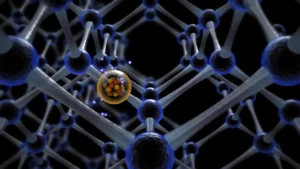
The MIT team’s insight was to treat this chemical fuel as an ionic liquid for electric thrusters. Ionic liquids are essentially liquid salts; they consist entirely of ions and do not evaporate in the vacuum of space. Because electrospray thrusters operate by using electric fields to "pull" ions out of a liquid and accelerate them through a nozzle, the ionic nature of ASCENT made it a prime candidate for a dual-purpose fuel.
Technical Architecture: The Mechanics of Electrospray and Chemical Integration
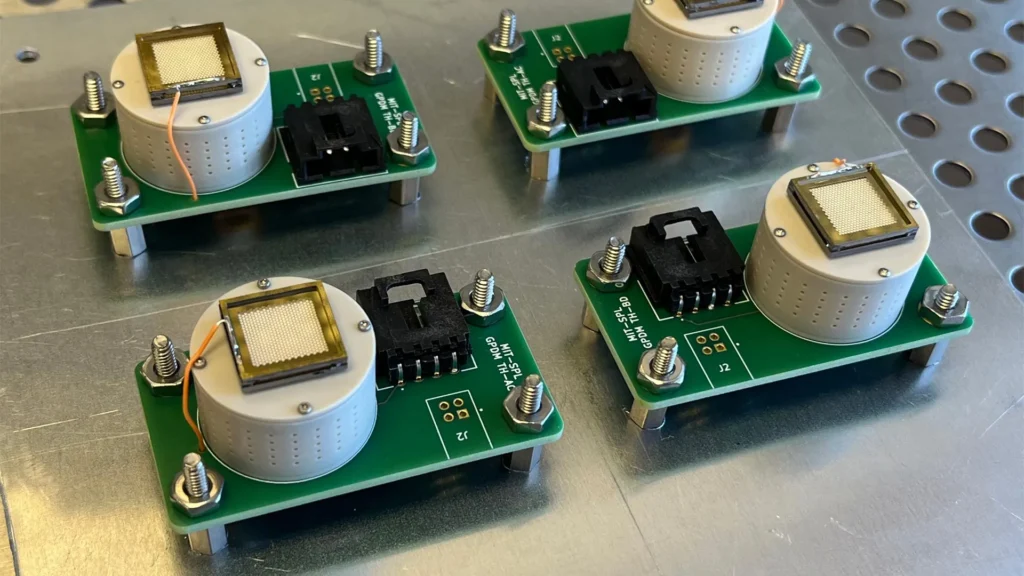
To validate this theory, the researchers utilized electrospray thrusters developed in Professor Lozano’s laboratory. These devices are remarkably compact—roughly the size of a postage stamp. Each thruster consists of a reservoir and an array of microscopic emitters. When a voltage is applied, the electric field distorts the surface of the ionic liquid into tiny cones, from which ions are ejected at high velocities.
In the MIT experiments, the researchers attached these thrusters to reservoirs containing one gram of ASCENT. The propellant’s physical properties, including a viscosity similar to baby oil, allowed it to flow effectively through the microfluidic channels of the thruster. To simulate the weightless and frictionless environment of space, the team employed a specialized "MagLev" (magnetic levitation) test platform. This platform allows a CubeSat-sized model to float freely within a vacuum chamber, enabling researchers to measure the minute amounts of thrust generated by the electrospray system.
During testing, the thrusters were operated continuously for up to 100 hours. The results were definitive: ASCENT provided performance metrics—including thrust and specific impulse—that were on par with conventional, single-use electric propellants. This confirmed that a satellite could carry a single tank of ASCENT to feed both a high-thrust chemical engine and a high-efficiency electric engine.
The Strategic Impact of Weight Reduction and Mission Flexibility
The implications of a unified fuel system are profound, particularly regarding the "propellant mass fraction"—the ratio of fuel weight to the total weight of the spacecraft. In the world of small satellites, every gram counts. By sharing a single tank and propellant, engineers can significantly reduce the dry mass of the satellite. This saved weight can then be allocated to larger batteries, more sophisticated scientific sensors, or high-bandwidth communication arrays.
"If you can have chemical and electrical propulsion in one small package, it’s the best of both worlds," says Bruno. "This opens the door for small satellites to do even more science, more observations, and more interesting missions, all on a smaller and cheaper platform."
The flexibility offered by dual-mode propulsion allows for a "hybrid" mission profile. A satellite could use its chemical thrusters to rapidly change its orbit or orient itself toward a fleeting astronomical event, such as a supernova or a passing comet. Once in position, it could switch to electrospray thrusters for ultra-fine station-keeping, ensuring its cameras remain locked on the target with millimeter precision for months or even years.
Chronology of Development and the Upcoming NASA Mission
The journey toward dual-mode propulsion has been a decade-long endeavor at MIT.
- 2014–2018: Lozano’s lab refines the electrospray thruster design, focusing on miniaturization and the use of various ionic liquids.
- 2019: Collaboration with the U.S. Air Force intensifies to explore the electrical properties of the ASCENT propellant.
- 2021–2023: Laboratory testing on the MagLev platform confirms that ASCENT does not degrade the thruster hardware over long durations and maintains stable thrust.
- November 2024: The technology is set for its ultimate test. NASA’s Green Propulsion Dual Mode (GPDM) mission is scheduled for launch.
The GPDM mission features a briefcase-sized CubeSat equipped with a single chemical thruster and four electrospray thrusters, all drawing from a common reservoir of ASCENT. This will mark the first time in history that a spacecraft operates a shared propellant tank in the vacuum of space. The mission aims to prove that the two systems can operate without interfering with one another and that the shared plumbing remains reliable under the thermal stresses of orbit.
Broader Implications for Deep Space and Earth Observation
Beyond the immediate technical achievement, the MIT research aligns with the broader "SmallSat Revolution." As launch costs continue to drop due to the rise of commercial providers like SpaceX and Rocket Lab, the demand for capable small satellites has surged. However, these satellites have largely been confined to Low Earth Orbit (LEO) because they lacked the sophisticated propulsion needed for deep-space travel.
With dual-mode propulsion, the solar system becomes accessible to CubeSats. "We could send CubeSats to Mars, or the asteroid belt," says Professor Lozano. "You could then use your chemical thrusters to quickly move to look at interesting features. You could have a lot more flexibility to do a lot more things."
Closer to home, the technology has immediate applications for climate and weather monitoring. Currently, weather satellites are often large, expensive, and fixed in their orbits. A constellation of small, dual-mode satellites could be "surged" toward a developing hurricane. They could use their chemical thrusters to arrive at the storm’s location within hours and then use their electric thrusters to maintain a precise hovering position to provide high-resolution, real-time data to meteorologists on the ground.
Conclusion and Future Outlook
The work of Bruno, Lozano, and their colleagues represents a paradigm shift in how engineers approach spacecraft complexity. By finding synergy in the chemical and electrical properties of a single liquid, they have effectively doubled the utility of a satellite’s most precious resource: its fuel.
As the NASA Green Propulsion Dual Mode mission nears its launch date, the aerospace community is watching closely. Success in orbit would validate years of laboratory research and signal the end of the era where small satellites were limited by their propulsion systems. In the near future, the distinction between a "chemical rocket" and an "electric thruster" may fade, replaced by integrated, intelligent systems that allow humanity to explore the cosmos with unprecedented agility and efficiency. This research, supported in part by NASA, underscores the vital role of academic innovation in pushing the boundaries of what is possible in the final frontier.