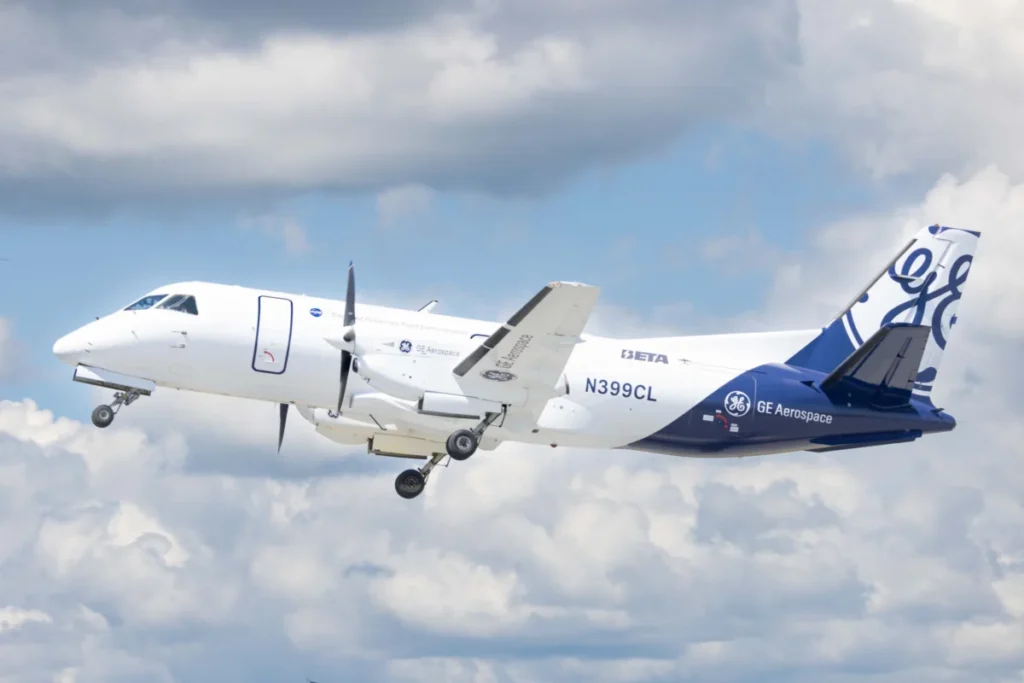
GE Aerospace, in collaboration with BETA Technologies and other key partners, has successfully completed a groundbreaking flight of a modified Saab 340b aircraft, reaching an altitude exceeding 30,000 feet with a hybrid-electric propulsion system. This significant achievement marks the first time a hybrid-electric aircraft has operated at altitudes typically utilized by commercial airline traffic, signaling a pivotal moment in the development of more sustainable aviation technologies. The flight, which took place in the United States, was later showcased with another demonstration at the Farnborough International Airshow in England, drawing considerable attention from industry leaders and aviation enthusiasts alike.
A Milestone in Electrified Aviation
The successful flight of the modified Saab 340b represents a critical step forward in the quest for cleaner and more efficient air travel. For decades, the aviation industry has grappled with the environmental impact of traditional jet fuel. The development and deployment of hybrid-electric propulsion systems offer a promising pathway to reduce emissions, improve fuel efficiency, and potentially decrease noise pollution, all while maintaining or even enhancing operational capabilities.
This particular test involved a Saab 340b, a twin-engine turboprop aircraft that typically seats between 30 and 36 passengers. The modification focused on integrating a megawatt-class hybrid-electric powertrain. During the demonstration at the Farnborough Airshow, an announcer aptly described the aircraft as the “first airline-sized aircraft to publicly demonstrate megawatt-class hybrid-electric propulsion in flight,” underscoring the scale and significance of the technological advancement. The aircraft performed aerial maneuvers, including soaring over the airfield and executing several turns and loops, with observers noting a slightly enlarged right engine nacelle, which housed the electric generator.
Leveraging NASA’s Expertise and Vision
The pioneering work conducted by GE Aerospace and its partners was significantly bolstered by foundational research and development supported by the National Aeronautics and Space Administration (NASA). According to a NASA release, the testing “leveraged work done through NASA’s former Electrified Powertrain Flight Demonstration project and the agency’s ongoing Subsonic Vehicle Technologies and Tools project.” These NASA initiatives have been instrumental in advancing the fundamental understanding and technological readiness of electrified propulsion systems for aviation.
The Electrified Powertrain Flight Demonstration (EPFD) project, in particular, aimed to lay the groundwork for future hybrid-electric aircraft by developing and demonstrating key technologies. GE Aerospace was awarded a substantial $179 million contract in 2021 through this program, specifically tasked with building and testing a megawatt-class hybrid-electric powertrain. This contract provided the essential funding and framework for GE to develop the core components of the system.
BETA Technologies: A Crucial Partner in Integration and Certification
BETA Technologies, a company at the forefront of electric aviation innovation, played a vital role in the recent flight demonstrations. BETA was brought on board more recently, leveraging its specialized expertise in certifying and integrating electric propulsion systems into aircraft. In an email to this publication, BETA highlighted its critical contribution, stating that its involvement was crucial for navigating the complex regulatory and technical challenges associated with bringing novel electric propulsion technologies to market. The company’s experience in the certification process, a notoriously stringent and time-consuming aspect of aviation development, is invaluable for moving hybrid-electric technology from experimental stages to operational deployment.
Technical Challenges and Solutions at Altitude
Operating at altitudes above 30,000 feet presents unique engineering challenges, especially for novel propulsion systems. This is the atmospheric layer where commercial airliners typically cruise, meaning that for hybrid-electric technology to be viable for mainstream aviation, it must perform reliably and efficiently in these conditions. GE Aerospace’s engineering and test teams focused on overcoming these specific hurdles.
According to GE’s release, the teams meticulously addressed key factors such as heat management, the effects of lower atmospheric pressures, and the demands of power density typically encountered at higher altitudes. Effective heat dissipation is crucial for the longevity and performance of electrical components, especially under the thermal stresses of flight. The reduced air density at cruising altitudes also impacts engine cooling and overall aerodynamic efficiency, requiring careful system design. Ensuring sufficient power output and managing energy flow under these conditions are paramount for achieving the desired flight performance.
Extended Flight Durations and Operational Modes
The test flights yielded impressive results regarding endurance and operational flexibility. During the testing phase, the team achieved a single longest flight in hybrid-electric operation exceeding two hours. This duration is significant as it demonstrates the system’s capability for sustained flight, moving beyond short hops to longer, more practical mission profiles.
Furthermore, the hybrid system showcased its versatility in different operational modes. BETA detailed how the aircraft was utilized during its transatlantic journey to the U.K. following the U.S. test flights. The modified plane flew in legs from Newfoundland to Greenland, Iceland, and Scotland. BETA explained that “the hybrid system was engaged during each leg to enable the pilots to climb to cruise more quickly (using electric assist) and charge the batteries (using generate mode).” This dual functionality—using electric power to augment engine performance for faster climbs and then switching to a generator mode to replenish batteries—highlights the system’s adaptability and potential for optimizing energy usage throughout a flight. The electric assist can reduce engine strain during climb, while the generate mode allows for efficient battery recharging during cruise or descent, demonstrating a sophisticated energy management strategy.
Chronology of Key Developments
The journey towards this historic flight can be traced through a series of strategic investments and research milestones:
- 2021: GE Aerospace secures a $179 million contract from NASA’s Electrified Powertrain Flight Demonstration (EPFD) program to develop and test a megawatt-class hybrid-electric powertrain. This marks a significant commitment to advancing the core technology.
- Prior to 2023: NASA’s Electrified Powertrain Flight Demonstration (EPFD) project and the ongoing Subsonic Vehicle Technologies and Tools project lay the theoretical and foundational research groundwork for hybrid-electric propulsion.
- Recent Past: BETA Technologies is engaged for its specialized expertise in certifying and integrating electric propulsion systems, bringing critical experience to the practical application of the technology.
- Current Year (Specific Date Unspecified in Source): GE Aerospace, working with BETA Technologies and others, conducts the first successful hybrid-electric flight of a modified Saab 340b above 30,000 feet in the United States.
- Current Year (Around Farnborough Airshow): The modified Saab 340b is flown again at the Farnborough International Airshow in England, providing a public demonstration of the technology.
- Following U.S. Tests: The modified aircraft undertakes a transatlantic journey to the U.K., with the hybrid system actively engaged for climb assist and battery charging during each leg of the flight.
Supporting Data and Industry Context
The aviation industry is under immense pressure to decarbonize. According to the International Air Transport Association (IATA), aviation currently accounts for about 2% of global CO2 emissions. However, as air travel demand continues to grow, this percentage is projected to increase without significant technological advancements. Hybrid-electric and fully electric aircraft are seen as key solutions to mitigate this growth.
The "megawatt-class" designation for the GE powertrain signifies its substantial power output. For context, a typical turbofan engine on a narrow-body commercial jet can produce tens of megawatts of thrust. A megawatt-class hybrid-electric system, while likely not intended to replace both engines on a large commercial airliner immediately, is a significant step towards electrifying larger aircraft or powering specific flight phases more efficiently. This scale of power is suitable for regional aircraft like the Saab 340b or for providing substantial electric augmentation to larger platforms.
The Saab 340b, with its typical passenger capacity, serves as a practical testbed because it represents a size category of aircraft that could potentially be a first adopter of advanced hybrid-electric technology for regional routes. Such routes are often shorter, making them more amenable to current battery technology limitations and allowing for more frequent charging opportunities.
Broader Implications for the Future of Flight
The successful high-altitude operation of this hybrid-electric aircraft has far-reaching implications:
- Path to Net-Zero Emissions: This achievement is a concrete step towards the aviation industry’s commitment to achieving net-zero carbon emissions by 2050. Hybrid-electric technology offers a tangible pathway to reduce fuel burn and, consequently, CO2 emissions on existing and future aircraft designs.
- Enhanced Operational Efficiency: The ability to use electric assist for climb can lead to more efficient use of the combustion engines, potentially extending their lifespan and reducing maintenance requirements. The generate mode for battery charging suggests a sophisticated energy management system that could optimize fuel consumption throughout the flight.
- Reduced Noise Footprint: Electric motors are generally quieter than traditional jet engines. As hybrid systems become more prevalent, a reduction in airport noise pollution could be a significant benefit for communities near airports.
- Technological Maturation and Certification: The flight data gathered from these high-altitude tests will be invaluable for further refining the technology and, crucially, for the complex process of aircraft certification. Demonstrating safe and reliable operation at typical cruising altitudes is a major hurdle cleared.
- Inspiration for Next-Generation Aircraft: This success story serves as a powerful proof of concept, inspiring further investment and innovation in the development of new hybrid-electric and fully electric aircraft designs. It validates the potential for these technologies to reshape air travel in the coming decades.
Official Statements and Industry Reactions (Inferred)
While direct quotes from all parties involved are not provided in the initial release, the actions themselves speak volumes. GE Aerospace’s continued investment and public demonstrations highlight their strategic commitment to hybrid-electric propulsion as a core pillar of their future product roadmap. BETA Technologies’ active involvement underscores the growing importance of specialized electric aviation expertise in the broader industry.
NASA’s support, both past and present, indicates a continued governmental commitment to fostering advanced aviation technologies that align with national goals for sustainability and economic competitiveness. The presence and fanfare at the Farnborough International Airshow, a premier global aerospace event, suggest strong interest and tacit endorsement from the wider aviation community. Industry analysts and competitors are undoubtedly watching these developments closely, as they signal a potential shift in market dynamics and technological leadership. The successful demonstration of megawatt-class hybrid-electric propulsion at commercial cruising altitudes is likely to accelerate research and development efforts across the sector.
Conclusion
The historic flight of the GE Aerospace-BETA Technologies modified Saab 340b above 30,000 feet is more than just a technical feat; it is a harbinger of a new era in aviation. By successfully demonstrating the viability of hybrid-electric propulsion at altitudes critical for commercial operations, the partners have moved a significant step closer to realizing cleaner, more efficient, and potentially quieter air travel. The collaborative effort, bolstered by NASA’s foundational research and BETA’s integration expertise, showcases the power of partnerships in driving innovation. As the aviation industry navigates the imperative of decarbonization, achievements like this provide a tangible vision for a more sustainable future in the skies. The data gathered from these flights will be instrumental in the ongoing journey towards certifying and deploying these transformative technologies, paving the way for future generations of aircraft.