In the intricate world of advanced manufacturing and scientific research, the pursuit of precision in motion control is paramount. While individual components boast impressive specifications, true precision is not an inherent quality but rather a meticulously engineered outcome, fundamentally reliant on robust system integration. This article, the fourth and final installment in a series exploring the multifaceted layers of performance in motion control, delves into the critical role of integrating mechanics, motors, drives, and controls to unlock the full potential of high-precision applications. Authored by Corey Foster, Director of Automation Sales & Application Engineering at Valin Corporation, this concluding piece underscores how overlooking the nuances of system integration can undermine even the most sophisticated components, preventing systems from meeting their intended performance benchmarks.
The journey toward understanding high-precision motion control began by dissecting its foundational elements. The initial article in this series meticulously examined the mechanics, highlighting often-neglected yet critical factors such such as bearing deflection, body stiffness, and structural smoothness. These seemingly minor details, invisible on standard datasheets, can profoundly impact the rigidity and stability essential for micron-level movements. Following this, the second installment shifted focus to the motors, exploring their diverse designs, construction methodologies, quality standards, and how these attributes contribute to precise motion generation. The third article then addressed the crucial role of drives and controls, emphasizing the significance of their design features and algorithmic capabilities in translating command signals into accurate, repeatable physical motion. This progression through the individual layers—mechanics, motors, and controls—serves as a vital prelude to understanding the culminating challenge: seamlessly integrating these disparate elements into a cohesive, high-performance whole.
A consistent theme woven throughout this series is the existence of critical details that do not appear on standard component datasheets but are pivotal in determining the success or failure of high-performance systems. As motion systems increasingly push beyond the micron-level accuracy threshold, traditional specifications alone become insufficient indicators of real-world performance. This necessitates a more profound engineering understanding, where nuanced decisions at every stage, particularly during integration, become indispensable. The overarching aim of this series has been to equip engineers, designers, and system integrators with the insights needed to appreciate the profound impact of each decision in constructing a truly high-precision motion system, moving beyond mere component selection to holistic system design.
Previously, this series introduced a tiered approach to performance in motion control systems: basic functionality, specification-level performance, and pushing beyond published specifications. This framework extends directly to the realm of integration. Achieving basic functionality might involve simply connecting components and verifying rudimentary movement. Reaching specification-level performance demands careful adherence to mounting guidelines and environmental considerations. However, attaining the pinnacle of precision—pushing beyond the specifications—requires an obsessive attention to detail in integration, where every interaction between components is optimized for peak performance.
System Integration: The Non-Accidental Pursuit of Precision
The notion that complex systems can simply "fall into place" and perform optimally is a pervasive misconception, particularly in precision engineering. While initial assemblies might function, prolonged operation or the demand for enhanced performance often reveals underlying vulnerabilities. The analogy of a paper airplane illustrates this concept effectively: a simple fold might allow it to fly initially, but repeated use leads to wear and decreased performance. To achieve greater distance and accuracy, the folds must become more precise, crisper, and cleaner, even with the same fundamental design. Similarly, in motion control, even the most exquisitely designed individual sub-systems—a high-end actuator, a state-of-the-art motor, or an advanced controller—will inevitably fall short if the overall system is not meticulously engineered and expertly integrated. Optimal performance does not emanate from isolated components but from the synergistic harmony of the entire system working in concert.
System integration, therefore, transcends mere assembly; it is the sophisticated art and science of enabling all mechanical, motor, drive, and control components to function at their full potential, not in isolation, but within the context of the surrounding infrastructure. Every specification listed on a component datasheet is predicated upon a set of hidden assumptions about the environment and other system elements. For instance, mechanical actuators presuppose a certain degree of flatness and stability in their mounting surfaces. Motors, particularly high-performance variants, assume specific airflow and heat sink characteristics to dissipate thermal energy effectively. Drives and controllers operate under the assumption of a clean, stable power supply free from electrical noise and fluctuations. Disregarding these underlying assumptions during integration is a common pitfall that can drastically compromise a system’s ability to achieve its stated performance.
Real-World Integration Failures: Case Studies in Compromised Precision
The consequences of inadequate system integration manifest in various forms, often leading to performance degradation, premature wear, and even catastrophic failure. Examining real-world scenarios highlights the critical importance of these considerations.
Mechanical Misalignment: The Silent Saboteur
Consider a precision linear motor system, which relies heavily on the integrity of its mounting surface and precise alignment with the linear bearings that support the load. This setup typically forms a three-component system: the linear motor, and two linear guides. If these components are not aligned with sub-micron precision, mechanical binding can occur. At best, this binding introduces uneven friction, leading to increased power consumption, reduced efficiency, and accelerated wear on moving parts. In more severe cases, misalignment can induce forces that cause the motor to stall completely, rendering the system inoperable. For instance, a deviation of just a few arc-seconds in parallelism between a linear motor track and its accompanying guides over a meter of travel can translate into significant binding forces, especially under load. This issue is particularly pronounced in multi-axis gantries where the cumulative effect of minor misalignments across several axes can lead to substantial positional errors and reduced lifespan.
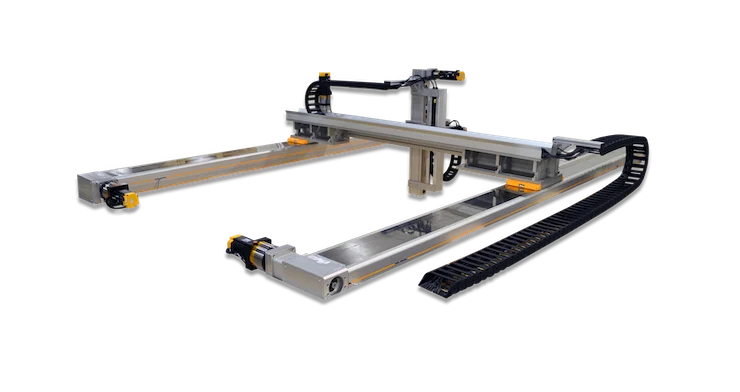
Another common challenge arises with parallel actuators, such as two long linear belt and pulley systems operating in tandem. Beyond the fundamental requirement for precise parallel alignment, these systems face an additional complexity: matching their travel lengths and ensuring consistent belt tension. If the belt tensions vary even slightly between the two actuators, the effective distance per revolution of the pulleys will differ. While seemingly minor over short distances, this variance can accumulate significantly over extended travel lengths. For example, over a two-meter travel, a 0.5% difference in belt tension between two parallel actuators could result in a 10mm positional discrepancy at the end of travel, an unacceptable error in applications demanding precise synchronous movement, such as large-format scanning or pick-and-place operations. Industry data suggests that such discrepancies are a leading cause of product defects and throughput reductions in automated assembly lines.
Environmental Degradation: The Unseen Adversaries
The operational environment often presents unforeseen challenges to system performance. Controllers and drives, frequently developed and tested in controlled laboratory or workshop settings, assume an ideal electrical environment. Consequently, essential protective measures such as robust grounding techniques, comprehensive shielding against electromagnetic interference (EMI), and effective electromagnetic compatibility (EMC) filters may be overlooked during initial integration. However, once these systems are deployed into industrial field environments—where power grids are often "dirty" with voltage spikes, harmonic distortions, and pervasive electromagnetic noise from heavy machinery—these shortcuts become critical vulnerabilities. Dirty power sources can induce noise in control signals, leading to erratic behavior, reduced positional accuracy, communication errors, and even hardware damage. Compliance with industrial electrical standards, such as IEC 61000 for EMC or NFPA 79 for industrial machinery wiring, is not merely regulatory but a foundational requirement for stable, high-precision operation. Studies indicate that electrical noise is a contributing factor in up to 20% of unexplained system malfunctions in industrial automation.
Thermal conditions also represent a significant environmental factor. A system meticulously assembled and calibrated in a temperate workshop might experience drastic performance degradation when installed in a hot manufacturing environment. Thermal expansion and contraction affect all materials, altering mechanical alignments, bearing clearances, and the dimensional stability of critical components. For instance, a steel component 1 meter long will expand by approximately 12 micrometers for every degree Celsius increase in temperature. In precision systems operating at sub-micron levels, even minor temperature fluctuations can cause significant dimensional changes, throwing off optical encoder readings, increasing friction in linear guides, and reducing the accuracy and repeatability of the entire motion path. This phenomenon necessitates careful material selection, thermal modeling, and often, active temperature control systems or sophisticated thermal compensation algorithms within the control software.

Integration Practices That Matter: Building for Enduring Precision
To mitigate these risks and ensure systems achieve and maintain their intended precision, several best practices must be rigorously implemented throughout the integration process.
Foundational Stability and Repeatability
The mounting surfaces for actuators are foundational to system performance. These surfaces must not only meet but often exceed the assumed flatness and stability standards of the actuators themselves. Precision-ground surfaces, often made from granite or high-grade steel, are common in ultra-high precision applications. Furthermore, the use of dowel pins or precision alignment features between actuators and their mounting surfaces, or between stacked actuators, is crucial. Dowel pins provide a highly repeatable physical registration, ensuring that if a system is ever disassembled for maintenance or upgrades, it can be reassembled with the same precise alignment, minimizing recalibration time and maintaining long-term performance consistency. The specification of mounting surface flatness, parallelism, and perpendicularity should be treated with the same rigor as the actuator’s own specifications.
Encoder Alignment: The Gateway to Accurate Feedback
For any axis incorporating encoders—whether linear, rotary, or ring-type—proper alignment is paramount. Encoders provide the critical feedback loop that enables precise control, and any misalignment directly corrupts this data. Linear encoders, for example, require their scale to be perfectly parallel to the axis of motion, with minimal runout. Rotary encoders demand concentricity and squareness to the rotating shaft. Achieving this level of precision often necessitates specialized fixtures, optical alignment tools, and metrology equipment such as laser interferometers or autocollimators. Calibration procedures are not a one-time event but often involve iterative adjustments and verification to ensure the encoder accurately reports position across the entire travel range. The accuracy of the encoder’s signal is only as good as its mechanical integration.
Disciplined Cable Routing: Mitigating Electrical Interference
Cable routing, often relegated to an afterthought, is a critical discipline in precision motion control. Low-power signal cables (e.g., encoder feedback, sensor inputs) must be routed separately and, ideally, perpendicularly to high-power cables (e.g., motor power, drive inputs). Running them in parallel within the same cable tray over long distances creates opportunities for electromagnetic induction, where high-current transients can induce noise into sensitive signal lines, leading to erroneous readings and control instability. If cables must cross, they should do so at a 90-degree angle to minimize inductive coupling. Furthermore, coiling excess high-power cable should be strictly avoided, as coils can act as inductors, exacerbating EMI and potentially creating resonant circuits that interfere with drive performance. Adherence to established industrial wiring standards, which provide guidelines for separation, shielding, and grounding, is essential for maintaining signal integrity.
Environmental Isolation: Protecting Against External Disturbances
Ultra-high precision systems are exquisitely sensitive to their surrounding environment. Isolating them from external disturbances is often critical. Vibration dampers, ranging from passive elastomer pads to active pneumatic or piezoelectric isolation systems, can significantly attenuate floor vibrations that would otherwise propagate through the machine structure and disrupt motion. Temperature-controlled rooms are frequently employed to minimize thermal expansion effects, maintaining a stable operating temperature within fractions of a degree Celsius. For the most demanding applications, systems are housed in dedicated temperature-controlled rooms, often constructed on separate foundations entirely decoupled from the rest of the facility. This "foundation isolation" prevents ground-borne vibrations from adjacent machinery, traffic, or even distant seismic activity from impacting the precision operation. Cleanroom environments are also essential for applications where particulate contamination could interfere with optical systems or mechanical clearances.
Guiding Questions for System Engineers
To navigate the complexities of system integration effectively, engineers must adopt a holistic, systems-thinking approach, asking probing questions that extend beyond component specifications. Here are some vital considerations during the integration process, each with profound implications for system success:
- What are the true operational environmental conditions (temperature, humidity, vibration, electrical noise, air pressure) the system will experience throughout its lifecycle? Implication: Overlooking environmental factors can lead to rapid degradation of components, thermal drift, electrical interference, and premature system failure, rendering initial performance specifications irrelevant.
- How will component tolerances accumulate across the entire system, and what is the worst-case scenario for combined errors? Implication: Individual component tolerances, while seemingly small, can add up to significant overall positional or dynamic errors, impacting accuracy and repeatability beyond acceptable limits if not properly analyzed and compensated for.
- What are the long-term wear and maintenance considerations, and how will they impact precision over time? Implication: Components degrade, lubricants break down, and alignments shift. A robust integration plan considers accessibility for maintenance, ease of recalibration, and the selection of durable components to sustain precision over the system’s intended lifespan.
- How will the integrated system be calibrated, verified, and validated against performance requirements, both initially and periodically? Implication: Without clear, measurable validation protocols using appropriate metrology tools (e.g., laser interferometers, CMMs), there’s no objective way to confirm that the integrated system meets its precision goals, leading to potential costly rework or field failures.
- What are the safety and fault tolerance requirements, and how does integration affect them? Implication: Proper integration ensures that safety interlocks, emergency stops, and fault detection mechanisms are correctly wired and programmed, preventing hazardous conditions and protecting both personnel and equipment. Integration choices can also enhance or degrade a system’s resilience to component failures.
- Are there specific industry standards, regulatory compliance, or certification requirements that must be met by the integrated system? Implication: Adherence to standards (e.g., ISO, CE, UL) is not just about legality; it ensures best practices for performance, safety, and interoperability. Ignoring these can lead to market access issues, product recalls, and reputational damage.
- How will the control software interact with and compensate for mechanical and electrical non-idealities introduced during integration? Implication: Advanced control algorithms can often compensate for minor mechanical imperfections or environmental disturbances, but this requires a deep understanding of the integrated system’s dynamics and careful tuning, turning integration into a software-hardware co-design challenge.
- What is the plan for future scalability, upgrades, or modifications, and how does the current integration facilitate or hinder these? Implication: A well-integrated system is designed with modularity and flexibility in mind, allowing for easier expansion, adaptation to new requirements, and technological upgrades without requiring a complete redesign.
Ultimately, the questions left unasked during the design and integration phases are the ones most likely to haunt a high-performance system. If an application demands any form of high precision or robust performance, engineers must transcend the role of a mere "product selector" and embrace the comprehensive mindset of a systems engineer. This shift entails understanding the intricate interplay between all components, anticipating potential failure modes, and proactively designing solutions that account for the real-world complexities of operation.
Broader Impact and Implications
The emphasis on meticulous system integration in high-precision motion control has profound implications across various industries. In advanced manufacturing, sectors like semiconductor fabrication, medical device assembly, micro-optics, and aerospace components rely entirely on motion systems capable of sub-micron accuracy and repeatability. Integration failures in these areas can lead to significant scrap rates, costly downtime, and ultimately, uncompetitive production. For instance, in the semiconductor industry, positional errors of even a few nanometers can render an entire wafer useless, underscoring the astronomical stakes involved. The global market for precision motion control is projected to grow significantly, driven by these demands, with proper integration being a key differentiator for success.
Economically, the initial investment in expert system integration, though potentially higher upfront, yields substantial returns through reduced operational costs, increased throughput, enhanced product quality, and extended system longevity. Conversely, neglecting integration can lead to protracted debugging cycles, expensive field service calls, and reputational damage. Industry trends indicate a growing demand for specialized system integrators who possess not only deep technical knowledge of individual components but also the holistic engineering expertise to harmonize them.
Looking ahead, as industries move towards "smart factories" and adopt technologies like Artificial Intelligence and Machine Learning for predictive maintenance and adaptive control, the foundational integrity provided by superior system integration will become even more critical. These advanced systems require highly reliable and accurate data inputs, which can only be guaranteed by components that are optimally integrated and operating within their specified parameters, free from environmental interference or mechanical stresses. The role of the system engineer, therefore, is evolving to encompass not just hardware and software integration, but also data integrity and the seamless interfacing with intelligent control architectures.
In conclusion, achieving true precision in motion control is a testament to rigorous engineering, where the whole is undeniably greater than the sum of its parts. By moving beyond a simple focus on individual component specifications and embracing a comprehensive approach to system integration—addressing mechanical alignments, environmental factors, electrical hygiene, and long-term operational considerations—engineers can unlock the full potential of their designs, transforming theoretical capabilities into tangible, high-performance reality. This final installment of the series serves as a clarion call for a disciplined, holistic approach to motion control, ensuring that precision is not left to chance, but is meticulously engineered into every layer of the system.