The ordinary graphite found in common pencil lead is revealing a startling level of complexity at the microscopic scale, challenging long-held assumptions about the limits of carbon-based materials. In a landmark study published in the journal Nature, a team of physicists at the Massachusetts Institute of Technology (MIT) has reported that a specific microscopic structure inherent to natural graphite can host multiple, distinct superconducting states. Superconductivity, a rare electronic state where electrons pair up to travel through a material with zero electrical resistance, is typically a fragile phenomenon. While scientists have identified thousands of superconducting materials over the last century, it is exceedingly rare to find a single material capable of exhibiting multiple, tunable forms of this exotic state.
The discovery centers on rhombohedral graphene, a naturally occurring but elusive configuration of carbon atoms. Unlike the more common hexagonal stacking found in most graphite, rhombohedral graphene consists of layers stacked in a specific, staircase-like pattern. By isolating atomically thin exfoliations of this material—specifically samples consisting of four or five layers—the researchers identified four separate superconducting regimes. Perhaps most significantly, the team observed that several of these states persist, and even strengthen, when exposed to high-intensity magnetic fields. Under normal circumstances, magnetic fields are the "natural enemy" of superconductivity, as they typically disrupt the delicate pairing of electrons. The MIT findings suggest that rhombohedral graphene hosts "unconventional" superconductivity, a discovery that could redefine the search for robust quantum materials.
The Evolution of Carbon Science: From Graphite to Graphene
To understand the significance of this discovery, one must look at the broader context of two-dimensional materials. Since the isolation of graphene in 2004 by Andre Geim and Konstantin Novoselov—a feat that earned them the Nobel Prize—carbon has been at the forefront of condensed matter physics. Graphene is a single-atom-thick sheet of carbon atoms arranged in a hexagonal honeycomb lattice. While a single layer of graphene is a remarkable conductor, it does not naturally superconduct.
For years, the primary method for inducing superconductivity in graphene involved "twistronics." This process, pioneered largely at MIT, involves stacking two layers of graphene and twisting them at a specific "magic angle" (approximately 1.1 degrees). This misalignment creates a Moire pattern that slows down electrons, forcing them to interact and pair up into a superconducting state. However, the rhombohedral graphene studied by Long Ju, the Lawrence C. and Sarah W. Biedenharn Associate Professor of Physics at MIT, and his team, offers a different path. Rather than relying on artificial twisting, the team looked for interesting behavior in naturally occurring structures within graphite.
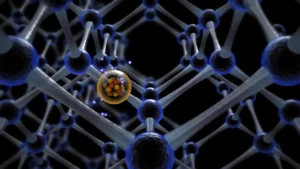
Rhombohedral graphene is essentially a stack of graphene layers where each layer is slightly offset from the one below it, creating a three-dimensional staircase. While this structure exists within bulk graphite, it is difficult to isolate because it is energetically less stable than the standard hexagonal (Bernal) stacking. However, when successfully isolated using the "Scotch tape" exfoliation method—where layers are peeled away from a block of graphite—this material reveals electronic properties that are arguably more diverse than its twisted counterparts.
Experimental Methodology: Tuning the "Knobs" of Physics
The MIT team, led by co-first authors Junseok Seo, Shenyong Ye, and Armel Cotten, utilized a sophisticated experimental setup to probe the material’s limits. The researchers focused on "p-type" doping—a process where they systematically removed electrons from the material, creating "holes" (the absence of an electron, which behaves like a positive charge). This was a departure from previous studies that focused on adding electrons (n-type doping).
By applying external electric fields, the researchers could precisely control the electron density within the four- and five-layer rhombohedral graphene samples. They referred to these controls as experimental "knobs." As they tuned these voltages, they measured the electrical resistance of the samples at ultracold temperatures, nearing absolute zero.
The experiments were conducted in collaboration with Dominik Zumbuhl’s group at the University of Basel in Switzerland. The Swiss laboratory provided the specialized equipment necessary to expose the graphene samples to high magnetic fields while maintaining the millikelvin temperatures required for superconductivity. This collaboration allowed the team to observe how the material reacted not just to electrical tuning, but to extreme magnetic environments.
Defying the Laws of Magnetism
The most striking revelation of the study was the material’s resilience against magnetic fields. In conventional superconductors, described by the BCS (Bardeen-Cooper-Schrieffer) theory, electrons form "Cooper pairs" with opposite spins. One electron spins "up" while the other spins "down," resulting in a net spin of zero. When a magnetic field is applied, it exerts a force that attempts to align both spins in the same direction. If the field is strong enough, it breaks the pair apart, and the material reverts to a normal, resistive state.
In the MIT experiments, the researchers applied a magnetic field parallel to the plane of the graphene. They found that three of the four discovered superconducting states survived in fields up to 9 tesla. For perspective, 9 tesla is approximately 180,000 times stronger than the Earth’s magnetic field.
Even more surprising was the material’s reaction to a perpendicular magnetic field. At certain electron densities, the superconductivity did not just survive; it was enhanced. The critical temperature—the threshold below which a material becomes superconducting—actually rose. "The superconductivity actually is enhanced, as in, the transition temperature goes from 55 millikelvin to probably 90 millikelvin," explained Professor Long Ju. Furthermore, the material was able to carry 50 to 60 percent more current before the superconducting state collapsed. This "magnetic boosting" is a phenomenon rarely seen in physics and suggests a highly unconventional pairing mechanism.
Proposed Theory: The Role of Aligned Spins
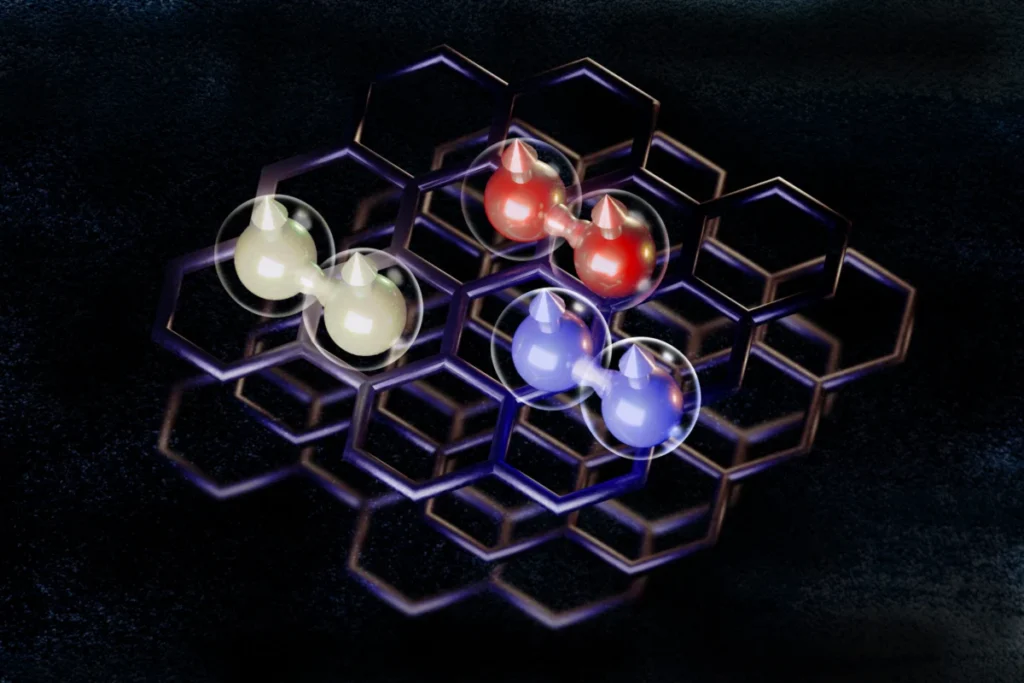
While the exact microscopic mechanism remains a subject of intense theoretical debate, the MIT team has proposed a compelling hypothesis. They suggest that in rhombohedral graphene, electrons may be pairing up with aligned spins rather than opposite spins. This is known as "spin-triplet" pairing.
If the electrons in a pair already have aligned spins, an external magnetic field would pull them in the same direction, preserving their alignment rather than tearing them apart. This would explain why the superconductivity persists and even thrives under magnetic stress. If proven, this would categorize rhombohedral graphene as a rare spin-triplet superconductor, a class of materials highly sought after for use in topological quantum computing. Such materials are theoretically more robust against decoherence, the primary hurdle in building stable quantum computers.
Chronology of Discovery and Broader Context
This latest study is part of a series of breakthroughs by Long Ju’s lab regarding rhombohedral graphene. The timeline of their research shows a rapid progression in understanding this "boring" carbon material:
- February 2024: The group discovered that rhombohedral graphene could host fractional electron charges, a phenomenon where electrons appear to split into smaller units. This is a hallmark of the fractional quantum Hall effect, but notably, it occurred in graphene without the need for a massive external magnetic field.
- May 2024: The researchers identified a "chiral" form of superconductivity in the material, where the superconducting state possesses a sense of "handedness" or directionality.
- Present (2025): The current Nature study expands this map, revealing the four distinct superconducting states and their anomalous relationship with magnetic fields.
The research involved a global consortium of institutions, including Florida State University, the University of Florida, and the National Institute for Materials Science in Japan. The work was supported in part by the U.S. Office of Naval Research, highlighting the strategic importance of discovering new materials for advanced electronics and sensing.
Implications for the Future of Material Science
The implications of this research extend far beyond the laboratory. The ability to "tune" a single, relatively simple material into multiple superconducting states using only electrical voltages provides a new blueprint for electronic design. In the long term, this could lead to the development of "programmable" materials where the fundamental physical properties—conductivity, magnetism, and superconductivity—can be switched on or off at will.
From a fundamental physics perspective, the discovery of multiple superconducting states in a single material provides a "natural laboratory" for testing theories of quantum mechanics. As Junseok Seo noted, the beauty of this research lies in the control researchers now have over crystalline carbon. "We’re not only dealing with what nature gives us, but we’re applying additional controls to change it to something that nature does not give us, but that can exist in the same material," Seo said.
The fact that these properties emerge in rhombohedral graphene—a structure that exists naturally within the graphite of a pencil—serves as a reminder that the most profound scientific mysteries can often be found in the most mundane places. While we are still far from room-temperature superconductivity or commercial quantum processors based on graphene, the MIT team’s work provides the "nutrition," as Professor Ju put it, for the scientific community to digest as they work toward the next generation of technological breakthroughs.
As researchers continue to probe the limits of rhombohedral graphene, the focus will likely shift toward finding ways to stabilize the rhombohedral structure over larger areas and at higher temperatures. If the exotic properties of this staircase-shaped carbon can be harnessed at scale, the humble pencil lead may eventually power the most advanced technologies of the 21st century.