The global pursuit of decarbonization has placed hydrogen at the forefront of energy innovation, heralded by many experts as "the fuel of the future." Its potential to revolutionize energy systems lies in its clean combustion, producing only water, and its critical role in industrial processes where emissions are otherwise difficult to abate, such as steel and cement manufacturing. However, realizing this ambitious vision hinges on overcoming two formidable challenges: developing cost-effective, low-carbon production methods and, crucially, establishing efficient and economical ways to transport and store this elusive element.
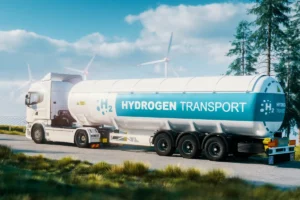
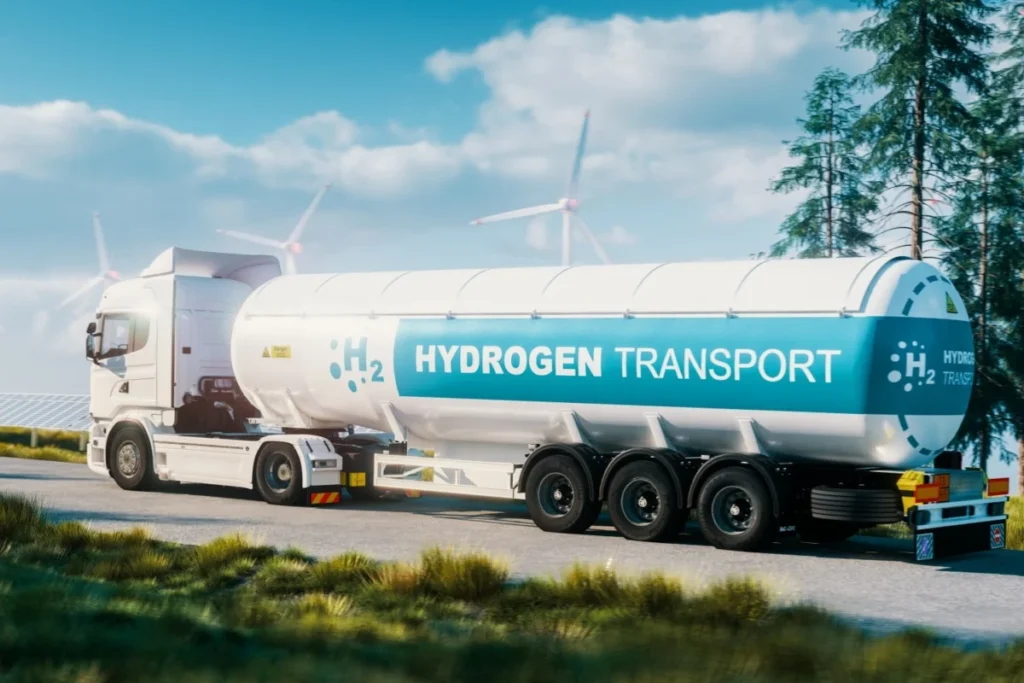
It is this latter, often overlooked, challenge that a dedicated team at the MIT Energy Initiative (MITEI), in collaboration with ExxonMobil Technology and Engineering Co., has been meticulously addressing. Their research, funded by ExxonMobil through MITEI in 2024, delves into the intricate logistics of moving pure hydrogen from its likely production sites – often remote – to its points of consumption. The inherent properties of hydrogen, its status as the lightest gas known and its low energy density by volume, present significant hurdles. Delivering a substantial amount of energy necessitates a considerable volume of hydrogen, requiring containment systems of exceptional tightness to prevent even the smallest molecules from escaping. This complexity starkly contrasts with the relative ease of transporting liquid fuels like gasoline. Without robust solutions for hydrogen storage and transportation, its promise as a cornerstone of a clean energy future remains unfulfilled.
Navigating the Hydrogen Supply Chain: The Genesis of HyCAT
The MITEI-led research team acknowledged that a one-size-fits-all solution for hydrogen transportation and storage is unlikely. The optimal approach, they concluded, is highly dependent on geographical location, existing infrastructure, and specific use-case requirements. This realization led to the development of a sophisticated analytical tool designed to empower users to make informed decisions based on their unique circumstances. Instead of presenting a definitive "best" outcome, the team has created a dynamic instrument that allows for a nuanced understanding of various transportation methods, their associated costs, and their carbon footprints.
This groundbreaking work is detailed in a new paper published in the esteemed journal Fuel. The study was spearheaded by former MITEI postdocs Gasim Ibrahim, now an R&D Engineer/Scientist at Honeywell, and Guiyan Zang, formerly a MITEI group lead and now an Associate Professor at Washington State University. A cadre of additional MIT co-authors, including former postdocs Bosong Lin, Jacqueline Garrido, Woojae Shin, and Haoxiang Lai, contributed significantly to the research.
The team’s foundational assumption was that for hydrogen to achieve its global potential, it would need to be transported across vast distances, encompassing transcontinental and intercontinental journeys, often over oceans. Given hydrogen’s gaseous state, converting it into a more manageable liquid form for shipping became a primary consideration. The central questions guiding their inquiry were: What are the most effective methods for liquefying or otherwise preparing hydrogen for long-haul transport? What are the projected costs associated with these methods? And, critically, how much carbon intensity do these processes add to the delivered hydrogen?
"There hasn’t been a lot of attention paid to addressing those questions," Ibrahim commented, highlighting the research gap. While some existing studies offered insights, their conclusions were often inconsistent, and significant uncertainties persisted. These uncertainties stem from the inherent variability in costs and carbon emissions from place to place, compounded by a limited understanding of how large-scale hydrogen transportation will function in practice.
An Adaptive Tool for a Dynamic Industry: Introducing HyCAT
"So we decided the best thing to do was to develop an adaptive tool that would enable users to perform their own assessments – a tool that could be updated very easily," Ibrahim explained. "And we would make it open source, so anyone can see and update the numbers that we used in formulating and testing it. As the industry develops, and as scale becomes more a factor, the assumptions made in [our initial] assessments of the economics and the carbon intensity [of different shipping methods] will need to be updated."
This resulted in the creation of the Hydrogen Carrier Analysis Tool, or HyCAT. This sophisticated model is specifically designed to focus on the transportation and storage aspects of the hydrogen supply chain. It deliberately excludes the upstream considerations of hydrogen production and the downstream applications of its use. Instead, HyCAT’s core function is to quantify the costs and greenhouse gas (GHG) emissions incurred during the transportation and delivery phases. While a comprehensive life-cycle assessment would encompass a broader spectrum of environmental impacts, HyCAT prioritizes GHG emissions for its analysis.
The tool’s design prioritizes user-friendliness. Ibrahim noted that it features an intuitive interface with drop-down menus for inputting assumptions. The results of an analysis are presented through clear bar charts, with accompanying links to detailed tables for further examination.
Ibrahim clarified that while HyCAT operates within a well-defined boundary – "incoming hydrogen to outgoing hydrogen" – its analyses are highly sensitive to user-defined inputs. For a specific situation, users are prompted to incorporate various local factors, including the carbon intensity and cost associated with the production of the incoming hydrogen. "So that will inform the final values that come out of a HyCAT analysis," Ibrahim stated, underscoring why the results can diverge significantly from one location to another.
Based on the user’s inputs, HyCAT systematically calculates the cost and GHG emissions across five key stages of the hydrogen supply chain:
- Conversion/Liquefaction: The process of transforming gaseous hydrogen into a transportable liquid or a hydrogen carrier.
- Shipping: The long-distance transport of the converted hydrogen, typically via maritime vessels.
- Unloading and Storage: The process of receiving the transported hydrogen at the destination port.
- Reconversion/Reformation: The process of releasing hydrogen from its carrier or re-gasifying liquefied hydrogen.
- Local Distribution: The final delivery of hydrogen to end-users.
Exploring Hydrogen "Carriers": A Spectrum of Solutions
A pivotal decision point in planning hydrogen transportation lies in how to convert the gaseous hydrogen into a liquid form or a stable carrier compound, and subsequently, how to reclaim the pure hydrogen at its destination.
Direct Liquefaction: One direct approach involves converting gaseous hydrogen into a liquid. However, this process is exceptionally energy-intensive. "You would need to consume about a third of the energy content of the hydrogen to make the gaseous hydrogen cold enough to liquefy," Ibrahim pointed out. Furthermore, liquid hydrogen requires highly insulated containment to prevent re-gasification and escape during storage and transit. The primary advantage of this method is that it does not involve chemical reactions.
Hydrogen Carriers: An alternative strategy employs "hydrogen carriers" – liquid chemical compounds that can absorb hydrogen atoms under specific conditions and release them under others. This approach transforms the transportation problem into one of moving a stable liquid compound that effectively stores hydrogen. This method inherently involves two chemical reactions: one to bind hydrogen to the carrier at the production site and another to release it at the destination.
In their demonstration runs, the researchers evaluated three potential carrier compounds, each with its own set of advantages and disadvantages:
-
Toluene-based Carriers: One carrier analyzed is derived from toluene. While the chemical reaction for binding hydrogen to toluene has been studied, a significant drawback is the origin of toluene, which is typically sourced from the oil and gas industry. This results in a relatively high carbon intensity associated with the toluene itself even before it picks up hydrogen. Moreover, over time, some toluene is lost, necessitating periodic replenishment.
-
Synthetic Methane: The researchers also examined "synthetic methane," produced by reacting hydrogen with carbon dioxide (CO2). This reaction is well-established, and a notable benefit is that its production consumes CO2, which can often be captured from the atmosphere. However, a byproduct of this reaction is water, leading to a loss of some hydrogen with each conversion cycle.
-
Ammonia (NH3): The final option investigated was ammonia, formed by the reaction of hydrogen with nitrogen from the air. This process is extensively studied and is already employed commercially for ammonia production. "We’ve been producing ammonia for a long time," Ibrahim stated, emphasizing the established infrastructure for its transportation and storage. While Ibrahim regards ammonia as potentially the "most promising option," he noted that the reaction required to release hydrogen from ammonia has not yet received extensive research attention.
Varied Conclusions and Future Trajectories
The initial analyses conducted using HyCAT revealed a crucial insight: the optimal pathway for hydrogen transportation is not universal. "As we developed the tool, we saw that the ‘best’ carrier was very specific to the supply chain at hand," Ibrahim observed. "It’s a function of how far you’re trying to ship your hydrogen, energy and shipping costs at your exporting and importing countries, the capital cost of building the needed facilities at both ends, and more."
This inherent variability means that generalizations from existing literature can be misleading. For instance, a method that appears cost-effective in one region might prove prohibitively expensive in another due to differences in energy prices, labor costs, or capital investment requirements. Similarly, the carbon footprint of a specific transportation method can be significantly influenced by the carbon intensity of the energy used in the conversion and reformation processes at either end of the supply chain.
The research team is now planning a follow-up study. This next phase will involve utilizing HyCAT to analyze specific, real-world supply chains under defined conditions. They intend to identify assumptions that carry significant uncertainty and explore the range of possible values for these variables. "Then we’ll be able to say, ‘under these conditions, this carrier is better than that one,’ or ‘this carrier is better at cost, but worse at carbon intensity,’" Ibrahim outlined. This will allow for more precise recommendations and a clearer understanding of trade-offs.
The overarching conclusion from the current study, according to Ibrahim, is that "there’s no conclusion." He strongly advises decision-makers against relying on generalized findings from the literature. Instead, he urges them to leverage HyCAT to thoroughly explore the options available to them. By aligning the tool’s results with their company’s specific objectives and values, stakeholders can optimize their hydrogen supply chains and accelerate the realization of clean-burning hydrogen as a viable global energy solution. The development of HyCAT represents a significant step forward in demystifying the complex logistical challenges of hydrogen, paving the way for its widespread adoption and contribution to a sustainable future.