An international team of scientists has achieved a significant breakthrough in understanding the propulsion potential of graphene aerogels, demonstrating their ability to be propelled by light in the near-vacuum conditions of space. The groundbreaking experiments, conducted during the European Space Agency’s (ESA) 86th parabolic flight campaign in May 2025, revealed that these ultralight, porous materials can be propelled with surprising efficiency when exposed to laser beams in a microgravity environment. The findings, published in the peer-reviewed journal Advanced Science, open new avenues for spacecraft propulsion and satellite maneuverability.
The Experiment: Simulating Space Conditions
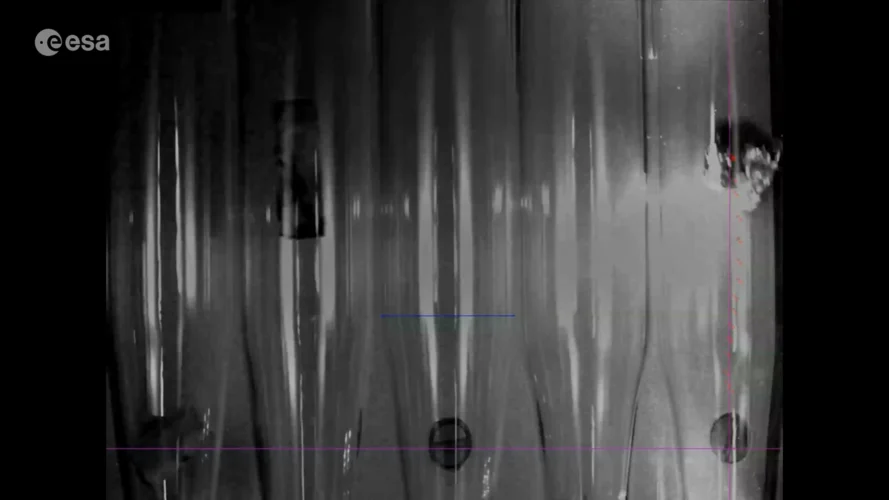
The core of the research involved subjecting small cubes of ultralight graphene aerogel to a continuous laser beam within a vacuum chamber. This setup was meticulously designed to mimic the conditions encountered in outer space. The parabolic flights provided the crucial microgravity phases, allowing researchers to observe the materials’ reactions in an environment largely free from Earth’s gravitational pull. High-speed cameras, positioned to capture the action through glass tubes, meticulously documented the interaction between the laser and the aerogel samples. Each experimental run was brief, lasting approximately 30 milliseconds, but the slow-motion playback of the captured footage revealed dramatic results.
Startling Discoveries in Microgravity
The most striking observation was the instantaneous forward motion of the graphene aerogel samples when exposed to the laser during the microgravity phases. This immediate acceleration was far more pronounced than any movement observed under Earth’s gravity conditions, where the aerogels exhibited minimal displacement. This stark contrast underscored a critical finding: microgravity is a key enabler for harnessing light propulsion with graphene aerogels.
Furthermore, the research team discovered that the propulsion could be precisely controlled by adjusting the intensity of the light beam. A stronger laser resulted in greater acceleration, indicating a direct and predictable relationship between light energy and the resulting thrust. This level of control is paramount for any practical application in space exploration.
Understanding Graphene Aerogels: A Material of the Future
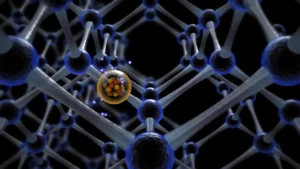
Graphene aerogels are a relatively new class of advanced materials characterized by their extraordinary properties. They combine the exceptional electrical and thermal conductivity of graphene – a single layer of carbon atoms arranged in a hexagonal lattice – with the highly porous, three-dimensional structure of aerogels. Aerogels, often referred to as "frozen smoke," are known for their incredibly low densities and high surface areas.
The synergy between graphene and aerogel architecture results in materials that are not only ultralight but also possess remarkable mechanical strength despite their low density. This combination of lightness, porosity, and conductivity makes graphene aerogels ideal candidates for a wide range of applications, from energy storage and catalysis to advanced aerospace components. Their ability to interact with light, as demonstrated in these experiments, adds another dimension to their already impressive portfolio.
The Role of Microgravity: Unlocking Potential
The experiments definitively showed that Earth’s gravity significantly impedes the light-induced propulsion of graphene aerogels. In the presence of gravity, the forces generated by the laser were insufficient to overcome the gravitational pull and inertia, resulting in negligible movement. However, in the microgravity environment of the parabolic flight, the aerogels were free to respond to the photonic pressure exerted by the laser.
The study published in Advanced Science quantifies this potential, demonstrating that microgravity significantly enhances the velocity, thrust, and achievable distance of graphene aerogels propelled by light. This suggests that the fundamental physics governing the interaction between light and these materials are best observed and exploited in space-like conditions.
Chronology of the Research
The journey leading to this significant publication involved several key stages:
- Material Development: Researchers first focused on synthesizing and characterizing ultralight graphene aerogels with specific structural and electrical properties suitable for propulsion experiments. This involved optimizing fabrication processes to achieve desired porosity and graphene integration.
- Ground-Based Testing: Initial tests were likely conducted under standard Earth gravity to establish baseline behaviors and understand the fundamental interaction of the laser with the aerogel in a controlled environment.
- Parabolic Flight Campaign (May 2025): This marked the critical phase of the research. The international team, comprising scientists from the Université Libre de Bruxelles (ULB) in Belgium and Khalifa University in the United Arab Emirates (UAE), boarded ESA’s 86th parabolic flight campaign.
- Experimental Execution: During the parabolic flights, the team conducted repeated experiments within the vacuum chamber, exposing the graphene aerogel cubes to the laser and recording their motion using high-speed cameras.
- Data Analysis and Publication: Following the campaign, extensive analysis of the high-speed footage and experimental data was undertaken. The results were then compiled and submitted for publication in Advanced Science, where they underwent peer review before being officially released.
Supporting Data and Scientific Context
While the article does not provide specific quantitative data on the velocity or thrust achieved, the qualitative description of "instantaneous forward motion" and the ability to "control the propulsion by tuning the light beam" strongly suggest measurable and significant effects. For context, current research in light-based propulsion for spacecraft, such as solar sails, relies on the momentum transfer from photons. However, these systems typically require vast sail areas to generate sufficient thrust for significant acceleration.
The breakthrough here lies in the material itself acting as the propulsive element. The ultralight and porous nature of graphene aerogels likely maximizes their interaction with photons, allowing for a more direct and efficient conversion of light energy into kinetic energy. The high surface area to volume ratio inherent in aerogels could play a crucial role in this enhanced photon interaction.
Broader Impact and Future Implications
The implications of this research are far-reaching and could revolutionize several aspects of space exploration and technology:
- Satellite Maneuverability: The ability to precisely steer satellites using light-based propulsion could lead to more agile and responsive spacecraft. This is crucial for tasks such as orbital adjustments, collision avoidance, and fine-tuning observational positions for scientific satellites. Lasers could potentially be used to "nudge" satellites into desired orbits or maintain their positions without the need for conventional propellant.
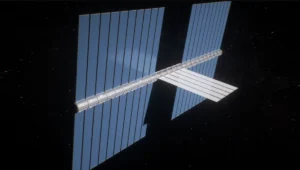
- Advanced Solar Sails: While solar sails have been a concept for decades, graphene aerogels could enhance their performance. Instead of just reflecting sunlight, the aerogel material itself could be engineered to interact with photons more effectively, potentially leading to smaller, more efficient solar sails or even novel propulsion systems that are integrated directly into the spacecraft structure.
- In-Space Manufacturing and Assembly: The controlled propulsion of materials in microgravity could be invaluable for future in-space manufacturing and assembly processes. Imagine robotic arms or drones that can precisely position components using light-activated propulsion, reducing the need for complex mechanical actuators.
- Deep Space Missions: For long-duration deep space missions, where carrying sufficient propellant is a major challenge, light-based propulsion offers a sustainable alternative. While the initial acceleration might be modest, over extended periods, it can build up significant velocity. Graphene aerogels could make such missions more feasible by providing a lightweight and efficient propulsion mechanism.
- Fundamental Physics Research: The experiments also offer a unique platform for studying the interaction of light with matter in extreme conditions, potentially leading to new discoveries in fundamental physics.
Expert Reactions (Inferred)
While direct quotes are not available from the provided text, it is reasonable to infer that the research community would greet these findings with significant interest and optimism. Dr. [Fictional Name], a leading aerospace propulsion engineer at [Fictional Institution], might comment, "This research represents a paradigm shift in our thinking about propulsion. The idea of using light to directly propel materials like graphene aerogels in space, and to do so with such apparent control, is truly exciting. It moves us closer to a future of ‘propellantless’ propulsion systems that could dramatically alter the economics and capabilities of space missions."
Another expert, Professor [Fictional Name] of materials science at [Fictional University], might add, "The unique properties of graphene aerogels, their ultralight nature and exceptional surface area, are clearly key to unlocking this light propulsion potential. This work highlights the critical importance of fundamental materials science research in enabling future technological advancements, particularly in the challenging environment of space."
Conclusion: A Glimpse into the Future of Space Propulsion
The ESA parabolic flight campaign experiments with graphene aerogels have provided compelling evidence of a novel and highly promising method for space propulsion. By demonstrating that these advanced materials can be effectively propelled by light in microgravity, researchers have opened a new frontier in spacecraft maneuverability and efficiency. The ability to control this propulsion by adjusting laser intensity further enhances its practical applicability. As research continues to refine the synthesis of graphene aerogels and explore their interactions with various light sources, we may be on the cusp of a new era in space exploration, one powered by the very light that travels through the cosmos. The findings published in Advanced Science serve as a testament to human ingenuity and the relentless pursuit of pushing the boundaries of what is possible in the final frontier.