
The crisp air of a Sunday morning often brings with it a ritual for watch enthusiasts: a cup of coffee and a head-to-head battle between two horological titans. This week’s "Sunday Morning Showdown" pits two chronographs from sister brands, Tudor and Rolex, against each other. Daan has chosen the newly released Tudor Black Bay Chrono 39, affectionately nicknamed "Bumblebee," a more compact iteration of the existing Black Bay Chrono that has garnered significant praise and ignited anticipation for future offerings. Its formidable opponent is Jorg’s perennial favorite, the Rolex Cosmograph Daytona. The central question: can this newcomer, with its more accessible dimensions and price point, triumph over its legendary cousin?

Historically, Tudor has faced an uphill battle in the "Sunday Morning Showdown" series when facing off against its more established sibling, Rolex. Across six previous encounters between the brands, Tudor has secured victory only once. This sole triumph occurred in 2023 when the Tudor Pelagos 39 outperformed the Rolex Submariner reference 14060. This week’s matchup, however, presents a compelling scenario for another Tudor victory. The introduction of the 39mm Black Bay Chrono opens the door for a wider audience to experience a Black Bay Chrono. Its redesigned, smaller case offers a more comfortable fit for many wrists, comparable in feel to the Daytona. Coupled with its attractive price point of €6,200, it presents a significant challenge to the Rolex Cosmograph Daytona, which retails at €16,550.
A Recap of Last Week’s Showdown
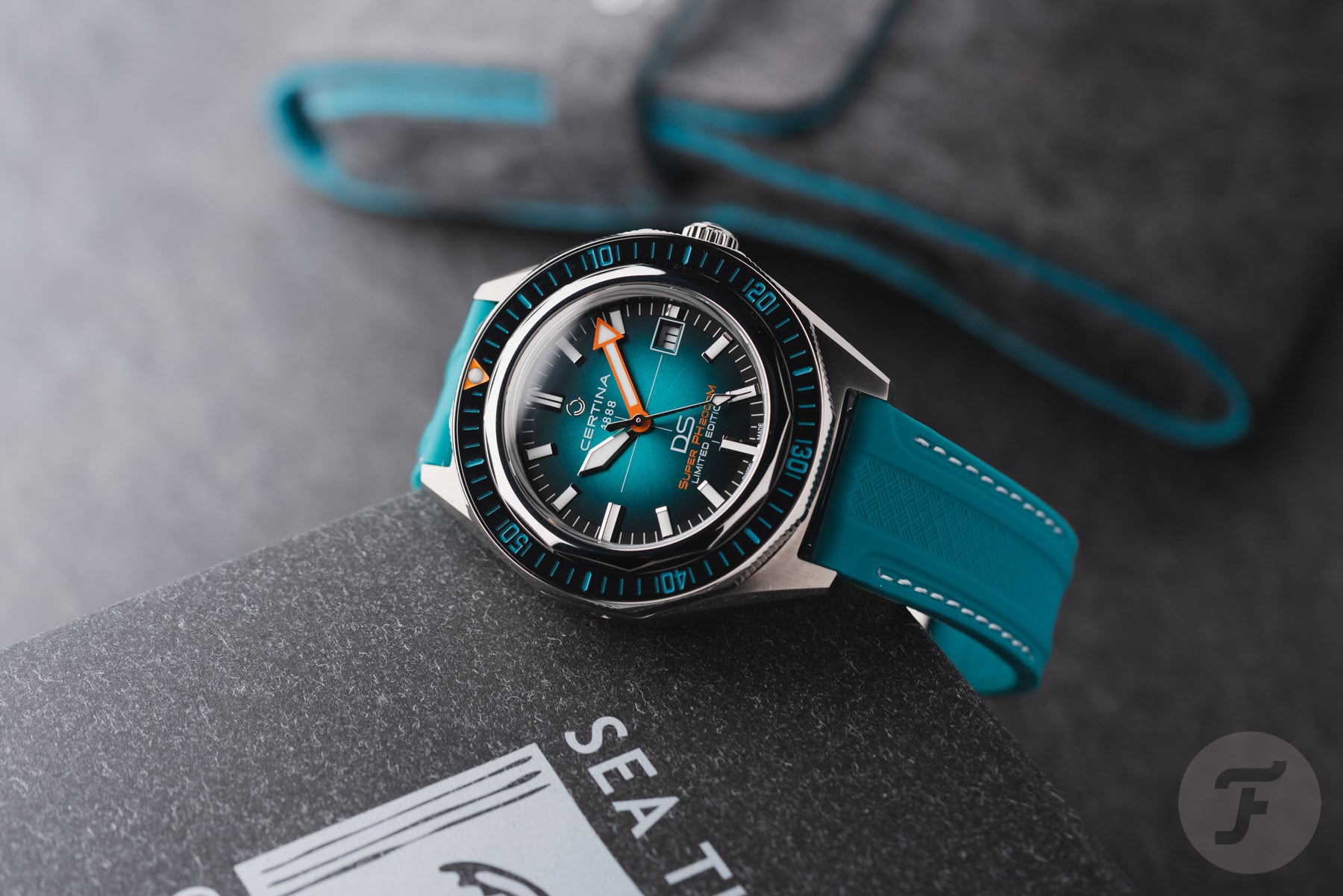
Before delving into this week’s prestigious contest, it’s pertinent to recall the outcome of the previous "Sunday Morning Showdown." Jorg’s Certina DS Super PH2000M STC emerged as the clear victor, decisively defeating Mike’s Tissot Seastar 2000 44mm. The Certina captured an impressive 80% of the reader votes, leaving the Tissot with a mere 20%. The accompanying comments echoed this sentiment, revealing a strong preference for the Certina’s specifications and aesthetic appeal. This decisive win underscores the community’s engagement and discerning taste in watch comparisons. Now, all eyes turn to see if this week’s contest will yield another resounding victory for one of the contenders.
Jorg: The Enduring Allure of the Rolex Cosmograph Daytona
Let’s address a long-standing sentiment upfront: in previous "Sunday Morning Showdown" installments, I have often found myself in opposition to the Rolex Daytona, particularly when pitted against rivals like the Omega Speedmaster or Zenith Chronomaster Sport. My preference has consistently leaned towards its competitors, a stance I maintain based on strong arguments. Zenith, as many avid readers know, holds a special place in my horological affections, and I would invariably select a Chronomaster Sport (excluding the open-dial variants) over a steel Daytona. Similarly, the iconic Moonwatch has always held an edge for me.

However, my perspective on the Daytona has undergone a significant transformation. I must admit that the current generation of Daytona models has grown on me tremendously. My time spent with various iterations of the current collection has been profoundly impressive. Regular readers of Fratello might recall my inclusion of the yellow gold Daytona with a turquoise dial in my list of favorite summer watches. Furthermore, we dedicated a comprehensive "Top 5" feature to the current Daytona lineup, underscoring its enduring appeal.
Why the Daytona Remains the Superior Choice
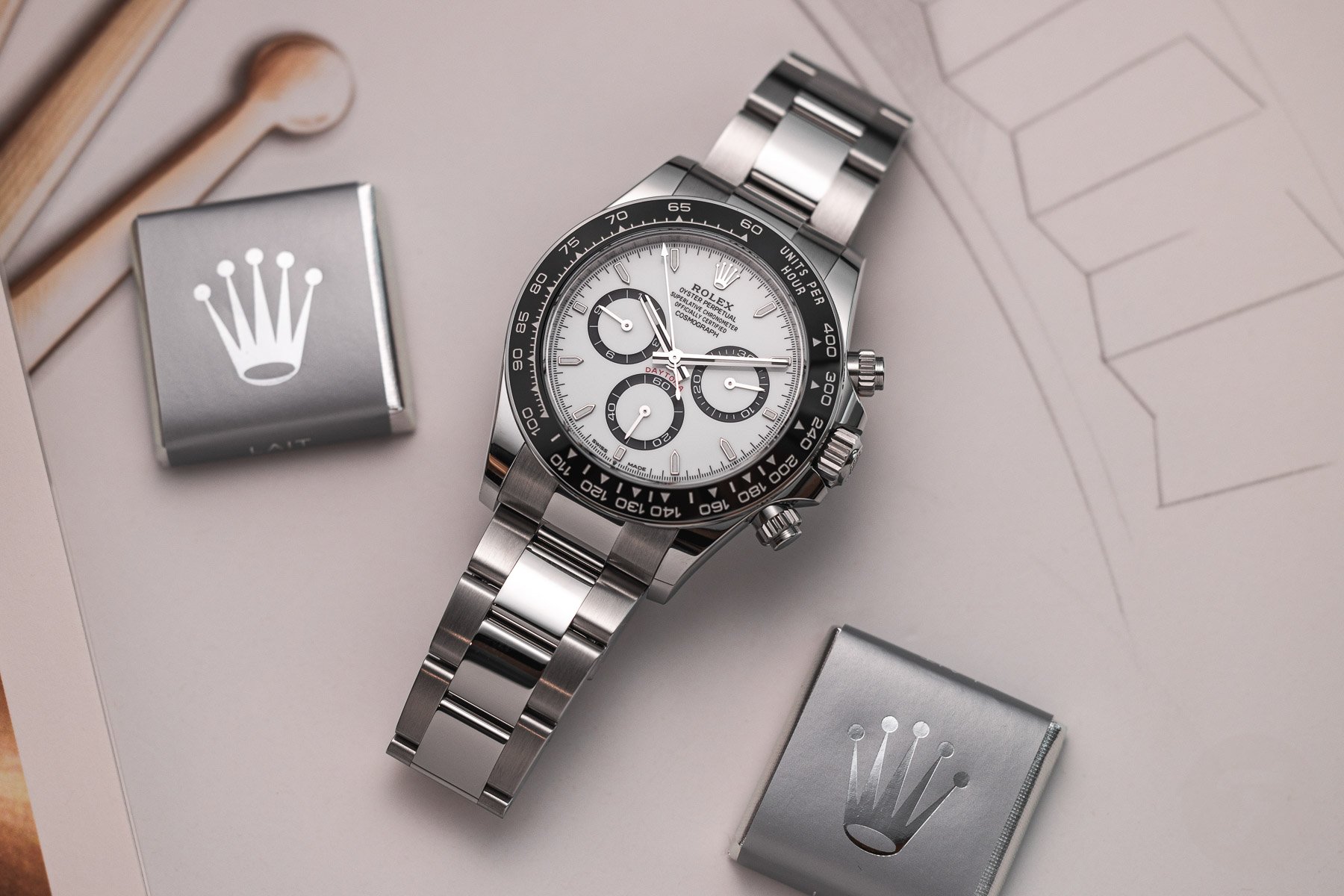
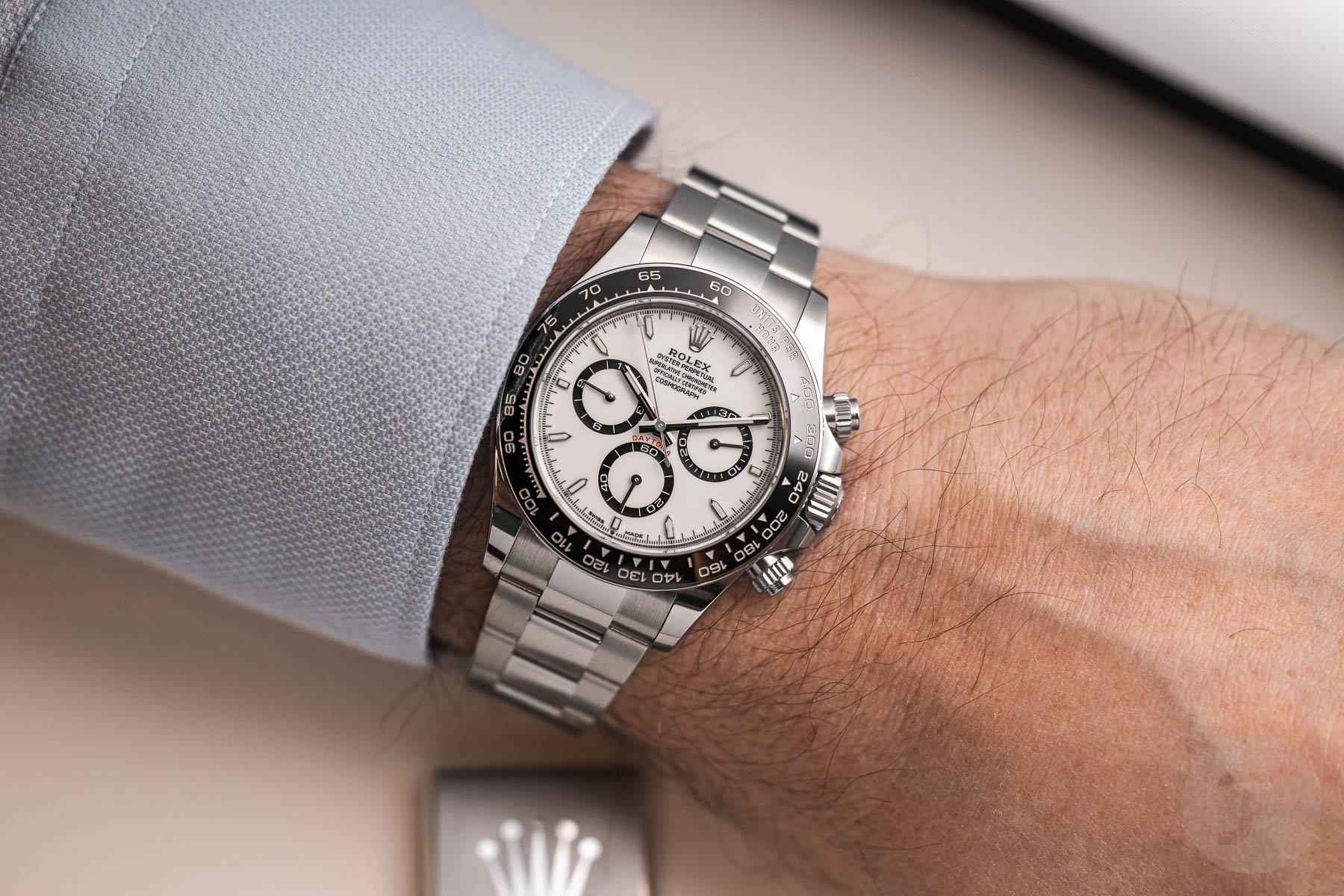
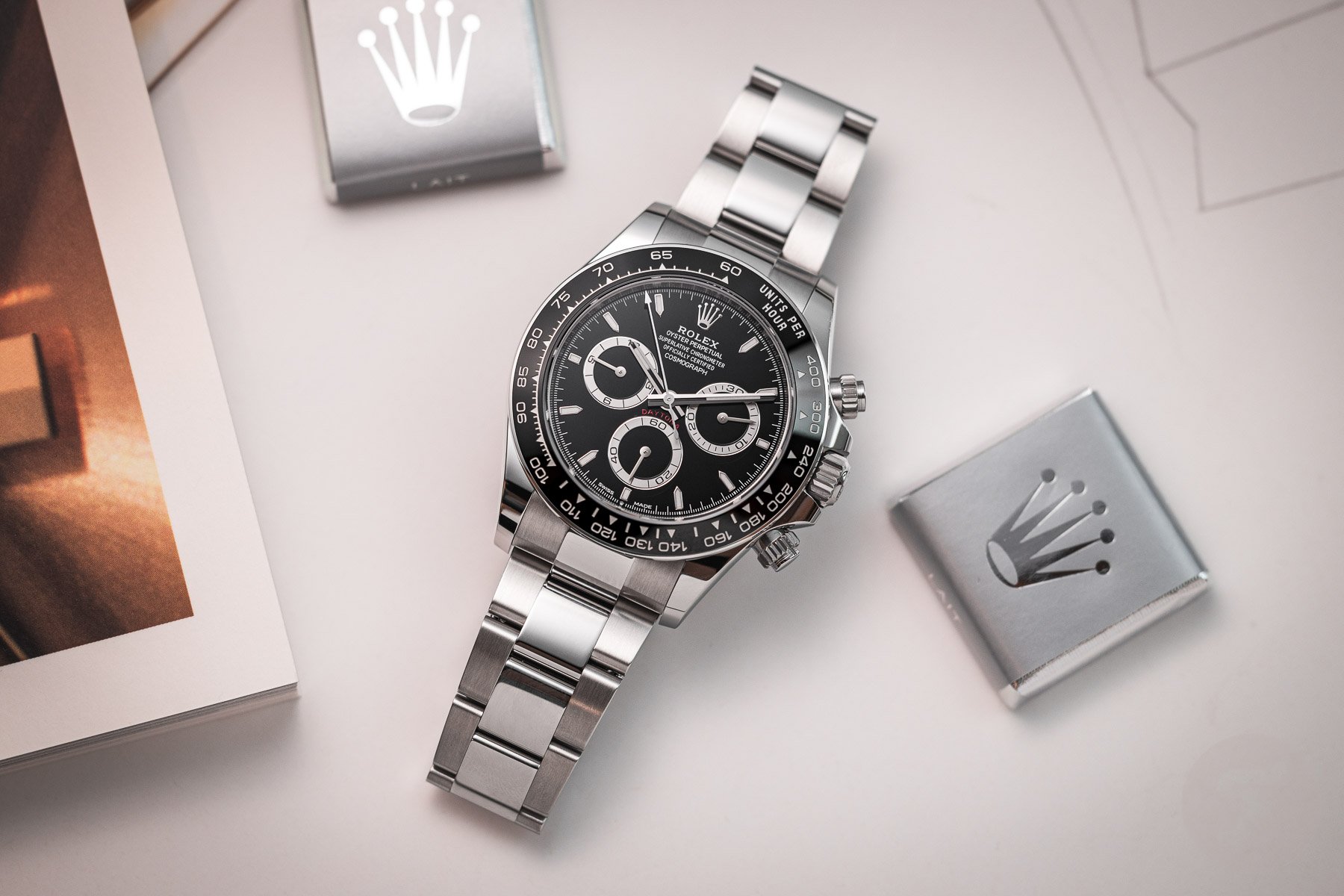
My appreciation solidified with the unveiling of the current generation of the Daytona in 2023. Rolex introduced a meticulously updated case design, imbuing it with a heightened sense of detail and sophistication. Crucially, the integration of the new in-house caliber 4131 enabled Rolex’s engineering team to achieve a remarkably slender profile, resulting in a case that measures a mere 11.9mm in thickness. While the Tudor Black Bay Chrono 39 has seen an admirable reduction in its dimensions, the Daytona still holds a distinct advantage in terms of slimness.
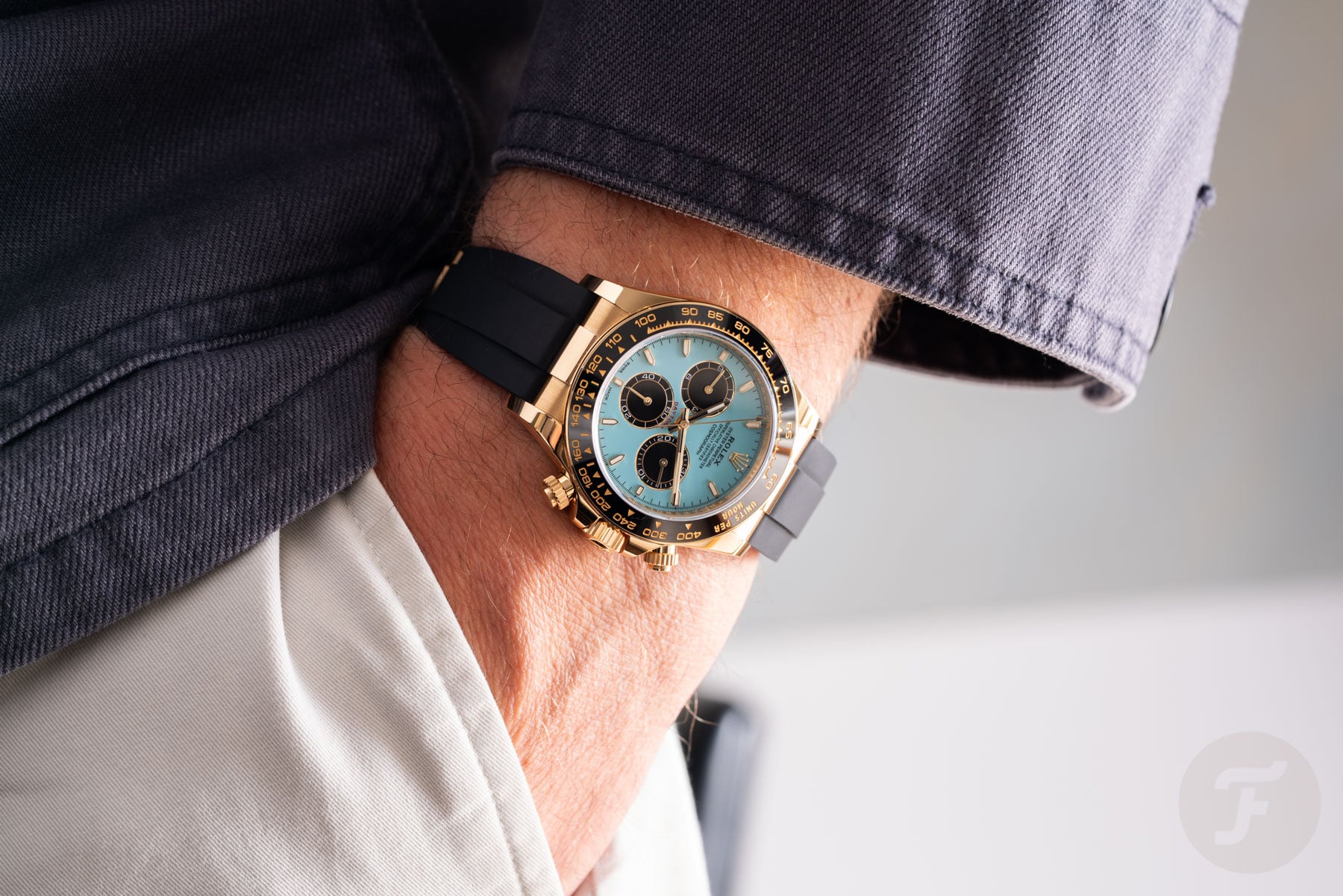
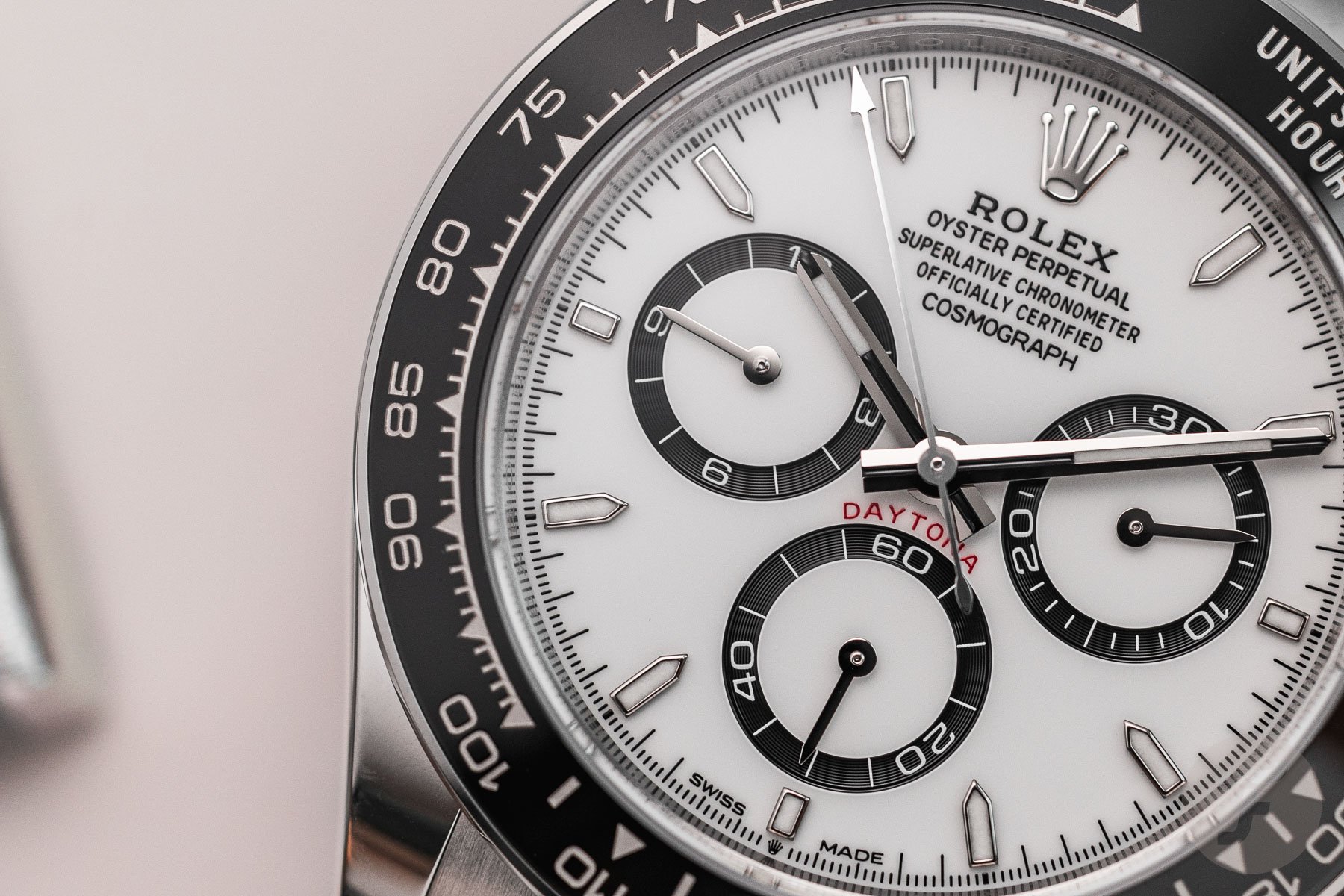
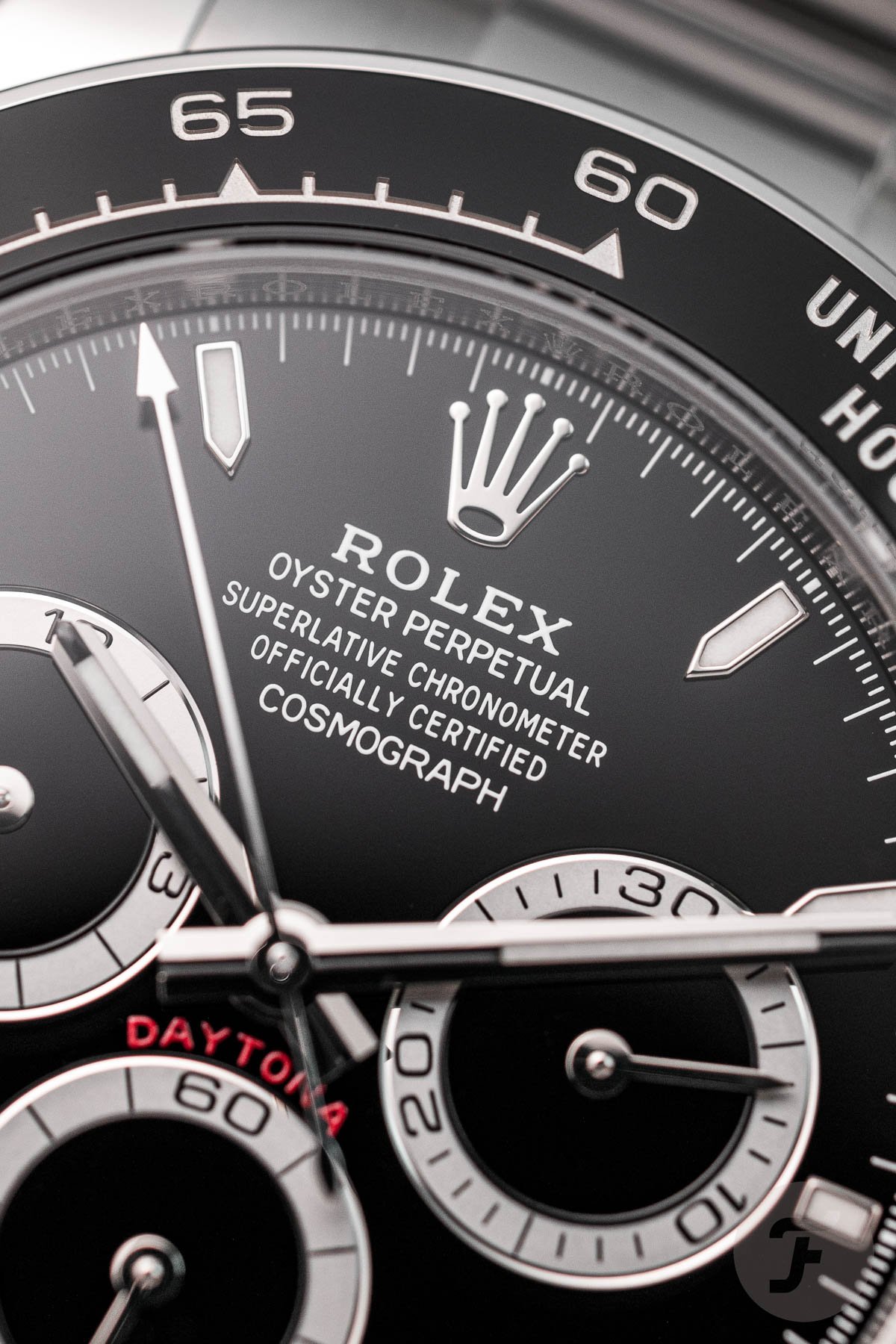
The Daytona’s 40mm case boasts a lug-to-lug measurement of 46mm. While Tudor’s design team has executed an exceptional redesign of the Black Bay Chrono’s case, the Daytona continues to exhibit superior proportions and an overall more refined presence. Its profile, in particular, appears more elegantly curved and sophisticated. A subtle yet impactful detail contributing to the current Daytona’s understated retro charm is the steel ring encircling the ceramic bezel. This level of meticulous detail unequivocally signals that the Rolex Daytona operates on a different plane of horological excellence compared to the Tudor Black Bay Chrono.
The Balanced Appeal of the Three-Register Layout
Another compelling aspect that draws me to the Daytona is its dial configuration, featuring a tri-register layout. Generally, I find this arrangement more aesthetically pleasing than a bi-register chronograph, and placing the Daytona alongside the Black Bay Chrono only reinforces this preference. The Daytona’s dial exudes a greater sense of balance, a result of several carefully considered design choices. Primarily, the presence of three sub-dials necessitates a thoughtful approach to proportions, ensuring that all elements remain harmoniously integrated and possess adequate breathing room. The Rolex design team has masterfully achieved this delicate equilibrium.
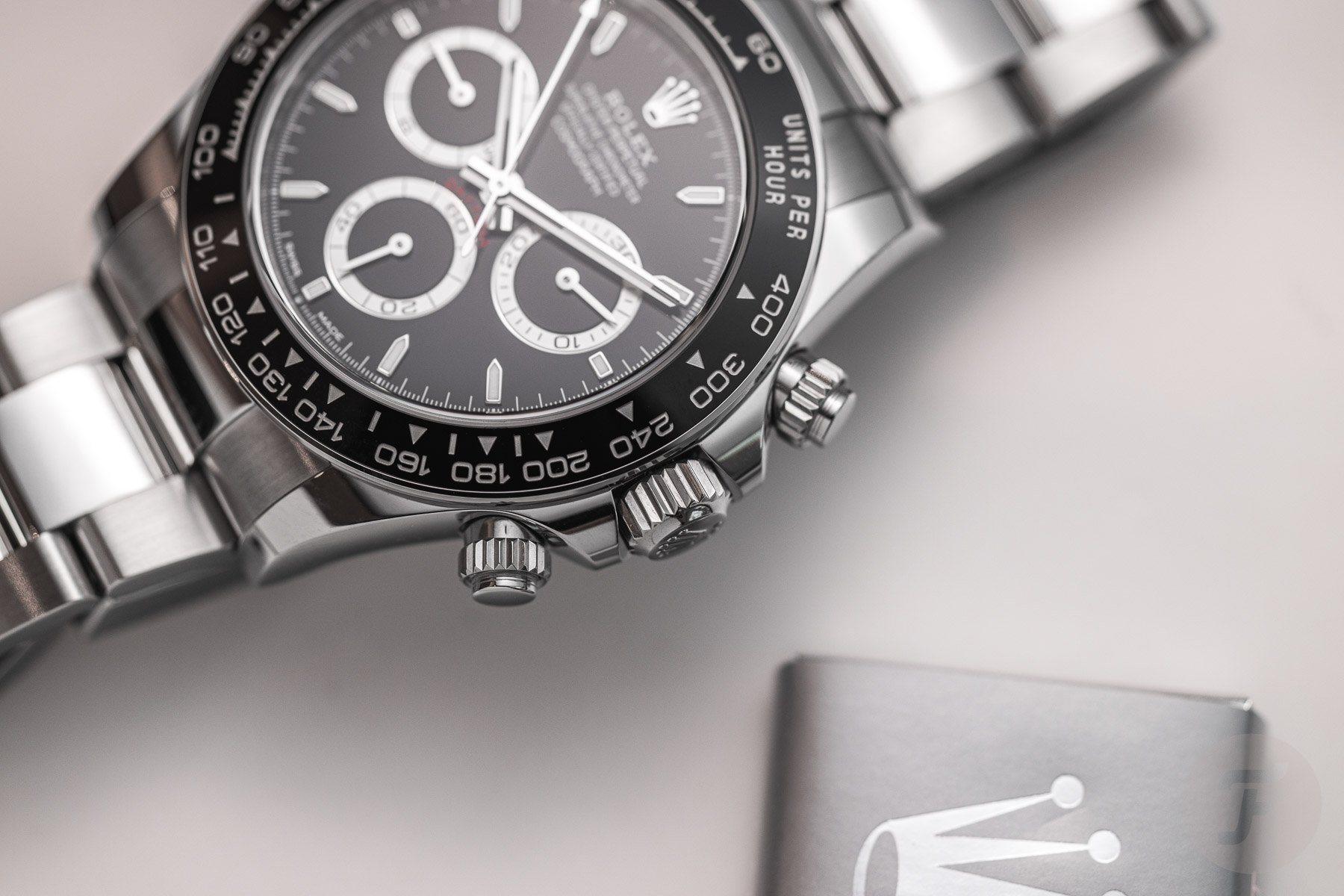
They have also opted for a complete set of hour markers, a contrast to the Tudor designers’ decision to omit markers at the 3 and 9 o’clock positions. Consequently, the two sub-dials on the Tudor can appear somewhat distant, whereas the Daytona’s dial feels perfectly composed. Furthermore, I find the prominent date window positioned at 6 o’clock on the Tudor dial to be a point of contention. While I acknowledge its functional utility in the lower half of the dial, I generally do not favor date displays in this specific location. Ultimately, the Daytona’s superiority hinges on its inherent refinement and masterful balance, attributes that Rolex designers have painstakingly cultivated.
The Daytona’s Distinctive Presence
This narrative of superior craftsmanship extends to the movements themselves. While the COSC-certified Tudor MT5813 is an undeniably capable movement, the Rolex 4131 represents a significant evolutionary leap. The Superlative Chronometer certification, a hallmark of Rolex’s commitment to precision, guarantees an accuracy of -2/+2 seconds per day after casing, a notable improvement over the -2/+4 seconds per day tolerance of Tudor’s MT5813. Additionally, the caliber 4131 incorporates Rolex’s energy-efficient Chronergy escapement and a proprietary Parachrom hairspring. It is, by all objective measures, a superior movement to the Kenissi-produced Tudor caliber.
While one might anticipate such elevated levels of engineering and quality from a more premium offering, the distinction goes beyond a simple comparison of technical specifications. The visceral experience of wearing a Rolex Daytona is distinctly different from donning a Tudor Black Bay Chrono. Though we may refer to these watches as cousins, on the wrist, the relationship feels more akin to a formidable older sibling versus a capable younger one. This perception is intrinsically linked to the brand’s appeal and the intangible aura that envelops a Rolex watch.
The Daytona carries the weight of its rich history, its design language that has shaped the industry, and its association with passions like tennis and architecture, all facets of the esteemed Rolex world. This legacy translates directly to the watches themselves, which is why I would not hesitate to invest the significant premium for a steel Daytona over the Black Bay Chrono 39, any day of the week. However, I am keen to hear Daan’s counterarguments and understand why he might disagree with my assessment.

Daan: The Tudor Black Bay Chrono 39 "Bumblebee" – A Bold Challenger
Good morning to all our readers. Let me begin by acknowledging a crucial point: the current Rolex Daytona stands as one of the preeminent automatic chronographs available on the market today. As Jorg rightly pointed out, its proportions are exceptional, ensuring a superb fit across a diverse range of wrist sizes. Over the years, it has evolved into a remarkably refined timepiece, boasting features like its encapsulated ceramic bezel and a flawlessly executed dial design – perhaps with the exception of the extensive text at the 12 o’clock position.

It also houses Rolex’s latest and most advanced automatic chronograph movement, a standard that the brand is compelled to uphold given its esteemed position in the watchmaking hierarchy. Tudor, conversely, has historically positioned itself as the more accessible alternative, and this new offering features a Kenissi-manufactured movement, a caliber based on the esteemed Breitling B01. However, unlike Jorg, I would find it difficult to justify a premium of approximately €10,000 and the protracted waiting periods often associated with acquiring a Rolex Daytona. Instead, I would much prefer to acquire the new Tudor "Bumblebee," a watch that is undoubtedly a formidable contender in its own right.
Downsized and Refined: A More Approachable Tudor
In comparison to its predecessors, Tudor has commendably reduced the diameter of the Black Bay Chrono from 41mm to a more versatile 39mm. The thickness has also been brought down to a highly acceptable 13.1mm from the previous 14.4mm. Furthermore, the lug span has been reduced from 50mm to a more compact 47mm. While these dimensions may not perfectly align with the Daytona’s svelte profile, I can attest, having tried it on, that it wears exceptionally well on my 17cm wrist. And yes, the Rolex Daytona is indeed a highly refined watch, but I must contend that the new Tudor Black Bay Chrono 39 "Bumblebee" has seen significant improvements in this regard.
As I detailed in my hands-on review, the smaller iteration of the Black Bay Chrono features a more balanced dial, with less empty space surrounding its elements. It also boasts more aesthetically pleasing sub-dials and a more consistent typography across both the dial and the bezel insert. There is very little to critique concerning the dial’s execution. Indeed, the date window at 6 o’clock might be a point of contention for some, as Jorg mentioned. However, to my eye, it effectively balances the dial, much like the Tudor logo at 12 and the brand text at 6 o’clock. I am also particularly drawn to the designers’ choice of black applied markers and hands, which create a striking contrast against the bright, matte yellow background.
A Capable Movement for the Discerning Enthusiast
Even the specifications of Tudor’s MT5813 automatic chronograph are remarkably competitive when compared to Rolex’s offering. With a substantial 70-hour power reserve, excellent magnetic resistance, and proven reliability, this movement delivers on all critical fronts. In terms of accuracy, the Kenissi-manufactured movement is nearly on par with Rolex’s offering. While it may lack some of the proprietary, uniquely named components found in Rolex movements, the fundamental performance and durability are undeniable.
Beyond the Hype: A Focus on the Watch Itself
Therefore, in terms of technical specifications, the new Tudor Black Bay Chrono 39 "Bumblebee" is undoubtedly a strong competitor to the Rolex Daytona. However, my primary argument extends beyond mere technical comparisons. The most compelling reason for choosing the Tudor over the Rolex Daytona lies in its market perception. As Lex eloquently argued a few years ago, the Rolex Daytona has transcended its status as merely a watch; it has become an overhyped status symbol. Acquiring one often necessitates appeasing an Authorized Dealer or paying a substantial premium on the secondary market. Once on the wrist, there’s an inherent awareness of its desirability and the potential risks associated with wearing such a coveted item.
Conversely, I would much rather embrace the less overtly coveted, yet equally striking, Tudor "Bumblebee" with its daring yellow and black dial. By the way, I find the aesthetics of the "Bumblebee" to be exceptionally appealing. While many, including Jorg, might express a preference for more conventional "panda" or "reverse-panda" dial configurations, I am a fervent admirer of this vibrant yellow colorway. It offers a refreshing departure from the ubiquitous black, white, or blue dials, yet remains remarkably wearable and perfectly complements the racing-inspired theme. Thus, without reservation, I would opt for the Tudor Black Bay Chrono 39 over the Rolex Daytona.
Cast Your Vote
This concludes our "Sunday Morning Showdown" between Rolex and its esteemed sibling brand, Tudor. The question remains: would you choose the legendary Cosmograph Daytona, or does the sportier Tudor Black Bay Chrono 39 "Bumblebee," with its more compact case and distinctive yellow dial, capture your imagination? We encourage you to cast your vote below and share your reasoning in the comments section.