The global scientific community recently gathered in Los Angeles to celebrate the 12th annual Breakthrough Prize ceremony, an event often referred to as the "Oscars of Science." Among the luminaries recognized for their transformative contributions to human knowledge were several distinguished affiliates of the Massachusetts Institute of Technology (MIT). These researchers, spanning the disciplines of life sciences, fundamental physics, and mathematics, were honored for work that ranges from the development of the first CRISPR-based medical therapy to the exploration of the fundamental symmetries that govern the universe. The recognition underscores MIT’s enduring role as a central hub for innovation and its capacity to produce scholars whose work reshapes the boundaries of possibility.
The Breakthrough Prize: A Legacy of Excellence
Founded in 2012 by Sergey Brin, Priscilla Chan and Mark Zuckerberg, Julia and Yuri Milner, and Anne Wojcicki, the Breakthrough Prizes have become the world’s most generous science awards. Each of the main prizes carries a $3 million purse, intended to provide scientists with the financial freedom to pursue ambitious, long-term research. In addition to the primary awards, the foundation grants the New Horizons in Physics and Mathematics Prizes, valued at $100,000, to promising early-career researchers who have already made substantial impacts in their respective fields.
The 2024 ceremony, held on April 18 at the Academy Museum of Motion Pictures, was a star-studded affair designed to elevate scientists to the status of celebrities, thereby inspiring the next generation of thinkers. For the MIT community, the evening was a validation of decades of rigorous inquiry and experimental persistence.
Revolutionizing Hematology: The Work of Stuart H. Orkin
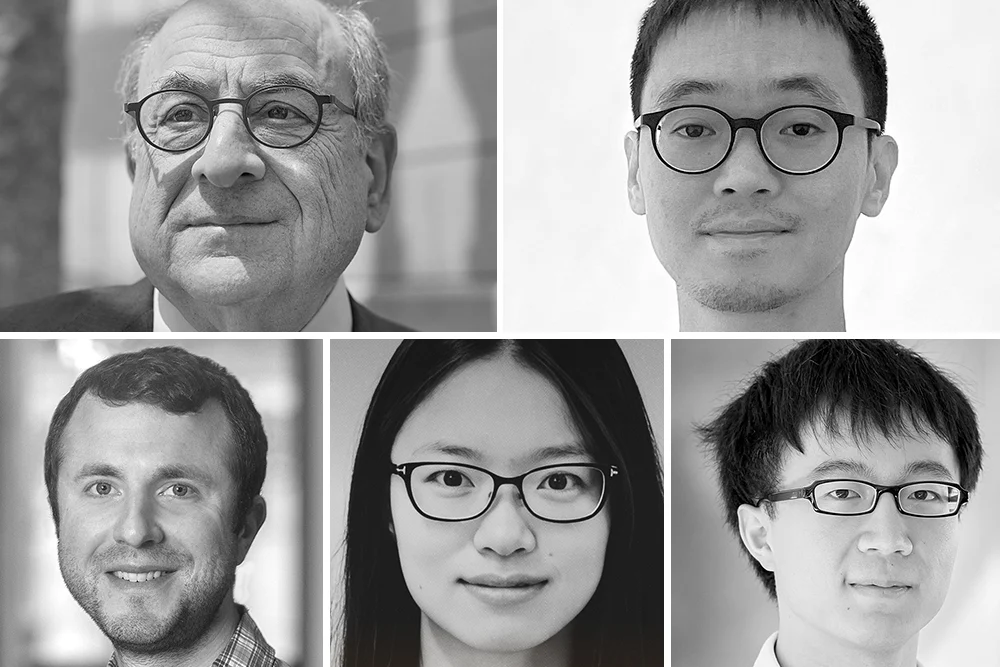
One of the evening’s highest honors, the Breakthrough Prize in Life Sciences, was awarded to Stuart H. Orkin ’67. Orkin, an alumnus of the MIT Department of Biology and currently a professor of pediatrics at Harvard Medical School and a researcher at Boston Children’s Hospital, shared the award with Swee Lay Thein of the National Institutes of Health. Their joint research has effectively moved sickle cell disease and beta-thalassemia from the category of "incurable" to "treatable" through the application of cutting-edge gene-editing technology.
Sickle cell disease, a painful and life-threatening genetic disorder, is caused by a mutation in the hemoglobin gene that results in crescent-shaped red blood cells. These cells can block blood flow, causing organ damage and intense pain. For decades, the primary treatment was limited to bone marrow transplants, which require a matched donor and carry significant risks.
Orkin’s journey toward a cure began with a deep dive into the molecular biology of hemoglobin. His research identified a "master switch" known as BCL11A. This protein controls the transition from fetal hemoglobin—which humans produce in the womb—to adult hemoglobin. Crucially, fetal hemoglobin does not carry the sickle cell mutation. Orkin and his team discovered that by "turning off" the BCL11A switch using CRISPR-Cas9 gene-editing technology, they could induce the body to resume the production of fetal hemoglobin in adults.
This breakthrough led directly to the development of Casgevy, the first-ever CRISPR-based medicine to receive regulatory approval for any human disease. The clinical implications are staggering: patients who once faced a lifetime of hospitalizations and a shortened life expectancy now have the potential for a functional cure. The success of Casgevy serves as a "proof of concept" for the entire field of genomic medicine, signaling a new era where genetic defects can be corrected at the source.
Decoding the Genetics of Neurodegeneration: Bryan Traynor
The Life Sciences category also recognized Bryan Traynor, a former student in the Harvard-MIT Program in Health Sciences and Technology (HST). Traynor, currently a senior investigator at the National Institute on Aging, shared the Breakthrough Prize with Rosa Rademakers for their pivotal discovery regarding the genetic architecture of amyotrophic lateral sclerosis (ALS) and frontotemporal dementia (FTD).
ALS is a progressive neurodegenerative disease that affects nerve cells in the brain and spinal cord, leading to loss of muscle control. FTD is a related condition that primarily affects the frontal and temporal lobes of the brain, impacting personality, behavior, and language. For years, the link between these two conditions remained a mystery.
Traynor and Rademakers identified a specific hexanucleotide repeat expansion in the C9orf72 gene as the most common genetic cause for both ALS and FTD. This discovery has provided a unified framework for understanding these devastating diseases. By identifying this genetic "glitch," researchers have been able to develop targeted therapies and diagnostic tools. The discovery has not only advanced clinical care but has also provided a vital roadmap for scientists seeking to understand the protein misfolding and cellular stress that characterize neurodegeneration.
New Horizons in Fundamental Physics: Generalized Symmetries
In the realm of theoretical physics, the Breakthrough Prize Foundation awarded the 2026 New Horizons in Physics Prize to a group of researchers that included Shu-Heng Shao, an assistant professor of physics at MIT and a member of the MIT Center for Theoretical Physics. Shao shared the prize with Clay Córdova (University of Chicago), Thomas Dumitrescu (UCLA), and Yifan Wang PhD ’16 (New York University).
The group was recognized for their work in discovering and developing the theory of "generalized symmetries" in quantum field theory (QFT). Quantum field theory is the mathematical framework that combines classical field theory, special relativity, and quantum mechanics, serving as the foundation for our understanding of particle physics.
Symmetry has always been a cornerstone of physics; it allows scientists to predict the behavior of particles and forces without knowing every detail of a system. However, the traditional definition of symmetry was limited. Shao and his colleagues expanded this definition, uncovering "non-invertible" and "higher-form" symmetries that had previously been overlooked. These generalized symmetries provide a more powerful set of tools for classifying phases of matter and understanding the strong force that holds atomic nuclei together. This work has profound implications for both high-energy physics and condensed matter physics, potentially leading to new insights into the nature of dark matter and the behavior of exotic materials.
Mapping the Cosmos: J. Colin Hill and the Expansion of the Universe
The 2024 New Horizons in Physics Prize also honored J. Colin Hill ’08, who shared the award with a team including Dillon Brout, Mathew Madhavacheril, Maria Vincenzi, Daniel Scolnic, and W. L. Kimmy Wu. Hill, an alumnus of MIT, was recognized for his contributions to measuring the expansion and composition of the universe.
Hill’s work focuses on the Cosmic Microwave Background (CMB)—the "afterglow" of the Big Bang. By analyzing the minute fluctuations in the temperature and polarization of this radiation, physicists can reconstruct the history of the universe. Hill has been at the forefront of advancing data analysis techniques that allow for unprecedented precision in these measurements.
His research is particularly relevant to the "Hubble Tension," a current crisis in cosmology where different methods of measuring the universe’s expansion rate yield conflicting results. By refining the analysis of CMB data from experiments like the Atacama Cosmology Telescope and the Simons Observatory, Hill is helping to determine whether these discrepancies point toward new, undiscovered physics or whether our current cosmological models require fundamental adjustment.
Advancements in Mathematics: The Contributions of Hong Wang
In the field of mathematics, Hong Wang PhD ’19 was awarded the New Horizons in Mathematics Prize. Wang, who earned her doctorate from MIT, was recognized for her work in harmonic analysis, a branch of mathematics that explores how complex functions can be decomposed into simpler, fundamental waves (such as sine and cosine waves).
Harmonic analysis is essential for everything from signal processing and medical imaging to understanding the distribution of prime numbers. Wang was specifically cited for resolving or making significant progress on several notoriously difficult problems, including those related to the "restriction conjecture." This problem deals with the properties of Fourier transforms of functions defined on curved surfaces. Wang’s work utilizes sophisticated geometric techniques to solve problems that have challenged mathematicians for decades. Her contributions provide new tools for researchers working in partial differential equations and number theory, demonstrating the deep interconnectedness of mathematical disciplines.
Analysis of Implications: A New Era of Discovery
The recognition of these MIT affiliates highlights several broader trends in modern science. First, the success of Orkin and Traynor underscores the "translational" nature of modern biology, where laboratory discoveries are rapidly converted into clinical applications. The move toward genetic medicine represents a paradigm shift from treating symptoms to correcting the underlying biological code.
Second, the awards in physics and mathematics illustrate the increasing complexity of theoretical research. As we push the boundaries of what we know about the subatomic world and the edges of the universe, the mathematical frameworks required to describe these phenomena become increasingly abstract. The work of Shao and Hill demonstrates that even the most theoretical pursuits have the potential to redefine our understanding of reality.
Finally, the Breakthrough Prizes emphasize the importance of collaborative, cross-institutional research. Many of the winners shared their prizes with colleagues from other elite institutions, reflecting a global scientific ecosystem where data and ideas flow across borders.
Chronology of the 2024 Breakthrough Awards
The journey to the 2024 gala began long before the red carpet was rolled out in Los Angeles. The following timeline outlines the path to these honors:
- 2008–2019: The period during which many of the awardees, including Hong Wang, J. Colin Hill, and Yifan Wang, completed their doctoral and undergraduate studies at MIT, forming the foundational theories of their later work.
- 2011: Stuart Orkin’s team publishes a seminal paper in Science identifying BCL11A as a repressor of fetal hemoglobin, marking a turning point in sickle cell research.
- 2011: Bryan Traynor and his team identify the C9orf72 repeat expansion, linking ALS and FTD.
- 2012: The Breakthrough Prize is established by Silicon Valley entrepreneurs.
- 2023 (December): The FDA approves Casgevy, the CRISPR-based therapy rooted in Orkin’s research, the first such approval in history.
- September 2023: The Breakthrough Prize Foundation officially announces the 2024 laureates.
- April 18, 2024: The 12th annual Breakthrough Prize ceremony takes place in Los Angeles, honoring the winners before a global audience.
Conclusion
The 2024 Breakthrough Prizes serve as a testament to the power of human curiosity and the importance of sustained investment in basic and applied research. For MIT, the awards are a reflection of the Institute’s mission to advance knowledge and educate students in science and technology that will best serve the nation and the world. From the microscopic editing of DNA to the macroscopic mapping of the cosmos, the work of these affiliates continues to drive progress, offering hope for new medical cures and a deeper understanding of the universe we inhabit. As these researchers return to their laboratories and classrooms, their achievements stand as a beacon for future scientists who seek to solve the most pressing challenges of our time.