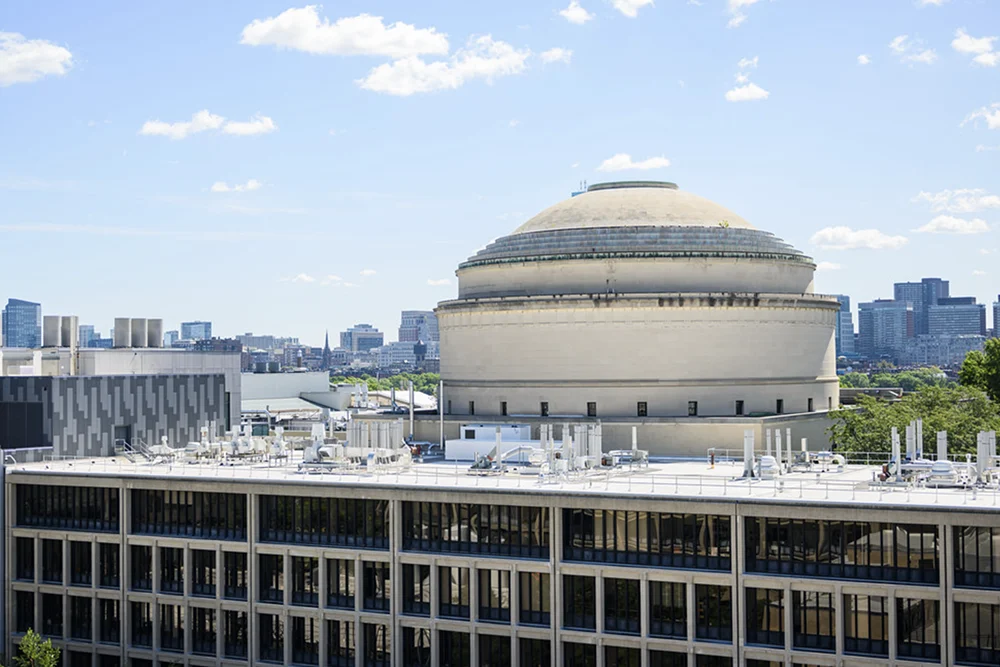
The National Science Foundation (NSF) has officially designated the Massachusetts Institute of Technology (MIT) as the lead institution for a prestigious new Materials Research Science and Engineering Center (MRSEC). Announced on July 30, this initiative is part of a broader federal effort to fortify the United States’ leadership in fundamental materials science, focusing on transformative technologies that span medical diagnostics, sustainable industrial manufacturing, and the next generation of semiconductor hardware. The center is expected to receive approximately $18 million in research funding over a six-year period, pending the finalization of formal research agreements between the NSF and the Institute.
This new center represents a massive interdisciplinary undertaking, uniting 16 distinct research groups from nine academic departments across four premier institutions. While MIT serves as the administrative and intellectual hub, the collaboration extends to Yale University, the University of California at Santa Barbara, and the Department of Radiology at Massachusetts General Hospital and Harvard Medical School. By bridging the gap between theoretical physics, chemical engineering, and clinical medicine, the MRSEC aims to solve "intractable" problems that no single discipline could address in isolation.
A Strategic Investment in the American Scientific Infrastructure
The selection of MIT is a cornerstone of a larger $108 million investment by the NSF into six new MRSECs across the country. These centers are designed to be the "intellectual centers of gravity" for materials science, pushing the boundaries of what is possible at the atomic and molecular levels. The 2024 cohort of centers will explore diverse frontiers, including artificial intelligence-driven experimental laboratories and hybrid quantum materials that blend light and matter.
For MIT, the new MRSEC is not merely a research grant but a continuation of a 60-year legacy of interdisciplinary excellence. The Institute’s history in materials research dates back to the 1960s, when the U.S. Department of Defense established foundational laboratories that later transitioned into NSF-supported centers. Previous iterations of these investments have been credited with spawning entire ecosystems of innovation, such as the MIT Microphotonics Center and the Microsystems Technology Laboratories.
Associate Professor Rafael Jaramillo of the Department of Materials Science and Engineering (DMSE) will lead the new center as director, supported by Professor Caroline Ross as associate director. The center will be housed within the MIT Materials Research Laboratory (MRL), an entity renowned for facilitating cross-departmental collaboration.
Research Thrust I: Revolutionizing Medical Imaging Through Nanoscale Engineering
The first primary research thrust of the MIT MRSEC focuses on the fundamental science of scintillators—specialized materials that absorb high-energy radiation, such as X-rays, and re-emit that energy as visible light. These materials are the "eyes" of modern medical imaging, yet their performance has long been limited by traditional manufacturing constraints.
Led by optical materials experts Professor Marin Soljačić and Professor Juejun Hu, the team intends to re-engineer these materials at the nanoscale. By controlling the architecture of scintillators at dimensions smaller than the wavelength of light, the researchers aim to achieve unprecedented levels of resolution, speed, and energy sensitivity.
The implications for healthcare are profound. Enhanced X-ray detectors could allow for the earlier detection of cancerous tumors, identifying abnormalities at a stage where they are still treatable. Furthermore, higher sensitivity means that medical professionals could produce high-quality images using significantly lower doses of radiation, reducing the long-term health risks for patients who require frequent diagnostic scans. Beyond the hospital, this technology has direct applications in industrial non-destructive testing and national security imaging at ports and airports.
Research Thrust II: Sustainable Metallurgy and the Future of Semiconductors
The second research thrust addresses a critical challenge in the global transition to a green economy: the sustainable production of metals and the development of new semiconductor platforms. This group will investigate the properties of high-temperature sulfur-based molten materials, a field of study that has seen a decline in academic focus within the United States over recent decades.
Under the guidance of Jaramillo and Professor Antoine Allanore, the research will explore how these sulfur-based liquids can be used to revolutionize the extraction and processing of critical metals, such as copper. As the world shifts toward electric vehicles and renewable energy grids, the demand for copper is projected to skyrocket. Traditional smelting processes are often energy-intensive and environmentally damaging. By mastering the chemistry of molten sulfur-based systems, the MRSEC hopes to unlock more efficient, lower-emission pathways for metal production.
Additionally, this research will pave the way for new thin-film semiconductor technologies. By understanding how these materials behave under extreme thermal conditions, scientists can develop new hardware components for the electronics industry, potentially leading to faster, more energy-efficient chips that could power the next generation of computing.
Expanding the National Portfolio of Research Facilities
A significant portion of the $18 million award will be dedicated to the creation of a new shared laboratory facility managed by MIT.nano. This laboratory will be equipped with specialized instrumentation for testing magnetic materials and observing material behavior under extreme conditions, such as high temperatures and intense pressures.
Crucially, this facility will not be restricted to MIT researchers. As part of the NSF’s mission to democratize scientific infrastructure, the lab will be open to academic and industry users from across the country. This "open-access" model is intended to accelerate the commercialization of new materials by providing startups and established companies with the tools needed to validate their technologies.
The "DISASTER!" Program: Education and Public Outreach
Recognizing that scientific advancement requires a robust pipeline of talent, the MIT MRSEC is launching an ambitious outreach initiative dubbed "DISASTER!" (stylized in all caps with an exclamation mark). This program is designed to introduce the field of materials science to a broader audience by examining history’s most famous engineering failures.
Director Rafael Jaramillo notes that while materials science is a well-known field in industrial hubs like Michigan, it lacks visibility in the Boston region’s community colleges. To bridge this gap, the DISASTER! program will recruit MIT undergraduates to conduct "forensic materials science" investigations into events such as the sinking of the Titanic—where brittle rivets were a contributing factor—and the crashes of the de Havilland Comet, which highlighted the then-unknown dangers of metal fatigue in aircraft.
"If it bleeds, it leads," Jaramillo remarked, emphasizing that understanding why a bridge failed or a plane crashed is a powerful way to engage the public’s curiosity. By telling these stories at public events like the MIT Future Fest, the center hopes to inspire a new generation of engineers to pursue careers in materials processing and forensic analysis.
Chronology of Materials Science at MIT
The establishment of the 2024 MRSEC is the latest chapter in a long-standing chronological development of materials research at the Institute:
- 1960s: The U.S. Department of Defense funds Interdisciplinary Laboratories (IDLs) at MIT to bolster Cold War-era technological capabilities.
- 1970s-1990s: The NSF takes over the funding of these labs, transitioning them into Materials Research Laboratories (MRLs) and eventually the MRSEC program.
- 2000s: MIT MRSECs contribute to the rise of photonics and nanotechnology, leading to the creation of MIT.nano.
- July 30, 2024: The NSF announces the $108 million investment, selecting MIT to lead one of the six new national centers.
- 2024–2030: The projected six-year lifespan of the current MRSEC award, focusing on imaging and sustainable metals.
Broader Implications and Future Outlook
The broader impact of the MIT MRSEC extends beyond the laboratory. By focusing on "critical materials," the center aligns with national security interests aimed at reducing reliance on foreign supply chains for essential minerals. The emphasis on sustainable production also supports global climate goals, seeking to decouple industrial growth from carbon-intensive processes.
Furthermore, the center’s interdisciplinary structure serves as a model for modern scientific inquiry. By involving departments as diverse as Earth, Atmospheric and Planetary Sciences (EAPS), Physics, Chemistry, and Chemical Engineering, the MRSEC ensures that a "materials-first" perspective is applied to some of the most complex challenges in science.
Looking toward the end of the six-year funding cycle, Jaramillo envisions the center as a self-sustaining hub. "I hope that we will have rebuilt the muscle memory to come together in an interdisciplinary way around materials science," he stated. The goal is to create a permanent intellectual foundation that will support the next 60 years of innovation, ensuring that the United States remains at the forefront of the materials revolution.
As the formal research agreement undergoes final negotiations, the 16 research groups involved are already preparing to begin their work. With the backing of the NSF and a legacy of excellence, the MIT Materials Research Science and Engineering Center stands poised to redefine the boundaries of medical science and industrial manufacturing for the 21st century.