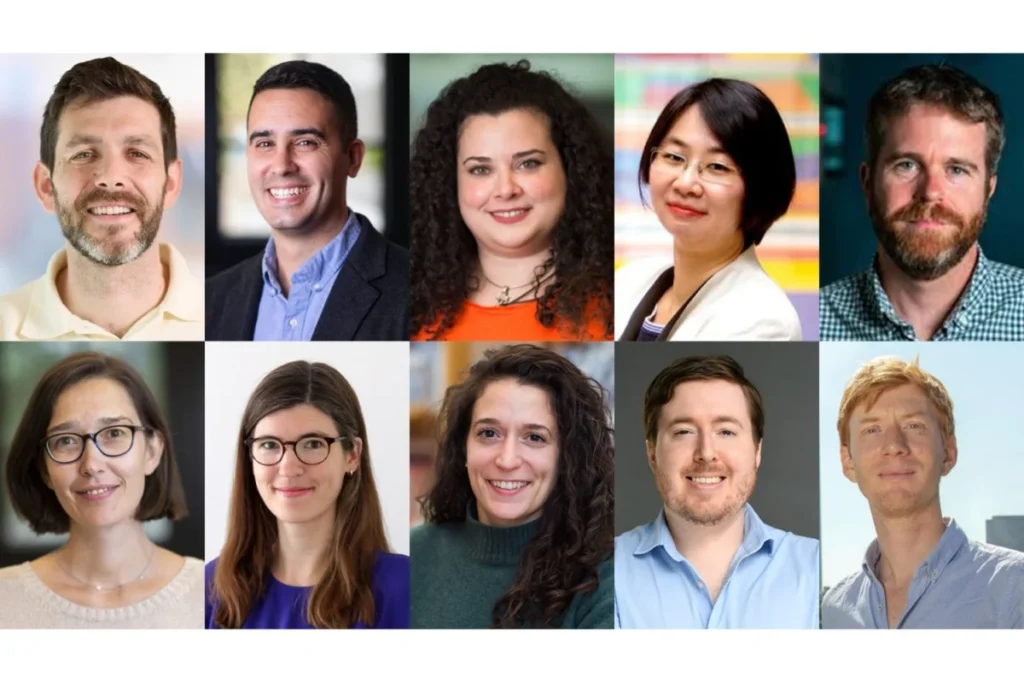
Cambridge, MA – In a significant affirmation of academic excellence and a strategic investment in the future of engineering, the Massachusetts Institute of Technology (MIT) announced in 2026 the granting of tenure to ten exceptional faculty members within its renowned School of Engineering. This landmark decision underscores MIT’s commitment to fostering groundbreaking research, innovative education, and mentorship that addresses some of the world’s most pressing challenges. The newly tenured engineers, whose appointments span a diverse array of departments including Aeronautics and Astronautics, Civil and Environmental Engineering, Electrical Engineering and Computer Science (EECS) – which reports jointly to the School of Engineering and MIT Schwarzman College of Computing – and Mechanical Engineering, as well as within the Institute for Medical Engineering and Sciences (IMES), represent the vanguard of their respective fields.
The rigorous process of earning tenure at an institution like MIT is a testament to sustained intellectual leadership, profound contributions to one’s discipline, and an unwavering dedication to the academic mission. For the ten individuals recognized this year, it marks not merely a personal career milestone but a collective enhancement of MIT’s formidable research and educational infrastructure.
The Significance of Tenure in Academia
Tenure, a cornerstone of the academic world, represents a university’s long-term commitment to a faculty member, granting them job security and, critically, academic freedom. This freedom allows scholars to pursue ambitious, potentially risky, and long-term research without fear of reprisal or dismissal based on controversial findings. At institutions like MIT, the tenure review process is notoriously stringent, often extending over several years and involving comprehensive evaluations of a candidate’s research productivity, impact, teaching effectiveness, and service to the department and the broader academic community.
Typically, a faculty member begins their journey as an assistant professor, a probationary period that can last six to seven years. During this time, they are expected to establish an independent research program, secure external funding, publish extensively in top-tier journals, teach courses effectively, and mentor students. The tenure committee, comprising senior faculty members, evaluates these accomplishments against the highest global standards. Success rates for tenure-track faculty at elite research universities can vary, but they often reflect a highly competitive environment where only a fraction of initial hires ultimately achieve this esteemed status. For MIT, a global leader in engineering and technology, the criteria are particularly elevated, reflecting its continuous pursuit of transformative discovery and innovation.
Dean Hammond Commends a New Generation of Leaders
Paula T. Hammond ’84, PhD ’93, dean of engineering, Institute Professor, and professor of chemical engineering, articulated the profound significance of this year’s tenure awards. "I’m delighted to congratulate the 10 newest tenured faculty members in the School of Engineering," Dean Hammond stated. "This major career milestone reflects not only their impact and excellence in research, but their deep commitment to education and mentoring the next generation of engineers. I am so excited to see what new developments, innovations, and technologies will come next from this incredibly accomplished group."
Dean Hammond’s remarks highlight the dual imperative of tenure at MIT: to recognize research prowess and to secure dedicated educators and mentors who will shape future generations of engineers and scientists. This strategic investment ensures the continuity of MIT’s intellectual legacy and its capacity to remain at the forefront of global innovation. The diversity of fields represented among the tenured faculty also underscores the interdisciplinary nature of modern engineering challenges and MIT’s holistic approach to addressing them.
Profiles of Innovation: The Newly Tenured Faculty
The ten faculty members granted tenure represent a cross-section of cutting-edge research and innovation within engineering and its allied fields. Their work collectively spans artificial intelligence, sustainable energy, advanced materials, aerospace systems, computational biology, and quantum computing, reflecting the breadth of MIT’s engineering enterprise.
Jacob Andreas (EECS)
As an associate professor in EECS and affiliated with the Computer Science and Artificial Intelligence Laboratory (CSAIL), Jacob Andreas stands at the forefront of natural language processing (NLP) and broader artificial intelligence. His research delves into the computational foundations of language learning, aiming to develop intelligent systems that can effectively learn from human guidance. In an era dominated by large language models and increasingly sophisticated AI, Andreas’s work is critical for enhancing the interpretability, robustness, and ethical development of AI systems. His contributions are poised to impact human-computer interaction, automated reasoning, and the future of knowledge acquisition, making AI more intuitive and adaptable to human needs. The global AI market is projected to reach trillions in the coming decade, and foundational research like Andreas’s is key to unlocking its full potential responsibly.
Zachary Cordero (Aeronautics and Astronautics)
Zachary Cordero, the Esther and Harold E. Edgerton Associate Professor in the Department of Aeronautics and Astronautics and associate director of the MIT Gas Turbine Laboratory, is driving advancements in frontier aviation and space platforms. His research focuses on advanced materials, manufacturing techniques, and structures, with a particular emphasis on high-temperature systems. As the aerospace industry seeks to develop more efficient, durable, and sustainable aircraft and spacecraft, Cordero’s work is vital for creating components that can withstand extreme conditions, pushing the boundaries of what is mechanically possible. His research directly supports national and international efforts to revolutionize air and space travel, reduce carbon footprints, and explore new frontiers beyond Earth.
Christina Delimitrou (EECS)
Christina Delimitrou, the KDD Career Development Professor in Communications and Technology and an associate professor in EECS, also affiliated with CSAIL, operates at the crucial intersection of computer architecture and computer systems. She is recognized for being among the first systems researchers to apply machine learning techniques to design and management problems in the cloud. Her work is foundational for optimizing the performance, efficiency, and reliability of the massive data centers that power the digital world. With global cloud spending continuing its exponential growth, her research ensures that the underlying infrastructure can scale effectively and intelligently, reducing energy consumption and improving user experience for countless applications and services.
Sili Deng (Mechanical Engineering)
Sili Deng, the Doherty Career Development Professor in Ocean Utilization and an associate professor in the Department of Mechanical Engineering, leads a group that develops scientific machine learning and experimental approaches to understand, predict, and engineer chemically reacting systems. Her work has profound implications for sustainable energy, advanced materials manufacturing, and climate-resilient technologies. As the world grapples with climate change and the urgent need for cleaner energy sources, Deng’s research offers pathways to optimize combustion processes, develop novel catalysts, and design materials that are more durable and environmentally friendly. Her contributions are essential for accelerating the transition to a sustainable global economy.
David Des Marais (Civil and Environmental Engineering)
David Des Marais, the Amgen Career Development Professor in the Department of Civil and Environmental Engineering, leads the Des Marais Lab, which focuses on understanding the mechanisms of plant-environment interaction. Utilizing tools from molecular, quantitative, and population genetics, his lab identifies the physiological basis of plant response to environmental cues. In an era of increasing food insecurity and climate variability, Des Marais’s research is critical for developing crop varieties that are more resilient to drought, heat, and disease. His work provides fundamental insights that can enhance agricultural productivity, ensure food security for a growing global population, and contribute to ecological restoration efforts.
Carmen Guerra-Garcia (Aeronautics and Astronautics)
Carmen Guerra-Garcia, the Esther and Harold E. Edgerton Associate Professor in the Department of Aeronautics and Astronautics and director of the Aerospace Plasma Group, conducts research at the intersection of aerospace engineering, low-temperature plasma technologies, and gas discharge physics. Her work addresses two critical aviation challenges: reducing emissions and ensuring the safety of next-generation aircraft. Through advancing the fundamental science of electrical discharges in flowing gases, applying this science to plasma-assisted combustion, and developing physics-based approaches to lightning protection, Guerra-Garcia is shaping the future of cleaner and safer air travel. Her research directly contributes to the aerospace industry’s ambitious goals for sustainability and operational integrity.
Laura Lewis (EECS and IMES)
Laura Lewis, the Athinoula A. Martinos Associate Professor in EECS and IMES, is dedicated to developing methods to analyze and interpret multi-modal neuroimaging data. Her goal is to enable the measurement of previously undetectable aspects of brain function, with a particular interest in fast fMRI, EEG, and PET, and their application to studying sleep. Understanding the brain remains one of science’s greatest frontiers. Lewis’s innovative approaches provide deeper insights into neurological processes, sleep disorders, and cognitive functions, paving the way for improved diagnostics, therapies, and a more comprehensive understanding of the human mind. The global neurotechnology market is expanding rapidly, driven by such advancements.
Tami Lieberman (Civil and Environmental Engineering and IMES)
Tami Lieberman, the Hermann L. F. von Helmholtz Career Development Professor in the Department of Civil and Environmental Engineering and IMES, leads the Lieberman Lab. Her research seeks to understand how ecology and evolution shape the personalized communities of the human microbiome and the role of this personalization on human health. The human microbiome is increasingly recognized as a crucial determinant of health and disease, influencing everything from digestion to immunity and mental well-being. Lieberman’s work provides critical insights into this complex ecosystem, opening new avenues for personalized medicine, dietary interventions, and the prevention and treatment of a wide range of conditions.
Kevin O’Brien (EECS)
Kevin O’Brien, an associate professor in EECS and a member of the Research Laboratory of Electronics, leads the Quantum Coherent Electronics Group. His research focuses on developing tools, techniques, and devices to enhance the measurement of quantum systems, most notably superconducting quantum computers. Quantum computing represents a paradigm shift with the potential to solve problems intractable for classical computers, impacting fields from drug discovery to financial modeling and cryptography. O’Brien’s work is fundamental to advancing the stability, coherence, and scalability of these nascent technologies, positioning MIT at the forefront of the quantum revolution. Global investment in quantum technologies is surging, underscoring the strategic importance of his research.
Wim van Rees (Mechanical Engineering)
Wim van Rees, an associate professor in the Department of Mechanical Engineering and the Leonardo Career Development Professor in Engineering, advances high-order, high-fidelity numerical methods for efficiently simulating interactions between fluid flows and moving or deforming bodies. His methodologies span applications from wake vortex dynamics to bio-inspired propulsion and morphing structures. From designing more aerodynamic vehicles to understanding the mechanics of biological flight and swimming, van Rees’s computational work is vital for engineering systems that are more efficient, agile, and resilient. His research underpins innovations in robotics, aerospace, marine engineering, and renewable energy.
Broader Impact and Implications for MIT
The granting of tenure to these ten faculty members in 2026 holds significant implications for MIT and the broader scientific community. This cohort represents a significant infusion of talent and long-term commitment into key strategic areas of research.
Reinforcing MIT’s Research Leadership: By securing these leading researchers, MIT reinforces its position as a global epicenter for engineering innovation. Their established and future work will continue to generate high-impact publications, patents, and technologies, contributing to the university’s formidable research output and influence. The sheer volume of federal and private research funding attracted by MIT faculty, often exceeding $1 billion annually, is directly supported by the caliber of researchers like these.
Enhancing Educational and Mentorship Capacity: Tenure ensures that these accomplished individuals will continue to teach, advise, and mentor undergraduate and graduate students for decades to come. This continuity is vital for transferring knowledge, fostering critical thinking, and inspiring the next generation of engineers and scientists. The student experience at MIT is uniquely shaped by direct interaction with faculty at the cutting edge of their fields.
Strategic Alignment with Global Challenges: The diverse research portfolios of the tenured faculty directly address major global challenges: climate change, sustainable energy, food security, advanced computing, personalized medicine, and the future of transportation. This aligns with MIT’s overarching mission to apply scientific and technological knowledge to benefit society. The strategic growth in areas like AI, quantum computing, and biomedical engineering reflects national and international research priorities.
Fostering Interdisciplinary Collaboration: Many of the tenured faculty’s research areas naturally cross traditional departmental boundaries, exemplified by appointments in IMES or joint reporting to the Schwarzman College of Computing. This fosters a rich environment for interdisciplinary collaboration, a hallmark of MIT’s research culture, leading to novel solutions that might not emerge from single-discipline approaches. For instance, the integration of engineering with medical sciences (IMES) or computer science with traditional engineering departments (EECS’s joint reporting) exemplifies this commitment.
A Vote of Confidence in Future Innovation: Granting tenure is a forward-looking decision. It is an institutional declaration that these individuals are not just excellent today, but are expected to be leaders and innovators who will shape their fields for the next 20-30 years. This long-term perspective is crucial for tackling complex problems that require sustained effort and foundational research.
The MIT School of Engineering, consistently ranked among the top engineering schools globally, with its numerous departments and interdisciplinary laboratories, serves as a powerful engine for discovery. The addition of these ten tenured faculty members further solidifies its intellectual capital, ensuring that MIT remains a pivotal force in shaping the technological and scientific landscape for decades to come. This class of 2026 tenure recipients embodies the spirit of inquiry, innovation, and impact that defines the Institute.