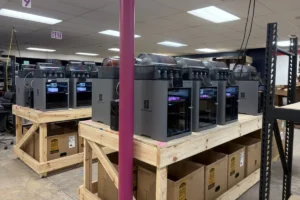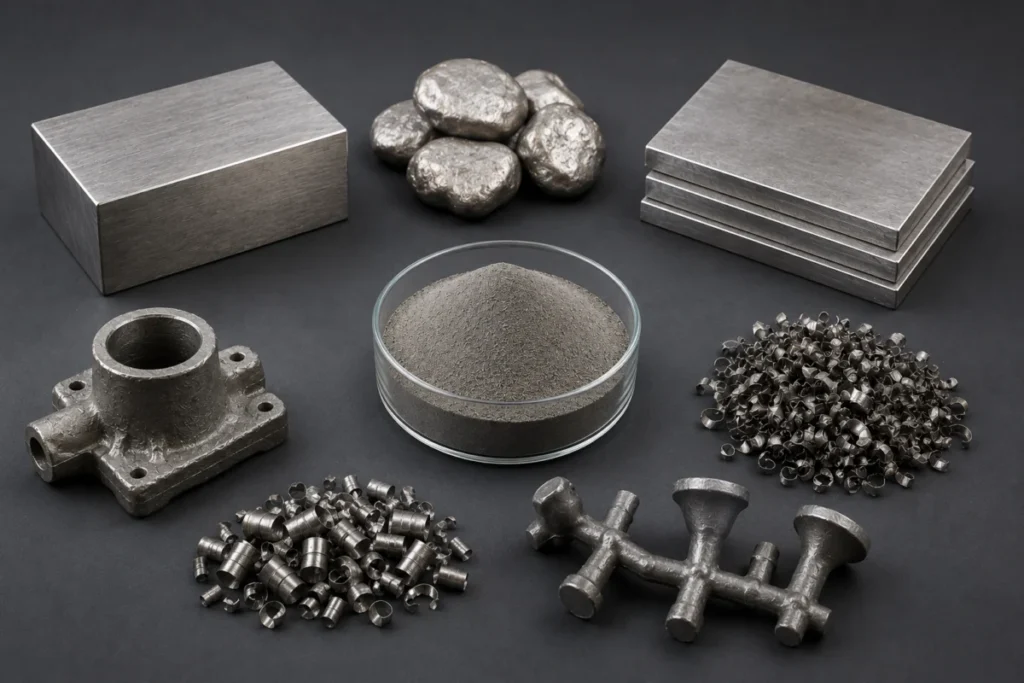
The global industrial landscape is undergoing a significant transformation, marked by a growing awareness of the precariousness of Western nations’ reliance on China for manufacturing and, increasingly, for critical mineral supply chains. Decades of outsourcing production have left many Western economies vulnerable, a reality underscored by China’s strategic use of export controls on essential materials like rare earths and tungsten. This trend, however, extends beyond niche commodities, encompassing a vast array of metals, including the ubiquitous aluminum, where China holds substantial influence. In response to this burgeoning challenge, the United States, particularly in vital sectors like aerospace and defense, is accelerating its adoption of metal additive manufacturing (AM), a technology that offers a potential pathway to regaining control over these critical supply chains.
The Shifting Sands of Global Supply Chains
For many years, the narrative surrounding globalization focused on the cost efficiencies and expansive capabilities offered by manufacturing hubs in Asia, particularly China. This led to a steady migration of production facilities and, consequently, a diminished domestic industrial base in many Western countries. While the economic advantages were readily apparent, the long-term strategic implications of ceding such extensive control over manufacturing were often overlooked. The recent tightening of export controls by China has served as a stark wake-up call, highlighting how access to raw materials and processed commodities can be weaponized in international trade relations.
The dominance of China in critical mineral supply chains is not a new phenomenon, but its implications are becoming increasingly apparent. A comprehensive analysis by Visual Capitalist reveals China’s pervasive influence across a broad spectrum of essential materials, challenging the perception that this is solely a concern for specialized, less common resources. This realization is prompting a strategic re-evaluation of industrial policy in Western nations, with a particular focus on building domestic capacity and reducing dependence on any single foreign source.
Metal Additive Manufacturing as a Strategic Imperative
The burgeoning adoption of metal AM in the US, especially within the aerospace and defense industries, is a direct consequence of this strategic imperative. These sectors, by their very nature, demand high-performance materials and secure, reliable supply chains. The ability to produce complex metal components on-demand, with reduced material waste and greater design flexibility, makes AM an attractive proposition. However, the true potential of AM to address supply chain vulnerabilities is inextricably linked to the availability of the raw materials – metal powders – used in these processes.
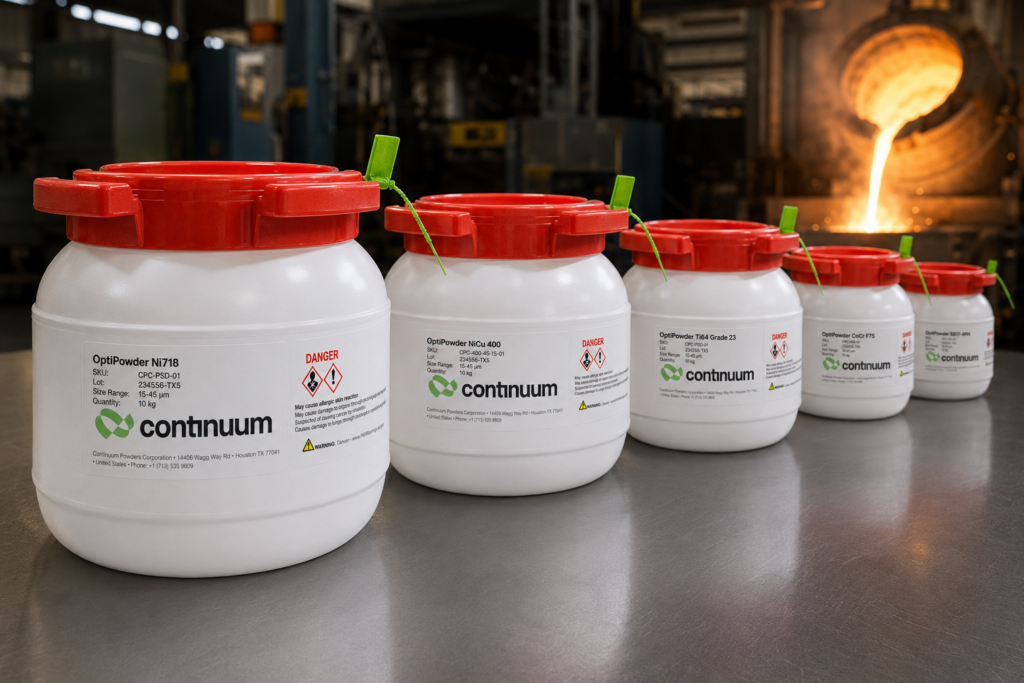
This is where companies like Continuum Powders, a Houston-based supplier of metal powders for advanced manufacturing, are carving out a crucial niche. Their business model is built on the foresight that reshoring manufacturing capabilities necessitates a parallel effort to reshore and secure critical mineral supply chains. This involves not only sourcing raw materials but also mastering the complex processing stages that transform them into usable powders.
Addressing Bottlenecks: Processing Over Mining
A key insight driving Continuum Powders’ strategy is the understanding that the primary bottlenecks in critical mineral supply chains often lie not in the availability of raw ore, but in the processing capacity required to refine these materials and convert them into the specialized forms needed for advanced manufacturing. Traditional mining operations may be abundant, but the ability to process these minerals into high-purity metal powders, with specific characteristics tailored for applications like AM, is a far more constrained capability, and one where China has historically held a significant advantage.
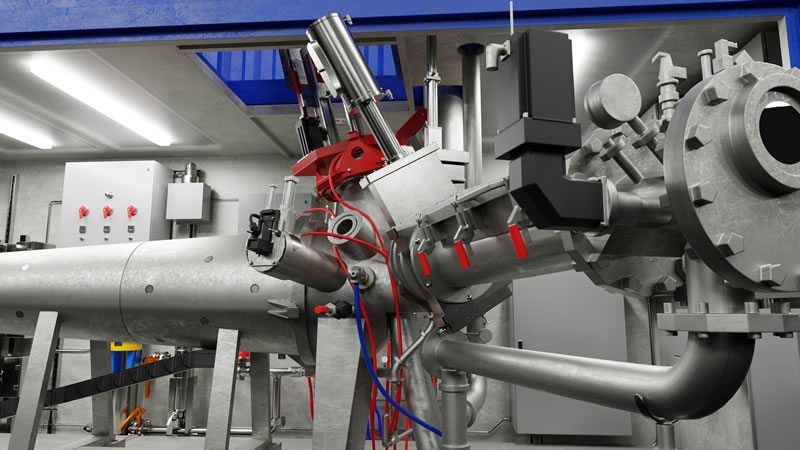
Continuum Powders’ proprietary Greyhound Melt-to-Powder (M2P) system exemplifies a forward-thinking approach to this challenge. This system is designed to integrate recycling capabilities at its foundation. By prioritizing the use of recycled metals, Continuum Powders aims to create a more sustainable and secure supply of metal powders. This approach not only reduces reliance on virgin materials, which are subject to price volatility and geopolitical risks, but also offers a more environmentally conscious manufacturing pathway.
The Closed-Loop Materials Era: A New Paradigm for Supply Autonomy
The strategic importance of recycling in the context of critical mineral supply chains is a central theme explored in a jointly produced white paper by Continuum Powders and AM Research, titled "Metal AM at Scale: the Closed-Loop Materials Era." This comprehensive document delves into how the integration of metal AM and recycling addresses critical issues such as cost efficiency, supply autonomy, and the provision of high-value materials for strategic sectors.
The white paper highlights several key areas where this closed-loop approach offers significant advantages:
- Cost Efficiency: In the early stages of AM adoption, the cost of not recycling was relatively negligible. However, as companies like Siemens Energy and Apple have demonstrated by scaling up to serial production, the cost competitiveness of AM is directly tied to the efficient utilization of materials. Recycled powders, when processed to high standards, can significantly reduce material costs, making AM a more economically viable solution for large-scale manufacturing.
- Supply Autonomy: By establishing robust in-house or domestically controlled recycling loops, manufacturers can significantly de-risk their supply chains. This reduces dependence on external suppliers, who may be subject to geopolitical pressures or disruptions. The ability to reclaim and reprocess used or scrap metal powder ensures a more consistent and predictable supply of raw materials.
- High-Value Materials for Strategic Sectors: Industries like aerospace and defense require specialized alloys with precise properties. The ability to recycle and reprocess these high-value materials within a controlled environment ensures that quality standards are maintained and that the unique demands of these critical sectors can be met without compromising national security interests.
- Defense Autonomy: For defense applications, the ability to produce critical components and spare parts rapidly and domestically is paramount. A closed-loop AM system, powered by recycled materials, contributes directly to this goal by reducing lead times and ensuring that essential materials are available even in times of crisis or conflict.
- Closing the Loop: The concept of "closing the loop" refers to the complete integration of material lifecycles, where waste is minimized and materials are continuously reused. In the context of metal AM, this means that spent or failed 3D printed parts, as well as production scrap, can be melted down and reprocessed into high-quality powder for new prints.
Continuum Powders’ Innovative Offerings: Custom Foundry Runtime (CFR)
To facilitate the transition to this closed-loop model, Continuum Powders has introduced innovative solutions designed to make recycled powders accessible and viable for a wider range of users. Their Custom Foundry Runtime (CFR) service offers powder-based metal AM users a unique opportunity to explore the advantages of using recycled powders, even in small batches. This allows companies to experiment with and validate the performance of recycled materials before committing to larger-scale adoption.
The CFR service addresses a critical barrier to entry for many companies: the perceived risk and complexity associated with using recycled materials. By providing on-demand alloy services for small-batch production, Continuum Powders enables users to gain hands-on experience with the cost and performance benefits of recycled powders, thereby accelerating their integration into mainstream AM workflows.
The Evolving Role of Recycling in the AM Ecosystem
Historically, recycling in the AM sector was often viewed primarily through the lens of sustainability. While environmental benefits are undeniable, the economic and strategic implications are now taking center stage. As AM technologies mature and production volumes increase, the cost savings associated with recycling become increasingly significant. This shift in perception is crucial for driving widespread adoption of sustainable and secure AM practices.
The integration of recycling capabilities into the core of metal powder production is no longer a peripheral concern; it is rapidly becoming a foundational element for achieving cost competitiveness and ensuring supply chain resilience. The implications extend beyond economic advantages, touching upon the vital aspect of national security. As nations strive to regain industrial sovereignty and reduce vulnerabilities, the ability to control the entire lifecycle of critical materials becomes a paramount strategic objective.
The white paper "Metal AM at Scale: the Closed-Loop Materials Era" serves as an essential resource for understanding the evolving landscape of metal AM and its pivotal role in the reshoring of critical mineral supply chains. By staying informed about these developments, industry leaders and policymakers can better navigate the challenges and opportunities presented by this new era of manufacturing.
Broader Implications and Future Outlook
The strategic importance of critical minerals cannot be overstated. They are the building blocks of modern technologies, from renewable energy infrastructure and electric vehicles to advanced electronics and defense systems. China’s control over significant portions of the global supply chain for many of these minerals has raised concerns about potential disruptions and the weaponization of trade.
The partnership between Continuum Powders and AM Research, along with the development of technologies like the Greyhound M2P system and the CFR service, represents a tangible step towards mitigating these risks. By fostering domestic processing capabilities, embracing recycling, and leveraging the advancements in metal AM, Western nations can begin to rebuild their industrial resilience and secure their access to the essential materials that underpin their economies and national security. The future of manufacturing will likely be characterized by a greater emphasis on circular economy principles, where resource efficiency and supply chain autonomy are not just desirable, but essential for long-term prosperity and security.