BIRMINGHAM, Mich. – The commercial drone industry is on the cusp of a transformative evolution, shifting from the traditional model of on-scene, manually piloted flights to a future dominated by remote, autonomous, and permanently stationed aircraft. This fundamental change promises to unlock unprecedented value across public safety, critical infrastructure management, and various enterprise applications, fundamentally altering how drones are deployed and utilized.
Currently, the prevailing operational paradigm for commercial drones involves a pilot physically arriving at a location, retrieving the drone from a vehicle, launching it, and maintaining direct visual contact while controlling the aircraft. While effective for tasks like aerial photography, construction site monitoring, and localized inspections, this approach inherently limits the scope and efficiency of drone applications. According to Miao, a key figure in this evolving landscape and associated with Birdstop, the significant leap forward in drone technology will not be defined by advancements in the aircraft itself, but rather by radical changes in its deployment and operational methodologies.
“The next generation of drone technology is one that’s going to be defined by the drone being in a different place than the person operating it,” Miao asserts, highlighting a paradigm shift that distances the operator from the physical location of the drone, potentially by hundreds of miles. This vision is not merely theoretical; it is actively being driven by critical regulatory changes, particularly those surrounding "beyond visual line of sight" (BVLOS) operations, spearheaded by the Federal Aviation Administration (FAA).
The Pivotal Role of BVLOS Regulations
Historically, FAA regulations, specifically Part 107, mandated that drone pilots maintain an uninterrupted visual line of sight with their unmanned aircraft system (UAS) during flight. This "see and avoid" principle, while crucial for safety in uncontrolled airspace, imposed significant limitations on drone utility. For instance, inspecting a several-hundred-mile pipeline or monitoring a vast agricultural area required numerous launches, landings, and repositioning of operators, making the process time-consuming and cost-prohibitive for many long-range applications. The inability to operate beyond the pilot’s visual range effectively tethered drones to localized tasks, preventing their full potential from being realized in scenarios demanding expansive coverage or rapid, distant deployment.
The FAA’s cautious but progressive approach to integrating UAS into the national airspace has seen a gradual loosening of these restrictions through waivers and pilot programs. The push towards BVLOS operations is a recognition that for drones to deliver maximum value, especially in critical applications, they must be able to operate autonomously or be controlled remotely from distant command centers. This shift allows drones to cover vast areas, respond to incidents far from human operators, and provide continuous surveillance or data collection without requiring personnel to be physically present.
Unlocking True Drone Value: Public Safety and Critical Infrastructure
Miao contends that the truly valuable applications of drones have yet to be fully realized under the conventional operational model. For sectors such as public safety agencies, security teams, and critical infrastructure operators, the primary objective is often to acquire timely and accurate information from a scene before human personnel arrive. This pre-arrival intelligence can be life-saving, drastically improve response efficacy, and mitigate risks for first responders.
Consider a scenario where a drone is summoned to an active fire, a hazardous materials spill, or a security breach at a remote facility. Instead of waiting for a pilot to drive to the scene, set up, and launch, a remotely deployed drone could be airborne within minutes, providing live aerial feeds and situational awareness to incident commanders hundreds of miles away. This capability fundamentally transforms emergency response, offering an immediate, bird’s-eye view that can inform tactical decisions, identify hazards, locate victims, and guide ground teams, thereby reducing response times and enhancing safety for all involved.
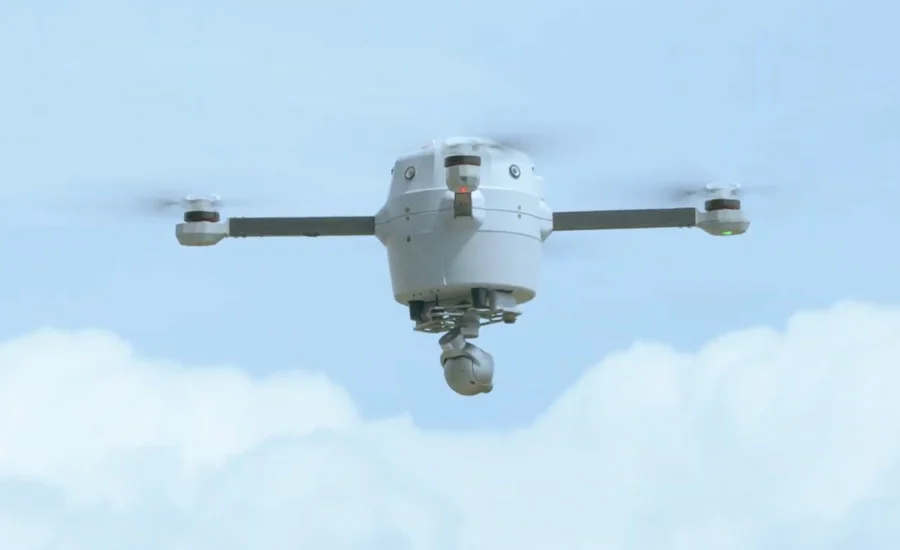
Birdstop, a company at the forefront of this revolution, develops autonomous drones specifically for government and enterprise customers. The company has secured nine distinct FAA approvals, enabling it to teleoperate drones under a diverse array of conditions and airspace environments. This regulatory achievement is a testament to the rigorous safety protocols and technological sophistication required to gain approval for operations that deviate from traditional visual line-of-sight rules.
"The drone may be tele-operated," Miao explains, "That drone may be beaming its intel back to its operators, its first responders, for instance, that can see what’s going on before potentially going into harm’s way.” This capability is not just an incremental improvement; it represents a paradigm shift from reactive, human-centric deployment to proactive, intelligent, and remotely managed aerial reconnaissance.
A Vision of Ubiquitous, On-Demand Drones
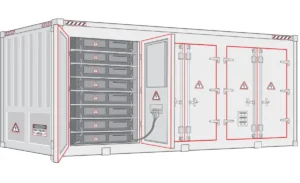
Miao envisions a future where drones are not merely transported to incidents but are permanently integrated into the fabric of communities, strategically stationed and ready for immediate deployment. "Drones on cell towers, on utility poles, on rooftops, and they’re summoned when they’re needed," he illustrates. This concept of a distributed network of "drone hubs" or "drone-in-a-box" systems could dramatically reduce response times for public safety agencies and infrastructure operators.
Imagine a city where every critical intersection, every major utility substation, or every remote industrial site has a drone ready to launch. In the event of a power outage, a security alert, or a traffic incident, the nearest drone could be activated, providing instant aerial visibility into the situation. This immediate reconnaissance could pinpoint the source of an outage, assess damage, or track a suspicious vehicle, all before human teams are even dispatched. The implications for predictive maintenance, rapid damage assessment after natural disasters, and continuous security monitoring are profound.
Transformative Impact on Drone Design and Manufacturing
This operational evolution is not only changing how drones are used but also how they are designed and manufactured. Many commercial drones currently on the market are still built with the assumption of a pilot operating them with a handheld controller in close proximity. However, companies like Birdstop are engineering their systems specifically for remote operation. This necessitates drones with advanced autonomy, robust long-range communication capabilities, sophisticated sensor packages, and integrated charging or swapping mechanisms for extended deployment without human intervention.
"We operate our drones using a computer, and eventually using a phone when you can be hundreds of miles away from the drone," Miao states, underscoring the shift towards software-defined control and remote command centers. This requires a new level of reliability, security, and intelligence built directly into the drone’s hardware and software architecture.
The Dual Transition: Domestic Manufacturing and Autonomous Operations
The drone industry is currently navigating two significant, interconnected transitions. The first is a strategic pivot towards domestic manufacturing. Geopolitical tensions, concerns over supply chain security, and restrictions on foreign drones and components are reshaping the market. There’s a growing imperative for nations, particularly the United States, to develop secure, resilient, and domestically sourced drone fleets. This drive is fueled by national security considerations, data integrity concerns, and the desire to foster a robust internal industrial base.
The second transition, as articulated by Miao, is the move towards autonomous and remotely deployed drone operations. These two shifts are not independent but mutually reinforcing. "It’s not only that we are creating a brand-new American fleet of drones," Miao emphasizes, "We are actually creating a next-generation fleet of drones.” This implies a strategic alignment: building advanced, autonomous capabilities into domestically manufactured systems, ensuring both technological leadership and supply chain resilience.
The Regulatory Landscape: A Chronicle of Progress and Challenges
The journey towards widespread BVLOS and autonomous drone operations has been a long and complex one, marked by continuous dialogue between innovators and regulators. The FAA’s initial drone regulations (Part 107), introduced in 2016, provided a foundational framework but deliberately limited operations to visual line of sight (VLOS) to ensure safety. Since then, the FAA has steadily worked towards enabling more complex operations.
- 2016: Part 107 introduced, establishing rules for commercial drone operations, primarily VLOS.
- 2017-Present: FAA began granting individual BVLOS waivers on a case-by-case basis, requiring extensive safety cases and operational plans from applicants. These early waivers were crucial for demonstrating the feasibility and safety of BVLOS operations in limited contexts.
- 2019: The FAA launched the UAS Integration Pilot Program (UASIPP) and later the BEYOND program, collaborating with state, local, and tribal governments to accelerate BVLOS operations and develop best practices. These programs have been instrumental in gathering data, refining operational concepts, and informing future rulemaking.
- 22020: The FAA released proposed rules for operating drones over people and at night without waivers, a precursor to broader BVLOS integration.
- 2023: The FAA continues to refine its approach, working towards a more standardized and scalable framework for BVLOS approvals, moving beyond individual waivers to potentially broader operational rules. This progression indicates a growing confidence in the technology and the ability to safely manage complex drone operations.
The challenges remain significant, including the development of robust detect-and-avoid (DAA) systems to prevent mid-air collisions with manned aircraft, secure communication links, and comprehensive airspace management solutions to integrate a multitude of autonomous drones into the existing air traffic control system. Privacy concerns and public acceptance also represent ongoing hurdles that require careful consideration and transparent engagement.
Economic and Societal Implications
The widespread adoption of autonomous and remotely deployed drones is poised to generate substantial economic benefits. Market research firms project the global commercial drone market to reach tens of billions of dollars in the coming years, with BVLOS operations being a significant growth driver. This expansion will create new jobs in drone manufacturing, software development, data analytics, maintenance, and operational services. It will also foster innovation in related fields such as AI, robotics, and telecommunications.
Beyond economic growth, the societal benefits are immense. Faster emergency response can save lives and reduce property damage. More efficient infrastructure inspection can prevent costly failures and ensure greater public safety. Enhanced security capabilities can protect critical assets and improve overall community safety. For example, drones equipped with thermal cameras could rapidly search for missing persons in vast, challenging terrains, dramatically improving search and rescue outcomes. In agriculture, autonomous drones can monitor crop health, apply pesticides precisely, and optimize irrigation over thousands of acres, leading to increased yields and reduced environmental impact.
Birdstop’s Strategic Approach and Michigan’s Role
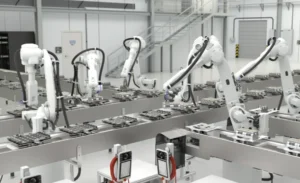
Birdstop’s manufacturing strategy is particularly noteworthy, leveraging Michigan’s rich legacy and robust ecosystem within the automotive supply chain. The state, historically a powerhouse in vehicle manufacturing, possesses unparalleled expertise in precision engineering, advanced materials, automation, and complex systems integration. This existing infrastructure, coupled with a skilled workforce, provides a fertile ground for developing and producing cutting-edge drone technology.
By tapping into Michigan’s automotive supply chain, Birdstop benefits from established manufacturing processes, quality control standards, and a deep pool of talent, enabling them to produce sophisticated drone systems domestically. This strategic choice aligns perfectly with the broader national push for domestic manufacturing, ensuring that the next generation of advanced drones is built with American ingenuity and resilience.
Miao is scheduled to delve deeper into these transformative changes, Birdstop’s manufacturing strategy, and the critical role of Michigan’s industrial base in an upcoming episode of ASSEMBLY Audible, set to release on August 6 on assemblymag.com. The discussion promises to provide further insights into how these twin transitions—domestic manufacturing and autonomous remote operations—are not just reshaping an industry, but creating a safer, more efficient, and technologically advanced future. The era of drones as mere flying cameras is rapidly receding, making way for a future where intelligent, remotely managed aircraft are integral to our infrastructure, safety, and economic prosperity.