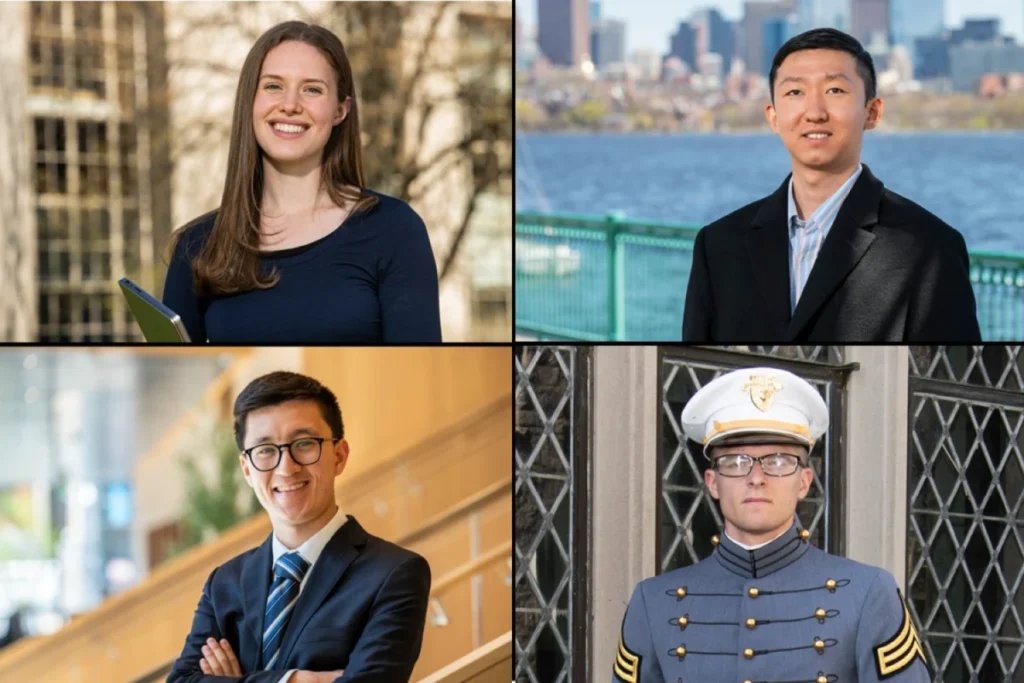
Cambridge, MA – The Fannie and John Hertz Foundation, a revered institution dedicated to fostering scientific and technological leadership, has proudly announced the selection of four individuals affiliated with the Massachusetts Institute of Technology (MIT) for its highly competitive 2024 fellowships. This distinguished recognition bestows upon Annika Marschner, Alvin Q. Meng, Zachary S. Siegel, and Matthew Wanta five years of unparalleled financial and intellectual support, designed to empower them in their pursuit of transformative graduate research. These MIT-affiliated recipients are part of a select national cohort of only 19 scholars chosen this year from across the United States, underscoring the exceptional caliber of talent emerging from the Institute.
The Hertz Fellowship: A Legacy of Empowering Scientific Pioneers
Established in 1963 by entrepreneurs John D. and Fannie Hertz, the Hertz Foundation’s mission is rooted in the belief that investing in the nation’s most promising scientific and technical talent is crucial for addressing humanity’s grand challenges and maintaining global leadership in science and engineering. John D. Hertz, a self-made millionaire who built an empire in rental cars and other ventures, and his wife Fannie, envisioned a mechanism to support exceptional graduate students whose innovative research could significantly impact society. Over the past six decades, the Foundation has remained steadfast in its commitment to this vision, identifying and nurturing individuals with the potential to become leaders in applied physical, biological, and engineering sciences.
The Hertz Fellowship is renowned for its unique structure, offering recipients not only a generous stipend and full tuition equivalent for up to five years but also an extraordinary degree of autonomy. This financial independence allows fellows to embark on high-risk, high-reward research projects that might otherwise be constrained by conventional funding models. This freedom is a cornerstone of the fellowship’s philosophy, enabling a deeper, more exploratory approach to scientific inquiry. The Foundation understands that true breakthroughs often emerge from unconventional paths, and its support empowers fellows to chart these new territories without undue financial pressure.
Philip Welkhoff, a Hertz Fellow himself and director of the malaria program at the Gates Foundation, who co-led this year’s rigorous selection process, articulated the essence of the new cohort’s distinction. "What particularly impresses me about this cohort is their fearlessness in taking on new challenges and advancing the frontiers of science," Welkhoff stated. "Each has exhibited tremendous creativity, grit, and vision, and I cannot wait to see what each accomplishes with the freedom to innovate provided by the Hertz Fellowship." This sentiment echoes the Foundation’s long-standing tradition of valuing audacious thinking and the pursuit of knowledge that pushes beyond existing boundaries.
Beyond the substantial financial package, the Hertz Fellowship provides a lifelong connection to an exclusive network of over 1,300 past and present fellows. This vibrant community, cultivated since the fellowship’s inception, offers invaluable mentoring relationships, collaborative opportunities, and access to specialized events. The connections forged within this elite group have historically catalyzed groundbreaking startups, collaborative research initiatives, and the commercialization of novel technologies across a vast spectrum of science, engineering, and medical fields. Notable contributions from Hertz Fellows span critical areas such as advanced medical therapies, the development of global defense networks, and pivotal work on instruments like the James Webb Space Telescope, demonstrating the profound and far-reaching impact of the Foundation’s investment.
The 2024 Cohort: A National Overview and MIT’s Contribution
The 2024 selection process was exceptionally competitive, drawing applications from thousands of top-tier graduate students across the nation. From this vast pool, only 19 individuals were ultimately chosen, reflecting an acceptance rate significantly lower than many prestigious academic programs. The inclusion of four MIT-affiliated scholars—three current students and one incoming graduate student—highlights the Institute’s consistent ability to attract and cultivate individuals poised for significant scientific contributions. This strong representation underscores MIT’s role as a leading global hub for innovation and advanced research, consistently producing talent recognized by the highest echelons of scientific philanthropy.
Meet the MIT-Affiliated Hertz Fellows: Profiles in Innovation
The four MIT-affiliated recipients embody the diverse and interdisciplinary spirit that the Hertz Foundation seeks to support. Their research interests span robotics, chemistry, artificial intelligence, and operations research, each promising to contribute significantly to their respective fields.
Annika Marschner
An accomplished mechanical engineer from the MIT Class of 2026, Annika Marschner is set to commence her PhD studies at MIT in the fall. Her undergraduate career was marked by an intense focus on the development of innovative technologies for both biointerfacing and bio-inspired systems, a field with immense potential for future medical and technological advancements. At MIT’s Raman Lab, her contributions included designing and building a custom benchtop stereoscope-compatible incubator and an extrusion-based desktop bioprinter, tools critical for advancing tissue engineering and cellular research. Further demonstrating her versatile skills, she developed a light-based filamented bioprinting system for ETH Zürich’s Tissue Engineering and Biofabrication Lab, pushing the boundaries of biological fabrication. Marschner also made significant contributions to large-scale hardware designs for robotic systems within MIT’s Biomimetic Robotics Lab, showcasing her ability to translate complex theoretical concepts into practical, tangible applications.
Her undergraduate thesis delved into the crucial area of improving the speed and dexterity of dynamic motions in bio-inspired robotic limbs, a challenge at the forefront of creating more agile and adaptable robotic systems. As a graduate student, Marschner plans to continue her pioneering work on both hardware and control system design within biologically relevant settings. Her particular interest lies in the critical areas of assistive medical technology and surgical robotics, where her innovations could profoundly enhance patient care, rehabilitation, and surgical precision. Her research promises to bridge the gap between biological principles and engineering applications, leading to robots that can interact with and assist humans in more natural and effective ways.
Alvin Q. Meng
Alvin Q. Meng, a doctoral student in inorganic chemistry at MIT, dedicates his research to unraveling the fundamental interactions that govern chemical structure and reactivity. His current focus on iron-sulfur clusters, conducted under the expert guidance of Professor Daniel L.M. Suess, is crucial for understanding a wide range of biological processes, including respiration and photosynthesis, as well as for developing new catalysts for industrial applications. Iron-sulfur clusters are ubiquitous in nature, playing vital roles in electron transfer and enzymatic reactions, making Meng’s fundamental research highly relevant to both basic science and applied technology.
Meng’s journey in science began after immigrating to the United States from Tianjin, China, at the age of 10. He earned undergraduate degrees in chemistry and mathematics from the University of Virginia, where he honed his research skills in the group of Professor W. Dean Harman. His prior work involved the intricate synthesis and characterization of dihapto-coordinated tungsten complexes of cyclopentadiene. This research specifically focused on a class of unusual binuclear species characterized by a unique carbon-carbon bond linking two metal-bound five-membered rings. Such highly specialized inorganic chemistry research contributes to a deeper understanding of bonding principles, molecular architectures, and the potential for novel catalytic systems, which can have implications for energy conversion and sustainable chemical synthesis.
Zachary S. Siegel
Zachary S. Siegel is an electrical engineering and computer science graduate student pursuing a PhD within MIT’s renowned Computer Science and Artificial Intelligence Laboratory (CSAIL). His research navigates the complex and increasingly vital intersection of robotics, cognitive science, and artificial intelligence, aiming to develop machines that exhibit more human-like learning and reasoning capabilities. Siegel graduated summa cum laude from Princeton University with a BSE in computer science and a minor in philosophy, an interdisciplinary background that uniquely positions him to tackle the philosophical and technical challenges of AI. His undergraduate accolades include induction into Tau Beta Pi and Sigma Xi, along with receiving the Outstanding Computer Science Independent Work Prize.
His senior thesis, advised by Tom Griffiths and Jacob Andreas, explored how humans infer the goals of others in open-ended, real-world environments. Siegel’s work compellingly demonstrated that Bayesian inference serves as an accurate model for people’s goal predictions, achieved by comparing partial observations to a learned library of possible plans weighted by their prior likelihood. This foundational work informs his doctoral research, which seeks to build machines that can learn from limited data and generalize to novel situations by integrating robot planning with Bayesian inference. Siegel is particularly captivated by combinatorial generalization – the remarkable human capacity to compose known skills in innovative ways to solve previously unseen problems without requiring additional demonstrations. At MIT, he is guided by a distinguished advisory team comprising Leslie P. Kaelbling, Tomás Lozano-Pérez, and Joshua B. Tenenbaum, all luminaries in the fields of robotics and cognitive AI. His contributions could pave the way for more adaptable, intuitive, and truly intelligent autonomous systems.
Matthew Wanta
Matthew Wanta is an incoming doctoral student poised to begin his studies in operations research at MIT in the fall. A distinguished graduate of the United States Military Academy at West Point, Class of 2026, he earned bachelor’s degrees in computer science and mathematical sciences, both with honors. Wanta’s extensive work has centered on machine learning applications for autonomous systems, specifically integrating probabilistic modeling and computer vision into cooperative drone search and swarm control frameworks. His background, steeped in both rigorous academic study and practical application within a military context, brings a unique perspective to his chosen field.
In collaboration with the DEVCOM Armaments Center, Wanta developed sophisticated computer vision models designed for detecting energetic defects in artillery munitions. This innovation has significant implications for defense manufacturing, enabling rapid, nonintrusive quality control that enhances safety and efficiency in critical production processes. His work with U.S. Special Operations Command and Army C5ISR organizations focused on advancing autonomous aerial search and sensing capabilities. Here, he built advanced simulation architectures for probabilistic target localization and multi-agent coordination, which are vital for enhancing surveillance, reconnaissance, and response operations in complex environments.
Beyond his academic and research achievements, Wanta demonstrated exceptional leadership as company commander for Bravo Company, 2nd Regiment, and held leadership roles in academic honor societies as president of Upsilon Pi Epsilon and vice president of Phi Kappa Phi. He is also an Astronaut Scholar and a Sapper School graduate, having commissioned as an Army officer in the Cyber Corps. His commitment to national service and his profound expertise in autonomous systems and defense applications underscore the multifaceted impact his future research in operations research is expected to have, particularly in areas of national security and advanced logistical optimization.
Statements and Institutional Pride
The selection of these four individuals for the Hertz Fellowship is a source of immense pride for MIT. While official statements from MIT leadership are typically issued during broader institutional award announcements, the consistent recognition of its students by such a prestigious foundation underscores the Institute’s sustained commitment to fostering top-tier scientific talent and pushing the boundaries of knowledge. The inclusion of an incoming student, Annika Marschner, further highlights MIT’s enduring appeal to the brightest minds entering graduate studies.
"MIT has a long and storied history of attracting and nurturing individuals who go on to redefine scientific and technological landscapes," an internal MIT spokesperson, speaking on background, noted. "The Hertz Foundation’s recognition of Annika, Alvin, Zachary, and Matthew is a testament not only to their individual brilliance and relentless dedication but also to the vibrant, interdisciplinary research environment that MIT strives to provide. These fellowships empower our students to pursue their most ambitious ideas, and we eagerly anticipate the groundbreaking contributions they will make."
From the Hertz Foundation’s perspective, the selection process is a meticulous endeavor to identify those rare individuals who possess not just exceptional intellect but also the courage, vision, and drive to tackle monumental scientific challenges. "Our fellows represent the vanguard of scientific inquiry," stated a representative from the Hertz Foundation, emphasizing the careful consideration given to each candidate’s potential for leadership and impact. "Their work will undoubtedly shape the future of their respective fields, and we are honored to support their journeys."
The Broader Impact: Cultivating Future Leaders and Shaping Global Progress
The implications of these Hertz Fellowships extend far beyond the individual recipients and their immediate research projects. By providing unparalleled freedom and resources, the Foundation directly contributes to accelerating scientific discovery and technological innovation that addresses pressing global issues. The unique structure of the fellowship, emphasizing autonomy, fosters a culture of bold experimentation and interdisciplinary collaboration, which are crucial for solving complex, multifaceted problems.
Historically, Hertz Fellows have been at the forefront of critical advancements across various sectors. Their work has contributed to breakthroughs in areas such as advanced medical diagnostics and therapies, including gene editing technologies and novel drug delivery systems that have revolutionized patient care. In global defense networks, their expertise has been instrumental in developing sophisticated cybersecurity measures, advanced communication systems, and autonomous defense technologies crucial for national security. Furthermore, their involvement in monumental projects like the James Webb Space Telescope underscores their impact on fundamental scientific exploration and our understanding of the cosmos.
For the new cohort, the lifelong access to the Hertz Foundation’s programs, including events, specialized mentoring, and extensive networking opportunities, means they become part of an enduring legacy. This community acts as a powerful multiplier, facilitating collaborations that might not otherwise occur and providing a peer network of accomplished scientists and engineers. This collective brain trust is a significant force for progress, fostering an environment where ideas can be shared, challenged, and refined, leading to even greater societal benefit.
The research areas chosen by Marschner (bio-inspired robotics for medical tech), Meng (fundamental inorganic chemistry), Siegel (human-like AI and robotics), and Wanta (machine learning for autonomous defense systems) represent some of the most critical and rapidly evolving fields in contemporary science and engineering. Their work promises to yield innovations that could revolutionize healthcare, enhance national security, deepen our understanding of fundamental chemical processes, and advance the frontier of artificial intelligence, ultimately benefiting humanity in myriad ways. The Hertz Foundation’s investment in these brilliant minds is, therefore, an investment in the future of scientific progress and a testament to the enduring power of intellectual freedom and dedicated support.






