Autocross, a discipline of precision driving against the clock, is won or lost in the margins of milliseconds. Unlike traditional circuit racing where drivers have multiple laps to find a rhythm and heat their tires, an autocross competitor must achieve peak performance within a window of sixty seconds or less. Between these frantic bursts of energy through a sea of pylons, the most successful competitors utilize their ten to fifteen minutes of downtime to perform surgical adjustments to their vehicles. This period, often overlooked by novices, serves as a critical laboratory where data gathered from the previous run is translated into mechanical changes intended to shave time off the next. The process involves a sophisticated understanding of thermodynamics, tire chemistry, and suspension geometry, all applied under the pressure of a ticking clock.
The Thermodynamics of Rubber and the Criticality of Thermal Management
At the heart of autocross performance is the tire. For a tire to provide maximum lateral grip, it must operate within a specific temperature window. For most extreme performance summer tires used in "Street" or "Street Touring" classes—often referred to as 200-treadwear tires—this optimal range typically falls between 120 and 160 degrees Fahrenheit. In professional racing series such as Formula 1 or IndyCar, drivers utilize warm-up laps and tire blankets to reach this window. In the grassroots environment of the Sports Car Club of America (SCCA) or similar regional clubs, competitors must rely on the heat generated during the run itself.
The paradox of autocross is that while the first run often suffers from "cold" tires, subsequent runs can easily lead to overheating. As heat builds up through the tire carcass and tread, the rubber can reach a point of "greasiness," where the chemical bonds of the compound begin to lose their structural integrity under high shear loads. This results in a noticeable drop in grip, often leading to understeer in the front or a "loose" rear end.
To combat this, veteran racers employ the use of pressurized water sprayers. By misting the tread and sidewalls immediately after a run, drivers utilize evaporative cooling to pull heat out of the tire. This is not a uniform process; a front-wheel-drive car will typically abuse its front tires more heavily, requiring more cooling at the nose, while a rear-wheel-drive car might require a balanced cooling approach across all four corners. On cooler days, the strategy flips. Competitors may be seen using "tire cozies" or blankets to trap the heat from a previous run, ensuring the rubber does not drop below its glass transition temperature before the next green light.
Precision Pressure Management and Contact Patch Optimization
Tire pressure is perhaps the most accessible yet impactful adjustment available to the autocrosser. It is a common misconception that there is a single "correct" pressure for a specific car. In reality, the ideal pressure is a moving target influenced by ambient temperature, track surface, and the heat generated by the driver’s aggression.
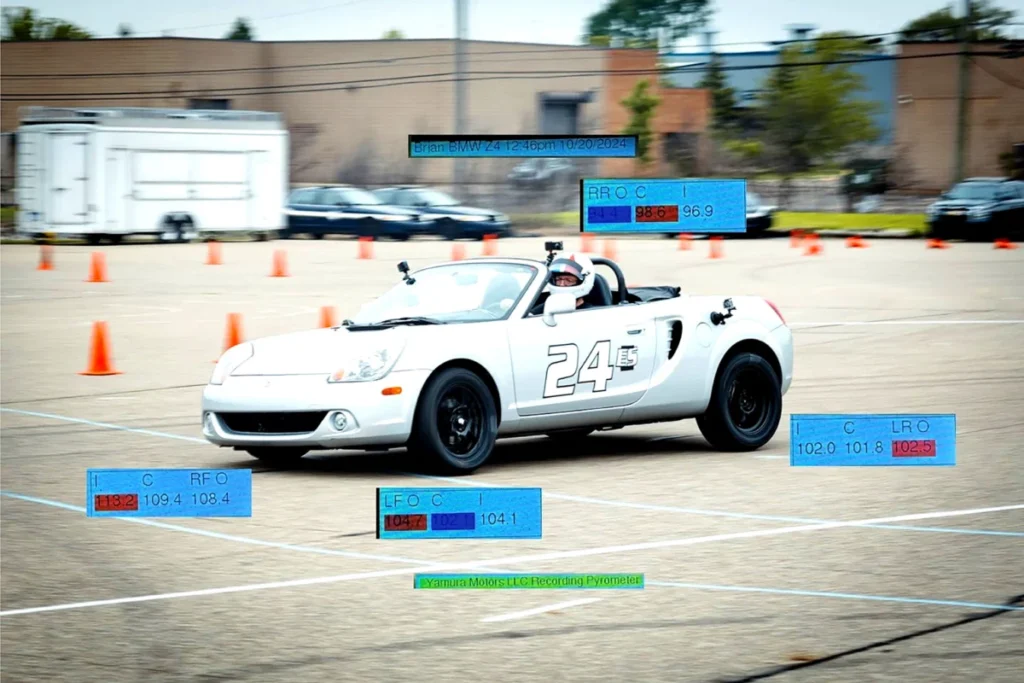
The primary goal of adjusting pressure between runs is to optimize the contact patch—the area of the tire actually touching the pavement. If a post-run inspection reveals that the center of the tread is significantly hotter than the shoulders, the tire is overinflated, causing it to "balloon" and reduce the footprint. Conversely, if the shoulders are scorched while the center remains cool, the tire is underinflated and rolling over onto the sidewall.
Professional-grade data collection involves using a probe-type pyrometer to take three readings across the width of each tire: the inner edge, the center, and the outer edge. A 2-to-3 PSI adjustment can be the difference between a car that "pushes" through a hairpin and one that rotates perfectly. Competitors are encouraged to keep meticulous logs, noting the starting "cold" pressure, the "hot" pressure immediately following a run, and the subsequent adjustments. This longitudinal data allows a driver to predict how a 10-degree rise in ambient temperature at noon will affect their car’s handling compared to the 8:00 AM practice sessions.
Suspension Geometry: Camber, Toe, and the Pursuit of Balance
While tire management addresses the rubber, suspension adjustments address how that rubber is presented to the road. For vehicles equipped with adjustable dampers or "coilovers," the window between runs is a time for fine-tuning the car’s transitional behavior.
Camber, the vertical tilt of the wheels, is the most frequent focus of suspension analysis. In a hard corner, centrifugal force causes the car to lean, which can lift the inner edge of the tire off the ground. To counter this, autocrossers run "negative camber," tilting the tops of the wheels inward. If a driver notices the outer edges of their tires are wearing excessively or showing high heat, it is a definitive sign that the car needs more negative camber to keep the tire flat during cornering.
Toe settings—the direction the tires point relative to the vehicle’s centerline—also play a pivotal role. A slight "toe-out" in the front can sharpen turn-in response, making the car feel more eager to enter a corner. However, too much toe-out can make the car nervous and unstable on fast straightaways. Between runs, a driver might soften or stiffen a sway bar (anti-roll bar) if the car is exhibiting undesirable balance. A car that refuses to turn (understeer) can often be cured by softening the front sway bar or stiffening the rear, allowing for better weight transfer and rotation.
Environmental Variables and Surface Evolution
An autocross course is a living entity that evolves throughout the day. A morning run is often a battle against a "green" track—one that is covered in a fine layer of dust, morning dew, or pollen. As more cars traverse the course, they "clean" the racing line and deposit a layer of rubber, a process known as "rubbering in." This increases the available friction coefficient, allowing for higher cornering speeds and, consequently, generating more heat in the tires.
The surface material itself dictates the strategy. New concrete, often found at airfield sites, is highly abrasive and provides immense grip but can shred tires quickly. Old asphalt, which may have "oiled out" or become polished over decades, requires a much softer touch and lower tire pressures to encourage the carcass to flex and find grip.
Furthermore, the "run order" can significantly impact performance. If a driver is in the first heat of the day, they face the coldest track temperatures. If they are in the final heat, the pavement may have soaked up hours of solar radiation, potentially reaching temperatures in excess of 120 degrees Fahrenheit before a car even touches it. This environmental context necessitates a proactive approach to adjustments; a driver cannot simply rely on what worked at a previous event but must react to the "micro-climate" of the current venue.
Analysis of Implications: The Competitive Edge
The transition from a casual participant to a trophy-winning competitor is almost always marked by the adoption of a rigorous between-run routine. The data suggests that drivers who actively manage their tire temperatures and pressures see more consistent lap times and a steeper improvement curve throughout the day.
There is also a psychological component to these adjustments. Autocross is a high-stress environment where a single mistake—a clipped cone or a missed apex—can invalidate a performance. Engaging in a structured mechanical routine between runs allows the driver to reset mentally. By focusing on the "math" of the car, they distance themselves from the "emotion" of a previous poor run, entering the cockpit for the next attempt with a clear, data-driven plan.
From a broader automotive perspective, the lessons learned in the "six-minute window" of autocross have direct applications in vehicle development and safety. Many of the suspension settings and tire management techniques used by grassroots racers are the same principles used by OEM engineers to tune the handling of high-performance sports cars. The ability to read a tire’s "story" through heat and wear is a fundamental skill in the world of vehicle dynamics.
Conclusion
In the final analysis, autocross is a sport of variables. While the driver’s skill behind the wheel is the primary determinant of success, the mechanical state of the vehicle provides the ceiling for that success. By treating the time between runs as an essential phase of the competition, drivers can ensure that their car is not just a static machine, but a dynamic tool that is constantly being optimized for the specific challenges of the moment. Whether it is a slight reduction in PSI, a cooling mist of water, or a click of a damper knob, these small changes aggregate into the split-second victories that define the sport. The difference between a podium finish and a mid-pack result often lies not in the speed of the car on the track, but in the diligence of the driver in the paddock.