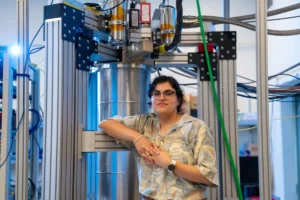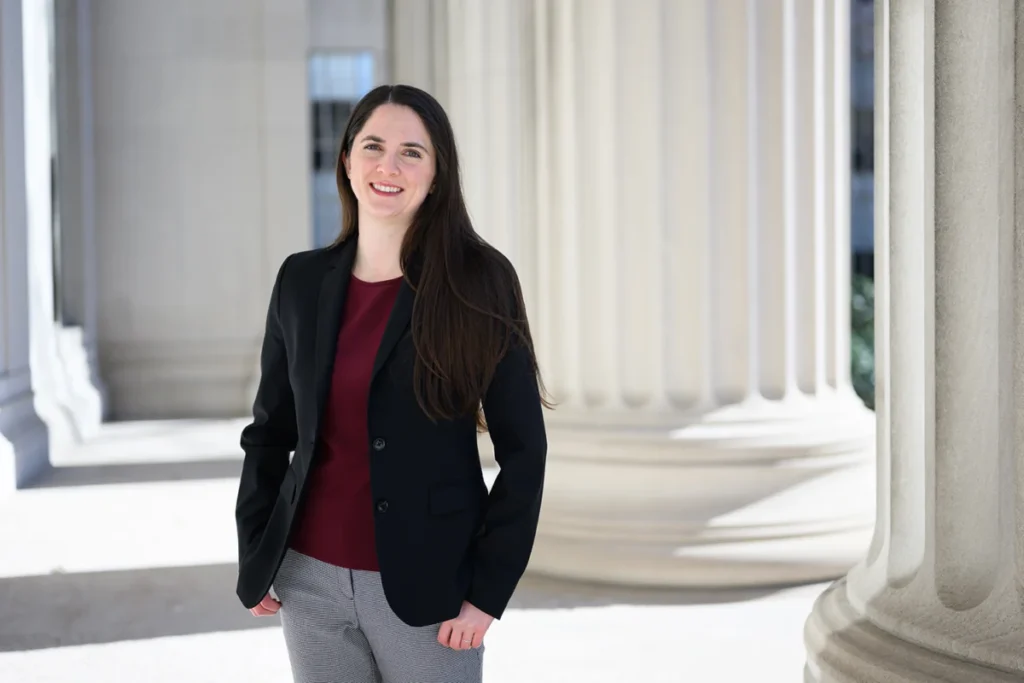
The global imperative for clean energy sources has placed nuclear power firmly in the spotlight, recognized for its substantial, carbon-free electricity generation. However, for nuclear energy to truly unlock its potential and scale up as a cornerstone of future energy grids, it must overcome significant economic hurdles. The capital intensity, lengthy construction timelines, and the substantial operational costs associated with maintaining large human staffs at traditional nuclear facilities have historically presented barriers to its broader adoption. Addressing these challenges is paramount, and at the forefront of this effort is Lauren Fortier, a second-year doctoral student in the Massachusetts Institute of Technology’s (MIT) Department of Nuclear Science and Engineering (NSE). Fortier’s groundbreaking research focuses on developing remote operation protocols for the autonomous control of nuclear plants, a technological leap designed to make nuclear power not only competitively priced but also economically viable for a new generation of reactors.
From Naval Operations to Academic Innovation: A Journey Driven by Efficiency
Fortier’s unique journey into nuclear engineering provides a profound foundation for her current research. Her academic path began with an undergraduate degree in materials science and engineering from Northwestern University, a pursuit supported by an ROTC scholarship. This academic grounding soon transitioned into an extraordinary practical application: supervising nuclear plant operations aboard a U.S. aircraft carrier, navigating the strategic waters of the South China Sea. This experience was formative, offering an unparalleled insight into the critical role of nuclear power in high-stakes environments. "It was a unique experience that you don’t easily see anywhere else, especially the complete reliance on nuclear power. The only way you’re moving through the ocean is if you have that nuclear reactor working," Fortier recounts, highlighting the absolute necessity of reliable nuclear propulsion.
During her tenure as a naval nuclear operator, Fortier developed a deep appreciation for the intricacies of plant operations and the underlying scientific principles. However, this hands-on experience also brought to light significant process shortcomings. She observed that many plant operations were extraordinarily manually intensive, prompting her to ponder whether these procedures could be streamlined and made less reliant on human intervention. This critical observation ignited her passion for operational efficiency and laid the groundwork for her future academic pursuits.
The opportunity to transition from the operational realm to academia arose when the Navy offered Fortier a chance to pursue a master’s degree from a selection of approved disciplines. Recognizing the direct relevance and immense potential, Fortier chose nuclear engineering at MIT, seeing it as a natural extension of her naval work. "My experiences in nuclear up until then had been overwhelmingly positive, so I thought I would build on them and move from the operations realm to the academic realm," she explains. The rigorous training and discipline instilled by the Navy proved invaluable, preparing her for the demanding academic environment at MIT, where she was poised to transform her insights into innovative solutions.
Laying the Foundation: Supervisory Control Systems for Nuclear Plants
Fortier’s master’s degree research marked her initial foray into the automation of nuclear operations. She focused on developing a supervisory control system for nuclear plants, utilizing a sophisticated simulator known for its robust thermal hydraulic response. The underlying premise of this research was that the lessons and efficiencies gleaned from these high-fidelity simulations could be directly translated and applied to real-world nuclear facilities. This foundational work provided a critical understanding of how to integrate automated control into complex operational frameworks, setting the stage for more ambitious goals.
However, as Fortier progressed, it became clear that her master’s research was merely "the tip of the iceberg." The broader vision for autonomous nuclear plant operations, particularly for emerging reactor technologies, required a far more comprehensive and nuanced approach. The path to truly autonomous systems, capable of operating safely and efficiently with minimal human oversight, presented a new set of complex challenges that extended well beyond the scope of a master’s thesis.
The Dawn of Autonomous Operations: Enabling Future Nuclear Energy
The future viability of nuclear power is increasingly linked to the development of advanced reactor designs, notably Small Modular Reactors (SMRs) and microreactors. These innovative designs promise greater flexibility, scalability, and enhanced safety features, making them suitable for deployment in a wider range of locations, including rural and remote areas. The global energy landscape is actively exploring these smaller, distributed power sources to meet localized energy demands, enhance grid resilience, and facilitate decarbonization. For instance, the World Nuclear Association estimates that over 70 SMR designs are currently under development globally, with several nearing commercialization. The economic premise of these reactors is that their smaller footprint and modular construction can significantly reduce upfront capital costs and construction timelines compared to traditional gigawatt-scale plants.
However, the economic model for these distributed, smaller plants diverges sharply from that of legacy facilities. Traditional nuclear power plants, operating at 100 percent capacity for decades, justify the significant expense of maintaining a large, highly skilled operational staff. But for microreactors, distributed at scale across various locations, potentially in remote settings, this model is unsustainable. A "large bench of human talent" per microreactor would negate their economic advantages. This is precisely where supervised and thoroughly vetted autonomous operations become not just beneficial, but essential.
Fortier’s doctoral research directly confronts this challenge, aiming to answer a pivotal question: "How do we transition to autonomous operations in nuclear power plants?" Her vision is to create one integrated approach—a central supervisory control system—rather than a patchwork of interlinked, disparate components. The inherent difficulty lies in modifying operational paradigms that have historically been "human-centric" to seamlessly incorporate machines. Fortier realized that any supervisory control system, no matter how meticulously designed, would be severely constrained by rigidity, failing to accommodate the dynamic interplay between human operators and automated systems. "Because everything is human-centric, it doesn’t allow you to choose the best way to do a procedure," she observes, advocating for a paradigm shift where humans and computers "tag-team," each performing tasks they excel at, with strategic human intervention deployed only when necessary. This collaborative human-machine approach is critical for maintaining safety and operational flexibility.
The Power of Collaboration: MIT’s Ecosystem Accelerates Innovation
The ambitious scope of Fortier’s doctoral research necessitated a collaborative approach, a hallmark of innovation within the MIT ecosystem. The journey toward realizing autonomous operations required expertise spanning control theory, human factors engineering, nuclear safety, and industry application.
Her primary research advisor, Sacit Cetiner, holds a joint appointment with MIT NSE and the Idaho National Laboratory (INL), providing a crucial bridge between academic theory and practical, national laboratory research. This connection proved invaluable, particularly for addressing the complexities of devising an autonomous supervisory control system with an effective and easily adopted human-machine interface. Fortier collaborated extensively with Katya Le Blanc, a senior human factors scientist at INL. Human factors engineering is a critical discipline in nuclear safety, focusing on optimizing human-system interactions to prevent errors and enhance overall system performance. Le Blanc’s expertise helped Fortier understand the nuanced requirements for designing systems where human operators can reliably monitor, intervene, and take over from automated systems when needed. Further enhancing this aspect, a collaboration with the Human System Simulation Laboratory at INL provided Fortier with a deeper understanding of designing robust cyber-physical systems, allowing for the simulation and testing of complex human-machine scenarios.
"I’m very much an engineer and don’t have a lot of experience in human behavior, so the collaboration with INL was a huge benefit for me. I got better insights into many aspects, including what you want to see when a human has to take over for a machine when it’s no longer working," Fortier explains, underscoring the interdisciplinary nature of her work.
Beyond the national laboratory context, Fortier also engaged with industry leaders. She completed a summer internship in 2025 with Westinghouse, a preeminent design organization and vendor for current- and next-generation nuclear power plants. This collaboration offered a vital opportunity to test-drive her ideas about autonomous operations solutions in a real-world industrial setting, gaining valuable feedback from experienced professionals on the practicalities and challenges of implementation.
Within MIT, Fortier benefited from the guidance of her co-advisors. Anuradha Annaswamy, a founder and director of the Active-Adaptive Control Laboratory in the Department of Mechanical Engineering, is a recognized expert in control systems. "She’s a control systems expert, which really benefits me because while I can explain what to do with a nuclear power plant, she can help me understand better how to go about operations from a control systems perspective," Fortier notes. Annaswamy provides crucial advice on the supervisory control system framework and its execution, while Fortier further strengthens her foundation by taking specialized classes in control systems. Another key co-advisor is Curtis Smith, the former director for INL’s Nuclear Safety and Regulatory Research Division and now KEPCO Professor of the Practice of Nuclear Science and Engineering at MIT NSE. Smith’s extensive background in nuclear safety and regulatory research provides an essential perspective, ensuring that Fortier’s autonomous systems are not only efficient but also meet the stringent safety and regulatory requirements of the nuclear industry.
A Phased Approach to Autonomy: Building Trust and Transparency
Fortier emphasizes that her approach to designing operational systems incorporates a gradual and systematic progression toward autonomy, a strategy vital for building trust among users and regulatory bodies. This phased introduction ensures that operators can familiarize themselves with automated procedures, understanding how they complement existing workflows. "When we introduce an automated procedure that walks you step by step through what you would be doing anyway, it is reassuring and builds trust," Fortier points out.
Her doctoral work is centered on incorporating "objective-oriented operations." In this model, a sophisticated control system is capable of dynamically creating the optimal sequence of events required to achieve a specific objective, rather than merely following a rigidly predetermined operating procedure. This flexibility allows the system to adapt to varying plant conditions and unforeseen circumstances, a crucial capability for complex industrial processes.
Another critical aspect of Fortier’s research, designed to foster reassurance and trust, is her reliance on "finite state automata" for automation development. Unlike opaque AI-driven systems, finite state automata offer inherent transparency in their execution. This methodology, which she extensively studied during an internship at INL in summer 2024, operates as a discrete event system. This means every action within the automation framework is event-driven—"if this happens, do that." This clear, logical progression allows the system to adjust dynamically for current conditions within the plant, transitioning between various states or events with explicit clarity. It represents a sophisticated approach to solving complex problems through conventional automation, deliberately eschewing purely AI-driven methods for now. "We’re not using a data-driven statistical approach like machine learning because we do not yet have the tools to validate the operation of such systems," Fortier clarifies, highlighting a pragmatic and safety-conscious stance on current technological limitations in a high-consequence industry.
Recognized Excellence and Future Impact
The profound potential and innovative nature of Fortier’s work on developing automation for nuclear plants have garnered significant recognition. Her research was among the winning entries in the 2025 edition of the Innovations in Nuclear Energy Research and Development Student Competition, a prestigious award sponsored by the Department of Energy’s Nuclear Energy University Program. This accolade underscores the national significance and strategic importance of her contributions to advancing nuclear energy. Furthermore, as a 2026–2027 MathWorks Engineering Fellow, Fortier will receive critical support to continue advancing her cutting-edge research, ensuring its continued development and progression.
The practical application of her nuclear plant automation program on next-generation equipment is expected to provide essential momentum for the development and widespread deployment of commercial microreactors. These smaller, inherently safer reactors are poised to play a crucial role in future energy grids, offering decentralized power generation, enhancing energy resilience, and providing reliable, clean electricity to remote communities, industrial sites, and military bases. The economic benefits of reduced staffing through automation will directly contribute to making these microreactors competitive with other energy sources.
The immediate next steps involve scaling the supervisory control system, integrating insights gained from her focused work on specific control aspects into a broader framework. Fortier expresses immense enthusiasm for the path ahead and the transformative possibilities her research holds. "The collaborations with other people, and the relationships we have established with stakeholders, have really helped make an impact and supported the relevancy of the work," she reflects. "Sometimes when you’re stuck in your own bubble, that outside perspective is really useful." This collaborative spirit and external validation are propelling her work forward, positioning it as a cornerstone in the global effort to decarbonize energy systems and usher in a new era of safe, efficient, and economically viable nuclear power.