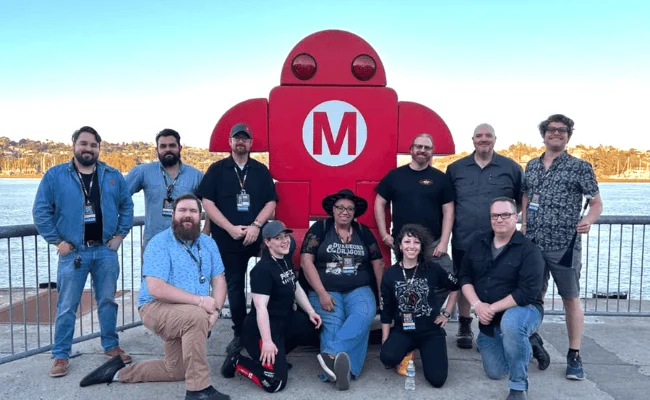
In an era increasingly dominated by digital effects, the art of practical animatronics continues to captivate audiences, offering a tangible connection to fictional worlds. A prime example of this enduring appeal is the celebrated animatronic known as "Thing" from Netflix’s hit series "Wednesday," a creation that has not only charmed viewers on screen but also made an indelible mark on live red carpet events worldwide. Jesse Velez, a veteran animatronics designer and the mastermind behind this sophisticated prop, has peeled back the curtain on the intricate process of bringing "Thing" to life, showcasing a remarkable fusion of traditional craftsmanship and cutting-edge robotics. His upcoming presentation at Maker Faire Bay Area 2025 is highly anticipated, promising a deep dive into the technical and creative journey of this iconic character.
The Phenomenon of "Wednesday" and the Role of "Thing"
"Wednesday," which premiered on Netflix in November 2022, quickly became a global sensation, breaking streaming records and revitalizing interest in the Addams Family universe. The series, directed by Tim Burton, centered on Wednesday Addams’s experiences at Nevermore Academy, blending mystery, dark humor, and supernatural elements. Among its diverse cast of characters, "Thing" emerged as an unexpected fan favorite. Portrayed as a sentient, disembodied hand, "Thing" serves as Wednesday’s loyal companion, confidant, and often, her resourceful aide in solving mysteries. Its expressive movements, ability to convey emotion without words, and practical utility in the narrative made it an indispensable element of the show’s charm and success.
The decision by the show’s creators to use a practical animatronic for "Thing," rather than relying solely on computer-generated imagery (CGI), was a deliberate choice that paid dividends. It provided a level of authenticity and immediate interaction that CGI, despite its advancements, often struggles to replicate in real-time on set. This commitment to practical effects resonated deeply with audiences, who appreciated the tangible presence of the character, reinforcing the show’s gothic aesthetic and quirky sensibility. The character’s popularity soared, transforming it from a mere prop into a beloved cast member, generating significant fan art, merchandise, and social media buzz.
From Concept to Global Icon: The Genesis of a Walking Hand
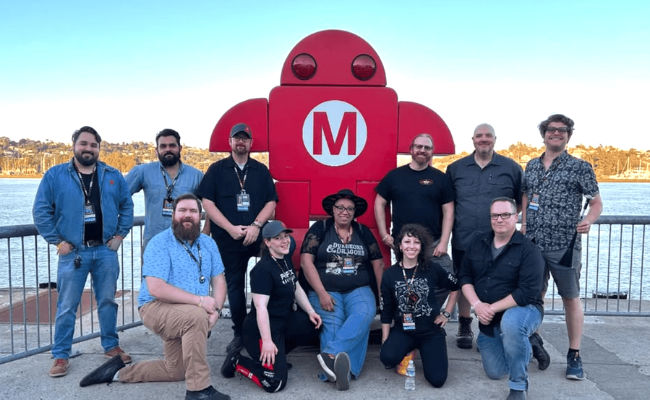
The journey of "Thing" from a conceptual idea to a fully functional, globe-trotting animatronic began, as Velez explains, with a fundamental prototype: a hand that could simply walk. This initial phase was crucial for establishing the basic mechanics and motion vocabulary for the character. The challenge was not just to create a believable hand, but one that could perform complex actions, convey personality, and, critically, interact spontaneously in live environments.
Velez and his team at Raptor House FX embraced this challenge with an ethos of creative hacking, combining readily available off-the-shelf components with custom-built parts. This approach, characteristic of the maker movement, prioritizes ingenuity and adaptability over bespoke, expensive solutions, allowing for rapid prototyping and iteration. The goal was clear: to engineer a fully wireless, portable animatronic that could mirror human movements in real-time, enabling its operator to control it with fluid precision and improvise spontaneously during live interactions.
The technical specifications for such a device are demanding. It required a robust internal structure capable of supporting motors, batteries, and control systems, all while maintaining a realistic aesthetic and being lightweight enough for travel and extended operation. The team meticulously designed an armature that could withstand the rigors of global travel and repeated public appearances, ensuring both durability and lifelike articulation.
The Technical Symphony: Building a "Thing"-esque Walking Hand
The construction of the live-performing animatronic hand involved a complex interplay of mechanical engineering, electronics, and software development. While the original article alluded to the "ingredients" without listing them, an informed analysis suggests the following critical components and methodologies were employed:
- Skeletal Structure and Actuation: The core of "Thing" is a lightweight yet sturdy internal skeleton, likely crafted from aerospace-grade aluminum, carbon fiber, or high-strength 3D-printed polymers. This framework supports a network of miniature, high-torque servo motors, one for each finger joint and potentially for wrist articulation. These servos, precisely controlled, allow for the nuanced movements that give "Thing" its distinct personality and expressiveness. The design had to ensure maximum range of motion while preventing mechanical interference.
- Power Management: Portability and wireless operation necessitate an efficient power source. Compact, high-density Lithium Polymer (LiPo) battery packs were almost certainly integrated, chosen for their power-to-weight ratio. Advanced power management systems would be crucial for maximizing operating time during live events and ensuring consistent performance.
- Wireless Control System: The real-time, improvisational nature of "Thing’s" performances required a robust and low-latency wireless communication system. This likely involved custom-designed radio frequency (RF) modules or advanced Bluetooth protocols, linking the animatronic hand to a remote puppeteering interface. The system had to guarantee reliable signal transmission across various environments, from bustling red carpets to enclosed studio spaces, without interference.
- Microcontroller and Programming: At the heart of the animatronic’s intelligence would be a powerful, yet compact, microcontroller (such as an Arduino, Raspberry Pi Zero, or custom PCB with an embedded processor). This unit would receive commands from the puppeteer via the wireless link, translate them into precise motor movements, and manage the animatronic’s internal functions. Custom firmware, optimized for responsiveness and smooth motion, would be a key element of its operation.
- External Aesthetics and Durability: The outer skin of "Thing" needed to be both realistic and durable. High-quality silicone or foam latex, meticulously sculpted and painted to match the on-screen character, would provide the necessary tactile and visual authenticity. These materials offer flexibility for movement while being resilient enough to withstand repeated handling and travel. Special attention would be paid to seam lines and blending to ensure a seamless, lifelike appearance.
- Puppeteering Interface: To achieve real-time, intuitive control, the team likely developed a custom puppeteering interface. This could take the form of an ergonomic glove equipped with flex sensors and accelerometers, allowing the operator’s hand movements to be directly translated to "Thing." Alternatively, a joystick-based or motion-capture system might have been employed, giving the performer granular control over each digit and overall hand posture. The elegance of the design would lie in its ability to make complex movements feel effortless and natural for the operator.
- Creative Hacking and Integration: Velez’s philosophy of "creatively hack[ing] together off-the-shelf and purpose-built components" is central to this project. This involves sourcing standard electronic components like servo motors, microcontrollers, and wireless modules, then modifying and integrating them into a bespoke mechanical framework. This iterative process allows for cost-effectiveness and rapid development, while still achieving highly specialized functionality. The seamless integration of these disparate parts, making them "all work and feel seamless," is the true magic of the engineering.
The Global Tour: "Thing" Takes the World Stage

The practical brilliance of Velez’s animatronic "Thing" truly shone during the global premieres of "Wednesday." The fully wireless and portable nature of the hand allowed it to traverse continents, becoming a star in its own right. From the bustling streets of Los Angeles and the iconic landmarks of New York to the vibrant cultures of Seoul, Istanbul, and London, "Thing" interacted directly with the cast, fans, and media on live red carpet events.
These appearances were not merely static displays; "Thing" actively engaged with its surroundings. It waved at cameras, "signed" autographs, playfully interacted with Jenna Ortega (Wednesday Addams) and other cast members, and even responded to audience cheers. This level of spontaneous interaction created unforgettable moments, amplifying the show’s promotional impact and forging a unique bond with its global fanbase. Unlike a CGI character that exists only on screen, "Thing’s" physical presence offered a tangible piece of the "Wednesday" universe, blurring the lines between fiction and reality. The ability of the performer to control the animatronic in real-time meant that each interaction was unique and unscripted, adding to the charm and authenticity of the encounters.
The logistics of transporting and operating such a delicate yet robust piece of machinery across multiple international locations presented its own set of challenges. Rigorous testing, careful packaging, and on-site technical support would have been essential to ensure flawless performance at each premiere, underscoring the professionalism and dedication of Velez’s team.
The Future is Tactile: The Enduring Power of Practical Effects
Jesse Velez’s work on "Thing" transcends mere technical achievement; it serves as a powerful testament to a burgeoning movement that cherishes tangible spectacle in an increasingly digital world. In an age saturated with hyper-realistic CGI, the visceral thrill of witnessing something real, intricately engineered, and seemingly alive right before one’s eyes holds a unique and profound appeal.
This project reinforces a critical debate within the film and television industry regarding the balance between practical effects and CGI. While CGI offers unparalleled flexibility and the ability to create environments and creatures impossible in the real world, practical effects often provide a sense of weight, texture, and immediate presence that digital creations can struggle to replicate. "Thing" stands as a prime example of how practical animatronics can ground a fantastical element in reality, enhancing believability and audience immersion.

Industry experts have noted a cyclical trend, with a renewed appreciation for practical effects emerging in recent years, often in combination with digital enhancements. Directors like Christopher Nolan, Denis Villeneuve, and of course, Tim Burton, have consistently advocated for and utilized practical effects to achieve a distinct aesthetic and realism. The success of "Thing" further solidifies the argument that practical artistry is not a relic of the past but a vital, evolving component of modern storytelling.
Broader Implications and the Maker Movement’s Influence
The methodology employed by Jesse Velez – creatively hacking together off-the-shelf and purpose-built components – highlights the profound influence of the maker movement on professional design and engineering. This philosophy, characterized by DIY culture, open-source principles, and collaborative innovation, demonstrates that sophisticated solutions don’t always require multi-million-dollar R&D labs. Instead, ingenuity, resourcefulness, and a deep understanding of mechanics and electronics can yield groundbreaking results.
Projects like "Thing" inspire a new generation of makers, engineers, and artists to explore the intersections of technology and creativity. They demonstrate that the skills cultivated in workshops and garages – from 3D printing and basic electronics to coding and fabrication – have direct applicability in high-profile entertainment productions. This accessibility of tools and knowledge democratizes innovation, allowing individuals like Velez to push the boundaries of what’s possible with relatively modest resources.
The impact of such work extends beyond entertainment. The advancements in compact robotics, wireless control, and real-time interaction developed for projects like "Thing" have potential applications in various fields, including assistive technologies, educational tools, and interactive art installations. The pursuit of making fantasy tangible often leads to innovations with broader societal benefits.
Jesse Velez’s presentation at Maker Faire Bay Area 2025 is expected to be a highlight, offering attendees a rare glimpse into the meticulous planning, problem-solving, and sheer artistry involved in crafting a world-class animatronic. It is an opportunity for aspiring creators and seasoned professionals alike to learn from a master of the craft, exploring the deep dives into animatronics, practical effects, and the relentless creativity that continues to transform our wildest sci-fi dreams into tangible realities, one servo and line of code at a time. The legacy of "Thing" will undoubtedly serve as an inspiration, proving that in an increasingly digital landscape, the tactile future remains vibrant and compelling.