The fundamental understanding of how electricity moves through matter has taken a significant leap forward as an international team of researchers discovered a physical "ceiling" to electrical resistance. In a collaborative effort involving the University of Toronto, L’École Normale Supérieure in Paris, and Lehigh University in Pennsylvania, physicists have demonstrated that the resistivity generated by particle collisions does not increase indefinitely. Instead, it reaches a saturation point, a finding that challenges traditional classical interpretations of how energy dissipates within a medium. This discovery, published in the journal Physical Review Letters, provides a microscopic lens into the behavior of quantum materials and could eventually influence the design of more efficient power systems and electronic components.
Electrical resistance is a cornerstone of modern physics and engineering, representing the opposition to the flow of electric current. In a standard conductor, this resistance is caused by electrons colliding with impurities, the lattice structure of the material, or other electrons. These collisions convert kinetic energy into thermal energy, which is why electronic devices heat up during use. On a global scale, this phenomenon has staggering economic and environmental consequences. Current data suggests that electrical transmission lines lose between 6 and 8 percent of their total generated power due to resistance, representing billions of dollars in lost energy and millions of tons of unnecessary carbon emissions. Understanding the absolute limits of this resistance is therefore not just a matter of theoretical curiosity, but a pursuit with profound practical implications.
The Quantum Laboratory: Ultracold Potassium Atoms
To explore the limits of resistivity, the research team bypassed the complexities of traditional solid-state metals, which are often filled with impurities and unpredictable structural defects. Instead, they turned to the field of ultracold atomic physics. By cooling potassium atoms to temperatures just a fraction of a degree above absolute zero—approximately -273.15 degrees Celsius—the scientists were able to create a state of matter where quantum mechanical effects dominate.
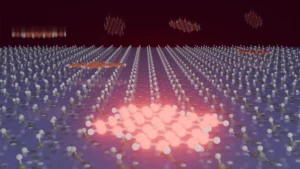
At these extreme temperatures, atoms move with agonizing slowness, allowing researchers to manipulate them with extraordinary precision. The team utilized an "optical lattice," a complex grid created by intersecting laser beams. This lattice acts as a "crystal of light," trapping the potassium atoms in a structure that mimics the arrangement of ions in a solid metal. However, unlike a real metal, the parameters of this optical lattice—such as the strength of the interactions between particles—can be tuned by the researchers in real-time.
Professor Joseph Thywissen of the Department of Physics and the Centre for Quantum Information and Quantum Control at the University of Toronto, who served as the senior author of the study, noted that this setup allowed the team to simulate conditions that are physically impossible to achieve in conventional materials. By using atoms to represent electrons, the team could isolate the specific effects of particle-on-particle collisions without the "noise" of other environmental factors.
The Discovery of Resistivity Saturation
The experiment focused on how resistivity changes as the frequency of collisions between particles increases. Under normal circumstances, one might expect that if you double the number of collisions, the resistance would double. Initially, the data followed this linear progression: as the potassium atoms were made to interact more frequently, the resistance of the system rose steadily.
However, as the interaction strength reached a critical threshold, the researchers observed a surprising deviation from the expected path. Despite further increasing the frequency and intensity of the collisions, the resistance stopped rising. It hit a plateau, or a "saturation" point.
"We observed that the atoms, which are only a few nanometers in size, bump into each other as if they were much larger," Thywissen explained. This phenomenon is known as quantum enhancement of the effective atom size. In the quantum realm, particles do not behave like hard billiard balls; they behave like waves. As the interactions become stronger, the "collision cross-section" of the atoms expands. Eventually, the particles are "bumping" into each other so frequently and over such a large effective area that the system reaches a state of maximum disorder. At this point, adding more interaction does not further impede the flow, leading to the observed limit in resistivity.
Historical Context and the Mott-Ioffe-Regel Limit
The concept of a limit to resistivity is not entirely new to theoretical physics, though experimental verification in a controlled environment has been elusive. In the mid-20th century, physicists Nevill Mott, Abram Ioffe, and Aleksandr Regel proposed what is now known as the Mott-Ioffe-Regel (MIR) limit. They suggested that resistivity should saturate when the "mean free path" of an electron—the average distance it travels between collisions—becomes comparable to the distance between the atoms in the crystal lattice.
Essentially, if a particle cannot even move the distance of a single atom without hitting something, the very concept of a "path" breaks down. While this limit has been hinted at in certain "strange metals" and high-temperature superconductors, the Toronto-Paris-Lehigh experiment provides some of the clearest evidence to date by demonstrating the effect in a synthetic, perfectly controlled environment.
The timeline of this research reflects a decade of advancement in laser cooling and trapping technologies. In the early 2000s, the primary goal of the field was simply to achieve the temperatures necessary for Bose-Einstein condensation or Fermi degeneracy. By the 2010s, researchers began using these gases to simulate complex many-body problems. This latest study represents the "precision era" of ultracold atoms, where researchers are no longer just observing new states of matter but are performing quantitative measurements of transport properties that can be directly compared to solid-state physics.
Collaborative Efforts and Methodology
The success of the study relied on the diverse expertise of the contributing institutions. The University of Toronto provided the primary experimental framework and the ultracold atom expertise. Researchers from L’École Normale Supérieure in Paris contributed theoretical models that helped interpret the complex quantum interactions occurring within the optical lattice. Lehigh University provided additional computational support, ensuring that the experimental observations were consistent with the laws of quantum thermodynamics.
The methodology involved a technique known as "transport measurement" in an optical lattice. The researchers applied a force to the cloud of atoms—analogous to an electric voltage—and measured the resulting "current" or flow of atoms. By varying the intensity of the laser beams forming the lattice and using magnetic fields to tune the interaction strength (a technique known as Feshbach resonance), they were able to map out the resistivity across a wide range of parameters.
Implications for Quantum Materials and Future Technology
The discovery of a maximum limit to resistance has significant implications for the study of "strongly correlated" materials. These are substances where the behavior of one particle is inextricably linked to the behavior of all others, leading to exotic properties like high-temperature superconductivity or colossal magnetoresistance.
In low-density metals, where electrons are relatively sparse, the microscopic understanding of resistivity has historically been murky. This study provides a clear roadmap for how resistance develops in these systems. By proving that a saturation point exists, the researchers have given theorists a new constraint to use when building models of quantum matter.
Furthermore, this research touches upon the mystery of "bad metals." In certain materials, resistivity continues to rise with temperature far beyond the theoretical MIR limit, a phenomenon that has baffled physicists for decades. By showing that a saturation limit exists in their controlled atomic system, the Toronto-led team provides a baseline. Any material that exceeds this limit must be operating under a different set of physical rules, potentially pointing the way toward "new physics" that could revolutionize our understanding of the universe.
Economic and Engineering Perspectives
While the study was conducted at temperatures near absolute zero, the principles it uncovers are universal. If engineers can better understand the "ceiling" of resistance, they can work more effectively to stay as far below that ceiling as possible. In the realm of semiconductor manufacturing, as transistors shrink to the size of just a few atoms, quantum effects and collision-based resistance become the primary hurdles to further performance gains.
The data provided by this study helps clarify how density and interaction strength affect energy loss. In the long term, this could inform the development of new alloys or synthetic materials for power grids that are specifically designed to minimize the quantum enhancement of particle collisions, potentially saving a fraction of that 8 percent power loss mentioned by Professor Thywissen. Even a 1 percent increase in grid efficiency would result in billions of dollars in annual savings and a massive reduction in the global carbon footprint.
Conclusion and Next Steps
The finding that electrical resistance has a maximum limit marks a pivotal moment in condensed matter physics. It validates decades of theoretical speculation and provides a new tool for exploring the most complex materials known to science. The collaboration between the University of Toronto, L’École Normale Supérieure, and Lehigh University highlights the necessity of international cooperation in tackling the most fundamental questions of the physical world.
Moving forward, the research team plans to investigate how this resistance limit behaves in different dimensions. The current study focused on a three-dimensional lattice, but physics often changes dramatically in two-dimensional or one-dimensional environments. Understanding how dimensionality affects the saturation of resistivity could lead to breakthroughs in 2D materials like graphene, which are already being touted as the future of electronics.
As Professor Thywissen noted, this study "opens the door to new studies of strongly correlated atomic systems." By mastering the "quantum bump" of atoms, scientists are now one step closer to mastering the flow of electricity itself, potentially leading to a future where energy waste is a relic of the past and quantum materials are the backbone of our technological infrastructure.