The global plastic crisis has reached a critical juncture, with annual production approaching 400 million metric tons and only a fraction—less than 10%—successfully entering the recycling stream. While plastic materials offer unparalleled durability and versatility, their persistence in the environment remains their most significant drawback. Most plastic items are utilized for mere minutes or hours, yet the molecular structure of the polymers ensures they remain in landfills or oceans for centuries. In a transformative shift toward "programmable" waste management, researchers have developed a new class of "living plastics" that contain dormant microbes capable of completely breaking down the material on command, potentially ending the cycle of long-term pollution and microplastic accumulation.
A team of scientists, led by Zhuojun Dai, Jin Geng, and Dianpeng Qi, recently published their findings in the journal ACS Applied Polymer Materials. Their study details the creation of a bio-composite material that integrates bacterial spores directly into the plastic matrix. Unlike previous iterations of biodegradable plastics that often require specific industrial composting conditions or leave behind harmful micro-fragments, this new material achieved total decomposition in just six days without producing microplastics. This breakthrough represents a significant step toward aligning the lifespan of a material with its intended period of use.
The Biological Mechanism: Turning Microbes into Built-In Disposal Systems
At the heart of this innovation is the use of Bacillus subtilis, a resilient bacterium commonly found in soil and the human gastrointestinal tract. B. subtilis is known for its ability to form spores—a dormant, highly resistant state that allows the organism to survive extreme heat, radiation, and lack of nutrients. This characteristic is essential for the manufacturing of living plastics, as the process of forming plastic films often involves high temperatures that would kill active bacteria.
The researchers engineered B. subtilis to produce a synergistic "double-enzyme" system. While some microorganisms naturally produce enzymes that can degrade polymers, a single enzyme is often inefficient at breaking down the complex, long-chain structures of synthetic plastics. The team’s approach involved two specific types of enzymes working in tandem:
- Endo-enzymes: These enzymes act as molecular scissors that cut the long polymer chains at random internal points. This process rapidly reduces the structural integrity of the plastic, turning it into shorter segments.
- Exo-enzymes: These enzymes target the ends of the shortened fragments, systematically stripping away individual monomer building blocks.
By combining these two functions, the material does not simply fragment into smaller pieces—a process that typically creates microplastics—but instead undergoes a complete chemical conversion back into its basic, non-toxic components. "By embedding these microbes, plastics could effectively ‘come alive’ and self-destruct on command, turning durability from a problem into a programmable feature," explained Zhuojun Dai, a corresponding author of the study.
From Polycaprolactone to Programmable Decay
For their experiments, the research team utilized polycaprolactone (PCL), a biodegradable polyester frequently used in specialized applications such as 3D printing, prototype modeling, and medical devices like surgical sutures. While PCL is inherently more degradable than common plastics like polyethylene (PE) or polypropylene (PP), it still requires months or years to break down in natural environments.
The manufacturing process involved mixing the dormant B. subtilis spores with molten PCL. Despite the heat required to process the polymer, the spores remained viable. Once the material cooled and solidified, the resulting "living plastic" exhibited mechanical properties—such as tensile strength and flexibility—that were nearly identical to standard PCL. This suggests that the inclusion of biological agents does not compromise the utility of the material during its functional life.
The "command" to self-destruct is triggered by environmental changes. In the laboratory setting, the team activated the degradation process by placing the plastic in a nutrient broth heated to 122 degrees Fahrenheit (50 degrees Celsius). Under these conditions, the spores "woke up," germinated into active bacteria, and began secreting the dual-enzyme cocktail. Within 144 hours (six days), the plastic film had vanished, leaving behind no detectable micro-fragments.
Addressing the Microplastic Challenge
One of the most pressing concerns regarding traditional "biodegradable" plastics is the formation of microplastics. Many current products marketed as compostable only break down into smaller pieces that are invisible to the naked eye but remain chemically persistent. these particles can enter the food chain, infiltrate water systems, and have been detected in human blood and lung tissue.
The sequential enzyme strategy employed by Dai and his colleagues specifically addresses this. Because the exo-enzymes consume the fragments produced by the endo-enzymes, the plastic is reduced to its molecular monomers. This "bottom-up" and "top-down" degradation ensures that the material is fully metabolized rather than just physically disintegrated.
Data from the study indicates that the rate of degradation for this living plastic is approximately 30 to 50 times faster than standard PCL exposed to natural soil microbes. This efficiency is a critical metric for waste management facilities that struggle with the slow turnover of traditional compostable materials.
Case Study: The Disappearing Wearable Electrode
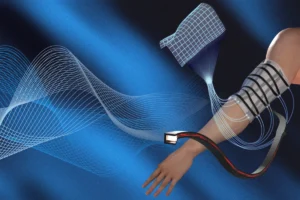
To demonstrate the practical viability of the technology, the researchers fabricated a wearable plastic electrode using the living material. Flexible electronics and wearable health monitors are a growing source of electronic waste (e-waste), as they often contain a mix of polymers and conductive elements that are difficult to separate and recycle.
The living electrode functioned normally, maintaining its conductive properties and structural integrity while in use. However, once the "disposal" protocol was initiated, the device fully degraded within two weeks. This application highlights a potential future where short-term medical sensors or environmental monitoring devices can be deployed and then "erased" from the environment, leaving no trace behind.
A Chronology of Living Material Development
The development of living plastics is part of a broader evolution in materials science known as Engineered Living Materials (ELMs). A timeline of the progress in this field illustrates the significance of the current breakthrough:
- 2016: Discovery of Ideonella sakaiensis, a bacterium capable of "eating" PET plastic at a waste site in Japan, sparked global interest in enzymatic degradation.
- 2018-2020: Researchers began isolating specific enzymes (like PETase) and engineering them for higher efficiency in industrial settings.
- 2021: Early experiments with "living" concrete and bricks showed that microbes could be used to self-heal cracks in construction materials.
- 2023: Initial attempts to embed enzymes directly into plastics were successful but often resulted in weakened materials or incomplete degradation.
- 2024: The Dai research group successfully integrated dormant spores with a multi-enzyme system, achieving rapid, total degradation without structural loss during the product’s lifespan.
Broader Implications and Environmental Analysis
The success of this study has profound implications for the global circular economy. If this technology can be scaled and adapted for other types of polymers, such as the polyethylene used in single-use bags or the PET used in beverage bottles, it could fundamentally change how society views waste.
Environmental analysts suggest that living plastics could mitigate the "leakage" of plastic into the oceans. Currently, millions of tons of plastic enter the marine environment annually. The research team is already looking toward the next phase of development: spores that activate in water. "The team now hopes to develop a method that activates the bacterial spores in water, where a significant share of plastic pollution accumulates," the study noted. If a plastic bottle could be programmed to degrade if it remains submerged in seawater for a certain period, the impact on marine ecosystems would be monumental.
However, challenges remain. The current activation temperature of 122°F (50°C) is higher than average ambient temperatures in many parts of the world. For widespread consumer use, researchers may need to engineer microbes that activate at lower temperatures or in response to specific triggers like UV light or salinity. Furthermore, the cost of producing engineered spores at an industrial scale must be competitive with traditional plastic manufacturing to ensure adoption by major corporations.
Conclusion and Future Outlook
The work of Dai, Geng, and Qi provides a blueprint for a new generation of smart materials. By treating plastic not as a dead, inert substance but as a biological host, the researchers have bridged the gap between synthetic durability and natural decomposition.
The funding for this research was provided by several prominent institutions, including the National Key Research and Development Program of China and the National Natural Science Foundation of China. This level of institutional support underscores the perceived importance of finding biological solutions to chemical pollution.
As the team moves forward, the focus will shift to the "plastic universality" of the method. While PCL was the primary subject of this study, the researchers believe the general strategy of spore integration can be adapted to a wide range of disposable products. The ultimate goal is a world where "disposable" truly means what it says—a material that serves its purpose and then, through the power of biology, returns to the earth without leaving a footprint.