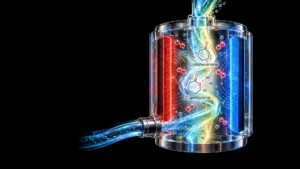
The fundamental chemical behavior of water when confined to spaces only a few molecules wide has remained one of the most persistent enigmas in physical chemistry, but a landmark study published in Science Advances has finally provided a comprehensive resolution to this long-standing debate. For decades, the scientific community has been divided over whether the mere act of squeezing water into nanoscale pores—such as those found in biological membranes, geological formations, and advanced technological filters—inherently alters its chemical reactivity. By utilizing cutting-edge machine learning simulations and quantum mechanical modeling, a research team led by the University of Cambridge has demonstrated that the perceived changes in water’s reactivity are not a direct consequence of confinement itself, but are instead driven by intense internal pressures and the specific chemical properties of the surrounding materials.
This discovery provides a unifying framework that reconciles ten years of contradictory experimental data. Historically, different laboratories reported wildly varying results regarding the acidity and dissociation rates of water in nano-channels. Some suggested that confinement made water significantly more reactive, while others found little to no change. The new research clarifies that these discrepancies arose because previous studies were comparing systems at different effective pressures and densities without a standardized thermodynamic baseline. By accounting for these variables, the researchers have moved the field toward a more predictable model of nanofluidics, with profound implications for the future of energy storage, desalination, and biotechnology.
The Fundamental Chemistry of Water Splitting
To understand the significance of this breakthrough, one must first consider the process of water dissociation, also known as autoprotolysis. In any volume of liquid water, a tiny fraction of molecules naturally split into two charged particles: a positively charged hydronium ion ($H_3O^+$) and a negatively charged hydroxide ion ($OH^-$). This equilibrium is the foundation of the pH scale, which determines whether a substance is acidic or basic.
Under standard conditions (room temperature and atmospheric pressure), only about one in every ten million water molecules is dissociated. However, even this minuscule amount of ion formation is critical. It facilitates the transport of protons in hydrogen fuel cells, governs the catalytic efficiency of enzymes in the human body, and dictates the lifespan of lithium-ion batteries. Scientists have long suspected that when water is forced into "nanoconfinement"—defined as spaces billionths of a meter wide—this delicate equilibrium might shift. If water becomes more or less likely to split in these environments, it could fundamentally change how we design everything from drug delivery systems to industrial catalysts.
A Decade of Scientific Conflict and the Quest for Clarity
The journey toward this discovery began roughly a decade ago as the field of nanotechnology exploded. The emergence of two-dimensional materials, such as graphene, allowed researchers to create "nanoslits" that could trap layers of water just one or two molecules thick. Early experiments produced a confusing array of results. Some researchers observed that water in these tight spaces appeared to be thousands of times more reactive than "bulk" water (water in a glass or a lake). Others, using different materials or slightly different pore sizes, saw no such enhancement.
The primary challenge in resolving this conflict was the difficulty of observing chemical reactions at the nanoscale in real-time. Laboratory measurements at this scale are notoriously sensitive to noise, and traditional computer simulations were often too limited. Classical simulations lacked the "quantum accuracy" needed to model the breaking of chemical bonds, while full quantum simulations were too computationally expensive to run for long enough periods to see rare events like water splitting.
The Cambridge-led team overcame this hurdle by employing machine learning simulations. These models are trained on quantum mechanical data but can perform calculations at a fraction of the computational cost. This allowed the researchers to simulate water behavior across a vast range of conditions, effectively bridging the gap between theoretical physics and practical chemistry.
The Role of Machine Learning in Quantum Simulations
The researchers utilized a specific type of machine learning known as neural network potentials. By training these networks on high-level quantum mechanical data, they were able to create a simulation environment that could accurately predict how water molecules interact, vibrate, and occasionally split apart. Unlike previous models, these simulations could handle the complexity of hundreds of water molecules interacting with various surfaces over timescales long enough to provide statistically significant data.
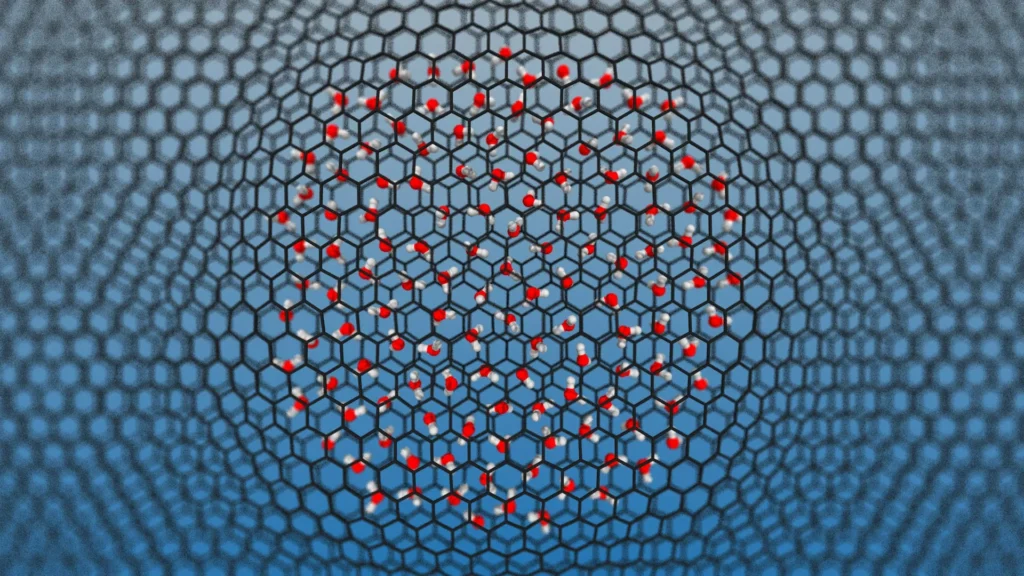
The team focused on water trapped between sheets of two specific 2D materials: graphene and hexagonal boron nitride (hBN). Graphene consists of a single layer of carbon atoms arranged in a honeycomb lattice, while hBN has a similar structure but is composed of alternating boron and nitrogen atoms. While structurally similar, these materials have very different electronic and chemical properties, making them the perfect "test tubes" for observing how different environments affect water chemistry.
The Discovery of "Invisible" Pressure
One of the most striking findings of the study was the sheer magnitude of the pressure that develops naturally within nanoconfined spaces. The simulations revealed that water droplets trapped between sheets of graphene or hBN can experience internal pressures of several gigapascals (GPa). To put this in perspective, one gigapascal is roughly 10,000 times the atmospheric pressure at sea level—conditions similar to those found deep within the Earth’s mantle.
Crucially, this pressure is generated without any external force. Instead, it is the result of van der Waals forces—the weak attractive forces that exist between all atoms. While these forces are negligible in everyday life, they become incredibly powerful when two large, atomically flat surfaces are brought very close together. The sheets of graphene or hBN effectively "clamp" down on the water molecules, squeezing them with immense force.
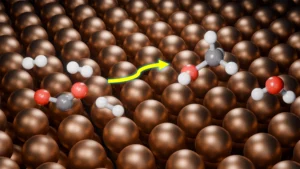
The researchers found that these high pressures are the primary driver behind the increased dissociation of water. When water is squeezed, the molecules are pushed closer together, which lowers the energy barrier required for a proton to jump from one molecule to another. This explains why previous experiments reported high reactivity; they were inadvertently observing high-pressure chemistry rather than a unique effect of "confinement" itself.
Reconciling the Data: Chemical Potential and Thermodynamics
The breakthrough moment for the research team came when they compared nanoconfined water to "bulk" water under the same thermodynamic conditions. When they matched the chemical potential—a measure of the internal energy available to do work or drive a reaction—the "confinement effect" largely evaporated.
"When we compared systems under equivalent thermodynamic conditions, the effect of confinement largely disappeared," explained Xavier R. Advincula, the study’s lead author. "In other words, the confinement alone does not intrinsically change water’s reactivity. This explains why experiments over the past decade have produced contradictory results. The contradictions in the literature were largely because scientists were comparing systems at different effective pressures or densities without realizing it."
This realization simplifies the field of nanofluidics significantly. It suggests that the laws of thermodynamics that govern chemistry in large vats or oceans still hold true at the nanoscale, provided that scientists correctly account for the local pressure and density.
Surface Chemistry: When the Container Becomes a Reactant
While pressure explains much of the reactivity, the study also highlighted that the material of the "container" is not always a passive observer. This is where the difference between graphene and hexagonal boron nitride (hBN) became apparent.
In the simulations involving hBN, the researchers noticed that the hydroxide ions ($OH^-$) produced by water splitting tended to migrate toward the edges of the hBN sheets. The boron and nitrogen atoms in hBN are polar, meaning they have slight electrical charges. These charges allow the hBN surface to form chemical bonds with the hydroxide ions, effectively "anchoring" them and preventing them from recombining with hydronium ions. This stabilization lowers the overall energy required for water to split, leading to a higher concentration of ions than would be expected from pressure alone.
In contrast, graphene is chemically inert and hydrophobic. It does not interact strongly with the ions, meaning that the reactivity of water confined in graphene is driven almost entirely by pressure. This distinction provides a new "design principle" for engineers: if you want to increase the reactivity of water in a device, you should choose a confining material that actively interacts with the products of the reaction.
Implications for Energy and Environmental Technology
The ability to control water reactivity at the nanoscale has immediate applications in several critical technologies. Perhaps the most significant is in the development of hydrogen fuel cells. These devices rely on proton-exchange membranes, which are essentially materials with nano-sized pores that allow protons (hydrogen ions) to pass through while blocking other molecules. By understanding how pressure and surface chemistry affect ion formation, scientists can design membranes that are more efficient and operate at lower temperatures.
Similarly, this research could revolutionize the field of water desalination and purification. Modern desalination often uses membranes with nanoscale pores to filter salt from seawater. Understanding the "local" chemistry of water within these pores can help prevent "scaling"—the buildup of mineral deposits that clogs filters—and improve the flow of water through the system.
In the realm of energy storage, the findings are relevant to the development of next-generation batteries and supercapacitors. Many of these devices use aqueous electrolytes confined within porous carbon electrodes. Knowing how the internal pressure of these pores changes the acidity of the electrolyte could lead to batteries that charge faster and last longer.
Chronology of Nanoscale Water Research
To contextualize this study, it is helpful to look at the timeline of milestones in the study of confined water:
- 2004: The discovery of graphene at the University of Manchester opens the door to studying fluids in 2D environments.
- 2010–2015: Initial studies on "nanofluidics" suggest that water behaves like a solid or a "super-dense" liquid when confined, leading to the first debates over its chemical reactivity.
- 2016: Experimentalists report "anomalously high" proton conductivity in graphene capillaries, suggesting water splits more easily in tight spaces.
- 2018–2021: Conflicting theoretical papers are published. Some use quantum models to support high reactivity, while others suggest the effect is an experimental artifact.
- 2024: The Cambridge team publishes their findings in Science Advances, using machine learning to prove that pressure, not confinement, is the primary driver, while identifying surface chemistry as the secondary factor.
Future Research and Engineering Directions
The research team, which includes experts from the Yusuf Hamied Department of Chemistry and the Cavendish Laboratory, is already looking toward the next steps. While this study used idealized, perfectly flat sheets of graphene and hBN, real-world materials are often messy. They contain defects, jagged edges, and impurities that can further influence chemical reactions.
The team plans to use their machine learning framework to screen large "libraries" of different 2D materials and surface coatings. The goal is to identify specific combinations that can either maximize or minimize water reactivity depending on the need. For example, in a medical implant, one might want to minimize water splitting to prevent corrosion, whereas in a catalytic reactor, one would want to maximize it.
"This research provides a new framework for understanding water chemistry at the nanoscale," said Dr. Christoph Schran of the Cavendish Laboratory. "More importantly, the work offers a practical design principle. Rather than focusing solely on the size of pores or channels, we can tailor water reactivity by choosing a confining material whose surfaces interact with the products of water dissociation and by controlling the pressures generated within confined spaces."
As the scientific community digests these findings, the focus will likely shift from asking if confinement changes chemistry to asking how we can precisely tune that chemistry for the next generation of sustainable technologies. The "simple" question of what happens to water in tiny spaces has finally received a sophisticated, comprehensive answer.