A groundbreaking innovation from engineers at the Massachusetts Institute of Technology (MIT) promises to transform the landscape of biomedical materials with the development of a novel hydrogel that is both highly hydrated and permeable to air. This advancement directly addresses a critical limitation of conventional hydrogels, which, despite their versatile properties, have historically lacked breathability, leading to skin irritation and compromised device performance during prolonged use. The new material, detailed in a recent publication in the prestigious journal Nature, maintains the desirable softness, stretchiness, and robustness of traditional hydrogels while incorporating an intricate network of microscopic tunnels designed to facilitate air passage. This significant step forward is poised to enable the creation of longer-lasting and more effective medical patches, wearable sensors, and implanted devices, marking a pivotal moment in materials science and patient care.
The Ubiquitous Role and Inherent Limitations of Hydrogels
Hydrogels, often described as squishy, bio-friendly substances akin to Jell-O, are composed primarily of water, typically around 80 to 90 percent, reinforced by a small percentage of polymer networks. These materials derive their unique properties—softness, elasticity, and biocompatibility—from their water-rich composition, which mimics natural biological tissues. Their widespread applications span various medical and consumer sectors, including wound dressings, drug delivery systems, cosmetic face masks, contact lenses, and as surgical glues to affix implants or repair tissues. For decades, hydrogels have been valued for their ability to adhere to skin or be implanted within the body, offering a gentle yet effective interface for diverse biomedical purposes. They can effectively encapsulate and release medicines over time, providing controlled therapeutic delivery, and serve as scaffolds for tissue regeneration.
Despite these myriad advantages, a fundamental challenge has persisted: their lack of breathability. Conventional hydrogels, by their very nature, are designed to retain moisture. While beneficial for maintaining a hydrated environment, this property becomes a significant drawback when the material is applied to the skin or integrated into the body for extended periods. The inability to allow air to pass through means that moisture and sweat can become trapped underneath the material. This trapped moisture creates an environment conducive to several undesirable outcomes, including skin maceration (softening and breakdown of skin due to prolonged moisture exposure), bacterial proliferation, local irritation, itching, and rashes. For medical devices like wound dressings, this can impede the natural healing process and increase the risk of infection. In the context of wearable health monitors, trapped sweat can degrade the adhesive bond, lead to signal interference, and cause significant discomfort, ultimately reducing the device’s accuracy and the wearer’s compliance. The current limitations often necessitate frequent changes of hydrogel-based products, which can be inconvenient, costly, and disruptive to continuous monitoring or treatment regimens. This inherent trade-off between hydration and breathability has long posed a formidable barrier to the development of truly long-term, comfortable, and effective hydrogel applications.
A Chronology of Innovation and Persistent Challenges
The concept of hydrogels dates back to the 1950s, with their properties and applications continually evolving. Early hydrogels were primarily used in contact lenses, where the need for biocompatibility and moisture retention was paramount. Over the subsequent decades, research expanded their utility into wound care, drug delivery, and tissue engineering. However, the breathability issue remained a persistent hurdle, particularly as the demand for longer-wear, more sophisticated medical devices and wearables grew.
Researchers worldwide have explored various strategies to imbue hydrogels with air permeability. One common approach involved physically puncturing microscopic holes throughout the gel. While this method could indeed create breathable pathways in dry conditions, these holes would invariably clog when the hydrogel came into contact with liquids, such as sweat or wound exudate, rendering them ineffective in real-world biomedical applications. Another strategy involved blending hydrogels with other naturally air-permeable polymers, such as silicone. However, achieving sufficient air permeability through this method often required incorporating a substantial amount of the secondary polymer. This dilution of the hydrogel’s primary water content resulted in materials that were significantly less hydrated, stiffer, and ultimately compromised the very properties that make hydrogels so valuable in the first place. These attempts highlighted the complex challenge of balancing hydration, mechanical integrity, and breathability—a triumvirate of properties that many considered mutually exclusive in a single hydrogel material.
Professor Xuanhe Zhao, the Uncas (1923) and Helen Whitaker Professor of Mechanical Engineering at MIT, and his team have been at the forefront of hydrogel research, pushing the boundaries of their mechanical and functional capabilities for several years. Recognizing the critical unmet need for breathable hydrogels, Zhao’s lab embarked on a dedicated quest to overcome this long-standing scientific and engineering challenge. "In general, water is not breathable," noted co-lead author Xiao-Yun Yan, emphasizing the core difficulty. "Hydrogel is 80 to 90 percent water, similar to Jell-O. And you cannot breathe through Jell-O." The team’s multi-year investigation culminated in the recent breakthrough, published today in Nature, offering a novel solution to a problem that had previously stumped materials scientists.
The MIT Breakthrough: Engineering "Highways for Air"
The ingenuity behind MIT’s new breathable hydrogel lies in a sophisticated yet elegant technique called "viscoelastic phase separation." This process, analogous to the immiscibility of oil and water, allows for the creation of distinct domains within a single material. For their innovative recipe, Professor Zhao and his colleagues integrated a very small quantity of silica aerogel particles into their conventional hydrogel mixture. Silica aerogel particles are essentially "solid-form" air bubbles, known for their hydrophobic nature, meaning they repel water. Co-lead author Xiao-Yun Yan aptly describes them as "like boba beads" — stable in water because water molecules do not readily leak through them.
When these hydrophobic silica particles were mixed with the water-heavy hydrogel solution, a remarkable phenomenon occurred. Due to viscoelastic phase separation, the water molecules preferentially clustered together, effectively pushing the less abundant silica particles into distinct, interconnected pathways. Over a period of several hours, this self-assembly process led to the formation of a stable, intricate network of thin, robust, silica-skinned tunnels permeating the entire hydrogel. These tunnels act as microscopic "highways for air," allowing gaseous exchange while the surrounding hydrogel matrix retains its high water content. As co-lead author Shucong Li explained, "It’s as if the particles formed a network of connected tunnels, like air-permeable highways within the hydrated hydrogel." Once this air-permeable network was established, the researchers then initiated a cross-linking process, which effectively "froze" the gel and its internal tunnel structure in place, preserving its breathability and mechanical integrity.
This innovative approach elegantly circumvents the limitations of previous attempts. Unlike hydrogels with punctured holes, the silica-lined tunnels remain open and functional even when immersed in liquid, ensuring continuous air permeability in practical applications. Furthermore, by using only a minimal amount of silica aerogel particles, the MIT team successfully created a breathable material without sacrificing the hydrogel’s crucial water content or its inherent softness and stretchiness, a stark contrast to methods that relied on adding large quantities of other polymers. This preservation of core hydrogel properties while adding breathability represents a significant scientific and engineering triumph.
Rigorous Validation and Promising Results
The MIT team subjected their newly engineered breathable hydrogel to a battery of rigorous tests to validate its performance, both mechanically and biologically. The results unequivocally demonstrated the material’s superior capabilities.
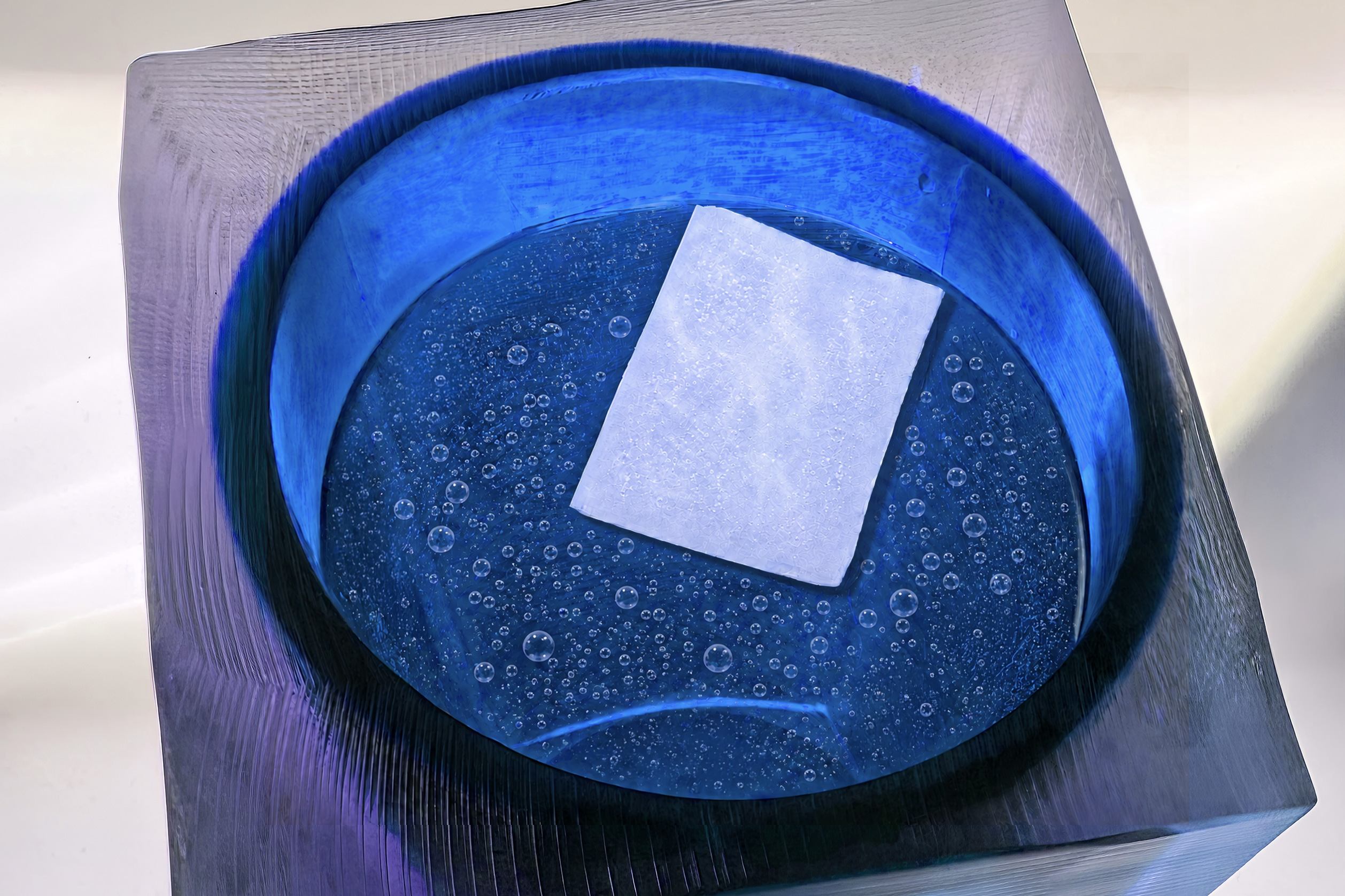
In mechanical tests, the hydrogel exhibited remarkable durability. It was put through an arduous regimen of 10,000 cycles of stretching and compression, simulating the stresses and strains experienced during daily human activities, such as movement and even heartbeats. Crucially, after these extensive mechanical challenges, the hydrogel retained its intricate network of air channels, showing less than a 5 percent drop in oxygen permeability. This robust mechanical resilience is vital for applications requiring long-term wear and continuous body movement.
The most compelling validation came from human volunteer trials. In one experiment, volunteers wore wireless electrocardiogram (ECG) heart monitors, with one monitor affixed using the new breathable hydrogel and another with a conventional, commercial hydrogel adhesive. During 20-minute exercise sessions, the monitors attached with the breathable hydrogel consistently maintained strong and clear ECG signals. In stark contrast, the monitors using conventional gels exhibited significant signal fluctuations, likely due to sweat buildup and compromised adhesion.
A longer-duration experiment further underscored the material’s advantages. Several volunteers wore ECG monitors secured with the breathable hydrogel continuously for 10 days. Throughout this period, the researchers observed a reliably good quality ECG signal, indicating consistent and accurate data acquisition. Critically, upon removal of the monitors after 10 days, none of the volunteers showed any noticeable signs of skin irritation, such as blisters or redness. "This indicates healthy skin conditions," remarked Shucong Li, highlighting the direct impact on user comfort and health. These findings demonstrate that the breathable hydrogel can significantly extend wear times for wearable medical devices without compromising skin health or data integrity, a major leap forward for long-term health monitoring.
Broader Implications and Transformative Potential
The successful development of this breathable hydrogel carries profound implications across numerous sectors, promising to redefine the capabilities of a wide array of biomedical products. Professor Zhao envisions this innovation not merely as a single product but as a foundational "technology platform" that can be adapted for diverse applications. "Water and oxygen are both essential for life," he states. "Now that we’ve added air to hydrogels, people can find broad applications."
The immediate beneficiaries include advanced wound care. Breathable bandages and dressings made from this material could significantly improve healing outcomes, particularly for chronic wounds, burns, and ulcers, by preventing maceration and reducing the risk of infection while maintaining a moist healing environment. This could lead to fewer dressing changes, reduced patient discomfort, and lower healthcare costs. The global wound care market, valued at over $20 billion annually, stands to be significantly impacted by materials that can provide both protection and physiological compatibility over extended periods.
In the realm of wearable health technology, the impact could be transformative. The global wearable medical device market is projected to reach over $150 billion by 2030. Longer-lasting, more comfortable, and consistently accurate biometric sensors for heart rate, glucose levels, and other vital signs would enhance patient compliance for continuous monitoring of chronic conditions. Athletes, elderly individuals, and those requiring long-term diagnostic tracking would benefit immensely from devices that remain effective and irritation-free for days or even weeks.
Furthermore, applications such as cosmetic face masks could offer enhanced efficacy and comfort, allowing skin to breathe while absorbing active ingredients. Contact lenses could be designed to provide improved oxygen flow to the cornea, potentially reducing the incidence of dry eye syndrome and enabling safer extended wear, a significant concern for millions of lens users. For implantable devices, improved oxygen exchange could enhance biocompatibility, reduce inflammatory responses, and potentially integrate more seamlessly with surrounding tissues, opening doors for advanced drug delivery implants and tissue engineering scaffolds.
Industry experts are likely to view this development as a significant leap forward, potentially attracting considerable interest from medical device manufacturers, pharmaceutical companies, and consumer health product developers. The ability to create materials that are both hydrated and aerated solves a long-standing engineering dilemma, positioning MIT at the forefront of advanced materials science. While the path to commercialization involves rigorous regulatory approvals and scaling up production, the fundamental science has been validated, laying a robust foundation for future innovation.
The research also opens new avenues for future studies. Professor Zhao’s team and others can now explore integrating additional functionalities into this breathable hydrogel platform, such as advanced biosensing capabilities, targeted drug delivery mechanisms, or even self-healing properties, all within a breathable framework. The concept of viscoelastic phase separation itself may prove to be a powerful tool for designing other multifunctional materials, extending its impact beyond hydrogels.
This pioneering work was supported in part by crucial funding from the MIT Hatsopoulos Faculty Fellowship, the Uncas and Helen Whitaker Professorship, a HEALS seed grant, the National Institutes of Health, the National Science Foundation, and the Department of Defense Congressionally Directed Medical Research Programs, underscoring the collaborative and interdisciplinary nature of this significant scientific achievement. The research was also carried out with the aid of MIT.nano’s state-of-the-art facilities, providing the necessary infrastructure for such advanced materials development. The MIT team, including co-authors Xiao-Yun Yan, Shucong Li, Won Jun Song, Runze Li, Bastien Aymon, Jingjing Wu, Gengxi Lu, Jiayi Liu, Shu Wang, Eric Lu, Hyunhee Lee, James Zhang, Casey O’Brien, and Zachary Smith, alongside collaborators from multiple other institutions, has not only solved a complex materials science problem but has also laid the groundwork for a new generation of biomedical devices that prioritize both efficacy and patient comfort.