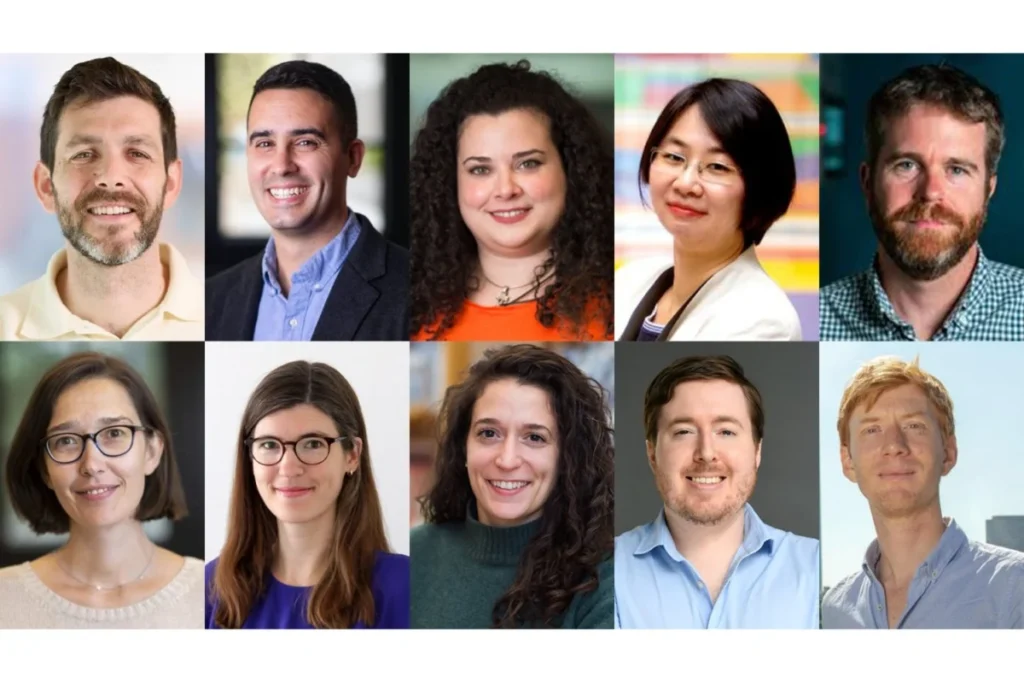
In 2026, the Massachusetts Institute of Technology (MIT) formally recognized the exceptional contributions of ten faculty members within its esteemed School of Engineering by granting them tenure. This significant career milestone solidifies their positions as permanent members of the institute’s academic staff, acknowledging their profound impact on research, education, and the broader scientific community. The newly tenured engineers hold appointments across a diverse array of departments, reflecting the interdisciplinary nature of modern engineering challenges and MIT’s comprehensive approach to innovation. These departments include Aeronautics and Astronautics, Civil and Environmental Engineering, Electrical Engineering and Computer Science (EECS) — which maintains a unique joint reporting structure to both the School of Engineering and the MIT Schwarzman College of Computing — and Mechanical Engineering, as well as within the critical Institute for Medical Engineering and Sciences (IMES).
Dean of Engineering, Institute Professor, and Professor of Chemical Engineering, Paula T. Hammond ’84, PhD ’93, expressed immense pride and enthusiasm regarding the announcement. "I’m delighted to congratulate the 10 newest tenured faculty members in the School of Engineering," Dean Hammond stated. "This major career milestone reflects not only their impact and excellence in research, but their deep commitment to education and mentoring the next generation of engineers. I am so excited to see what new developments, innovations, and technologies will come next from this incredibly accomplished group." Her comments underscore the dual importance of groundbreaking research and dedicated mentorship in shaping the future of engineering at MIT and beyond.
The Rigorous Path to Academic Permanence: Understanding Tenure at MIT
Tenure at an institution like MIT represents the pinnacle of academic achievement and a long-term commitment between a faculty member and the university. It is not merely a promotion but a recognition of sustained excellence and future potential, offering academic freedom and job security that allows scholars to pursue ambitious, high-risk, high-reward research without fear of reprisal or short-term pressures. The process for achieving tenure at MIT is exceptionally rigorous, typically spanning six to seven years of intense evaluation following an initial assistant professorship. Candidates are scrutinized across multiple dimensions: the originality and impact of their research, their effectiveness as educators and mentors, their service to the department and institute, and their emerging leadership in their respective fields.
The review involves extensive internal and external peer evaluations, departmental and school-level committees, and ultimately, approval from the President and Provost. This multi-layered assessment ensures that only individuals who have demonstrated extraordinary promise and a lasting commitment to the institute’s mission are granted this permanent appointment. For MIT, granting tenure is a strategic investment in intellectual capital, ensuring the institution continues to attract and retain the world’s leading minds, fostering an environment where transformative discoveries can flourish over decades. This year’s cohort exemplifies MIT’s commitment to advancing the frontiers of science and engineering, addressing some of the most pressing global challenges of the 21st century, from climate change and sustainable energy to advanced computing and human health.
A New Cohort of Innovators: Profiles of the Tenured Faculty
The newly tenured engineering faculty represent a cross-section of cutting-edge research and innovation, each poised to make significant contributions to their fields for years to come. Their diverse specializations highlight MIT’s breadth and depth in engineering disciplines.
Advancing Artificial Intelligence and Language (Jacob Andreas)
Jacob Andreas, an associate professor in EECS and affiliated with the Computer Science and Artificial Intelligence Laboratory (CSAIL), has been granted tenure for his groundbreaking work in natural language processing (NLP) and broader artificial intelligence (AI). His research is dedicated to understanding the computational foundations of language learning, pushing the boundaries of how intelligent systems can learn effectively from human guidance. In an era where AI-driven language models are becoming increasingly sophisticated, Andreas’s focus on interpretability, efficiency, and human-AI collaboration is crucial for developing robust, ethical, and truly intelligent systems. His contributions are vital for applications ranging from advanced conversational AI to automated knowledge discovery and human-computer interaction, addressing the complex interplay between language, cognition, and machine intelligence.
Pioneering Materials for Aerospace (Zachary Cordero)
Zachary Cordero, the Esther and Harold E. Edgerton Associate Professor in the Department of Aeronautics and Astronautics and associate director of the MIT Gas Turbine Laboratory, earned tenure for his pivotal work in advanced materials, manufacturing, and structures. His research specifically targets enabling frontier aviation and space platforms, with a particular emphasis on high-temperature systems. As the aerospace industry strives for more sustainable and efficient flight, and as space exploration pushes into more extreme environments, the development of materials capable of withstanding unprecedented thermal and mechanical stresses is paramount. Cordero’s innovations in this domain are critical for next-generation aircraft engines, hypersonic vehicles, and spacecraft components, promising to unlock new capabilities in both terrestrial and extraterrestrial transport.
Optimizing Cloud Systems with Machine Learning (Christina Delimitrou)
Christina Delimitrou, the KDD Career Development Professor in Communications and Technology and an associate professor in EECS, also affiliated with CSAIL, has been tenured for her pioneering research at the intersection of computer architecture and computer systems. She is recognized as one of the first systems researchers to effectively apply machine learning techniques to design and management problems within cloud computing environments. With the global economy increasingly reliant on cloud infrastructure, optimizing performance, efficiency, and reliability is a monumental task. Delimitrou’s work provides intelligent solutions to manage the complexity of massive data centers, improving resource allocation, reducing energy consumption, and enhancing the user experience, thereby underpinning the digital transformation across industries.
Engineering for Sustainable Energy and Climate (Sili Deng)
Sili Deng, the Doherty Career Development Professor in Ocean Utilization and an associate professor in the Department of Mechanical Engineering, has been granted tenure for her group’s development of scientific machine learning and experimental approaches to understand, predict, and engineer chemically reacting systems. Her research directly contributes to sustainable energy solutions, advanced materials manufacturing, and climate-resilient technologies. As the world confronts the urgent challenges of climate change and the transition to cleaner energy sources, Deng’s work is instrumental in optimizing combustion processes, designing novel catalysts, and developing new materials for energy storage and conversion. Her interdisciplinary approach combines fundamental science with cutting-edge computational tools to accelerate the development of critical technologies for a sustainable future.
Unlocking Plant Resilience (David Des Marais)
David Des Marais, the Amgen Career Development Professor in the Department of Civil and Environmental Engineering, has earned tenure for leading the Des Marais Lab, which focuses on understanding the mechanisms of plant-environment interaction. His research utilizes tools from molecular, quantitative, and population genetics to identify the physiological basis of plant response to environmental cues. In an era of increasing climate variability and growing global population, ensuring food security and developing resilient agricultural systems are paramount. Des Marais’s work provides fundamental insights into how plants adapt to stress, paving the way for developing crop varieties that can thrive in challenging conditions, resist diseases, and efficiently utilize resources, thereby contributing significantly to global food supply and ecological stability.
Transforming Aviation Through Plasma Science (Carmen Guerra-Garcia)
Carmen Guerra-Garcia, the Esther and Harold E. Edgerton Associate Professor in the Department of Aeronautics and Astronautics and director of the Aerospace Plasma Group, has been granted tenure for her work at the intersection of aerospace engineering, low-temperature plasma technologies, and gas discharge physics. Her research addresses two critical aviation challenges: reducing emissions and ensuring the safety of next-generation aircraft. This is achieved through three interconnected thrusts: advancing the fundamental science of electrical discharges in flowing gases and nonuniform media, applying that science to plasma-assisted combustion and chemical conversion, and developing physics-based approaches to lightning protection. Guerra-Garcia’s innovations are crucial for decarbonizing air travel and enhancing the reliability of future aircraft, contributing to both environmental sustainability and passenger safety.
Mapping the Brain’s Mysteries (Laura Lewis)
Laura Lewis, the Athinoula A. Martinos Associate Professor in EECS and IMES, has been tenured for her research aimed at developing methods to analyze and interpret multi-modal neuroimaging data. Her work enables the measurement of previously undetectable aspects of brain function, with a particular interest in fast fMRI, EEG, and PET, applied notably to the study of sleep. Understanding the complex workings of the human brain is one of the grand challenges of science. Lewis’s advanced neuroimaging techniques are providing unprecedented insights into neurological processes, sleep disorders, and various brain conditions. Her contributions are vital for advancing neuroscience, developing new diagnostic tools, and ultimately improving treatments for a wide range of neurological and psychological disorders.
Decoding the Human Microbiome (Tami Lieberman)
Tami Lieberman, the Hermann L. F. von Helmholtz Career Development Professor in the Department of Civil and Environmental Engineering and IMES, has been granted tenure for leading the Lieberman Lab. Her research seeks to understand how ecology and evolution shape the personalized communities of the human microbiome and the role of this personalization on human health. The human microbiome, a complex ecosystem of microorganisms residing within and on us, is increasingly recognized as a critical factor in health and disease. Lieberman’s work provides crucial insights into how these microbial communities develop, adapt, and interact with the human host, opening new avenues for personalized medicine, disease prevention, and the development of novel therapeutic strategies based on modulating the microbiome.
Pushing the Frontiers of Quantum Computing (Kevin O’Brien)
Kevin O’Brien, an associate professor in EECS and a member of the Research Laboratory of Electronics, leads the Quantum Coherent Electronics Group. He has been tenured for his research efforts focused on developing tools, techniques, and devices to enhance the measurement of quantum systems, most notably superconducting quantum computers. Quantum computing holds the promise of revolutionizing fields from medicine to materials science and cryptography, but it faces significant challenges in error correction and measurement. O’Brien’s work is fundamental to overcoming these hurdles, advancing the precision and reliability of quantum operations. His contributions are essential for scaling quantum computers and bringing their transformative potential closer to reality.
Simulating Complex Fluid Dynamics (Wim van Rees)
Wim van Rees, an associate professor in the Department of Mechanical Engineering and the Leonardo Career Development Professor in Engineering, has been granted tenure for his research advancing high-order, high-fidelity numerical methods for efficiently simulating interactions between fluid flows and moving or deforming bodies. His methodologies span applications from wake vortex dynamics to bio-inspired propulsion and morphing structures. Understanding and predicting fluid-structure interactions are critical in numerous engineering disciplines, including aerospace, marine engineering, and biomechanics. Van Rees’s advanced computational models provide unprecedented accuracy and efficiency in simulating complex physical phenomena, enabling the design of more efficient aircraft, submarines, and even biomimetic robots, pushing the boundaries of engineering design and performance.
Leadership Perspective: Dean Hammond’s Vision
Dean Paula T. Hammond’s congratulatory message extends beyond mere acknowledgment; it reflects MIT’s strategic vision for the future of engineering. Her emphasis on both research impact and dedication to education highlights the institute’s holistic approach to academic excellence. "This group embodies the spirit of MIT: relentless curiosity, groundbreaking innovation, and an unwavering commitment to shaping a better world through science and engineering," Dean Hammond later elaborated in an internal communication. "Their work not only advances their specific fields but also inspires our students, fosters interdisciplinary collaborations, and reinforces MIT’s position at the forefront of global technological progress. We are not just tenuring faculty; we are investing in the future of human ingenuity."
MIT’s Strategic Investment in Future Technologies and Talent
The granting of tenure to these ten individuals in 2026 is not an isolated event but a continuation of MIT’s long-standing commitment to nurturing intellectual talent and fostering an environment of groundbreaking discovery. Historically, MIT has been a crucible for innovation, consistently ranked among the world’s top universities for engineering and technology. For instance, in 2025 and prior years, various global rankings reaffirmed MIT’s engineering programs as number one, a testament to its faculty’s caliber and the institution’s robust research infrastructure. The strategic investment in diverse fields, from AI and quantum computing to sustainable energy and biomedicine, underscores MIT’s proactive approach to addressing the most complex challenges facing humanity.
The joint appointment structure of EECS with the MIT Schwarzman College of Computing further exemplifies this forward-thinking strategy, recognizing the pervasive influence of computing across all engineering disciplines. Similarly, the inclusion of faculty within IMES highlights the growing importance of interdisciplinary research at the intersection of engineering, science, and medicine. This organizational fluidity allows for dynamic collaboration and accelerates the translation of fundamental research into tangible societal benefits.
Broader Impact: Shaping Global Challenges and Education
The impact of these tenured faculty members extends far beyond the confines of their labs. Their research directly contributes to solving some of the world’s most pressing grand challenges:
- Climate Change and Sustainability: Through work in sustainable energy, climate-resilient technologies, and reduced aviation emissions.
- Human Health and Well-being: By mapping brain function, understanding the microbiome, and developing advanced medical engineering solutions.
- Artificial Intelligence and Digital Transformation: Advancing NLP, optimizing cloud infrastructure, and laying the groundwork for quantum computing.
- Aerospace and Exploration: Pioneering materials for space and aviation, and enhancing aircraft safety.
- Food Security: Unlocking plant resilience to environmental stresses.
Moreover, these individuals are not just researchers but also educators and mentors. Their tenure ensures a stable, experienced faculty base that will guide and inspire generations of future engineers and scientists. They will shape curricula, lead graduate research, and contribute to the vibrant intellectual community that defines MIT. The academic freedom afforded by tenure empowers them to embark on ambitious, long-term research projects that may not yield immediate commercial results but could lead to paradigm-shifting discoveries. This commitment to foundational research is a hallmark of leading academic institutions and is crucial for sustained technological and scientific progress.
Conclusion: A Foundation for Future Breakthroughs
The 2026 tenure announcements at the MIT School of Engineering signify more than just personal achievements for ten exceptional individuals. They represent a renewed institutional commitment to intellectual leadership, groundbreaking research, and the cultivation of future talent. By investing in these diverse and cutting-edge fields, MIT continues to solidify its role as a global beacon of innovation. The collective expertise and future contributions of this tenured cohort promise to generate new knowledge, develop transformative technologies, and address critical global challenges, leaving an indelible mark on science, engineering, and society for decades to come. Their work forms a robust foundation upon which future breakthroughs will undoubtedly be built, further cementing MIT’s legacy of "mind and hand" in service to the world.






