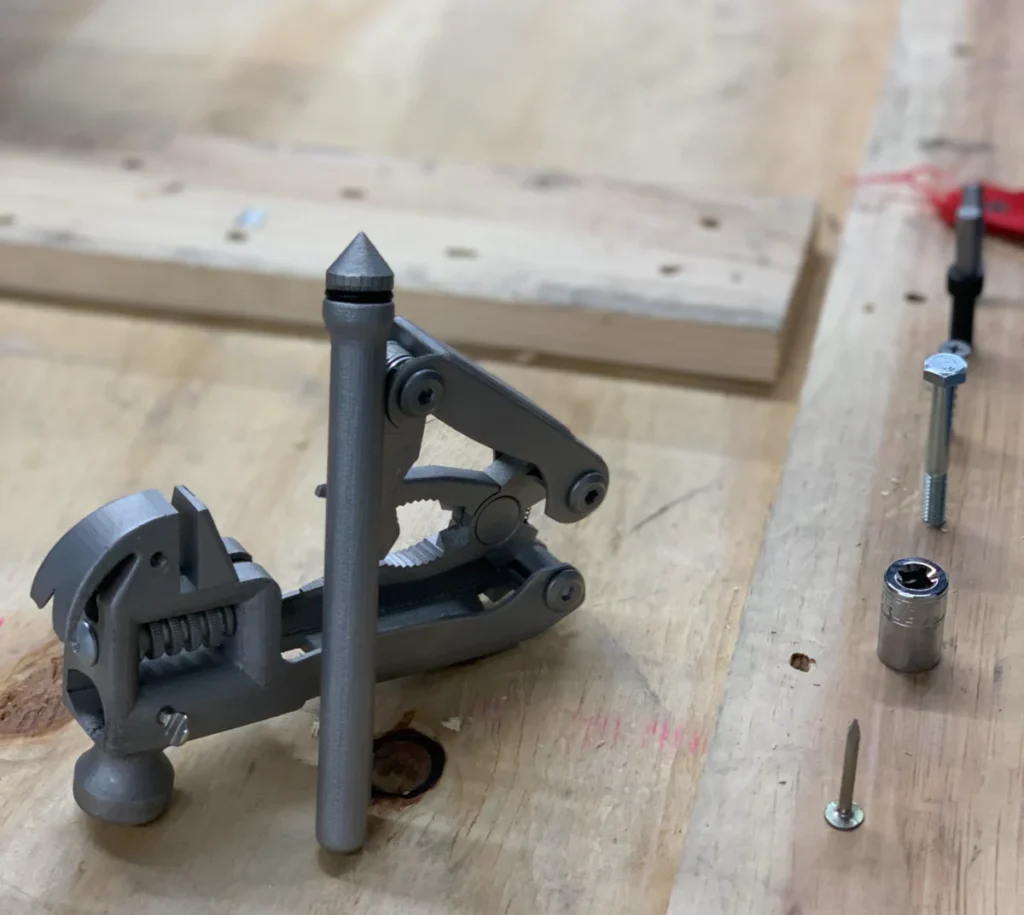
A team of ambitious students from the University of Texas at El Paso (UTEP) has emerged victorious in the third annual America Makes AM in Steel competition, showcasing their ingenuity with a meticulously designed and 3D-printed stainless steel multi-tool. The award-winning creation, a testament to advanced additive manufacturing techniques, was fabricated using Laser Powder Bed Fusion (LPBF) technology and highlights the burgeoning potential of 3D printing in producing functional, everyday carry (EDC) items for critical sectors.
The competition, a key initiative by America Makes, the U.S. additive manufacturing innovation accelerator, challenges university student teams to design and engineer robust, visibly 3D-printed metal multi-tools. These tools are designed to mimic common EDC items, which are indispensable in fields ranging from intricate medical procedures to demanding industrial applications. The UTEP team, operating under the moniker "Borderland Steel" and affiliated with UTEP’s W.M. Keck Center for 3D Innovation, demonstrated a profound understanding of both design principles and advanced manufacturing processes to secure their first-place finish.
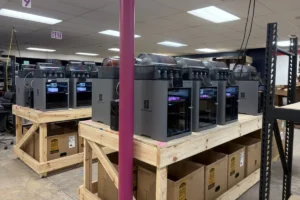
The journey to the winning multi-tool involved a rigorous design and prototyping phase. Initially, the Borderland Steel team explored multiple design iterations, leveraging in-house desktop 3D printers utilizing PLA (polylactic acid) filament. This initial phase allowed for rapid testing of concepts and form factors, crucial for refining the ergonomics and functionality of the multi-tool. Following this iterative process, the team transitioned to advanced metal additive manufacturing for the final prototype.
The chosen material for the winning multi-tool was stainless steel 316L, a widely recognized alloy known for its excellent corrosion resistance, strength, and biocompatibility, making it suitable for demanding applications. The LPBF process, a cornerstone of metal 3D printing, was employed to build the multi-tool layer by layer from a fine metal powder. This technique enables the creation of complex geometries and internal structures that are often impossible to achieve with traditional manufacturing methods.
A significant aspect of the Borderland Steel team’s success lay in their innovative approach to design consolidation. The initial concept comprised approximately 20 distinct parts. Through intelligent engineering, the team managed to reduce this to about five integrated components. This reduction was achieved by combining functionalities, standardizing interfaces between parts, and strategically integrating lattice structures. The use of lattice structures is a hallmark of advanced additive manufacturing, allowing for significant material reduction while maintaining or even enhancing structural integrity by optimizing load paths. This not only contributes to a lighter and more efficient design but also demonstrates a sophisticated understanding of material science and structural engineering principles within the additive manufacturing context.
The team then embarked on an extensive series of printing iterations of this consolidated design. Each iteration served to meticulously refine tolerances and improve the articulation and movement of the multi-tool’s various components. This dedication to precision engineering underscores the commitment required to translate a digital design into a fully functional physical object, especially when dealing with the intricacies of moving parts within a 3D-printed metal assembly.
Following the printing and subsequent postprocessing, the Borderland Steel team presented their multi-tool at the AM in Steel competition. The event, held in conjunction with RAPID + TCT 2026 in Boston, Massachusetts, served as a prestigious platform for showcasing cutting-edge additive manufacturing innovations from academic institutions. The rigorous evaluation process likely involved assessing the tool’s design innovation, functionality, print quality, material utilization, and overall execution. The UTEP team’s design not only met but exceeded these stringent criteria, earning them the coveted first prize.

The technical specifications of the winning multi-tool are noteworthy:
- Material: Stainless steel 316L, chosen for its balance of strength, corrosion resistance, and suitability for additive manufacturing.
- Design Software: Materialise Magics slicing software, a sophisticated tool used to prepare 3D models for printing by optimizing build orientation, generating support structures, and defining print parameters.
- Process: Laser Powder Bed Fusion (LPBF), a high-resolution metal 3D printing technology that melts and fuses metal powder particles layer by layer using a laser.
- System: EOS M290, a widely adopted industrial LPBF system known for its reliability and capability in producing high-quality metal parts.
- Postprocessing: Electrical Discharge Machining (EDM) and sandblasting. EDM is often used for precise machining of hardened materials or complex geometries, while sandblasting is employed to improve surface finish, remove support structures, and enhance aesthetic appeal.
The Significance of the AM in Steel Competition
The America Makes AM in Steel competition has become a pivotal event in fostering the next generation of additive manufacturing professionals. Established to bridge the gap between academic research and industrial application, the competition provides a unique learning experience for students. It pushes them to think critically about design for additive manufacturing (DfAM), material selection, process optimization, and the practical challenges of producing functional metal components.
The annual event typically draws participation from leading universities across the nation, fostering a spirit of friendly competition and collaborative learning. By focusing on multi-tools, a tangible and relatable product, the competition allows students to demonstrate the real-world applicability of 3D printing technologies. It also serves as a crucial platform for industry stakeholders to identify emerging talent and observe the latest advancements in metal additive manufacturing. The fact that this competition has been running for three consecutive years, with previous iterations also highlighting innovative student designs, underscores its growing importance and impact on the additive manufacturing ecosystem.
UTEP’s Keck Center: A Hub for Innovation
The W.M. Keck Center for 3D Innovation at UTEP plays a vital role in nurturing student talent in advanced manufacturing. As a state-of-the-art facility, it provides students with access to cutting-edge additive manufacturing equipment and expertise. The center’s focus on hands-on learning and interdisciplinary collaboration prepares students to tackle complex engineering challenges. The success of the Borderland Steel team is a direct reflection of the robust educational environment and the resources provided by the Keck Center, solidifying UTEP’s reputation as a leader in additive manufacturing education. This success also benefits the broader El Paso region, positioning it as a hub for technological advancement and skilled workforce development in the additive manufacturing sector.
The Broader Implications of 3D-Printed Multi-Tools
The development of a functional, 3D-printed stainless steel multi-tool carries significant implications beyond the scope of a student competition. For sectors like the medical industry, the ability to produce highly customized surgical instruments or specialized tools on demand could revolutionize patient care and surgical efficiency. In industrial settings, the creation of lightweight, high-strength tools tailored to specific tasks can enhance productivity, reduce worker fatigue, and improve safety.
The consolidation of multiple functions into a single, optimized component through additive manufacturing also points towards a future where complex assemblies can be printed as a single unit, reducing part count, assembly time, and potential failure points. The integration of lattice structures, as demonstrated by the UTEP team, is a key area of research and development, promising lighter, stronger, and more material-efficient products across a wide array of industries. Furthermore, the ability to iterate rapidly on designs using additive manufacturing accelerates product development cycles, allowing companies to bring innovative solutions to market faster.
The choice of stainless steel 316L is also indicative of a growing trend towards using advanced alloys in additive manufacturing for critical applications. As the technology matures, the range of printable materials continues to expand, opening up new possibilities for high-performance components in aerospace, automotive, and defense industries, among others.
Looking Ahead
The victory of the Borderland Steel team at the America Makes AM in Steel competition is a clear indicator of the rapid advancements being made in metal additive manufacturing and the talent emerging from universities like UTEP. This success story not only highlights the capabilities of LPBF technology and advanced design techniques but also underscores the vital role of competitions and dedicated innovation centers in shaping the future of manufacturing. As additive manufacturing continues to evolve, innovations like the UTEP multi-tool will undoubtedly pave the way for more sophisticated, efficient, and customized products that address critical needs across diverse global industries. The event serves as a powerful reminder of the potential of young engineers and the transformative power of 3D printing in shaping a new era of industrial innovation.