The field of quantum information science stands at a critical juncture where the theoretical potential of subatomic particles meets the practical limitations of current engineering. For decades, the primary hurdle in realizing the full power of quantum technologies has been the difficulty of creating and maintaining entanglement—a state where particles become so inextricably linked that the condition of one instantaneously influences the other, regardless of the distance between them. Traditionally, generating these complex states has required incredibly bespoke, fragile, and expensive experimental setups. However, a research team from the University of Chicago’s Pritzker School of Molecular Engineering (UChicago PME) has unveiled a theoretical framework that could democratize the production of high-level entanglement. By utilizing standard laboratory equipment in a novel configuration, the researchers have demonstrated that complexity can emerge from simplicity, potentially accelerating the timeline for ultra-precise quantum sensors and advanced computational materials.
The Evolution of Quantum Entanglement and the Symmetry Bottleneck
To appreciate the significance of the UChicago proposal, one must understand the historical and technical context of quantum entanglement. Often referred to by Albert Einstein as "spooky action at a distance," entanglement is the backbone of the "second quantum revolution." While the first revolution gave us the transistor and the laser, the second seeks to harness the non-classical correlations of particles to perform tasks impossible for traditional systems.
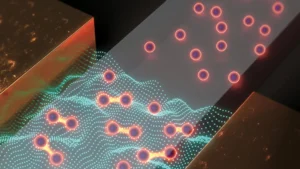
In current experimental physics, one of the most successful platforms for studying these interactions is Cavity Quantum Electrodynamics, or Cavity QED. In a standard Cavity QED setup, atoms are trapped within a high-finesse optical cavity—essentially a space between two highly reflective mirrors. When a laser is introduced, the photons (light particles) bounce back and forth, interacting repeatedly with the atoms. This interaction is the "glue" that allows atoms to communicate and become entangled.
However, a persistent challenge in these systems has been the "symmetry problem." In a conventional cavity, every atom is exposed to the same light field in the same way. This uniformity means that all atoms behave identically, effectively acting as a single large "super-atom." While this is useful for creating certain types of basic entanglement, it severely limits the variety and complexity of the quantum states that can be produced. To create the more "interesting" and useful states required for advanced sensing or error-corrected computing, researchers needed a way to make the atoms behave differently without losing control over the entire system.
Breaking Symmetry Through Minimalist Modification
The breakthrough proposed by Professor Aashish Clerk and postdoctoral researcher Anjun Chu involves a deceptively simple modification to the standard Cavity QED architecture. Published recently in the journal Physical Review X, their research details a method to break the stifling symmetry of these systems using tools already present in most quantum optics labs: additional lasers or magnetic fields.
Instead of treating all atoms as an identical collective, the UChicago team proposed shifting the energy levels of different groups of atoms. In their model, atoms are organized into pairs or ensembles where one group’s excited state energy is shifted upward, while its partner group’s energy is shifted downward by an equal amount. This "equal but opposite" energy offset is the key.
"The challenge has always been that these systems have too much symmetry. All the atoms are talking to light in the same way," Professor Clerk explained. "That really restricts what kind of entangled states you get." By introducing these controlled offsets, the researchers found they could "tune" the system. Even though all atoms are still driven by the same primary laser, their individual responses differ based on their specific energy shifts. This allows for the generation of a much wider palette of entangled states, all while maintaining the mathematical predictability that makes the system useful for scientific applications.
A Chronology of Quantum Innovation Leading to the Breakthrough
The path to this theoretical discovery is rooted in a decades-long timeline of quantum research. The 1980s served as a foundational period, during which theorists like Ian Affleck, Tom Kennedy, Elliott Lieb, and Hal Tasaki (AKLT) proposed specific many-body entangled states to explain the behavior of magnetic materials. For forty years, the "AKLT state" remained a cornerstone of theoretical condensed matter physics, but creating it in a controlled, scalable environment remained difficult.
In the early 2000s, the development of high-quality optical cavities and laser cooling techniques allowed scientists to begin testing these theories in the lab. The 2010s saw the rise of the National Quantum Initiative in the United States, which funneled significant resources into centers like Q-NEXT—the Department of Energy (DOE) National Quantum Information Science Research Center led by Argonne National Laboratory. It is within this collaborative ecosystem that the UChicago PME team operated, bridging the gap between abstract 1980s physics and 2020s engineering.
The proposal by Clerk and Chu represents a synthesis of these eras. It takes the "simple ingredients" of 21st-century Cavity QED and uses them to realize the "complex states" envisioned by 20th-century theorists.
Enhancing Sensitivity and Noise Resilience in Quantum Sensing
One of the most immediate practical applications of this research lies in the realm of quantum sensing. Modern sensors, such as those used in MRI machines or GPS systems, rely on classical signals. Quantum sensors, however, can use entanglement to detect infinitesimal changes in magnetic fields, gravitational waves, or local time dilation.
The UChicago team demonstrated that their system is particularly adept at measuring "field gradients"—the difference in a field’s strength between two points. This is achieved by placing two groups of atoms in different locations. Because the atoms are entangled through the cavity light, the resulting quantum state of the system becomes a direct "map" of the difference in the environment between those two points.
Perhaps more importantly, the researchers addressed the "fragility" of entanglement. Usually, any external noise—such as temperature fluctuations or stray electromagnetic waves—will break the delicate quantum state, a process known as decoherence. The UChicago method features a built-in "common-mode rejection" capability. Because the system is designed to measure the difference between two locations, any noise that hits both locations simultaneously (like a distant power line or a vibration) is naturally canceled out.
"You’re able to do two things that are normally not compatible with one another: Use entanglement to build an exquisitely sensitive sensor but also have robustness to arbitrarily large amounts of noise," Clerk noted. This resilience could be the "holy grail" for deploying quantum sensors in real-world environments outside of shielded, cryogenically cooled laboratories.
Broader Implications: From Magnetism to Quantum Computing
Beyond sensing, the ability to stabilize states like the AKLT state has profound implications for our understanding of fundamental physics. These states are vital for studying "topological" phases of matter—materials that conduct electricity on their surface but act as insulators in their interior. Understanding these phases is not just a matter of curiosity; it is essential for developing "topological quantum computers," which would be inherently more stable than current prototypes like those developed by Google or IBM.
Furthermore, the team emphasized that their method uses "Ramsey measurement" techniques. This is a standard protocol in atomic physics used for atomic clocks. By ensuring that the information in their new entangled states can be read out using standard techniques, the researchers have lowered the barrier for experimentalists to adopt their method. It removes the need for "exotic" measurement hardware, making the transition from theory to practice much smoother.
The Strategic Role of Q-NEXT and National Research Centers
The success of this research also highlights the strategic importance of the U.S. Department of Energy’s investment in quantum science. The work was supported by Q-NEXT, one of five National Quantum Information Science Research Centers established by the DOE. These centers were created to foster collaboration between universities, national labs, and the private sector.
By working within the Q-NEXT framework, the UChicago team was able to align their theoretical work with the practical capabilities of labs at Argonne National Laboratory. This synergy ensures that the theoretical "blueprints" produced at PME are grounded in the realities of what modern equipment can achieve. As the global race for quantum supremacy intensifies, such collaborations are seen as vital for maintaining technological leadership and ensuring national security, particularly in areas like unbreakable encryption and advanced material science.
Future Directions and Experimental Verification
While the current work is theoretical, it has already sparked significant interest in the experimental physics community. The next logical step involves a physical demonstration of the "symmetry-breaking" laser technique. According to Anjun Chu, the first author of the study, the team is already in discussions with several experimental groups to bring these "interesting, highly entangled quantum states" to life.
"The fact that such simple ingredients can generate such complex and useful quantum states gives us hope," Clerk said. The team plans to investigate even more complex arrangements of atoms, such as 2D and 3D lattices within cavities, to see if they can generate "quantum spin liquids"—states of matter that could hold the key to the next generation of high-temperature superconductors.
As the scientific community moves closer to the era of "General Purpose Quantum Computers," the UChicago PME research suggests that we do not have to wait for a perfect computer to reap the benefits of the quantum world. By rethinking how we use existing tools, we can already begin to construct sensors and materials that operate beyond the limits of classical physics, turning "spooky action" into a practical, everyday utility.