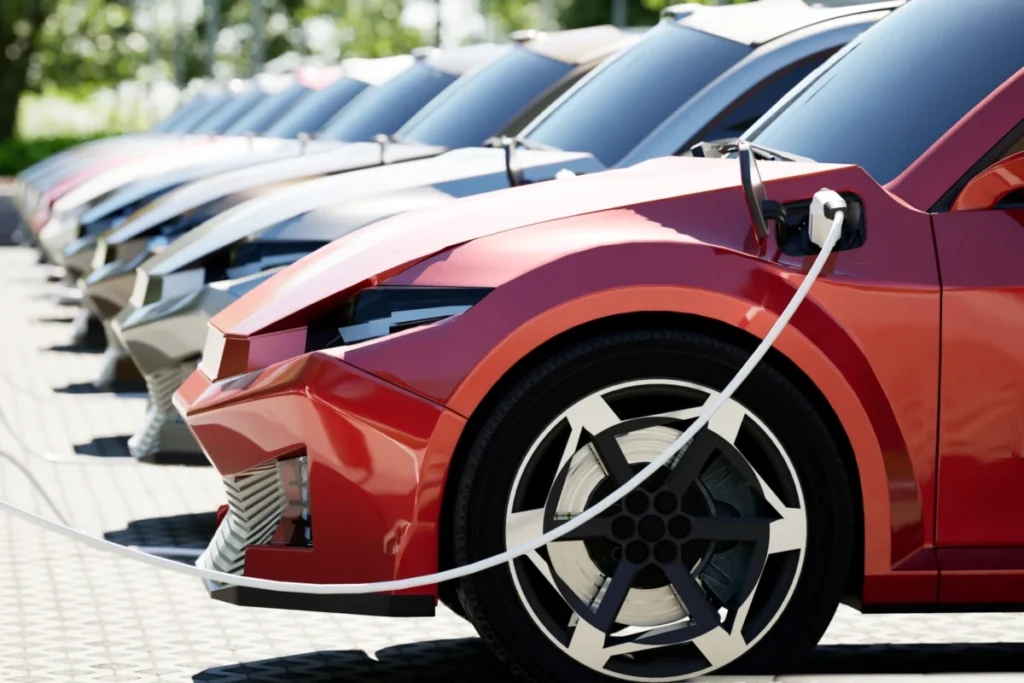
A comprehensive new study by researchers at the Massachusetts Institute of Technology (MIT) has definitively concluded that electric vehicles (EVs) generate substantially lower greenhouse gas emissions and, in most regions of the United States, do not incur higher ownership costs than comparable gasoline-powered vehicles. This finding holds true despite significant regional variations in climate, electricity sources, grid congestion, and the diverse driving patterns of individual consumers. The groundbreaking research, which builds upon and significantly enhances a previously developed public tool, offers a more nuanced and detailed understanding of EV performance and affordability than has been previously available.
The MIT team’s innovative approach meticulously accounts for a multitude of factors that influence both the life-cycle emissions and ownership expenses of EVs. These include crucial elements such as localized meteorological data, the specific distance and duration of individual driving trips, and the fluctuating prices of both electricity and gasoline. By delving into these granular details, the study moves beyond generalized assumptions, providing a more accurate picture for consumers and fleet owners alike. The research was finalized in late 2024 and early 2025, incorporating the latest available data to ensure its relevance and accuracy.
A Holistic Approach to Emissions and Cost Analysis
The study’s methodology represents a significant leap forward in comparative vehicle analysis. Unlike many prior studies that focused on a limited set of variables, such as the percentage of renewable energy in a region’s electricity grid or the general impact of gasoline prices on affordability, the MIT researchers adopted a far more holistic perspective. "To our knowledge, there have been few efforts so far that bring all these factors together," stated Marco Miotti, Ph.D. ’20, a senior researcher at ETH Zurich who spearheaded this research as a graduate student in MIT’s Institute for Data, Systems, and Society (IDSS). "But if someone wants to buy a car and have a better understanding of the factors that affect emissions and costs, this holistic approach is important."
To achieve this comprehensive view, the researchers meticulously gathered data from thousands of U.S. zip codes. This granular data collection allowed them to examine the performance and cost implications at the level of individual drivers within specific geographic locations. The analysis also incorporated time-averaged fuel prices, a deliberate choice to mitigate the influence of short-term price fluctuations and provide a more stable basis for comparison. This detailed examination aimed to paint a fuller picture of emissions and costs than was previously available, moving beyond broad regional averages.
Key Findings: Emissions Reductions and Cost Competitiveness
The study’s results are compelling. They indicate that an individual’s driving behaviors can be as influential as regional factors, such as the local electricity mix, in determining the emissions savings of an electric vehicle compared to its gasoline-powered counterpart. Across most of the United States, battery-electric vehicles (BEVs) demonstrate a significant reduction in emissions, typically ranging from 40% to 60%, with even larger impacts observed in densely populated urban areas. This finding directly challenges some prevailing narratives that suggest EVs offer only marginal environmental benefits.
Furthermore, the research specifically addressed concerns about the performance of EVs in colder climates. Contrary to some media reports that have suggested that cold weather significantly diminishes EV emission benefits, the MIT study found that these colder climates do not reduce the overall emission advantages as much as commonly assumed. Even in frigid conditions, where battery efficiency might see a temporary dip, the long-term, annual emission benefits remain substantial. Miotti elaborated on this point, noting, "We even did a sensitivity study to see if the range is reduced in very cold climates, and we found that, even in the most unfavorable conditions, EVs still reduce emissions by a substantial amount." This suggests that the impact of cold weather on total lifecycle emissions is less pronounced than often portrayed.
On the cost front, the MIT analysis revealed that EVs are generally competitive with comparable internal combustion engine (ICE) vehicles in terms of lifetime ownership cost across most of the U.S., even when excluding the benefit of clean vehicle tax credits. In regions where electricity prices are particularly affordable, BEVs often emerge as a more cost-effective option than plug-in hybrid electric vehicles (PHEVs) or traditional gasoline cars. This cost parity, coupled with significant emission reductions, presents a strong economic case for EV adoption.
Enhancing the Carbon Counter Tool
The insights gleaned from this detailed analysis have been instrumental in updating a publicly accessible tool previously developed by the MIT team: carboncounter.com. This online platform empowers individuals to compare the life-cycle emissions and total ownership costs of nearly any vehicle model currently available on the market. The newly released version of carboncounter.com integrates the advanced modeling and data from the latest study, offering users an even more precise and personalized assessment. The researchers emphasize that the tool is designed to answer the critical questions: "Are EVs better? This paper helps answer ‘better for whom, and under what conditions?’"
The research, which appears in the latest issue of Environmental Research Letters, was co-authored by senior author Jessika Trancik, a professor in IDSS, and Miotti. Their work aims to provide a more transparent and data-driven basis for evaluating the environmental and economic implications of vehicle choices.
Detailed Data Integration and Modeling Advancements
The core of the MIT study lies in its sophisticated data integration and modeling techniques. The researchers focused on two primary types of EVs: battery-electric vehicles (BEVs), which rely solely on electricity for propulsion, and plug-in hybrid electric vehicles (PHEVs), which combine an electric motor with a combustion engine to optimize fuel efficiency and extend range.
The team significantly expanded and refined a suite of existing vehicle cost and emissions models. This enhancement allowed for the incorporation of a much wider array of data types and influencing factors. For instance, an existing model designed to estimate energy consumption and fuel economy was meticulously adjusted to better capture the nuances of local climate variations and their impact on vehicle performance.
"But the real effort was not just in extending these different models, but in bringing together all these different data and making them work with the models in a consistent manner," Miotti explained. The researchers meticulously sourced data for every U.S. zip code, covering critical variables such as typical driving cycles, local traffic congestion levels, prevailing gasoline and electricity prices, the specific composition of the regional electricity grid (i.e., the mix of power sources), and detailed meteorological profiles. They employed advanced statistical methodologies to effectively amalgamate these diverse datasets.
A notable example of their data fusion techniques is the use of a probabilistic matching approach. This method allowed them to combine information on general driving frequency, derived from nationwide travel surveys, with more detailed GPS data. This GPS data provided insights into specific driver behaviors, including acceleration patterns and the typical daily distances covered on different days of the week. This multi-layered data integration was crucial for understanding the real-world performance of vehicles.
The research was strategically designed to focus on the spatial distribution of emissions and costs, using U.S. zip codes as the primary geographic unit. Simultaneously, the analysis accounted for the impact of individual vehicle models, considering their specific size, features, and efficiencies. Professor Trancik highlighted the importance of this user-centric perspective: "At the end of the day, it’s the vehicle and fleet owners who make decisions about vehicle purchases. So, we wanted to make sure to consider their wide-ranging individual perspectives rather than simply performing a region-by-region comparison."
Broader Implications and Future Directions
The findings of the MIT study have significant implications for policymakers, consumers, and the automotive industry. The confirmation that EVs are not only environmentally superior but also economically viable in most scenarios provides a powerful endorsement for the continued transition to electric mobility.
The study revealed that all the analyzed factors – including electricity mix, traffic, travel distance, and climate – contribute to the emissions reduction potential of EVs relative to ICE vehicles, with their importance being roughly equal in determining the overall outcome. Specifically, EVs achieve the greatest emissions reductions in areas characterized by a cleaner electricity grid, higher traffic density, longer annual travel distances, and milder climates, in descending order of impact. Furthermore, for individual drivers, increased driving frequency, the choice of larger vehicles, and experiencing more frequent traffic congestion all contribute to amplified emission reductions.
The study also offers a forward-looking perspective. As the U.S. electricity grid continues to decarbonize through increased adoption of renewable energy sources, the spatial variations in EV emissions savings are expected to diminish. However, the researchers anticipate that differences in individual driving behaviors will remain a significant factor influencing the actual emissions benefits realized by EV owners. Miotti noted, "While we found that the electricity mix is a big driver of the spatial variation in emissions savings of EVs, the electricity grid is decarbonizing everywhere. As that happens, emissions savings across space will become more homogenous for EVs, but the differences across one driver to another will remain."
Looking ahead, the MIT research team plans to further enhance their analytical framework. Future iterations could incorporate a temporal dimension, allowing for the analysis of how evolving vehicle technologies, fuel prices, and electricity costs impact emissions and costs over time. Additionally, the framework could be expanded to evaluate regions outside the United States or to include data on non-plug-in hybrid electric vehicles, further broadening its applicability.
The research was supported in part by the MIT Martin Family Society of Fellows for Sustainability, underscoring the institution’s commitment to addressing critical environmental challenges. The inclusion of this research in a prestigious publication like Environmental Research Letters signals its scientific rigor and its potential to influence future policy and consumer decisions regarding electric vehicle adoption.
This comprehensive study provides a robust, data-driven foundation for understanding the multifaceted benefits of electric vehicles, offering clear guidance for individuals and organizations navigating the evolving landscape of automotive transportation. The widespread adoption of EVs, supported by such evidence, is poised to play a crucial role in achieving national and global climate goals.