Long-duration space missions, by their very nature, present a unique crucible for human psychology and interpersonal dynamics. The inherent isolation, the claustrophobic confines of spacecraft, and the relentless psychological pressure of being millions of miles from Earth can test the bonds of even the most cohesive crews. To shed light on how these extreme conditions shape teamwork, an international consortium of researchers has meticulously studied a ten-month overwintering mission at Concordia Station, Antarctica, a remote outpost that serves as a powerful terrestrial analog for future voyages to the Moon and Mars.
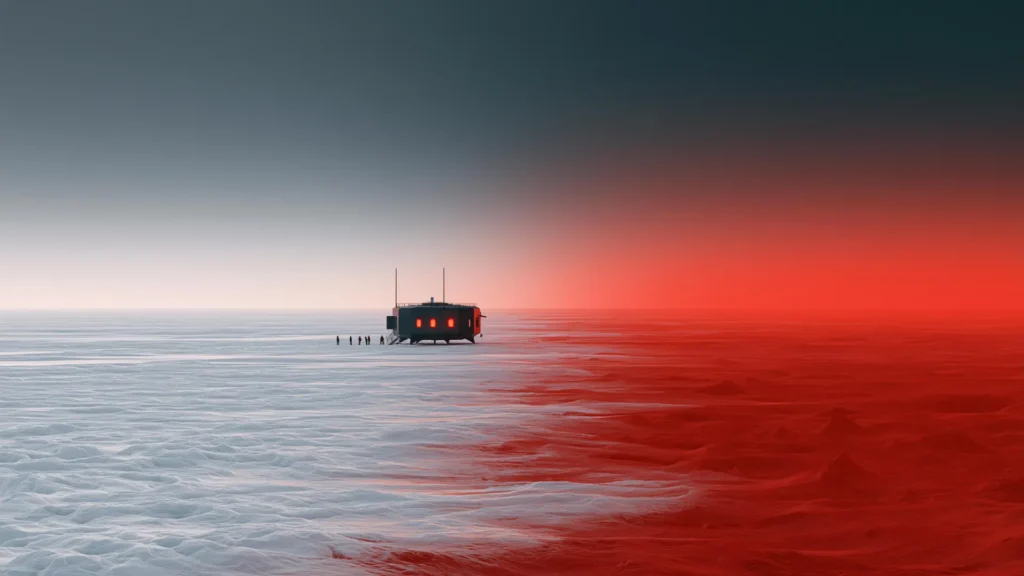
The groundbreaking research, spearheaded by Professor Jan Schmutz from the Department of Psychology at the University of Zurich and Dr. Andrea Cantisani, a psychiatrist and research associate at the University of Bern, delved into the intricate social fabric of a 12-person crew enduring the Antarctic winter. Concordia Station, perched atop a vast ice plateau, is renowned for its extreme isolation. During the austral winter, temperatures plummet to as low as minus 80 degrees Celsius (-112 degrees Fahrenheit), rendering the station a veritable hermitage for months on end. This profound isolation, coupled with the logistical challenges of resupply and communication, makes Concordia an unparalleled real-world laboratory for simulating the psychological and social demands of extended space exploration.
Tracking the Shifting Sands of Social Connection in Extreme Isolation
The study’s methodology was designed to capture a nuanced understanding of the crew’s evolving social landscape. Over the ten-month duration of their overwintering period, the 12 crew members participated in regular psychological assessments, completing comprehensive questionnaires at four distinct intervals. These questionnaires were designed to gauge their subjective experiences of loneliness, trust levels, the prevalence and intensity of interpersonal conflict, the quality of their social relationships, their perception of team cohesion, and their overall assessment of team performance.
Complementing these self-reported data, the researchers employed an innovative technological approach: wearable sensors. Each crew member was equipped with these discreet devices, which automatically logged instances of physical proximity to other team members and meticulously recorded the duration of these encounters. This objective data stream provided a crucial counterpoint to the subjective questionnaire responses, allowing researchers to correlate actual physical interaction patterns with the crew’s psychological states.
The synergy between the questionnaire data and the sensor-derived proximity metrics enabled the research team to construct a dynamic, longitudinal map of the crew’s social evolution. They could observe, in near real-time, how fluctuations in loneliness, shifts in trust, the emergence or abatement of conflict, the deepening or fraying of social bonds, the strengthening or weakening of team cohesion, and perceived team performance were intertwined with their daily interactions.
The Counterintuitive Sting of Over-Contact: When Proximity Breeds Pressure
Perhaps the most striking and counterintuitive finding to emerge from this rigorous investigation was the revelation that increased physical proximity to fellow crew members did not consistently translate into improved social well-being or enhanced team functioning. The data revealed a complex and often paradoxical relationship: participants who reported more frequent contact with others were, in many instances, also more likely to express heightened levels of conflict, a greater sense of mistrust, and a perceived decline in team performance.
This observation challenges a common assumption that in isolated, high-stress environments, more social interaction is inherently beneficial. The study’s results suggest that in highly confined settings, constant physical closeness can, in fact, become an additional source of pressure. While the profound isolation of such missions is undoubtedly difficult to bear, the persistent lack of personal space and privacy can also engender significant strain.
"In small teams operating under extreme conditions, more contact doesn’t automatically equate to social support; rather, it can actually exacerbate tensions," explained Professor Jan Schmutz, reflecting on the core implications of the research. This statement underscores a critical distinction between quantity and quality of interaction, highlighting that forced proximity can dilute the efficacy of social support mechanisms.
The researchers are careful to emphasize that their study identified strong correlations, and as with any observational research, direct causation cannot be definitively established. They acknowledge the possibility that individuals experiencing feelings of loneliness might have proactively sought out more social interaction, even if these encounters did not ultimately provide the supportive balm they craved. This self-selection bias could contribute to the observed correlation between increased contact and negative social outcomes.
The Emergence of Subgroups: A Natural Tendency in Diverse Teams
Further analysis of the wearable sensor data revealed another significant trend: as the mission progressed, the crew members naturally began to gravitate towards and form smaller social subgroups. The data indicated a discernible pattern of increasing time spent with colleagues who shared commonalities such as language or nationality.
While the formation of these smaller, more intimate social circles can offer vital emotional support and a sense of grounding during prolonged periods of stress, the researchers also note a potential downside. These endogenous groupings, while comforting to individuals, could inadvertently foster social divisions within the larger, culturally diverse team. Such divisions, if left unmanaged, have the potential to weaken overall team unity and hinder effective collaboration.
This phenomenon has been observed in other isolated and confined environments, such as long-term military deployments or extended scientific expeditions. The tendency to form in-groups based on shared identity can be a protective mechanism, but it requires careful monitoring to prevent it from becoming a source of fragmentation.
Illuminating the Path Forward: Essential Lessons for Lunar and Martian Endeavors
The findings from the Concordia Station study hold profound implications for the planning and execution of future long-duration space missions, particularly those venturing to the Moon and Mars. Astronauts on these ambitious journeys will face unprecedented levels of isolation, with limited opportunities for privacy and significantly constrained communication channels with Earth. The psychological resilience and interpersonal harmony of these small crews will be paramount to mission success.
The research provides concrete, evidence-based insights into the complex social dynamics that can arise in such extreme environments. It underscores the critical need for proactive strategies to manage interpersonal relationships, rather than relying on assumptions about the inherent benefits of constant interaction.
Beyond the realm of space exploration, the results of this study may also resonate with a broader spectrum of demanding human endeavors. Professionals working in other highly isolated and confined settings, such as submariners, crews on offshore oil platforms, and personnel at remote research stations, could also benefit from the lessons learned. These environments share many of the same psychological stressors and interpersonal challenges as long-duration space missions.
"Our findings highlight the critical importance of identifying social dynamics early in a mission and providing teams with targeted support interventions," Professor Schmutz emphasized, advocating for a proactive approach to crew well-being. This suggests a need for pre-mission training that addresses conflict resolution, communication skills, and the management of personal space and privacy within confined settings, as well as ongoing support structures during the mission itself.
Technological Resilience in the Face of Extreme Conditions
An additional, and significant, contribution of this research lies in the validation of wearable sensor technology for use in extreme environments. The study successfully demonstrated that these devices can operate reliably and accurately even under the harsh conditions present at Concordia Station. This technological breakthrough is crucial because it allows researchers to monitor subtle yet important changes in everyday social patterns without introducing substantial disruptions to the crew’s routines. Such unobtrusive monitoring is vital for capturing authentic behavioral data in real-world operational settings.
Looking ahead, future research endeavors will aim to refine our understanding of the nuanced interplay between different types of social interaction. The goal will be to differentiate between those interactions that effectively relieve stress and bolster well-being, and those that, conversely, may inadvertently contribute to tension and strain. This finer-grained analysis will be indispensable for developing highly specific and effective psychological support protocols for astronauts and other individuals facing prolonged periods of isolation and confinement.
The scientific community’s sustained interest in understanding and mitigating the human challenges of deep space exploration is a testament to the ambitious future humanity envisions. Studies like the one conducted at Concordia Station are not merely academic exercises; they are essential building blocks for ensuring the safety, success, and psychological health of the pioneers who will one day venture beyond our planet. The paradox of proximity – that too much closeness can be detrimental – offers a vital piece of wisdom for navigating the vast distances of space and the intricate landscapes of the human heart.