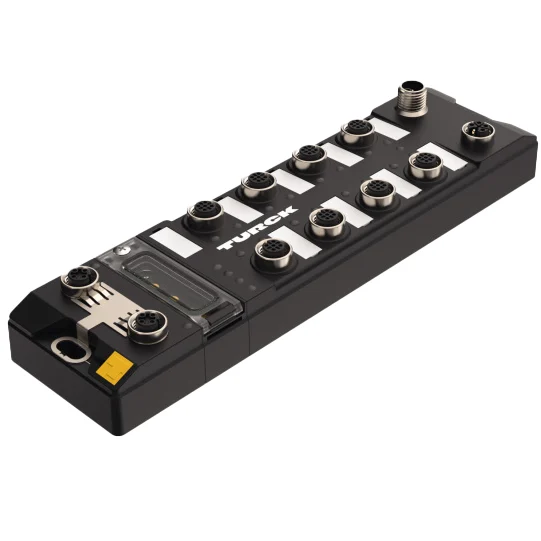
TURCK, a global leader in industrial automation, has offered an exclusive preview of its forthcoming TBEN-LLH-4RMC, a sophisticated and compact multiprotocol Ethernet I/O module engineered specifically for the precise control and seamless integration of conveyor roller motors. This innovative solution is designed to significantly advance material handling and intralogistics applications across various industrial sectors. The TBEN-LLH-4RMC is slated for its official launch in the United States market during the second quarter of 2026, promising a transformative impact on how modern conveyor systems are designed, implemented, and maintained.
The burgeoning landscape of e-commerce, coupled with an escalating demand for efficient supply chains, has placed unprecedented pressure on manufacturing and logistics operations to adopt more agile, scalable, and resilient material handling systems. Traditional conveyor infrastructures, often reliant on centralized Programmable Logic Controllers (PLCs) and complex, cumbersome wiring schemes, are increasingly struggling to meet these contemporary demands. This is precisely the operational gap the TBEN-LLH-4RMC aims to bridge, offering a decentralized automation approach that promises to revolutionize the deployment and management of conveyor systems in intralogistics, packaging, and general manufacturing environments where robust motor control, system flexibility, and unwavering durability are paramount.
The Evolution of Industrial Automation and Intralogistics
The past decade has witnessed a dramatic shift in industrial automation, driven by the principles of Industry 4.0 and the pervasive influence of the Industrial Internet of Things (IIoT). This paradigm shift emphasizes connectivity, data-driven decision-making, and, crucially, decentralized intelligence at the edge of the network. In the realm of intralogistics, this translates to a move away from monolithic, single-point-of-failure control architectures towards distributed, modular systems that can adapt rapidly to changing operational requirements. The global intralogistics market, valued at approximately $200 billion in 2023, is projected to grow at a Compound Annual Growth Rate (CAGR) of over 10% through 2030, underscoring the urgent need for advanced automation solutions that can keep pace with this expansion. Conveyor systems, as the backbone of material flow, are at the heart of this transformation, requiring intelligent, adaptable control mechanisms.
Traditional conveyor setups often involve extensive cabling running from individual motors and sensors back to a central control cabinet, housing a large PLC. This approach is inherently complex, labor-intensive to install, difficult to troubleshoot, and prone to extensive downtime in the event of a fault. Furthermore, modifications or expansions to such systems can be costly and disruptive, hindering the agility required in today’s fast-paced operational environments. The TBEN-LLH-4RMC represents a direct response to these challenges, embodying the principles of edge computing and distributed control to bring intelligence and control closer to the field devices themselves.
TURCK’s Legacy in Industrial Innovation and Robust Solutions
For over 50 years, TURCK has established itself as a pioneering force in industrial automation, renowned for its comprehensive portfolio of sensors, fieldbus technology, connectivity solutions, and interface products. Founded in Germany, the company has consistently focused on developing robust, high-performance solutions designed to withstand the harshest industrial conditions. TURCK’s philosophy revolves around enhancing efficiency, reducing complexity, and improving reliability for its customers across diverse industries, from automotive and food and beverage to logistics and heavy machinery.

Their expertise in creating compact, intelligent, and ruggedized I/O modules, particularly within their TBEN series, is well-documented. The TBEN-L series, for instance, has gained significant traction for its ability to integrate various industrial Ethernet protocols into a single device, providing unparalleled flexibility for system integrators. The introduction of the TBEN-LLH-4RMC builds upon this strong foundation, applying TURCK’s core competencies to address a specific, high-demand application: the control of conveyor roller motors. This strategic focus underscores TURCK’s commitment to delivering targeted, high-value solutions that directly address evolving industry needs.
Unpacking the TBEN-LLH-4RMC: Design, Functionality, and Key Features
The TBEN-LLH-4RMC module is a testament to sophisticated industrial design, merging advanced functionality with a compact and rugged form factor suitable for decentralized automation. While specific technical specifications will be fully disclosed closer to the Q2 2026 launch, TURCK’s preview highlights several critical features that underscore its potential impact:
- Compact Multiprotocol Ethernet I/O: The "multiprotocol" capability is a cornerstone of modern industrial communication. It means the module can seamlessly communicate over various leading industrial Ethernet protocols, typically including PROFINET, EtherNet/IP, and Modbus TCP, often without requiring configuration changes. This flexibility is invaluable for system integrators working with diverse equipment and control platforms, simplifying integration and reducing inventory. The compact size allows for installation directly on the conveyor frame, minimizing wiring runs and saving valuable cabinet space.
- Onboard Logic and I/O Functions: This feature is central to the concept of decentralized automation. The TBEN-LLH-4RMC is equipped with internal processing capabilities, allowing it to execute local control logic. This means it can manage individual roller motors or small segments of a conveyor independently, reducing the processing load on the central PLC. The integrated I/O functions provide direct connections for sensors (e.g., photo-eyes for package detection) and actuators, enabling localized decision-making, such as starting/stopping rollers based on product presence or accumulation zones. This edge intelligence contributes to faster response times and enhanced system autonomy.
- Rugged Housing for Industrial Environments: Industrial environments are inherently harsh, characterized by dust, moisture, vibration, and temperature fluctuations. TURCK’s reputation for robust design suggests the TBEN-LLH-4RMC will feature a high Ingress Protection (IP) rating (e.g., IP65/IP67), safeguarding it against dust and water ingress. Its construction will also likely incorporate materials and design principles to withstand shock and vibration, ensuring reliable operation even in demanding applications like large-scale material handling facilities. This durability directly translates to reduced maintenance and extended operational life.
- Direct Control of Conveyor Roller Motors: The module is specifically optimized for controlling common 24V DC roller motors, which are widely used in modern conveyor systems, particularly in Zero Pressure Accumulation (ZPA) conveyors. ZPA systems are designed to minimize contact between packages, improving product integrity and reducing wear on the conveyor. The TBEN-LLH-4RMC’s ability to directly interface with and control these motors means precise speed control, direction changes, and start/stop functionality can be managed at the roller level, facilitating sophisticated material flow management and energy efficiency.
Transformative Benefits for Manufacturers and System Integrators
The TBEN-LLH-4RMC’s design philosophy translates into tangible benefits for end-users and the system integrators responsible for deploying these solutions:
- Reduced Complexity and Cost: By moving intelligence and control closer to the field, the module drastically simplifies wiring architectures. Instead of numerous cables returning to a central cabinet, fewer trunk cables (often standard Ethernet) are needed, potentially utilizing daisy-chaining capabilities. This reduction in wiring labor, cable costs, and cabinet space significantly lowers overall installation expenses.
- Enhanced Flexibility and Scalability: The modular nature of decentralized I/O allows for greater system flexibility. Conveyor lines can be easily reconfigured, expanded, or modified by adding or removing modules without extensive rewiring or reprogramming of the central PLC. This adaptability is crucial for businesses facing evolving production needs or seasonal demands.
- Improved Uptime and Diagnostics: Decentralized control reduces the impact of a single point of failure. If one module or section experiences an issue, the rest of the system can continue operating. Furthermore, built-in diagnostic features at the module level allow for quicker identification and isolation of faults, minimizing downtime and streamlining maintenance efforts.
- Accelerated Commissioning: With simpler wiring and pre-programmed local logic, commissioning times can be significantly reduced. Integrators can deploy and test sections of a conveyor system more rapidly, bringing operations online faster and accelerating return on investment.
Market Landscape and Strategic Positioning
The industrial I/O and motor control market is highly competitive, featuring established giants such as Siemens, Rockwell Automation, Beckhoff, Balluff, WAGO, and Phoenix Contact, among others. Each offers a range of solutions for industrial automation. TURCK’s TBEN-LLH-4RMC strategically positions the company by focusing on a specific, high-growth niche: intelligent control for conveyor roller motors within material handling.
While competitors offer general-purpose I/O and motor control solutions, the TBEN-LLH-4RMC’s emphasis on compactness, multiprotocol flexibility, and integrated logic specifically for roller motors gives it a distinct advantage in applications where space is limited and direct, intelligent motor control is desired without over-reliance on a central controller. This targeted approach allows TURCK to provide a highly optimized solution that directly addresses the pain points of intralogistics system designers and operators. The material handling equipment market is projected to reach nearly $200 billion by 2030, with automation components forming an increasingly significant segment. Solutions like the TBEN-LLH-4RMC are critical enablers for this growth, allowing companies to automate more sophisticated processes at lower total cost of ownership.

The Road to Q2 2026: Launch and Future Vision
The preview of the TBEN-LLH-4RMC, well in advance of its Q2 2026 U.S. launch, serves multiple strategic purposes. It allows TURCK to generate significant industry interest, gather early feedback from potential customers and system integrators, and build anticipation for a product designed to address pressing operational challenges. Following its U.S. debut, it is highly probable that TURCK will pursue a global rollout, extending the benefits of this module to international markets facing similar intralogistics demands.
Looking ahead, the TBEN-LLH-4RMC aligns perfectly with TURCK’s broader vision for the future of smart factories and connected logistics. As industries increasingly adopt concepts like predictive maintenance, real-time analytics, and hyper-personalized production, the need for intelligent, connected devices at every level of the automation pyramid will intensify. This module is a stepping stone towards more fully autonomous and self-optimizing material handling systems, where each component can communicate, make local decisions, and contribute to the overall efficiency and resilience of the entire operation.
An inferred statement from a TURCK spokesperson might emphasize, "The TBEN-LLH-4RMC represents our commitment to pushing the boundaries of decentralized automation. We understand the complex challenges faced by our customers in material handling, and this module is engineered to deliver unprecedented flexibility, simplify installations, and significantly reduce operational costs, making advanced conveyor control more accessible and robust than ever before."
Similarly, an industry analyst specializing in industrial automation might comment, "The introduction of specialized, multiprotocol I/O modules like TURCK’s TBEN-LLH-4RMC is a critical development for the intralogistics sector. As companies strive for greater efficiency and adaptability in their supply chains, solutions that reduce wiring complexity, enhance modularity, and bring intelligence to the edge are not just desirable but essential. This module positions TURCK strongly in a market segment that is ripe for such innovation, offering a clear value proposition to system integrators and end-users alike."
In conclusion, TURCK’s preview of the TBEN-LLH-4RMC signals a significant advancement in the field of conveyor automation. By combining compact design, multiprotocol compatibility, onboard logic, and a rugged construction, this Ethernet I/O module is poised to deliver substantial benefits in terms of simplified installation, reduced maintenance, and enhanced operational flexibility. As the industrial landscape continues its rapid evolution towards smarter, more connected, and highly efficient systems, the TBEN-LLH-4RMC promises to be a pivotal component in empowering the next generation of material handling and intralogistics operations upon its anticipated launch in Q2 2026.






