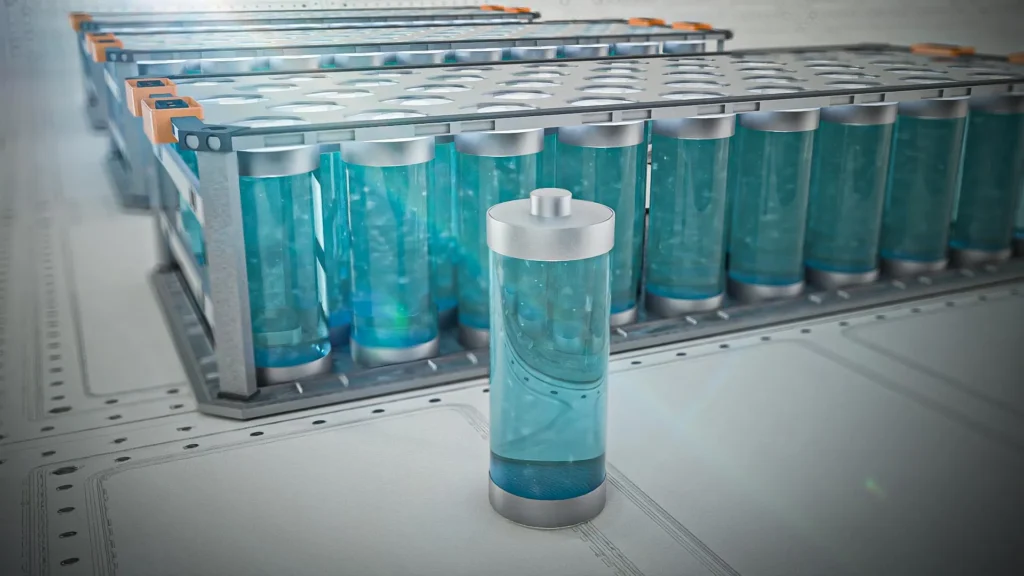
The transition toward a global green economy has long been tethered to the advancement of battery technology, specifically the search for alternatives to the ubiquitous but resource-intensive lithium-ion cell. In a significant departure from conventional battery manufacturing wisdom, researchers at the University of Surrey have demonstrated that sodium-ion batteries can achieve superior performance by retaining, rather than removing, internal water molecules. This discovery, published in the Journal of Materials Chemistry A, not only positions sodium-ion technology as a formidable competitor to lithium but also reveals a secondary, groundbreaking application: the ability to desalinate seawater while simultaneously storing electrical energy.
The Paradigm Shift in Sodium-Ion Chemistry
For decades, moisture has been the primary antagonist in battery research. In the production of lithium-ion batteries, even trace amounts of water are considered a contaminant that can lead to hazardous chemical reactions, gas buildup, and the degradation of the electrolyte. Consequently, industrial battery manufacturing involves rigorous and expensive drying processes, often requiring high-temperature heat treatments to ensure components are bone-dry before assembly.
However, the team at the University of Surrey’s School of Chemistry and Chemical Engineering decided to challenge this fundamental assumption. Led by Dr. Daniel Commandeur, the researchers focused their efforts on a material known as nanostructured sodium vanadate hydrate (NVOH). While sodium vanadium oxide has been a subject of scientific interest for years, the "hydrate" aspect—meaning water molecules are chemically integrated into the material’s crystalline lattice—was traditionally viewed as a hurdle to be overcome through dehydration.
The team’s experimental results were transformative. By leaving the natural water content within the NVOH structure, they found that the material’s performance did not suffer; instead, it improved dramatically. In laboratory settings, the hydrated version of the material stored nearly twice as much charge as standard sodium-ion cathode materials. Furthermore, the battery demonstrated exceptional longevity, maintaining its structural integrity and performance over more than 400 charge-discharge cycles.
Addressing the Global Lithium Shortage
The implications of this discovery are best understood within the context of the current energy landscape. As the world pivots toward electric vehicles (EVs) and grid-scale renewable energy storage, the demand for lithium has skyrocketed. Lithium is a finite resource, with mining operations concentrated in a few geographical regions, such as the "Lithium Triangle" in South America (comprising Chile, Argentina, and Bolivia) and parts of Australia and China. The extraction process is not only expensive but also environmentally taxing, requiring vast amounts of water and often resulting in significant ecological footprints.
Sodium, by contrast, is one of the most abundant elements on Earth. It can be found in massive quantities in the world’s oceans and in salt deposits across the globe. Because sodium is chemically similar to lithium, it can be used to create batteries that function on the same basic principles: ions moving between a cathode and an anode through an electrolyte. Until now, the primary barrier to the widespread adoption of sodium-ion batteries has been their lower energy density and shorter lifespan compared to lithium-ion counterparts. The Surrey research suggests that by optimizing hydrated materials, the performance gap could be bridged, making sodium a viable, low-cost, and sustainable alternative for large-scale applications.
A Dual-Function Technology: Energy Storage and Desalination
Perhaps the most surprising aspect of the Surrey study was how the NVOH material behaved when exposed to salt water. In a series of tests, researchers placed the battery components into a saline solution—an environment that is typically corrosive and detrimental to electrical systems. Surprisingly, the sodium vanadate hydrate continued to function effectively as a battery electrode.
Beyond mere survival, the system began to actively alter the chemistry of the water. As the battery was charged, the NVOH material pulled sodium ions out of the salt water. Simultaneously, a graphite electrode used in the setup removed chloride ions. Because common salt (sodium chloride) consists of these two components, the process effectively began to desalinate the water.
This process, known as electrochemical desalination, represents a potential revolution in how coastal communities manage resources. Traditional desalination, such as Reverse Osmosis (RO), is notoriously energy-intensive, requiring high pressure to force water through semi-permeable membranes. The Surrey team’s discovery hints at a future where a single device could serve two vital infrastructure roles: storing surplus energy from wind or solar farms during the day and providing fresh drinking water as a byproduct of the energy discharge cycle at night.
Chronology of Research and Technical Data
The journey toward this breakthrough followed a rigorous scientific timeline. Sodium vanadium oxide research has been ongoing for over a decade, but the focus was largely on anhydrous (water-free) versions of the material. The Surrey team began their specific investigation into nanostructured hydrates in the early 2020s, seeking to understand why certain "wet" materials occasionally showed anomalous spikes in conductivity.
The technical data produced during the study highlights several key benchmarks:
- Capacity: The hydrated NVOH cathode achieved a specific capacity that nearly doubled the output of conventional sodium-ion cathodes, placing it in the top tier of reported materials for this battery class.
- Rate Capability: The material demonstrated the ability to charge and discharge rapidly, a crucial requirement for electric vehicle applications where "fast charging" is a primary consumer demand.
- Stability: In the 400-cycle test, the material showed minimal degradation, suggesting that the internal water molecules actually stabilize the crystal structure during the mechanical stress of ion movement.
- Desalination Efficiency: In initial tests, the electrochemical setup showed a high selectivity for sodium and chloride ions, suggesting that it could eventually be scaled to treat large volumes of seawater.
Expert Reactions and Industry Implications
Dr. Daniel Commandeur, the lead author of the paper, noted that the results were a reminder to question long-held scientific dogmas. "Our results were completely unexpected," Dr. Commandeur stated. "Sodium vanadium oxide has been around for years, and people usually heat-treat it to remove the water because it’s thought to cause problems. We decided to challenge that assumption, and the outcome was far better than we anticipated."
Industry analysts suggest that if this technology can be scaled, it could significantly lower the barrier to entry for energy storage in developing nations. Since sodium-ion batteries do not require the expensive cobalt or nickel often found in lithium-ion cells, the cost of the raw materials is substantially lower. Furthermore, the Surrey team’s method simplifies the manufacturing process. By eliminating the high-heat drying stage for the cathode, manufacturers could reduce energy consumption in the factory, further lowering the carbon footprint of the battery’s lifecycle.
Environmental scientists have also expressed interest in the desalination aspect. As climate change exacerbates water scarcity in arid coastal regions, the ability to integrate water treatment with renewable energy grids could provide a "silver bullet" solution. Instead of building separate, energy-hungry desalination plants, future coastal cities could utilize "battery-desalination hubs" that stabilize the local power grid while contributing to the municipal water supply.
Future Outlook and Challenges
While the results from the University of Surrey are promising, the technology is still in the laboratory phase. Several hurdles remain before sodium-ion-desalination units become a commercial reality. First, the researchers must determine how to scale the nanostructured materials for mass production without losing the performance benefits observed at the micro-scale. Second, the long-term effects of using seawater as an electrolyte need further study; while the initial tests were successful, the presence of other minerals and organic matter in natural seawater could lead to "fouling" or unwanted side reactions over thousands of cycles.
However, the proof-of-concept is undeniable. The research establishes a new frontier in "water-in-salt" chemistry and challenges the industry to rethink the role of moisture in energy storage. By leveraging the abundance of sodium and the unique properties of hydrated vanadates, the University of Surrey has mapped out a path toward a more sustainable and resource-efficient future.
As the global community seeks to meet net-zero targets, the development of batteries that are not only efficient but also environmentally benign will be critical. The sodium-ion battery, enhanced by the very water it may one day help to purify, stands as a testament to the potential of unconventional scientific inquiry. The next decade of research will likely focus on optimizing these systems for industrial use, potentially turning the world’s oceans into a vast, rechargeable reservoir of both energy and life-sustaining fresh water.