The San Mateo County Event Center recently transformed into a sprawling hub of engineering ingenuity and creative absurdity as Open Sauce 2026 concluded its second annual residency in Northern California. Originally conceived as a specialized convention for the engineering YouTube community, the event has rapidly evolved into a spiritual successor to the legendary Maker Faire Bay Area, drawing thousands of attendees, hundreds of exhibitors, and the most prominent figures in the "Creator Economy." This year’s gathering demonstrated a significant expansion in scope, filling more halls and featuring a higher density of complex hardware projects than its inaugural Silicon Valley showing.
The event, which bridges the gap between digital content creation and physical prototyping, serves as a vital touchpoint for a generation of engineers who primarily consume technical knowledge through platforms like YouTube and TikTok. While the convention celebrates the whimsical—ranging from motorized furniture to giant inflatable costumes—the underlying technical prowess on display highlights a sophisticated mastery of 3D printing, robotics, and open-source software integration.
The Evolution of the Maker Gathering
Open Sauce was founded to provide a physical venue for the "Maker" community, which had seen a fragmentation of its traditional meeting spaces over the last decade. By centering the event around high-profile YouTube personalities, the organizers have successfully tapped into a pre-existing audience of millions. The 2026 iteration saw a notable increase in the number of first-time exhibitors, many of whom spent months—and in some cases, thousands of dollars—developing projects specifically for this weekend.
One standout example of this dedication was a team that invested approximately $9,000 to convert a standard living room couch into a fully functional, street-legal vehicle. This brand of "absurdist engineering" has become a hallmark of the Open Sauce identity, where the primary goal is often the realization of a technically challenging, albeit impractical, concept.
The Creator Economy and the "Algorithm"
A central pillar of the convention was a series of panels featuring industry leaders and top-tier creators. VidCon CEO Jim Louderback led a high-profile discussion regarding "The Algorithm," the complex set of mathematical rules that dictates visibility on social media platforms. These panels provided a rare, behind-the-scenes look at the professionalization of making.

Attendees heard candid accounts of the financial risks involved in high-stakes engineering content. One creator revealed spending upwards of $50,000 on a single project that ultimately failed to produce a viable video, illustrating the volatile nature of the creator business model. The consensus among the veteran speakers was clear: while the barrier to entry for starting a channel is lower than ever, the financial sustainability of the field requires a relentless output of high-quality, engaging videos rather than a focus on immediate profit.
Robotics: From BattleBots to Tabletop Sports
Robotics remains the most dominant category at Open Sauce, represented by a diverse array of machines ranging from destructive combatants to delicate mechanical puppets. The event featured several teams from the televised BattleBots series, providing fans with a close-up look at the heavy-duty metallurgy and high-voltage electronics required for robotic combat.
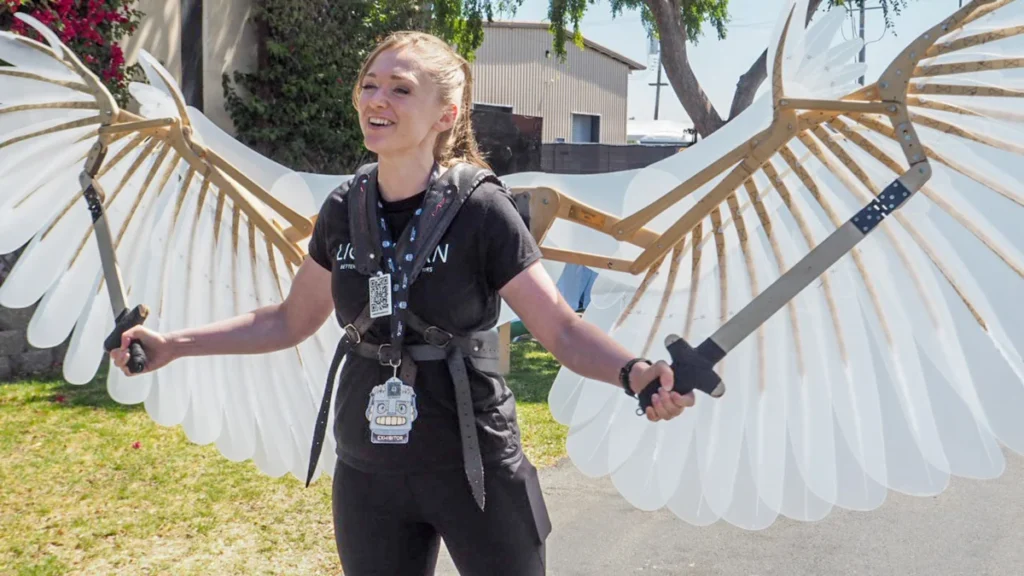
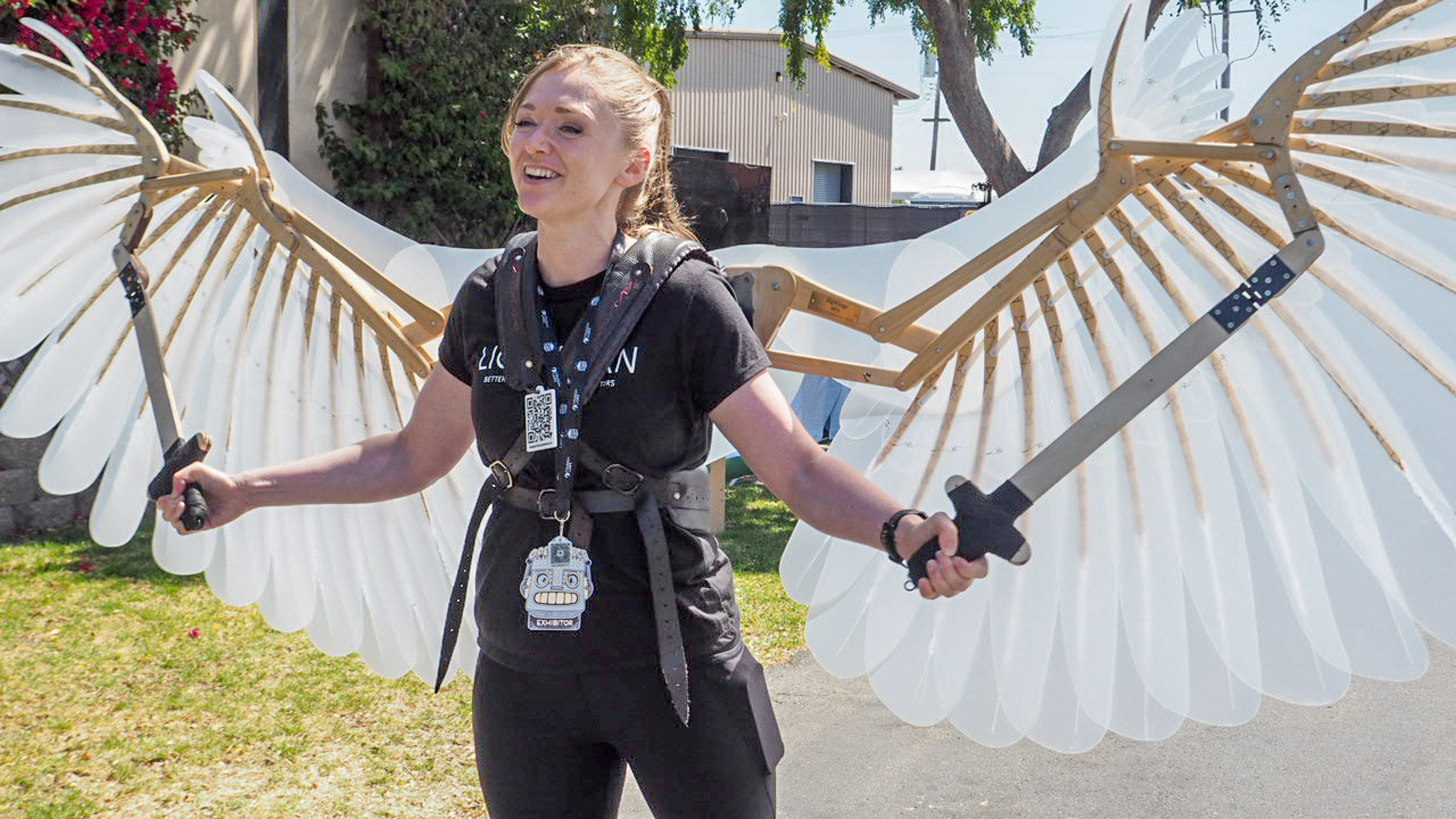
In contrast to the heavy hitters, artist Laura Mathews showcased the delicate side of mechanical engineering with her large-scale mechanical wings. These builds utilize complex linkages and lightweight materials to mimic the fluid motion of avian flight, blending traditional sculpture with modern kinetic engineering.

The robotics sector also featured "Sesame," a tiny, affordable walking robot designed by Dorian Todd. A previous blue-ribbon winner at Maker Faire, Todd’s creation was the centerpiece of a popular tabletop football match, demonstrating that high-level robotics does not always require a massive budget or industrial-scale components.
The Star Wars Legacy and Community Building
The Bay Area Droid Builders maintained a significant presence at the event, showcasing hyper-realistic replicas of iconic Star Wars characters such as K-2SO, MSE-6 (the "mouse droid"), and B1 battle droids. These builders represent a long-standing tradition within the maker community where open-source blueprints and collaborative troubleshooting allow hobbyists to achieve movie-quality results.
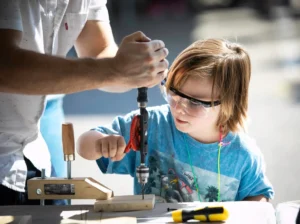
This spirit of community was also evident in the presence of Hacker Dojo, one of Silicon Valley’s oldest and most influential hackerspaces. Founded in 2009 in Mountain View, the Dojo has been a foundational resource for countless startups and hobbyists. However, the organization is currently facing a precarious financial situation and used the event to advocate for its survival. Through toy car customization workshops for children and the auctioning of intricate brick-based artwork, the Dojo highlighted the essential role that physical community spaces play in fostering the next generation of engineers.

Sustainable Technology and the Right to Repair
Amidst the entertainment-focused exhibits, several projects addressed serious environmental and social issues. Joel Hartlaub, known online as JoelCreates, presented the OddCube air purifier kit. As air quality continues to be a major concern due to wildfires and urban pollution, Hartlaub’s project emphasizes "Right to Repair" principles. The OddCube is designed to be easily assembled, repaired, and upgraded by the user, standing in stark contrast to the "planned obsolescence" prevalent in modern consumer electronics.
This focus on sustainable engineering reflects a growing trend within the open-source hardware movement: the transition from making "cool gadgets" to developing viable, open-source alternatives to commercial products.
Immersive Art and Psychological Scale
The intersection of art and engineering was perhaps most vividly represented by a giant housefly sculpture created by Lexi Tayte and Jessica Crafternoon. Known for their previous work with oversized Furby-inspired installations, the duo shifted their focus to entomology for 2026.

The sculpture, constructed from soft materials but executed at a massive scale, was designed to subvert the typical human "fight or flight" response to insects. By magnifying the fly’s anatomy to a human scale, the artists forced viewers to confront the complexity of the insect’s form, turning a common pest into an object of wonder and technical appreciation. The project highlights the role of makers in creating "immersion" through physical presence, something that digital media cannot fully replicate.
Interactive Media and Custom Hardware
The gaming hall at Open Sauce 2026 showcased the burgeoning "alt-ctrl" (alternative controller) movement. This niche within the gaming industry focuses on creating custom hardware interfaces that go beyond the standard keyboard or gamepad.
Bryan Racic demonstrated "Klorbiest Catch," a seafaring game controlled by a custom, 3D-printed nautical wheel and throttle system. Racic’s project, hosted on the Scuttlefish.io platform, is entirely open-source, allowing other developers to print their own nautical controllers and adapt them for various maritime simulations. This democratization of hardware development ensures that specialized interfaces remain accessible to indie developers and hobbyists.

In the realm of advanced manufacturing, Whitcorp-Labs displayed a photogrammetry dome capable of high-speed 3D scanning. This technology, which creates digital twins of physical objects by stitching together hundreds of photographs, is becoming increasingly vital in fields ranging from visual effects to industrial quality control.
Broader Impact and Future Outlook
The success of Open Sauce 2026 signals a robust health for the maker movement in Northern California. Despite the rising costs of living and the challenges facing physical hackerspaces, the desire for hands-on engineering remains strong. The event serves as a critical bridge, taking the inspiration generated by digital creators and providing a venue for that inspiration to manifest in the physical world.
The economic impact of the event is also noteworthy. By attracting thousands of visitors to San Mateo, Open Sauce supports local hospitality and logistics sectors while providing a platform for small hardware startups to showcase their prototypes to a highly targeted audience of early adopters.

As the convention looks toward its next iteration—already scheduled for July 17 and 18, 2027—the organizers face the challenge of scaling while maintaining the grassroots "open-source" feel that defines the brand. The symbiotic relationship between Open Sauce and the traditional Maker Faire Bay Area ensures that the region remains the global epicenter of DIY innovation.
For the participants, the event is more than just a showcase; it is a validation of the "maker" identity. Whether it is a $9,000 couch-car or a 3D-printed air purifier, the projects at Open Sauce 2026 represent a collective refusal to be merely consumers of technology. Instead, these makers choose to be its architects, one line of code and one 3D-printed part at a time.