The field of neurotechnology, once the exclusive domain of high-budget university laboratories and specialized medical institutions, is undergoing a radical transformation driven by the accessibility of open-source hardware and the ingenuity of a new generation of "makers." At the forefront of this movement is Aarav Sharma, a young innovator whose recent developments in Brain-Computer Interface (BCI) technology are bridging the gap between theoretical research and practical, portable assistive devices. Building upon his previous success with a 3D-printed, brain-controlled robotic arm, Sharma has expanded his focus to address one of the most critical challenges in the field: high-speed, non-invasive communication for individuals with severe motor impairments.
The Evolution of a Visionary Project
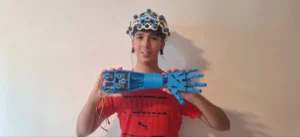
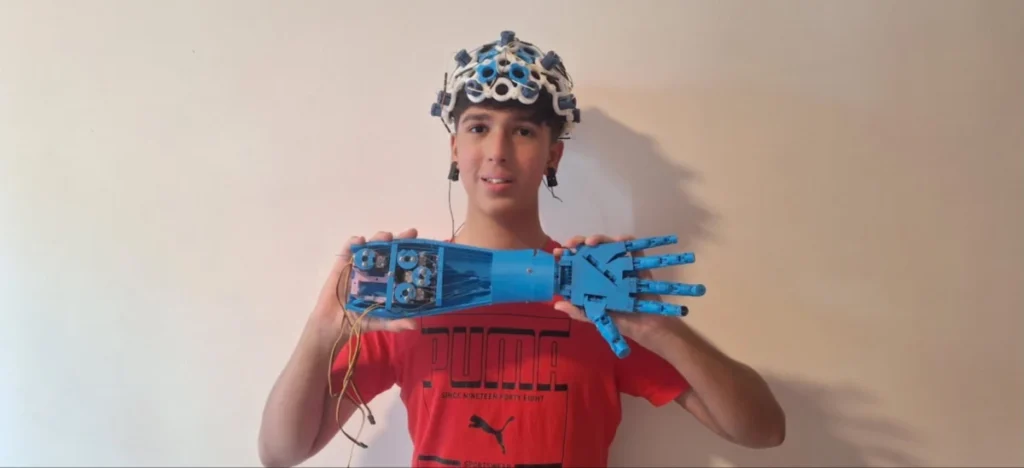
Aarav Sharma first gained international attention at the age of 14 when he developed a functional robotic arm controlled entirely by neural signals. That initial project utilized basic Electroencephalogram (EEG) data to trigger motor movements, demonstrating the potential for low-cost, 3D-printed prosthetics. However, for Sharma, the robotic arm was merely a proof of concept. Recognizing that physical movement is only one aspect of autonomy, he pivoted his research toward the development of a comprehensive communication system.
The transition from a single-purpose motor controller to a multi-command communication interface represents a significant leap in technical complexity. While his earlier work focused on "motor imagery"—the process of imagining movement to generate brain signals—his latest iteration utilizes a sophisticated paradigm known as Steady State Visually Evoked Potential (SSVEP). This shift has allowed for a more reliable, faster, and more scalable system, moving the project from a hobbyist experiment to a viable prototype for assistive technology.
Understanding SSVEP: The Mechanics of Neural Control
To understand the significance of Sharma’s latest work, one must delve into the mechanics of SSVEP. Unlike other BCI methods that require intense mental concentration or the "imagining" of specific limb movements, SSVEP relies on the brain’s natural physiological response to visual stimuli. When a person looks at a light source flickering at a specific frequency, the visual cortex of the brain generates electrical activity at that same frequency, as well as its harmonics.
Sharma’s system utilizes a display featuring six distinct targets, each flashing at a unique frequency. By wearing an EEG headset—provided through a strategic sponsorship with OpenBCI, a leader in open-source neurotechnology—the user simply focuses their gaze on a specific target. The headset’s electrodes detect the resulting micro-voltages on the scalp, and the software identifies which frequency is dominant in the visual cortex.
Sharma describes the system as "eye tracking from the inside." Traditional eye-tracking technology requires high-resolution cameras and clear lines of sight to the pupils, which can be problematic in various lighting conditions or for users with certain physical ocular conditions. By bypassing the physical movement of the eyes and reading the neural response directly, Sharma’s SSVEP system offers a robust alternative that functions even if the user’s physical control of their eye muscles is limited, provided they can still fixate on a stimulus.

Data Collection and System Calibration
The efficacy of any BCI system is heavily dependent on the quality of data and the rigor of the underlying algorithms. Sharma has implemented a disciplined approach to offline EEG data collection to ensure high accuracy. During the calibration phase, a user completes approximately 60 trials. During these trials, the system prompts the user to focus on specific flashing targets among the six available options.
This data is then processed to create Time-Frequency Representation (TFR) graphs. These graphs allow Sharma to visualize how the brain’s frequency response changes over time, ensuring that the detected signal is indeed a response to the stimulus and not background "noise" or muscle artifacts. Furthermore, Sharma utilizes a "confusion matrix"—a specific table layout that allows the visualization of the performance of an algorithm. In this context, the matrix helps identify which targets are being "confused" by the system (e.g., if the system struggles to distinguish between a 10Hz and a 12Hz flicker), allowing for precise tuning of the frequency thresholds.
By testing how accuracy fluctuates with different amounts of EEG data, Sharma has optimized the balance between speed and reliability. His findings indicate that the system can maintain high accuracy while minimizing the "dwell time" required for the computer to confirm a user’s selection.
Integration with Large Language Models (LLMs)
One of the most innovative aspects of Sharma’s project is the integration of artificial intelligence to solve the "bottleneck" of BCI communication. Historically, BCI-based typing has been agonizingly slow, often limited to a few characters per minute. To combat this, Sharma has integrated an OpenAI-powered language model into the user interface.
As the user selects characters or basic commands through the SSVEP interface, the AI provides real-time word suggestions and sentence completion, much like the predictive text on a modern smartphone but significantly more advanced. The AI analyzes the context of the previous selections to offer the most likely next words. This hybrid approach—where the user retains ultimate control of the output but the AI handles the heavy lifting of prediction—has yielded impressive results. In initial testing, users were able to construct and transmit full sentences in under five seconds, a speed that rivals or exceeds many commercial assistive communication devices.
A Path Toward Portability: The AR Future
While the current system operates via a standard computer monitor, Sharma’s roadmap points toward a more integrated and mobile future. He is currently developing a mockup for an Augmented Reality (AR) glasses interface. This transition is crucial for the practical application of BCI technology in daily life.
By moving the UI from a stationary screen to AR glasses, the flashing SSVEP targets can be overlaid onto the user’s real-world environment. A mockup of this interface shows five floating boxes containing letter choices and commands like "Call Dad," positioned within the user’s field of vision. This would allow an individual with limited mobility to interact with their environment, control smart home devices, or communicate with caregivers while moving through different spaces, rather than being tethered to a desktop setup.

Chronology of Development
The timeline of Aarav Sharma’s work reflects a rapid pace of innovation:
- Early 2023: Development of the initial 3D-printed robotic arm at age 14, utilizing basic motor imagery EEG.
- July 2024: Publication of the robot arm project in Make: Magazine, drawing attention to the potential for low-cost neuroprosthetics.
- Late 2024: Receipt of sponsorship from OpenBCI, providing access to professional-grade EEG hardware and signal processing tools.
- Late 2024/Early 2025: Development and testing of the six-command SSVEP communication system.
- Current Phase: Integration of OpenAI’s GPT-based models for predictive text and the design of the AR-based user interface.
Broader Implications for Assistive Technology
The implications of Sharma’s work extend far beyond the "maker" community. For individuals living with conditions such as Amyotrophic Lateral Sclerosis (ALS), locked-in syndrome, or severe spinal cord injuries, the ability to communicate efficiently is a primary factor in quality of life. Current high-end BCI solutions, such as those involving surgical implants (e.g., Neuralink or Synchron), offer high data rates but involve significant medical risks and costs.
Sharma’s approach emphasizes non-invasive, relatively low-cost hardware combined with sophisticated software. By proving that high-speed communication is possible using off-the-shelf EEG components and modern AI, he is contributing to the democratization of medical technology. His work suggests a future where assistive devices are not only more capable but also more accessible to those who need them most.
Analysis of the "Young Maker" Phenomenon
Aarav Sharma represents a growing trend of young innovators who are bypassing traditional academic hierarchies by utilizing open-source resources. The availability of platforms like GitHub for code sharing, YouTube for technical tutorials, and affordable hardware from companies like OpenBCI has lowered the barrier to entry for complex fields like neuroscience.
Furthermore, the integration of AI into these projects acts as a force multiplier. By leveraging the power of existing Large Language Models, a single developer can solve complex problems—like natural language processing—that would have previously required a team of specialized engineers. Sharma’s ability to synthesize these disparate technologies—EEG, SSVEP, 3D printing, and AI—highlights the multidisciplinary nature of modern innovation.
Future Outlook
As Aarav Sharma continues to refine his BCI-Neurova platform, the next major hurdle will be the transition to wearable AR hardware. This will require addressing challenges related to battery life, processing power on mobile devices, and the stability of EEG signals while the user is in motion. However, given the progress made in the last year, the prospect of a fully portable, AI-augmented BCI communication system seems increasingly within reach.
For now, Sharma remains a prominent figure in the maker movement, documenting his journey and sharing his findings at aaravinnovate.com/bci-neurova. His work serves as a compelling case study in how the intersection of human curiosity, open-source technology, and artificial intelligence can address some of the most profound challenges in human-computer interaction. As he moves from the robot arm to the AR-enhanced mind, the tech world will undoubtedly be watching to see where his focus lands next.