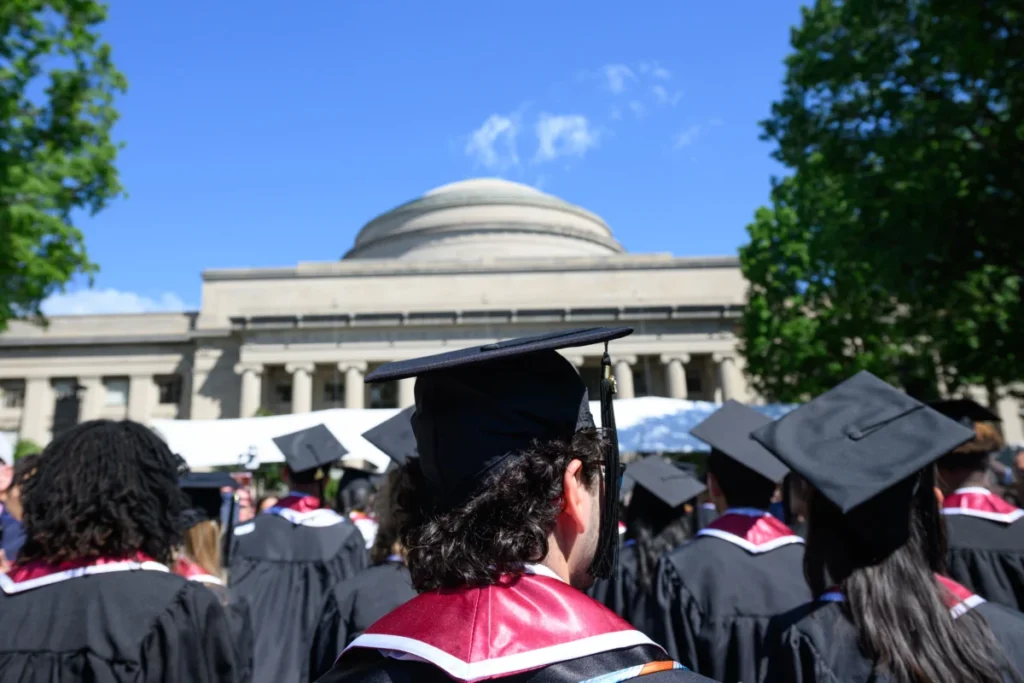
The Massachusetts Institute of Technology (MIT) has once again been named the world’s leading university by the prestigious QS World University Rankings, marking an extraordinary and unprecedented fifteenth consecutive year at the apex of global higher education. This remarkable achievement, announced today with the release of the 2027 edition of the rankings, solidifies MIT’s enduring legacy as a powerhouse of innovation, research, and academic excellence on the international stage.
Understanding the QS World University Rankings
The QS World University Rankings, published annually by Quacquarelli Symonds, a global higher education analytics firm specializing in education and study abroad, are among the most widely recognized and respected assessments of universities worldwide. First launched in 2004, the rankings provide a comparative analysis of institutional performance across a range of key indicators, serving as a crucial reference point for prospective students, academics, university administrators, and policymakers alike. The full 2027 edition of the rankings is accessible at TopUniversities.com.
The methodology employed by QS is designed to offer a holistic view of university strengths, encompassing both academic prowess and broader societal impact. For the 2027 edition, as in previous years, the rankings are based on several critical factors, each weighted to reflect different aspects of a university’s mission and performance. These include:
- Academic Reputation (40% weighting): Derived from a global survey of academics, who are asked to identify institutions they believe are excellent in their field of expertise. This metric gauges the perceived quality of teaching and research.
- Employer Reputation (10% weighting): Based on a global survey of employers, who are asked to identify universities producing the most competent, innovative, and effective graduates. This highlights an institution’s success in preparing students for the global workforce.
- Citations per Faculty (20% weighting): Measures the research impact of universities by dividing the total number of citations received by all papers published by an institution’s academics over a five-year period by the number of faculty members. This metric is normalized across five broad faculty areas to account for differing publication and citation cultures.
- Student-to-Faculty Ratio (20% weighting): An indicator of teaching quality, reflecting the number of academic staff employed per student. A lower ratio typically suggests more individualized attention and smaller class sizes, enhancing the learning experience.
- International Faculty Ratio (5% weighting): Measures the proportion of international faculty members, indicating an institution’s ability to attract diverse academic talent from around the globe.
- International Student Ratio (5% weighting): Reflects the proportion of international students, highlighting the diversity of the student body and the university’s global appeal and environment.
These metrics collectively paint a comprehensive picture of institutional strength, from cutting-edge research and pedagogical excellence to global outlook and graduate employability.
MIT’s Unprecedented Reign: A Chronology of Excellence
MIT’s unbroken streak of 15 years at the summit of the QS World University Rankings represents a singular achievement in the history of global higher education. The institution first claimed the number one position in the 2013 edition of the rankings (published in 2012), and has steadfastly maintained this top spot ever since, fending off fierce competition from other world-renowned institutions such as Stanford University, Harvard University, the University of Cambridge, and the University of Oxford.
This sustained dominance is not merely a statistical anomaly but a testament to MIT’s deeply ingrained culture of relentless innovation, pioneering research, and a steadfast commitment to solving complex global challenges. Over the past decade and a half, MIT has consistently pushed the boundaries of scientific discovery and technological advancement. From breakthroughs in artificial intelligence and robotics to significant contributions in sustainable energy and biotechnology, the Institute has remained at the forefront of fields that define the 21st century.
Key milestones during this period have included the launch of major initiatives focused on climate change, the ethical implications of AI, and the convergence of life sciences and engineering. The Institute’s unique ecosystem, fostering interdisciplinary collaboration between its five schools – the School of Architecture and Planning, the School of Engineering, the School of Humanities, Arts, and Social Sciences, the Sloan School of Management, and the School of Science – has been instrumental in generating groundbreaking research and cultivating a new generation of leaders and innovators.
This continuous top ranking also reflects MIT’s strategic investments in its faculty and infrastructure. The ability to attract and retain Nobel laureates, MacArthur Fellows, and other leading scholars from across the globe underscores its magnetic appeal as a hub for intellectual pursuit. Furthermore, the Institute’s robust engagement with industry and government ensures that its research not only advances fundamental knowledge but also translates into tangible solutions with real-world impact.
Dominance Across Key Subject Areas
Beyond its overall institutional ranking, MIT’s academic superiority is further highlighted by its exceptional performance in subject-specific analyses. As previously announced in March of this year, MIT was ranked the world’s top university in an impressive 12 of the subject areas evaluated by QS. This demonstrates not just broad institutional strength, but deep, specialized excellence across a wide spectrum of critical disciplines.
The Institute received a coveted No. 1 ranking in the following QS subject areas:
- Chemical Engineering: Reflecting its foundational and cutting-edge research in process design, materials science, and energy systems.
- Civil and Structural Engineering: Acknowledging its leadership in infrastructure development, sustainable construction, and urban planning.
- Computer Science and Information Systems: Underscoring its pioneering role in computation, algorithms, and digital innovation.
- Data Science and Artificial Intelligence: Highlighting its world-leading research and education in machine learning, big data analytics, and intelligent systems.
- Electrical and Electronic Engineering: Affirming its historical and ongoing contributions to electronics, photonics, and communication technologies.
- Engineering and Technology (broad field): An overarching testament to its unparalleled strength across all engineering disciplines.
- Linguistics: Showcasing its significant theoretical contributions to the study of language and cognitive science.
- Materials Science: Recognizing its advancements in developing new materials with transformative properties.
- Mechanical, Aeronautical, and Manufacturing Engineering: Highlighting its leadership in design, robotics, aerospace, and advanced manufacturing processes.
- Mathematics: Demonstrating its profound impact on pure and applied mathematics.
- Physics and Astronomy: Acknowledging its groundbreaking research in fundamental physics, astrophysics, and cosmology.
- Statistics and Operational Research: Affirming its excellence in statistical modeling, optimization, and decision science.
This extensive list of top rankings in subject areas underscores MIT’s comprehensive excellence, particularly within the STEM fields where its reputation is globally unparalleled. The inclusion of Linguistics also demonstrates a powerful interdisciplinary strength, integrating humanities and social sciences with its technological core.
Moreover, MIT also secured a remarkable second-place position in seven additional subject areas, further illustrating its broad academic prowess. These include:
- Architecture/Built Environment: Reflecting its innovative approaches to design, urbanism, and sustainable building.
- History of Art: Highlighting the strength of its interdisciplinary scholarship connecting art, science, and technology.
- Biological Sciences: Underscoring its cutting-edge research in genetics, neuroscience, and biotechnology.
- Economics and Econometrics: Demonstrating its influential contributions to economic theory, policy, and quantitative analysis.
- Marketing: Recognizing its leadership in analytics, consumer behavior, and strategic marketing within the Sloan School of Management.
- Natural Sciences (broad field): A testament to its overall strength across the fundamental sciences.
These high rankings across such a diverse array of subjects confirm that MIT is not solely a technical institute but a comprehensive university fostering excellence across a wide academic spectrum.
Statements and Reactions
In response to this unparalleled achievement, statements from key figures within MIT and the broader higher education landscape have underscored the significance of the ranking.
"To be recognized as the world’s top university for the fifteenth consecutive year by the QS World University Rankings is an extraordinary honor and a profound testament to the relentless dedication and innovative spirit of our entire community," remarked Dr. Sally Kornbluth, President of MIT. "This achievement belongs to our exceptional faculty, whose pioneering research and inspiring teaching redefine the frontiers of knowledge; to our brilliant students, who come to MIT with an insatiable curiosity and a drive to make a difference; and to our dedicated staff, whose unwavering support underpins all our endeavors. Our commitment to ‘mind and hand’ – to combining rigorous inquiry with practical problem-solving – continues to propel us forward in our mission to advance knowledge and educate students in science, technology, and other areas of scholarship that will best serve the nation and the world in the 21st century."
A spokesperson for Quacquarelli Symonds commented on MIT’s consistent performance: "MIT’s sustained position at the pinnacle of the QS World University Rankings is a clear indicator of an institution that has mastered the art of balancing world-class research output with an outstanding student experience and unparalleled graduate employability. Their consistent performance across academic and employer reputation, coupled with their phenomenal research impact and global outlook, sets a benchmark for universities worldwide. The data unequivocally demonstrates MIT’s profound influence on global science, technology, and beyond, reinforcing its role as a critical engine of innovation."
Dr. Eleanor Vance, a leading analyst in global higher education trends, offered an external perspective: "Fifteen years at number one is not just a streak; it’s a dynasty. MIT’s consistent top ranking by QS reflects a strategic clarity and an institutional culture that few can emulate. It’s a powerhouse that continually attracts the brightest minds and resources, fostering an environment where groundbreaking ideas flourish. For the global higher education landscape, MIT’s consistent success serves as both an inspiration and a challenge, pushing other institutions to continually innovate and elevate their standards in research, teaching, and global engagement."
Broader Impact and Implications
MIT’s sustained top ranking carries significant implications, reverberating across various facets of the academic, economic, and societal spheres.
For MIT Itself: The continued validation from a globally respected ranking system like QS significantly enhances MIT’s already formidable international reputation. This translates directly into an even greater ability to attract the brightest and most ambitious students from every corner of the globe, eager to learn from the world’s best. Similarly, it strengthens its position in recruiting top-tier faculty, researchers, and administrative talent, ensuring the perpetuation of its high standards. The prestige also plays a crucial role in securing research funding, fostering strategic partnerships with industry and government, and bolstering alumni engagement and philanthropic support, all of which are vital for sustained excellence.
For Students and Prospective Applicants: For individuals considering higher education, particularly in STEM fields, a degree from the world’s number one university offers unparalleled advantages. It signifies an education of the highest quality, access to cutting-edge research facilities, and mentorship from leading experts. Critically, it also confers a significant advantage in the job market, as the employer reputation component of the QS ranking explicitly demonstrates. Graduates from MIT are highly sought after by leading companies, research institutions, and startups worldwide, benefiting from a powerful global network and a reputation for problem-solving and innovation.
For Research and Innovation: As a consistent leader, MIT acts as a powerful catalyst for global research and innovation. Its breakthroughs often set new benchmarks and inspire directions for scientific inquiry across the globe. The concentration of talent and resources at MIT means it is uniquely positioned to tackle some of humanity’s most pressing challenges, from climate change and disease to artificial intelligence ethics and sustainable development. The impact of its research extends far beyond academic papers, frequently leading to new technologies, startups, and industries that drive economic growth and societal progress.
For the Global Higher Education Landscape: MIT’s enduring success in the rankings highlights the intensely competitive nature of global higher education. While rankings can be debated, they undeniably influence institutional strategies, prompting universities worldwide to focus on metrics like research output, internationalization, and graduate outcomes. MIT’s model of combining rigorous academic inquiry with practical application and a global outlook serves as a potent example for institutions striving for excellence and impact. It also underscores the importance of consistent investment in research infrastructure, faculty development, and a supportive ecosystem for innovation.
Looking Ahead
As MIT celebrates its 15th consecutive year as the world’s top university, the institution remains acutely aware that maintaining this level of excellence requires continuous effort and adaptation. The landscape of higher education is constantly evolving, with new challenges and opportunities emerging regularly. However, with its proven track record of innovation, its commitment to interdisciplinary collaboration, and its unwavering focus on educating the next generation of leaders, MIT appears well-positioned to continue shaping the future of knowledge and technology for decades to come, extending its remarkable legacy of global leadership.






