A significant hurdle in modern manufacturing, the lengthy and costly process of producing electric motors and other complex electromechanical devices, may soon be a relic of the past. Researchers at the Massachusetts Institute of Technology (MIT) have announced a revolutionary breakthrough: a multimaterial 3D-printing platform that can fabricate fully functional electric machines in a single, integrated step. This innovation promises to democratize advanced manufacturing, enabling on-demand production of critical components and drastically reducing reliance on global supply chains. The potential implications range from immediate factory floor efficiency gains to the acceleration of innovation in robotics, automotive, and medical technology sectors.
The genesis of this development lies in a persistent challenge faced by industries reliant on electric motors. When a critical component like a motor fails on a busy factory floor, the ensuing production halt can result in substantial financial losses. The traditional remedy, ordering a replacement part, often involves long lead times, especially if the necessary components must be sourced from distant distributors. This logistical bottleneck can translate into days, weeks, or even months of lost productivity. The prohibitive cost and specialized infrastructure required for traditional electric machine fabrication, confined to a select few manufacturing centers, have historically made on-site production an impractical solution.
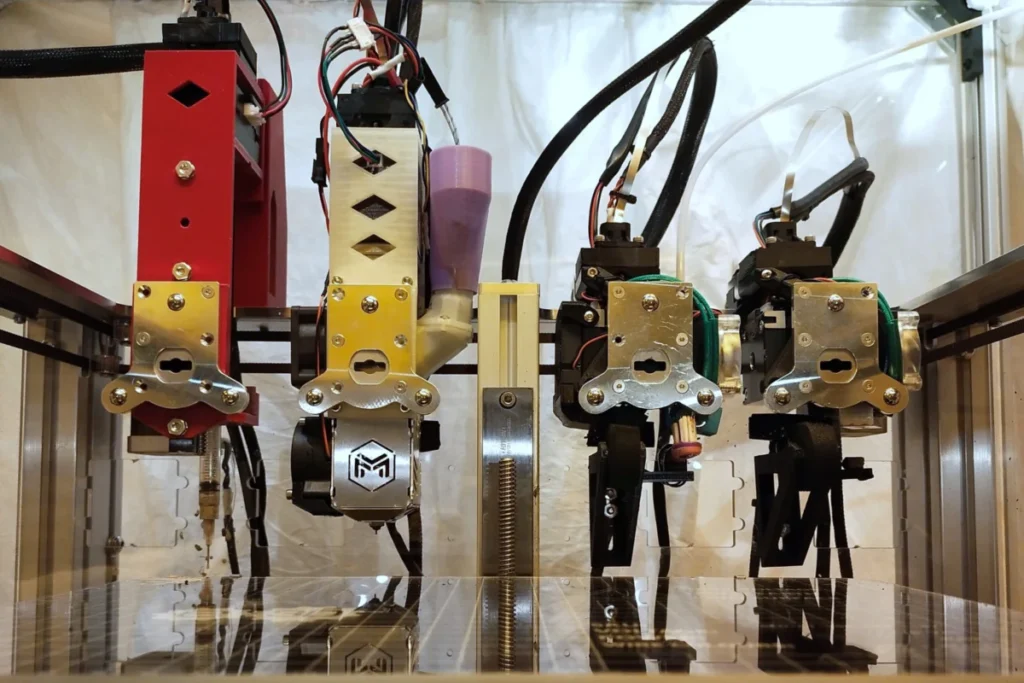
However, MIT’s Microsystems Technology Laboratories (MTL) has spearheaded an initiative to dismantle these manufacturing barriers. Led by Luis Fernando Velázquez-García, a principal research scientist, and Jorge Cañada, an electrical engineering and computer science (EECS) graduate student who served as the lead author, the research team has engineered a sophisticated 3D-printing system. This platform is designed to process multiple functional materials simultaneously, including electrically conductive and magnetic substances, through a set of four specialized extrusion tools. Each extruder is tailored to handle diverse forms of printable materials, allowing the printer to seamlessly switch between them as it builds a device layer by intricate layer.
The culmination of this intensive research effort was the successful fabrication of a fully 3D-printed electric linear motor. This complex electromechanical device was produced in a matter of hours, utilizing five distinct materials. Remarkably, only a single post-processing step—magnetization—was required to render the motor fully operational. Performance evaluations revealed that the 3D-printed motor not only met but in some cases surpassed the capabilities of similar motors produced through more conventional, multi-stage manufacturing processes that often necessitate extensive post-processing. This demonstration marks a pivotal moment, proving the feasibility of integrating complex functionalities into a single, additive manufacturing process.
A Paradigm Shift in Manufacturing Processes
The current manufacturing landscape for electric motors and similar devices is characterized by a series of discrete, labor-intensive steps. These typically involve the precision machining of individual components, followed by their assembly and then specialized processes for imparting magnetic properties. Each stage requires dedicated machinery, skilled labor, and significant quality control measures. The MIT platform bypasses much of this complexity by depositing functional materials in their final or near-final form, layer by layer, directly into the desired structure.
"This is a great feat, but it is just the beginning," stated Velázquez-García in a recent interview. "We have an opportunity to fundamentally change the way things are made by making hardware onsite in one step, rather than relying on a global supply chain. With this demonstration, we’ve shown that this is feasible." This sentiment underscores the transformative potential of the technology, moving beyond incremental improvements to a fundamental rethinking of hardware production. The researchers envision a future where factories can print replacement parts or even custom-designed components on demand, drastically reducing downtime and lead times.
Engineering for Multimaterial Complexity
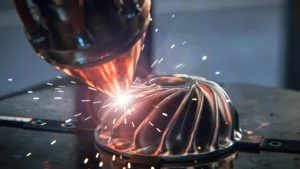
The core innovation of the MIT platform lies in its ability to handle a diverse array of materials with distinct functional properties, all within a single extrusion-based 3D printing framework. Extrusion printing, a well-established additive manufacturing technique, involves forcing a material through a nozzle to build an object layer by layer. To construct an electric machine, this method needs to accommodate materials that conduct electricity, generate magnetic fields, and provide structural support, among other requirements.
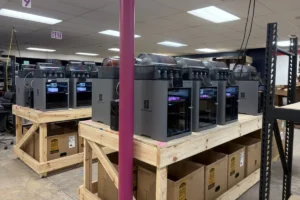
"The researchers focused on extrusion 3D printing, a tried-and-true method that involves squirting material through a nozzle to fabricate an object one layer at a time," explains the research paper published in Virtual and Physical Prototyping. To overcome the limitations of conventional multimaterial printers, which typically handle only two materials in the same form (e.g., filament or pellets), the MIT team retrofitted an existing printer with four specialized extruders. Each of these extruders was meticulously designed to manage different material forms and processing requirements.
A significant engineering challenge involved balancing the properties of the materials with the demands of the extrusion process. For instance, electrically conductive materials, crucial for carrying current, must be able to harden without excessive heat or UV light, as these can degrade other integrated dielectric materials. Many high-performance conductive materials are formulated as inks, requiring a pressure-driven extrusion system, which differs significantly from the heated nozzle systems used for melting filament or pellets.
"There were significant engineering challenges," Velázquez-García elaborated. "We had to figure out how to marry together many different expressions of the same printing method—extrusion—seamlessly into one platform." This integration was achieved through the strategic placement of sensors and a novel control framework. This sophisticated system ensures that the platform’s robotic arms can consistently pick up and place each extruder, and that each nozzle moves with exceptional precision and predictability. This level of control is paramount, as even minute misalignments between layers can compromise the performance of the final electromechanical device.
The Linear Motor: A Proof of Concept
To validate their multimaterial printing platform, the researchers selected a linear motor as their primary test case. Linear motors generate motion in a straight line, contrasting with the rotational motion produced by conventional motors found in vehicles. These linear actuators are essential components in a wide range of applications, including high-speed pick-and-place robotics for automated assembly, precise optical systems, and baggage handling systems.
The fabrication of the linear motor took approximately three hours. The only post-processing step required was magnetizing the hard magnetic materials incorporated into the motor’s structure. This step is essential for generating the magnetic fields necessary for the motor’s operation. The researchers estimate that the total material cost for producing one such motor is a remarkably low 50 cents. This cost-effectiveness is a direct result of the integrated manufacturing process, which minimizes material waste and eliminates the need for expensive, pre-fabricated components.
Furthermore, the performance metrics of the 3D-printed linear motor were highly encouraging. It demonstrated the ability to generate several times more actuation force than a common type of linear engine that relies on complex and often bulky hydraulic amplification systems. This superior performance, achieved through a streamlined manufacturing process, highlights the potential of additive manufacturing to not only reduce costs and lead times but also to enable the creation of more efficient and powerful devices.
Future Horizons and Broader Implications
The success in fabricating a functional linear motor is viewed by the MIT team as a foundational achievement, opening the door to a vast array of future possibilities. The immediate next steps involve integrating the magnetization process directly into the multimaterial extrusion workflow. This would eliminate the need for a separate post-processing step, further streamlining the fabrication of functional electric machines.
Another key objective is to demonstrate the capability of printing fully functional rotary electrical motors, the ubiquitous type found in countless applications from household appliances to industrial machinery. Expanding the platform’s toolset to include additional functionalities will enable the monolithic fabrication of even more complex electronic devices, potentially leading to the creation of entirely new categories of electromechanical systems.
The broader implications of this technology are profound. In the long term, this 3D printing platform could revolutionize how electronic components are designed and manufactured across numerous sectors. For the robotics industry, it could enable the rapid creation of highly customized actuators and sensors, leading to more agile and adaptable robots. In the automotive sector, it could facilitate the development of lightweight, integrated electric propulsion systems or specialized components for autonomous vehicles. The medical field could benefit from the ability to produce bespoke surgical tools, diagnostic devices, or implantable electronics with unprecedented speed and precision.
The reduction in waste is another significant advantage. Traditional manufacturing methods often involve subtractive processes, where material is removed from a larger block, leading to substantial waste. Additive manufacturing, by contrast, builds objects layer by layer, using only the material necessary for the final product. This inherent efficiency aligns with growing global efforts to promote sustainable manufacturing practices and reduce environmental impact.
The research has garnered attention from the broader scientific and industrial communities. Gizmodo, a prominent technology publication, highlighted the breakthrough, reporting that the MIT team "explained how by retrofitting a printer with enough extruders to handle the various materials needed to make a working motor, they decimated the usual production time for such a device and brought the material costs down to around $0.50." This recognition underscores the significant impact the development is expected to have on the field of manufacturing.
Funding for this groundbreaking research was provided in part by Empiriko Corporation and the La Caixa Foundation, acknowledging the significant societal and economic potential of this technological advancement. As the research progresses, the world will be watching to see how this innovative multimaterial 3D printing platform reshapes the future of manufacturing, moving us closer to a paradigm where complex hardware can be created on demand, anywhere, and with unparalleled efficiency.