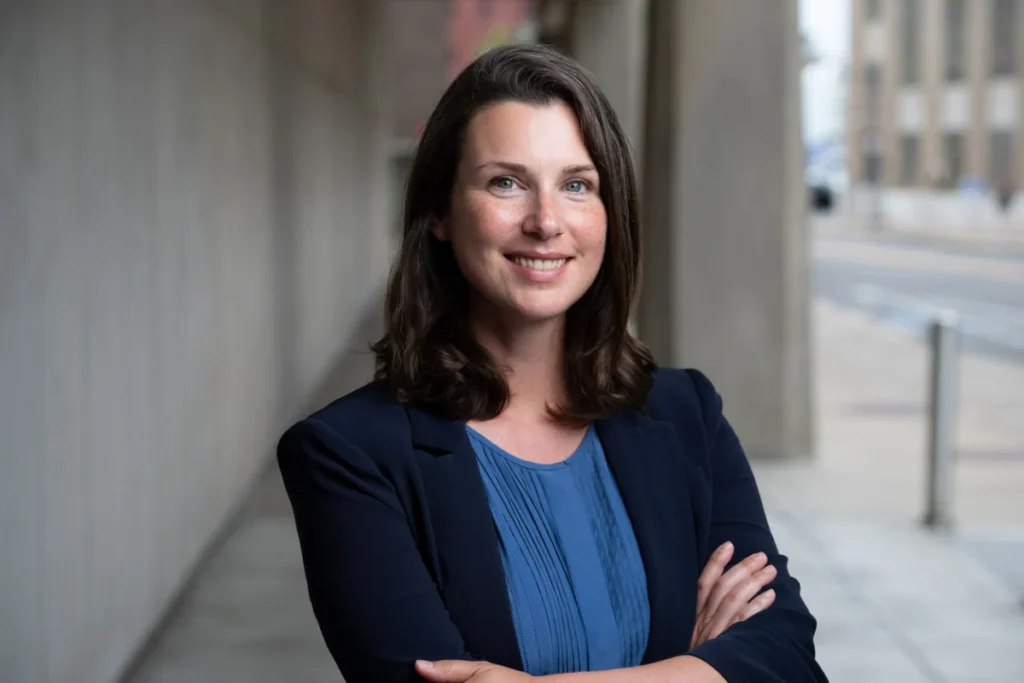
Black holes have long occupied a space in the public imagination as mysterious, bottomless voids—celestial "rabbit holes" where matter simply ceases to exist. However, contemporary astrophysics reveals a far more complex and violent reality. Rather than being tunnels of nothingness, black holes are the densest objects in the known universe, possessing such intense gravitational pull that they warp the fabric of space and time. They are not merely passive consumers of matter but are active, dynamic engines that generate massive disks of superheated plasma and emit radiation that can be detected across billions of light-years. At the forefront of this research is Erin Kara, an associate professor of physics at the Massachusetts Institute of Technology (MIT) and a member of the Kavli Institute for Astrophysics and Space Research, whose work is redefining our understanding of how these cosmic giants interact with their host galaxies.
Recent advancements in observational technology have allowed astronomers to monitor the sky with unprecedented frequency and duration. This constant surveillance has yielded a surprising discovery: black holes are far more temperamental than previously thought. "It used to be that we didn’t have eyes on systems all the time," explains Kara, who was recently granted tenure at MIT. "Now we’re seeing that they can turn on and off at rates that are much faster than we ever thought possible." These observations indicate that matter is being drawn into black holes at accelerated velocities, often fueled by stars that become trapped within a black hole’s accretion disk—the swirling vortex of gas and dust that orbits the event horizon.
The Evolution of a Physicist: From Medicine to the Cosmos
The path to uncovering the secrets of the universe was not a linear one for Kara. Born and raised in Bethlehem, Pennsylvania, she grew up in a household steeped in the medical profession; her mother was a nurse and her father a physician. Initially, Kara intended to follow in their footsteps, enrolling in a pre-medical track at Barnard College of Columbia University. However, a mandatory introductory physics course during her freshman year altered her trajectory. She found herself captivated by the subject’s ability to provide fundamental, ground-level explanations for the physical world, ranging from the subatomic quantum realm to the vast scales of the cosmos.
Under the mentorship of astronomer Reshmi Mukherjee, Kara’s curiosity transitioned into active research. In the summer of 2008, a pivotal moment occurred with the launch of NASA’s Fermi Gamma-Ray Space Telescope. Designed to survey the sky for high-energy radiation, the telescope began transmitting data that required immediate analysis. Mukherjee assigned the young intern the task of identifying two mysterious, bright gamma-ray signals. Kara’s investigation confirmed that these signals originated from quasars—extremely luminous and active supermassive black holes located far beyond the Milky Way. This early success solidified her commitment to astrophysics, demonstrating that even at the start of a career, a researcher could contribute to solving the "unanswered questions" of the universe.
However, the transition to a career in physics presented challenges beyond the data. While the environment at Barnard, an all-women’s college, was supportive and intimate, Kara’s upper-level courses at Columbia University introduced her to a different demographic. She observed a stark contrast in confidence levels between herself and her male peers, an experience that momentarily caused her to doubt her own abilities. "It’s a very unique experience to be with all women in a physics environment, and then to see how my feelings about my own abilities changed, just based on the environment," Kara reflects. Ultimately, her academic success in that competitive cohort helped her build the resilience and confidence necessary for the rigorous world of international research.
Decoding the Echoes: The Science of X-ray Reverberation
After completing her undergraduate studies with a major in physics and a minor in art history, Kara moved to the United Kingdom to attend the Institute of Astronomy at the University of Cambridge. It was here, during her doctoral studies under the guidance of Professor Andy Fabian, that she began specializing in a nascent field: black hole X-ray reverberation mapping.
In 2009, Fabian’s team identified peculiar time delays in X-ray signals emanating from the vicinity of a black hole. They theorized that these signals were "echoes" or reverberations. These echoes occur when X-rays are generated in the "corona"—a region of ultra-hot electrons located just above the black hole—and then bounce off the accretion disk. By measuring the time delay between the initial X-ray burst and its reflection, scientists can calculate the distance between the corona and the disk, effectively allowing them to map the geometry of space-time in the immediate vicinity of the event horizon.
During her PhD, Kara took on the monumental task of scouring archival data for these reverberation signals. At the time, such echoes had only been confirmed in a single black hole. Kara’s work proved that these signals were prevalent across many systems, transforming X-ray reverberation from a niche observation into a robust tool for mapping the most extreme environments in the universe. This technique provides a "sonar" of sorts for the cosmos, allowing physicists to "see" regions that are otherwise too small or too distant to be imaged directly by even the most powerful telescopes.
Overcoming Orbital Setbacks: Hitomi and the Rise of XRISM
Following her time at Cambridge, Kara returned to the United States for postdoctoral research at the University of Maryland and NASA’s Goddard Space Flight Center. Her work was set to revolve around Hitomi, a sophisticated Japanese X-ray satellite launched in 2016. Hitomi carried a revolutionary instrument: a microcalorimeter capable of measuring the energy of individual X-ray photons with extreme precision. However, just 40 days into the mission, a series of command errors caused the satellite to spin out of control and disintegrate in orbit.
Despite the catastrophe, Hitomi managed to transmit a single, high-quality observation of the Perseus cluster. This brief data set was a revelation, showing a spectrum of such clarity that it confirmed the viability of the microcalorimeter technology. Kara and her colleagues used this "dying breath" of the satellite to prove that the technology worked, paving the way for a successor mission.
That successor, the X-ray Imaging and Spectroscopy Mission (XRISM), was successfully launched in 2023. Today, Kara leads a science group for the XRISM mission, utilizing its advanced sensors to analyze the chemical composition and velocity of gas surrounding supermassive black holes. The mission represents a significant leap forward in "X-ray spectroscopy," allowing scientists to distinguish between different elements in the accretion disk and track how they are being whipped around by the black hole’s gravity.
Tidal Disruptions and the MIT Hub
Kara’s research also encompasses "tidal disruption events" (TDEs)—violent occurrences where a star wanders too close to a black hole and is torn apart by tidal forces. This process, often referred to as "spaghettification," creates a sudden flare of radiation as the stellar debris is consumed. Kara’s expertise in this area grew during her time working with the Neutron Star Interior Composition Explorer (NICER), a telescope installed on the International Space Station in 2017.
In 2019, Kara joined the faculty at MIT, a move she describes as a "no-brainer" due to the university’s storied history in X-ray astronomy. MIT was the home of pioneers like Bruno Rossi and Hale Bradt, who helped establish the field in the 1960s. At MIT’s Kavli Institute, Kara now leads a new generation of researchers, analyzing data from NICER and XRISM to study not just how black holes eat, but how they "burp"—referring to the massive outflows of energy and matter that can stall star formation in an entire galaxy.
Beyond the hard data, Kara has sought innovative ways to communicate her findings. In 2022, she collaborated with MIT educators and music anthropologists to create "sonifications" of black hole data. By converting X-ray echoes into audible sound waves, she allowed the public to hear the "reverb" of a black hole. For Kara, a violinist and singer, this project was a bridge between her artistic interests and her scientific rigor, offering an "otherworldly" perspective on cosmic energy.
Implications for Galaxy Formation and the Future of Astronomy
The significance of Kara’s work extends far beyond the black holes themselves. It is now understood that supermassive black holes, which reside at the centers of most galaxies (including our own Milky Way), play a critical role in galactic evolution. The energy released by a black hole’s accretion disk and its relativistic jets can heat up the surrounding interstellar gas, preventing it from cooling and collapsing into new stars. This "feedback" mechanism suggests that the growth of a black hole and the growth of its host galaxy are inextricably linked.
"For reasons we don’t fully understand, the distribution of stars and gas and dust in a galaxy is dictated in part by the supermassive black hole at its center," Kara notes. "Our sun is one of those stars. It’s all intertwined."
Looking forward, Kara is preparing for the next frontier of space-based observatories. This includes the Ultraviolet Transient Astronomy Satellite (ULTRASAT), which will provide a wide-field view of the sky to catch TDEs in their earliest stages, and the Laser Interferometer Space Antenna (LISA). LISA, a joint NASA-ESA mission, will be the first space-based gravitational wave detector. It will be capable of detecting the ripples in space-time caused by the collision of supermassive black holes, providing a completely new way to "hear" the universe’s most violent events.
As Erin Kara continues to untangle the physics of these "engines of galaxy formation," her work stands as a testament to the power of persistent observation. By combining archival data with cutting-edge technology and a cross-disciplinary approach, she is turning the "dark and mysterious voids" of the past into the well-mapped laboratories of the future. The echoes she studies today are the keys to understanding the history of the cosmos and the very origins of the structures that allow life to exist in the universe.