Researchers at EPFL’s School of Engineering have pioneered a groundbreaking additive manufacturing process that overcomes the limitations of traditional vat photopolymerization, paving the way for the creation of exceptionally strong and complex metal and ceramic components. This innovative method, detailed in the latest issue of Advanced Materials, introduces a paradigm shift by decoupling material selection from the initial 3D printing stage, offering unprecedented versatility and performance in the fabrication of advanced materials.
The conventional approach to vat photopolymerization, a popular 3D printing technology, involves curing a light-sensitive liquid resin layer by layer using a laser or ultraviolet light. While this method excels at producing intricate shapes, its reliance on specific light-reactive polymers has historically confined its applications, particularly in scenarios demanding high mechanical strength, thermal resistance, or conductivity. Attempts to convert these printed polymers into more robust materials like metals and ceramics have often resulted in products riddled with porosity and significant shrinkage, compromising their structural integrity and leading to undesirable warping.
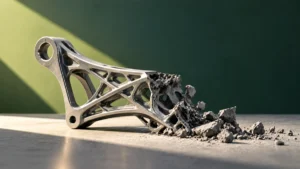
Daryl Yee, who spearheads the Laboratory for the Chemistry of Materials and Manufacturing at EPFL, acknowledged these persistent challenges. "These materials tend to be porous, which significantly reduces their strength, and the parts suffer from excessive shrinkage, which causes warping," Yee stated, highlighting the critical need for a more effective solution.
A Novel Two-Stage Approach to Material Fabrication
The breakthrough achieved by Yee and his team lies in a novel two-stage manufacturing process. Instead of attempting to print directly with a resin already containing metal compounds, which often leads to uneven distribution and suboptimal curing, the researchers first construct a precisely defined framework using a simple, water-based hydrogel. This hydrogel serves as a highly adaptable template.
Following the initial 3D printing of the hydrogel scaffold, the researchers immerse this "blank" structure in a solution containing metal salts. Through a series of carefully controlled chemical reactions, these metal salts are converted into tiny metal-containing nanoparticles. These nanoparticles then permeate and deposit throughout the entire hydrogel matrix. This immersion and conversion process, referred to as "growth cycles," is repeated multiple times. Each cycle incrementally increases the concentration of metal within the structure, allowing for the creation of composites with exceptionally high metal content.
After approximately five to ten of these growth cycles, the hydrogel template, having served its purpose, is removed. This is achieved through a simple heating process, which effectively vaporizes the water and organic components of the hydrogel, leaving behind a dense, solid object composed entirely of metal or ceramic. Crucially, the resulting object precisely replicates the intricate geometry of the original hydrogel print.
One of the most significant advantages of this sequential approach is its inherent material flexibility. Because the metal salts are introduced after the shape has been established by the 3D printing of the hydrogel, the same hydrogel template can be utilized to produce a wide array of different metals, ceramics, or composite materials. This ability to switch materials without redesigning the printing process offers remarkable cost-efficiency and versatility for manufacturers.
"Our work not only enables the fabrication of high-quality metals and ceramics with an accessible, low-cost 3D printing process; it also highlights a new paradigm in additive manufacturing where material selection occurs after 3D printing, rather than before," Yee summarized, underscoring the fundamental shift this innovation represents in the field of additive manufacturing.
Demonstrating Advanced Architectures and Unprecedented Strength
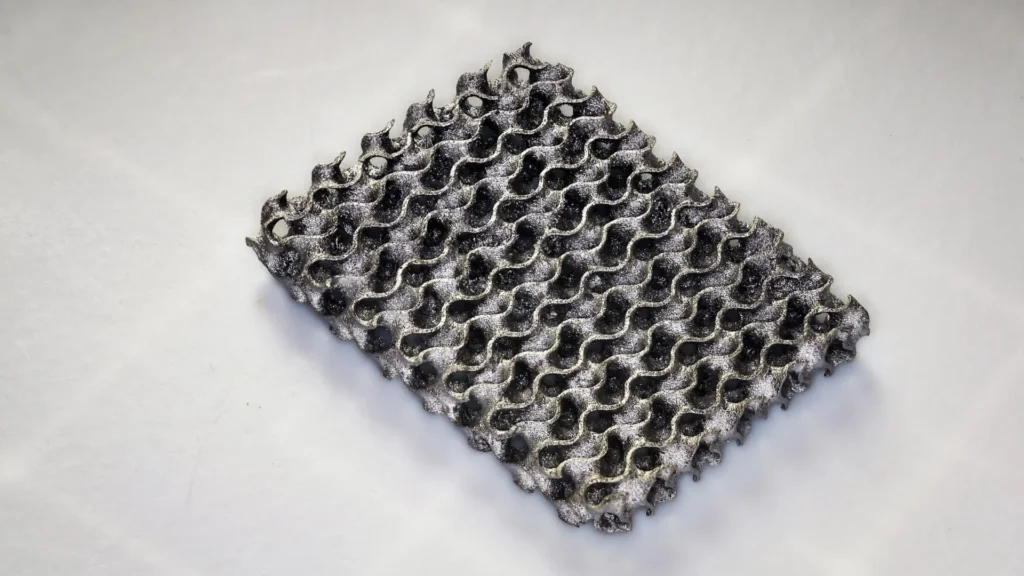
To validate their groundbreaking technique, the EPFL team focused on fabricating complex, mathematically defined lattice structures known as gyroids. These intricate designs, often used in advanced engineering applications due to their high surface area and mechanical properties, were produced using iron, silver, and copper. This demonstration showcased the technique’s capacity to generate structures that are simultaneously strong and remarkably complex.
The strength of these newly fabricated gyroids was rigorously tested using a universal testing machine. This device applies increasing pressure to a material sample until it deforms or fractures, providing precise quantitative data on its load-bearing capabilities. The results were striking.
"Our materials could withstand 20 times more pressure compared to those produced with previous methods, while exhibiting only 20% shrinkage versus 60-90%," reported PhD student Yiming Ji, the first author of the study. This dramatic improvement in both strength and dimensional stability directly addresses the critical flaws identified in earlier polymer-to-metal conversion techniques. The reduced shrinkage is particularly important, as it minimizes the risk of internal stresses and warping that can compromise the functional integrity of printed parts.
Implications for High-Performance Applications
The scientists believe their novel technique holds immense promise for the fabrication of advanced 3D architectures where a combination of high strength, low weight, and intricate design is paramount. Such requirements are critical in a variety of cutting-edge fields.
For instance, the technology could revolutionize the production of sensors, which often require complex internal structures to maximize their sensitivity and efficiency. Similarly, biomedical devices, such as implants or prosthetics, could benefit from the ability to create patient-specific, strong, and biocompatible components. Furthermore, devices for energy conversion and storage, areas demanding high surface areas and specific material properties, are also prime candidates for this innovative 3D printing approach.
A particularly compelling application lies in the development of metal catalysts. Catalysts are indispensable for enabling chemical reactions that are fundamental to numerous industrial processes, including the conversion of chemical energy into electricity. The ability to produce highly porous and dense metal structures with precise control over their architecture could lead to significantly more efficient and durable catalytic converters. Other potential applications include the creation of high-surface area metals with advanced cooling properties, vital for thermal management in energy technologies and high-performance electronics.
Future Directions and Industrial Adoption
Looking towards the future, the EPFL team is actively engaged in refining their process to facilitate its widespread adoption by industry. A key focus is on further increasing the density of the fabricated materials, which would translate to even greater strength and performance.
Another area of ongoing development is speed. While the repeated infusion and growth cycles are essential for achieving high material density and strength, they inherently make the process more time-consuming compared to some other additive manufacturing techniques. To address this, Yee and his colleagues are exploring automation solutions. "We are already working on bringing the total processing time down by using a robot to automate these steps," Yee confirmed. This commitment to optimizing the process for industrial scalability suggests a clear path towards commercialization.
Background and Chronology of Innovation
The journey to this significant advancement likely began with a deep understanding of the limitations inherent in existing additive manufacturing technologies. The field of 3D printing, or additive manufacturing, has seen exponential growth since its inception in the 1980s. Early iterations focused on rapid prototyping using polymers. The subsequent development of technologies like Selective Laser Sintering (SLS) and Fused Deposition Modeling (FDM) expanded the range of printable materials to include plastics and some metals.
Vat photopolymerization, also known by brand names like Stereolithography (SLA) and Digital Light Processing (DLP), emerged as a powerful tool for producing highly detailed and smooth parts. However, its reliance on photosensitive resins presented a bottleneck for applications requiring the inherent properties of metals and ceramics, such as high temperature resistance, electrical conductivity, and extreme hardness.
The desire to bridge this gap has driven research into post-processing techniques, including various forms of infiltration and sintering. However, as Yee noted, these methods often struggled with achieving the desired material density and dimensional accuracy.
The EPFL team’s innovation can be viewed as a strategic departure from these traditional post-processing paradigms. By integrating material deposition directly into the post-printing stage, but in a highly controlled and iterative manner, they have created a hybrid approach that leverages the precision of 3D printing with the material science required for high-performance components.
The publication in Advanced Materials, a highly respected journal in materials science, signifies the rigorous peer-review and scientific validation of their findings. This likely represents years of research, experimentation, and refinement by Yee’s laboratory. The timeline for such a breakthrough typically involves initial conceptualization, extensive laboratory testing of different hydrogel formulations and metal salt concentrations, optimization of the growth cycles, and finally, comprehensive characterization and validation of the resulting materials.
Expert Perspectives and Broader Impact
While specific reactions from other institutions were not provided in the initial information, the implications of this research are likely to be met with significant interest across the materials science and additive manufacturing communities. Experts in these fields will undoubtedly recognize the potential for this technique to democratize the production of advanced materials.
The ability to use a single, versatile 3D printing process to create a diverse range of high-performance materials could significantly reduce manufacturing costs and lead times for industries reliant on specialized components. It could also foster innovation by lowering the barrier to entry for developing and testing new material compositions and complex geometries.
The shift in paradigm, where material selection occurs after printing, is particularly profound. This offers a level of design freedom previously unattainable. Engineers can now focus on optimizing the functional geometry of a component using a readily printable hydrogel template, and then select the most appropriate metal or ceramic for the specific application in the final manufacturing step. This flexibility could accelerate product development cycles and lead to the creation of entirely new product categories.
The potential impact on industries such as aerospace, automotive, electronics, and healthcare is substantial. For example, in aerospace, lightweight yet incredibly strong components are crucial for fuel efficiency and performance. In the automotive sector, this technology could enable the production of lighter, more durable parts, contributing to improved fuel economy and safety. The medical field could see advancements in custom implants and advanced diagnostic tools.
In conclusion, the EPFL team’s development represents a significant leap forward in additive manufacturing. By addressing the fundamental limitations of existing methods, they have unlocked the potential for creating high-performance metal and ceramic components with unprecedented precision, strength, and material versatility. This innovation is poised to reshape the landscape of advanced material fabrication and drive progress across a multitude of critical industries.