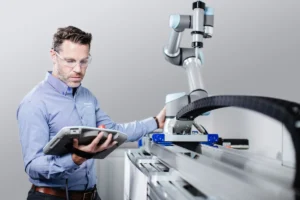
Mouser Electronics, a global distributor of electronic components, has significantly bolstered its extensive collection of engineering resources with the launch of dedicated Artificial Intelligence (AI) and Power Management Resource Hubs. These new platforms are designed to furnish engineers with practical, in-depth guidance essential for the intricate development of industrial edge AI systems, where unparalleled power efficiency, unwavering reliability, and robust performance are not merely desirable features but critical operational imperatives. The initiative addresses a growing industry demand for specialized knowledge as AI deployments transition from theoretical research and controlled environments into the harsh, unpredictable realities of industrial settings, often far removed from stable infrastructure.
The Proliferation of Edge AI and Its Demands
The landscape of modern technology is undergoing a profound transformation driven by the increasing deployment of artificial intelligence at the "edge" – meaning data processing occurs closer to the source of data generation rather than relying solely on centralized cloud infrastructure. This paradigm shift, often referred to as edge AI, is particularly impactful within the realm of industrial automation and the broader Industrial Internet of Things (IIoT). As edge AI matures from experimental phases into real-world applications, embedded systems are increasingly tasked with sophisticated operations such as real-time analytics, predictive maintenance, and anomaly detection directly at the point of data collection. This localized processing capability is vital for applications where latency must be minimized, data privacy is paramount, network bandwidth is limited, or continuous cloud connectivity is unreliable or nonexistent.
Consider a smart factory floor, where numerous sensors monitor machine health, production lines, and environmental conditions. Traditional systems might send all this raw data to the cloud for analysis, introducing delays and consuming significant bandwidth. With edge AI, inference models can run directly on local devices, identifying potential equipment failures milliseconds before they occur, optimizing production flows, or detecting security breaches in real time. Similarly, in remote energy infrastructure, such as wind farms or oil pipelines, edge AI can monitor structural integrity, predict maintenance needs, and optimize energy output without constant reliance on satellite uplinks or costly fiber optic connections. These scenarios underscore the escalating emphasis on designing power architectures that are not only capable of supporting demanding AI inference workloads but also resilient enough to operate autonomously and reliably in challenging environments.
Navigating the Complexities of Power Systems for Edge AI
One of the most significant engineering challenges inherent in the proliferation of edge AI is the profound impact that AI workloads exert on power consumption profiles. Unlike traditional embedded applications, which often exhibit predictable and relatively stable current demands, AI inference tasks are characterized by highly dynamic current draw. The computational intensity of neural network operations can cause rapid, substantial fluctuations in power requirements, moving from low-power idle states to sudden, high-power peaks during inference. This variability necessitates meticulously designed power supplies that can respond instantaneously and efficiently to these transient demands, preventing voltage sags, ensuring stable operation, and maximizing energy efficiency.
Mouser’s new AI Resource Hub serves as an invaluable repository of technical content, delving into a wide array of topics crucial for navigating this complex domain. Engineers can explore the nuances of TinyML deployment on low-power microcontrollers, a critical area for extending AI capabilities to highly constrained devices. The hub also covers sophisticated edge AI development workflows, providing insights into model optimization, deployment strategies, and the selection of appropriate inferencing engines for various hardware platforms. Furthermore, it offers detailed guidance on implementing predictive maintenance strategies powered by AI, developing smart sensing solutions, and integrating AI into industrial IoT devices. These resources collectively empower engineers to gain a comprehensive understanding of AI workload characteristics before embarking on the critical task of selecting or designing an appropriate power architecture, thereby optimizing both performance and power efficiency from the ground up.
Complementing this, the Power Management Resource Hub provides an equally critical knowledge base, exploring practical power design topics that are directly applicable to industrial edge AI. This includes in-depth discussions on PMIC (Power Management Integrated Circuit) multi-rail sequencing, a vital technique for correctly powering up and down complex SoCs (System-on-Chips) and FPGAs (Field-Programmable Gate Arrays) commonly found in AI accelerators. The hub also covers robust power-fail detection mechanisms, crucial for ensuring data integrity and enabling graceful system shutdowns in the event of power interruptions. Furthermore, it details various techniques for building highly reliable power subsystems, encompassing component selection, PCB layout considerations, and strategies for mitigating electromagnetic interference (EMI) and ensuring electromagnetic compatibility (EMC), all of which are paramount for supporting production-grade AI hardware in demanding industrial environments.
Supporting Remote and Off-Grid Industrial Systems
A substantial proportion of industrial edge AI deployments are situated in locations where access to a stable, grid-connected mains power supply is either intermittent, unreliable, or entirely unavailable. These challenging environments include remote agricultural sites, expansive pipeline networks, offshore oil and gas platforms, and critical infrastructure in developing regions. For such deployments, the ability to operate autonomously and efficiently for extended periods is not merely an advantage but a fundamental requirement.

The newly launched resource hubs address these specific challenges by providing comprehensive guidance on evaluating the viability and implementation of energy harvesting solutions to support AI workloads. Technical content within the hubs meticulously covers essential concepts such as Maximum Power Point Tracking (MPPT), a sophisticated algorithm crucial for maximizing power extraction from variable energy sources like solar panels. Engineers can delve into the intricacies of designing and deploying solar energy systems, understanding panel technologies, battery storage integration, and overall system sizing. The hubs also explore the architecture and benefits of DC microgrids, which offer localized, resilient power solutions for industrial sites, often integrating multiple renewable energy sources and battery storage. Furthermore, specialized sections are dedicated to off-grid industrial automation, providing tailored insights for powering systems in environments completely disconnected from conventional power grids.
Beyond mere power generation, the resources also engage in a critical discussion surrounding the delicate balance between inference frequency, battery life, and the amount of harvested energy. This involves exploring intelligent power management algorithms and system design choices that allow engineers to optimize edge AI systems for prolonged operation in remote condition monitoring and industrial sensing applications. For instance, an AI system monitoring the structural integrity of a bridge might be designed to perform frequent, low-power inferences to detect subtle changes, only triggering more power-intensive analysis when anomalies are detected, thereby extending battery life significantly. This strategic approach to power management is vital for the long-term sustainability and cost-effectiveness of remote edge AI deployments.
Preparing Designs for Real-World Deployment and Long-Term Reliability
The journey from a functional prototype to a mass-produced, field-deployable product introduces an entirely new set of power-related challenges. In real-world industrial environments, AI hardware can be subjected to a spectrum of adverse electrical conditions, including sudden voltage spikes caused by inductive loads or lightning strikes, brownouts resulting from grid instability, and rapid load transients as operational demands fluctuate. Any of these events can severely impact the performance, reliability, and longevity of sensitive AI electronics.
To comprehensively address these critical issues, the Power Management Resource Hub provides in-depth information on advanced power technologies and design methodologies aimed at enhancing system resilience. This includes detailed discussions on silicon carbide (SiC) power modules, which offer significant advantages over traditional silicon-based devices due to their superior performance at high temperatures, higher voltage capabilities, and improved efficiency, making them ideal for robust power conversion in harsh industrial settings. The hub also explores various battery energy storage architectures, including the latest advancements in lithium-ion technology and supercapacitors, alongside critical insights into Battery Management Systems (BMS) that are essential for safe, efficient, and long-lasting battery operation. Furthermore, the resources delve into the selection and application of high-frequency magnetics, which are crucial for designing compact, efficient DC-DC converters that can handle the dynamic power demands of edge AI while minimizing system footprint and thermal dissipation. By providing guidance on these advanced components and design principles, Mouser equips engineers to build power systems that are not only efficient but also inherently resilient against the myriad electrical disturbances encountered in real-world industrial deployment.
Mouser’s Strategic Vision and Broader Implications
Mouser Electronics, with its long-standing history as a vital distributor in the electronics industry, consistently plays a pivotal role in enabling innovation by providing engineers with access to the latest components and critical technical information. The introduction of these dedicated AI and Power Management Resource Hubs underscores Mouser’s strategic commitment to supporting the rapidly evolving fields of artificial intelligence and industrial automation. This initiative is a testament to the company’s understanding of the increasing complexity faced by design engineers and its proactive approach to offering comprehensive, accessible knowledge.
A spokesperson for Mouser Electronics, commenting on the launch, might emphasize, "As AI continues its rapid expansion into diverse industrial applications, the foundational challenge often lies not just in the intelligence itself, but in powering it reliably and efficiently in unforgiving environments. Our new AI and Power Management Resource Hubs are meticulously crafted to bridge this knowledge gap, providing engineers with a centralized, authoritative source of information to navigate these complexities. We believe that by empowering our customers with these insights, we are not just distributing components, but actively fostering the next generation of industrial innovation and accelerating the deployment of transformative AI solutions globally."
The broader implications of such comprehensive resources are significant. On an economic front, by simplifying the design process and mitigating risks associated with edge AI deployments, these hubs can accelerate time-to-market for innovative industrial solutions, fostering new industries and enhancing productivity across existing sectors. Technologically, they will undoubtedly contribute to the more widespread and reliable adoption of AI in critical infrastructure, leading to advancements in areas such as smart manufacturing, autonomous robotics, environmental monitoring, and intelligent energy grids. Environmentally, by promoting efficient power management and the adoption of energy harvesting techniques, these resources can contribute to more sustainable industrial operations, reducing energy consumption and carbon footprints. Mouser’s initiative provides engineers with a central reference covering the full design process, from the initial evaluation of AI workloads and component selection through to the implementation of robust power delivery strategies, ultimately ensuring the successful deployment of industrial edge AI applications.
Engineers across various disciplines are encouraged to explore the wealth of information available in the AI Resource Hub and the Power Management Resource Hub, accessible directly through the Mouser Electronics website. These platforms represent an invaluable asset for anyone involved in designing, developing, or deploying the next generation of intelligent industrial systems.