Modern warehousing, a critical lynchpin in the global supply chain, has undergone a profound transformation, moving from labor-intensive manual operations to highly sophisticated, automated ecosystems. At the heart of this revolution lies a seemingly unassuming yet indispensable component: the gearmotor. These electromechanical powerhouses, particularly fractional-horsepower variants, are the unsung workhorses that drive the intricate dance of robotics, conveyors, and various material handling systems, ensuring the efficiency, speed, and safety demanded by today’s e-commerce-driven economy.
The shift towards automation in warehousing is not merely a technological trend but a strategic imperative, fueled by several converging factors. The exponential growth of e-commerce has placed unprecedented pressure on logistics networks to process and ship orders with increasing speed and accuracy. Concurrently, persistent labor shortages in many regions, coupled with rising labor costs, have made manual operations less sustainable and economically viable. Furthermore, the inherent desire to enhance workplace safety, minimize human error, and optimize space utilization has accelerated the adoption of automated solutions. Industry reports consistently highlight robust growth in the warehouse automation market, with projections indicating a compound annual growth rate (CAGR) well into the double digits over the next decade, underscoring the urgency and scale of this transformation.
Gearmotors: The Unsung Workhorses of Automation
A gearmotor combines an electric motor with a reduction gear train, creating a compact and efficient power source capable of delivering high torque at lower speeds. This characteristic is precisely what makes them invaluable in warehouse applications. Unlike standalone motors that might operate at high RPMs but low torque, gearmotors are engineered to provide the necessary mechanical advantage for moving heavy loads, precise positioning, and sustained operation, often within demanding industrial environments. Their robust design, reliability, and ability to withstand continuous duty cycles make them a preferred choice for applications where consistency and uptime are paramount. Fractional-horsepower gearmotors, in particular, are prevalent due to their optimal balance of power, efficiency, and compact footprint, suitable for a wide array of equipment without excessive energy consumption.
Diverse Applications Across the Warehouse Floor
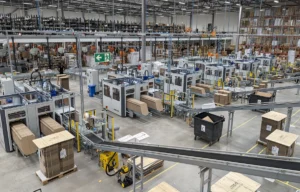
The omnipresence of gearmotors becomes strikingly evident when one observes the dynamic operations within a contemporary automated warehouse. From the agile movements of autonomous robots to the steady flow of conveyor belts and the critical safety mechanisms at loading docks, gearmotors are integrated into nearly every moving part.
-
Autonomous Mobile Robots (AMRs) and Automated Guided Vehicles (AGVs): The rise of purpose-built autonomous robot fleets has been a defining feature of modern warehousing. These intelligent machines, designed to move product racks, pallets, or individual items across vast factory floors, are heavily reliant on gearmotors. Gearmotors provide the motive force for traversing the facility, enabling precise navigation and swift movement. Crucially, they also power the mechanisms for turning in place, allowing robots to maneuver in tight spaces and execute complex paths. In more advanced robotic systems, gearmotors are employed for lifting transported items, such as via a jack screw mechanism, facilitating vertical movement for stacking or retrieval operations. The precision and torque density offered by gearmotors are critical for the accuracy and repeatability required for these robotic tasks.
-
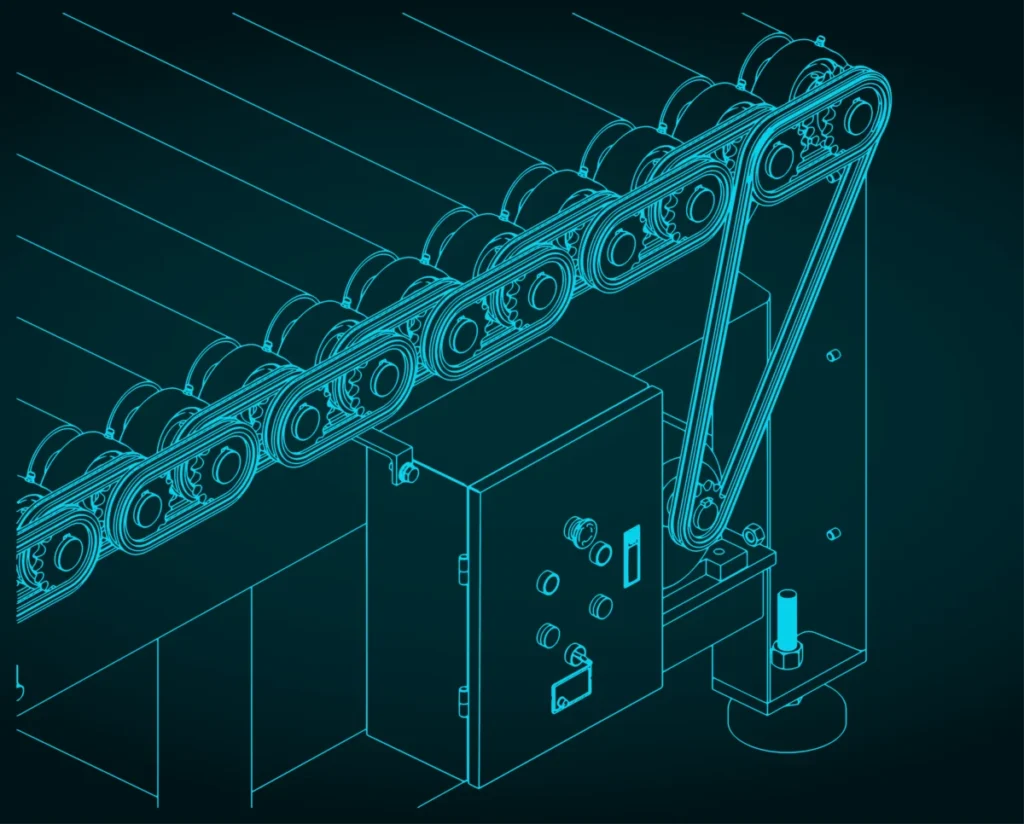
Conveyor Systems: The Backbone of Material Flow: Conveyors remain the arteries of any large-scale warehouse, facilitating the continuous movement of goods. Gearmotors are integral to various conveyor types, including traditional belt conveyors, roller conveyors, and specialized systems like accordion-style and flexible powered conveyors. These innovative material-handling systems often feature scissor-leg designs with powered rollers, ganged together with round belts at their ends. Gearmotors drive these rollers, propelling goods through facilities, often interfacing seamlessly with flatbed shipping trucks at loading docks to expedite loading and unloading processes. A notable innovation in this domain is the zoning of accordion-style conveyors, where gearmotors and interconnected controls activate sections of the conveyor only when goods are present, creating a highly efficient, demand-driven material flow. This modular approach optimizes energy consumption and minimizes wear on inactive sections.

-
Enhancing Safety at Loading Docks: Beyond mere efficiency, safety is a paramount concern in warehousing, especially at busy loading docks where human operators and heavy machinery interact. Gearmotors play a crucial role in powering advanced safety mechanisms, such as motorized locking restraints. These sophisticated, claw-type dock constraints are designed to engage securely with hardware on trucks, preventing drivers from inadvertently pulling away while personnel—be it on foot or operating forklifts—are still traversing the interface between the truck and the loading dock. The reliability and robust torque of gearmotors ensure that these restraints operate effectively and consistently, significantly mitigating the risk of severe accidents and improving overall dock safety protocols.
-
Heavy-Duty Material Handling: Motorized Carts and Lifts: The movement of exceptionally heavy or unwieldy workpieces within a warehouse or manufacturing plant often necessitates specialized equipment to ensure both efficiency and ergonomic safety. Motorized caster wheels, driven by gearmotors, are a prime example. These wheels are integrated into carts, trolleys, and dollies, transforming manually cumbersome tasks into easily manageable, powered movements. This is particularly vital in settings supporting the assembly of large equipment with substantial subsystems, where manual propulsion would be impractical, unsafe, or lead to operator fatigue and injury. Furthermore, gearmotors are heavily relied upon in various types of lifts. This includes man lifts with "crow’s-nest" buckets, enabling operators to reach elevated areas safely, and ergonomic workpiece lifts. These lifts often feature motorized trolley wheels and a motorized Z-axis platform or specialized end-effectors, such as pneumatic suction-cup arrays, allowing operators to safely and precisely raise and lower items, thereby reducing physical strain and improving productivity.
Precision and Integration: The Evolution of Control Systems
The functionality of gearmotor-based systems is intrinsically linked to their control mechanisms, which range from simple standalone units to highly integrated, complex networks. Most dock restraints, for instance, operate as self-contained units, typically managed by a straightforward on-off switch complemented by a readily accessible emergency-stop button. Similarly, many lift trucks function as independent units, steered and operated directly by warehouse personnel, often employing a basic current-limit control where motor torque is directly proportional to current, enabling acceleration, speed maintenance, and direction changes.
For such designs, some fractional-horsepower gearmotor suppliers offer integrated speed controls featuring basic on-off and speed-adjustment functions. However, a more prevalent trend, particularly for original equipment manufacturers (OEMs), is to design their own proprietary control systems or outsource the production of custom-designed PC boards. This approach allows OEMs greater flexibility in integrating the gearmotor’s controls into broader, global control-system functions, often consolidating multiple operational commands onto a single board. This integration not only streamlines manufacturing and reduces component count but also enhances the overall coordination and intelligence of the automated system. For example, in flexible powered conveyors with centralized controls, a motor and its interconnected control system might be present every five feet or so. Switches within each zone detect the presence of items, activating the respective motor to move them through. Once a zone is cleared, it deactivates, and the next zone powers on in a sequential "domino effect," illustrating the sophistication of integrated control.
Procurement and Supply Chain Dynamics
The procurement of gearmotors for warehouse automation equipment involves a sophisticated process, typically initiated by OEM design engineers who specify components based on performance requirements, efficiency targets, and durability needs. Purchasing managers, armed with these detailed specifications, then interface directly with suppliers to size and specify gearmotors for standard lifts, conveyors, and other essential equipment. This upstream relationship between OEMs and gearmotor manufacturers is critical, as it dictates the foundational capabilities of the warehouse automation systems.
Further down the supply chain, distributors and system integrators play a vital role, often working directly with plant engineers to tailor and implement these solutions to specific warehouse layouts and operational requirements. This collaborative approach ensures that the standardized OEM equipment is optimized for diverse logistical challenges. The robustness of this supply chain was tested significantly during recent global disruptions. Instances where specific gearmotor models became suddenly unavailable, particularly after OEM designs were finalized and engineering specifications set, forced purchasing managers to embark on urgent quests for alternative suppliers. This highlights the importance of diversified supply chains and the need for adaptable engineering practices to maintain operational continuity in a dynamic market.
Economic and Operational Impact
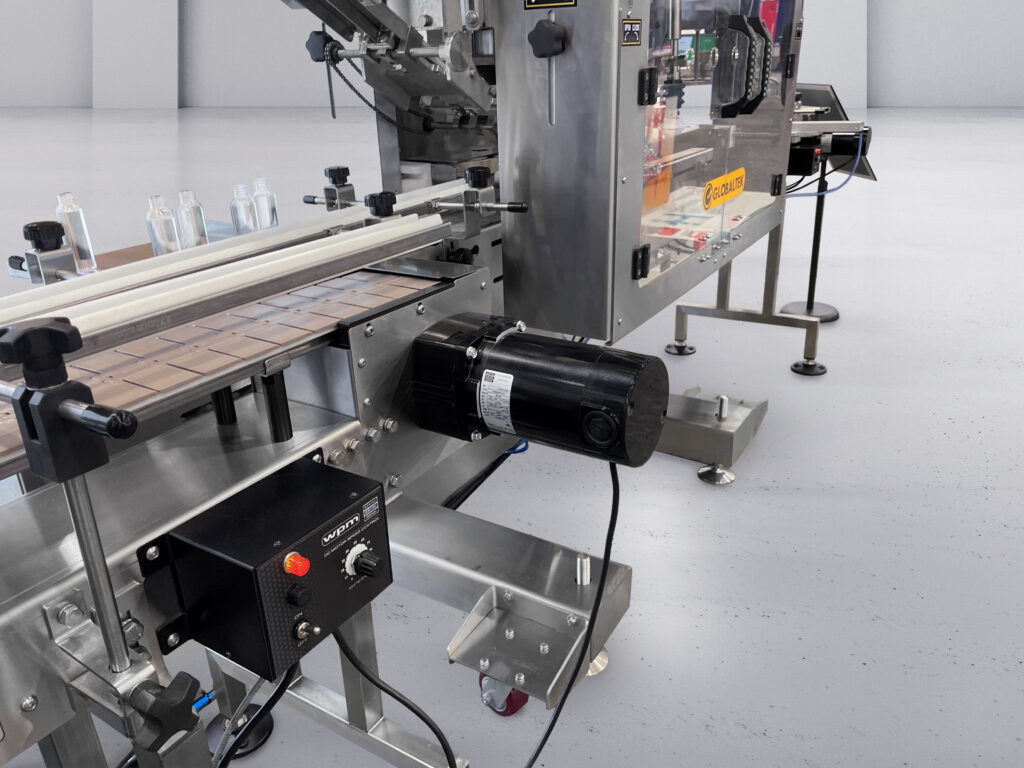
The extensive deployment of gearmotors in automated warehousing yields significant economic and operational benefits. Foremost among these is a dramatic increase in operational efficiency. Automated systems, driven by reliable gearmotors, can operate continuously, often 24/7, without fatigue or breaks, leading to higher throughput rates and faster order fulfillment. This directly translates into cost reductions through optimized labor utilization, reduced material damage, and more efficient use of warehouse space. The enhanced precision offered by gearmotors in robotic and conveyor systems also minimizes errors, further contributing to cost savings and improved customer satisfaction.
Moreover, the integration of gearmotor-driven safety features, such as dock restraints, significantly reduces workplace accidents, leading to lower insurance costs and a safer environment for human workers. From an energy consumption perspective, modern gearmotors are increasingly designed for high efficiency, often incorporating features like variable speed drives (VSDs) and permanent magnet technologies. While individual fractional-horsepower units might consume modest amounts of power, their cumulative impact in a large automated warehouse can be substantial, making energy efficiency a key consideration in procurement decisions and contributing to broader sustainability goals.
The Future of Warehousing and Gearmotor Innovation
As warehousing continues its relentless march towards greater automation and intelligence, the role of gearmotors is set to evolve further. Emerging technologies such as Artificial Intelligence (AI) and Machine Learning (ML) are increasingly being integrated into warehouse management systems, enabling predictive maintenance for gearmotors and other components. This allows for proactive servicing, minimizing unexpected downtime and maximizing operational uptime.
The demand for more compact, powerful, and energy-efficient gearmotors will continue to drive innovation. Manufacturers are investing in research and development to produce units that offer higher torque density in smaller packages, crucial for agile robotics and modular conveyor systems. Customization will also become more prevalent, with gearmotors being specifically engineered for unique robotic applications, optimizing performance for specialized tasks. Furthermore, the integration of advanced sensors directly into gearmotors will provide real-time data on performance, temperature, vibration, and other critical parameters, feeding into sophisticated analytics platforms for enhanced operational insights and predictive capabilities. The ongoing push for sustainable manufacturing will also influence gearmotor design, favoring materials and processes that reduce environmental impact throughout the product lifecycle.
In conclusion, the seemingly humble gearmotor is far more than just a component; it is a foundational technology underpinning the sophisticated, high-performance automated warehouses of today and tomorrow. From propelling robotic fleets to ensuring the smooth flow of goods on conveyors and safeguarding personnel at loading docks, these electromechanical devices are indispensable. As the logistics landscape continues to evolve, driven by consumer demand and technological advancements, the innovation and reliability of gearmotors will remain central to the efficiency, safety, and future success of global supply chains.
These insights were gained in a recent conversation with Terry Auchstetter of Bodine Electric Co. For more information, visit bodine-electric.com.
Read more about another warehouse application for gearmotors — in automated guided vehicles (AGVs) — at bodine-electric.com/blog/custom-bldc-gearmotors-for-agvs.