The manufacturing landscape for high-performance industrial tools is on the verge of a significant transformation following a breakthrough study from researchers at Hiroshima University and the Mitsubishi Materials Hardmetal Corporation. By successfully applying a specialized form of additive manufacturing to tungsten carbide-cobalt (WC-Co) cemented carbides, the team has demonstrated a method to produce ultra-hard components with drastically reduced material waste and lower energy requirements. This development, recently detailed in the International Journal of Refractory Metals and Hard Materials, addresses one of the most persistent challenges in metallurgy: the efficient shaping of materials that are designed specifically to resist being shaped.
Tungsten carbide-cobalt is the unsung hero of the modern industrial world. Valued for its ability to withstand extreme thermal stress, immense pressure, and abrasive wear, it is the primary material used in the "business end" of cutting tools, high-speed drills, mining equipment, and construction machinery. However, the very properties that make WC-Co indispensable—its hardness and durability—render it notoriously difficult to manufacture. Traditional production methods are often characterized by high costs, significant raw material loss, and geometric limitations. The new research into hot-wire laser irradiation additive manufacturing (AM) suggests a future where these limitations are bypassed, allowing for the strategic placement of high-cost carbide only where it is essentially required.
The Industrial Significance of Cemented Carbides
To understand the impact of this research, one must first look at the unique composition of WC-Co. Known as a "cemented carbide," the material is a metal matrix composite where tungsten carbide particles act as the aggregate and metallic cobalt serves as the binder or "cement." This combination yields a material that possesses the hardness of a ceramic and the toughness of a metal.
Historically, the production of WC-Co has relied on powder metallurgy. This involves a multi-step process: mixing fine powders of tungsten carbide and cobalt, pressing them into a "green" compact shape, and then subjecting them to sintering. Sintering is a high-temperature process—often exceeding 1,400 degrees Celsius—where the cobalt melts and "wets" the carbide particles, bonding them into a solid mass. While effective, this process is energy-intensive and largely subtractive or mold-based. If a manufacturer needs a complex tool, they must often create a large block of cemented carbide and grind away the excess, leading to significant waste of expensive raw materials.
Tungsten and cobalt are not only costly but are also classified as critical raw materials due to supply chain vulnerabilities. Tungsten mining is geographically concentrated, and cobalt is subject to intense ethical and economic scrutiny. Consequently, any manufacturing advancement that can achieve "near-net-shape" production—creating a part that is very close to its final dimensions—is of immense value to the global industrial economy.
The Innovation: Hot-Wire Laser Irradiation
The research team, led by Assistant Professor Keita Marumoto from Hiroshima University’s Graduate School of Advanced Science and Engineering, turned to additive manufacturing to solve the waste dilemma. Unlike conventional 3D printing methods that use powders (such as Laser Powder Bed Fusion), which can be slow and prone to porosity, the team utilized hot-wire laser irradiation.
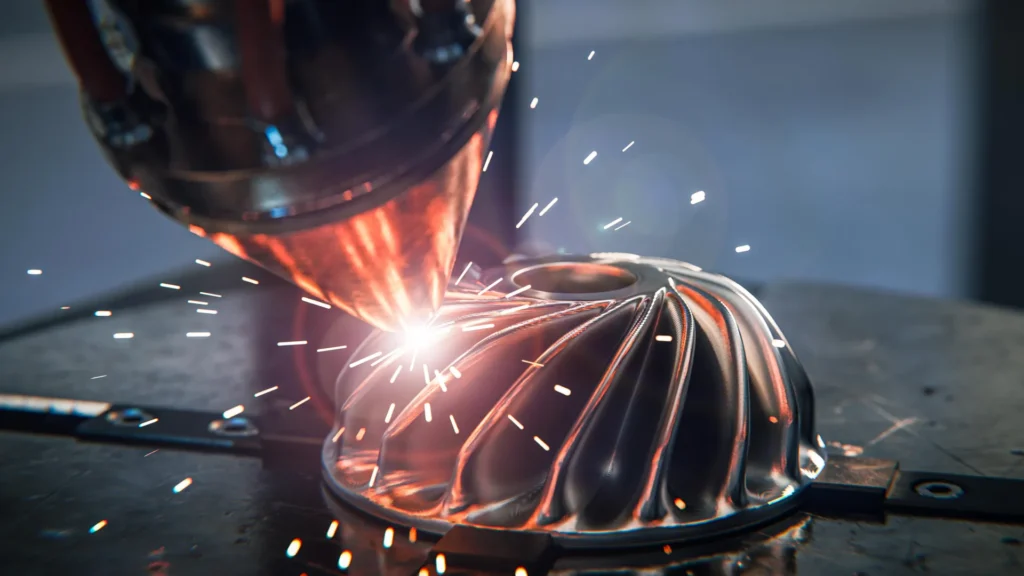
This process, also referred to as laser hot-wire welding, involves feeding a filler wire toward a substrate while a laser beam provides the energy to bond the material. The "hot-wire" aspect is crucial; the wire is preheated by an electric current before it even reaches the laser’s focal point. This preheating allows the laser to focus its energy on the bonding interface rather than on the initial melting of the wire, leading to much faster deposition rates and a more stable thermal environment.
The researchers faced a delicate balancing act. If the material is heated too much, the tungsten carbide can decompose or undergo "grain growth," where the microscopic crystals expand, significantly softening the material. If it is not heated enough, the layers will not bond, leading to structural failure. The team’s approach focused on "softening" the materials to a state of high plasticity rather than total liquid melting, thereby preserving the internal microstructure of the carbide.
Experimental Methodology and Technical Hurdles
The study tested two distinct fabrication arrangements to determine the optimal geometry for building the carbide structures.
In the first arrangement, termed the "rod-leading" method, the laser was directed onto the top of a cemented carbide rod, with the rod positioned ahead of the deposition path. In the second, the "laser-leading" method, the laser preceded the rod, irradiating the interface between the bottom of the carbide wire and the base material, which in this case was iron.
The results revealed a complex relationship between heat distribution and material integrity. The rod-leading method resulted in the decomposition of tungsten carbide near the upper portions of the structure. This decomposition often leads to the formation of brittle phases that can cause a tool to shatter under pressure. Conversely, while the laser-leading method showed promise in maintaining structural integrity, it initially struggled to reach the required hardness levels due to the rapid cooling rates associated with the iron base material.
To overcome these challenges, the researchers introduced a strategic middle layer composed of a nickel-based alloy. This buffer layer served two purposes: it improved the metallurgical bond between the carbide and the iron base, and it acted as a thermal regulator. By carefully controlling the temperature to stay above the melting point of the cobalt binder but below the threshold for carbide grain growth, the team achieved a breakthrough.
Data Analysis: Achieving Industrial-Grade Hardness
The primary metric for success in this study was the Vickers Hardness (HV) of the printed material. The Vickers test involves pressing a diamond indenter into a material and measuring the resulting impression. For a material to be viable for industrial cutting tools, it must typically exceed a hardness of 1300 to 1400 HV.
The Hiroshima-led team successfully produced a base material with a hardness exceeding 1400 HV. To put this into perspective, standard structural steel usually measures between 150 and 200 HV, while hardened tool steels reach approximately 700 to 800 HV. By achieving 1400 HV through additive manufacturing, the researchers proved that 3D-printed carbide can match the mechanical performance of traditionally sintered parts.
Furthermore, the study confirmed that the "softening" approach prevented the formation of major defects such as macro-cracking and internal voids, which have plagued previous attempts to 3D-print refractory metals. The ability to maintain this level of hardness without causing the material to become overly brittle is a significant milestone in additive metallurgy.
Collaboration and Expert Perspectives
The success of this research is attributed to the collaboration between academic theorists at Hiroshima University and industrial practitioners at Mitsubishi Materials Hardmetal Corporation. This partnership ensured that the research remained grounded in the practical requirements of the tool-making industry.
"Cemented carbides are extremely hard materials used for cutting tool edges and similar applications, but they are made from very expensive raw materials such as tungsten and cobalt, making reduction of material usage highly desirable," Assistant Professor Keita Marumoto explained. "By using additive manufacturing, cemented carbide can be deposited only where it is needed, thereby reducing material consumption."
Marumoto also highlighted the broader potential of their "softening" technique. He noted that the strategy of manipulating metals at the edge of their melting points could be applied to other difficult-to-process refractory metals, such as molybdenum or tantalum, which are vital in the aerospace and electronics sectors.
Industry analysts suggest that if Mitsubishi Materials and other partners can scale this technology, it could lead to a "on-demand" manufacturing model for industrial tools. Instead of stocking thousands of different drill bit shapes, a factory could simply print the specific carbide geometry required onto a cheaper steel shank, reducing inventory costs and lead times.
Broader Impact and the Future of Tool Manufacturing
The implications of this study extend beyond the laboratory. The manufacturing industry is currently under intense pressure to adopt more sustainable practices. Traditional sintering and grinding of WC-Co are not only wasteful in terms of material but also involve high carbon footprints due to the long duration of high-temperature furnace cycles. Additive manufacturing via laser hot-wire irradiation offers a more surgical approach, applying heat only where and when it is needed.
However, the journey to full-scale commercialization still faces hurdles. The researchers noted that while they have achieved the necessary hardness, further work is required to eliminate all instances of micro-cracking and to improve the long-term fatigue life of the printed components. The current study focused on relatively simple geometries; the next phase of research will involve developing algorithms and motion control systems to print complex, multi-axis shapes like helical flutes for end mills.
There is also the question of "post-processing." Even the most accurate 3D printers often require a final polish or grind to reach the exacting tolerances required for precision machining. The goal for the Hiroshima team is to minimize this post-processing to the point where the economic advantages of AM become undeniable.
Conclusion: A Foundation for the Next Generation of Materials
The findings published in the International Journal of Refractory Metals and Hard Materials provide a robust foundation for a new era of tool manufacturing. By proving that hot-wire laser irradiation can produce defect-free, ultra-hard tungsten carbide, the research team has opened the door to more efficient, sustainable, and customizable industrial production.
As the global demand for high-precision machinery grows—driven by the expansion of the electric vehicle market, aerospace exploration, and advanced infrastructure projects—the need for better tools will only intensify. The ability to 3D-print the world’s hardest materials may soon move from a scientific curiosity to a cornerstone of the modern factory, ensuring that the "teeth" of industry are sharper, cheaper, and more sustainable than ever before.