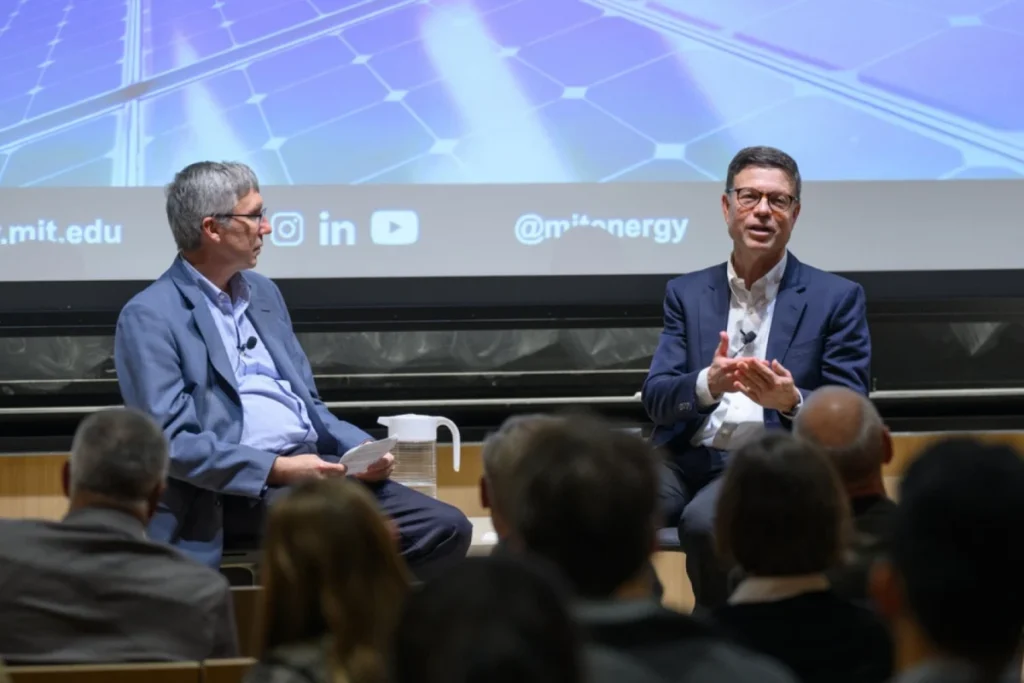
The relentless pace of battery innovation is not merely reshaping the automotive landscape but is also poised to fundamentally transform global energy systems. This transformative potential was a central theme at the recent MIT Energy Initiative (MITEI) Fall Colloquium, where Kurt Kelty, vice president of battery, propulsion, and sustainability at General Motors (GM), shared insights into the company’s ambitious strategy for bringing next-generation battery technologies from the laboratory to widespread commercialization. Kelty’s presentation, part of the MITEI Presents: Advancing the Energy Transition speaker series, underscored GM’s commitment to driving American battery innovation forward and addressing the critical challenges facing the widespread adoption of electric vehicles (EVs) and sustainable energy storage.
The MITEI Presents series serves as a vital platform for thought leaders and experts to convene and discuss the scientific, technological, and policy solutions essential for navigating the complexities of the global energy transition. By bringing together innovators like Kelty with the academic rigor of MIT, the initiative fosters dialogue and accelerates the development of practical, impactful solutions. The colloquium provided a focused examination of GM’s multi-pronged approach to battery development, a sector critical to achieving ambitious climate goals and fostering economic growth.
Kelty articulated that GM’s battery division is strategically focused on three paramount objectives. The first, and perhaps most immediate concern for consumer adoption, is improving affordability. "How do you drive down the cost?" Kelty posed to the audience, emphasizing that batteries represent a significant portion of an EV’s overall price tag. "It’s the batteries. The batteries make up about 30 percent of the cost of the vehicle." This cost barrier remains a primary hurdle for many potential EV buyers, and GM’s dedication to reducing it is a clear indicator of their market strategy.
The second key focus is the enhancement of battery performance. This encompasses critical metrics such as charging speed and energy density. Faster charging times are crucial for alleviating range anxiety and improving the convenience of EV ownership, mirroring the refueling experience of internal combustion engine vehicles. Higher energy density, meanwhile, translates directly to longer driving ranges, a factor that has historically been a major selling point for EVs and a key differentiator in a competitive market.
The third pillar of GM’s battery strategy is the localization of the supply chain. Kelty’s assertion that "We’ve got to build up our resilience and our independence here in North America, so we’re not relying on materials coming from China," highlights a growing geopolitical and economic imperative. Recent global supply chain disruptions have underscored the vulnerabilities associated with over-reliance on any single region for critical raw materials and manufacturing. By establishing robust, domestic battery production capabilities, GM aims to mitigate risks, ensure a stable supply, and potentially create new domestic manufacturing jobs.
Accelerating Innovation Through Virtualization and AI
To achieve these ambitious goals, GM is making substantial investments in the virtualization space, a strategy that is dramatically compressing the research and development timelines. By leveraging advanced modeling and artificial intelligence (AI), Kelty’s team can now conduct simulations that previously took months, reducing the process to a matter of days. This computational power allows for rapid iteration and optimization of battery chemistries and designs.
"If you want to modify… the nickel content ever so slightly, we can very quickly model: ‘OK, how’s that going to affect the energy density? The safety? How’s that going to affect the charge capability?’" Kelty explained. This granular level of analysis is critical for understanding the complex interplay of different materials and their impact on battery performance. The ability to perform these assessments at multiple scales – from the individual cell to the battery pack and ultimately the entire vehicle – provides a comprehensive understanding of how design choices will translate into real-world performance and reliability. This virtual prototyping approach not only speeds up discovery but also reduces the need for costly and time-consuming physical prototypes, further contributing to cost reduction.
The Breakthrough: Lithium Manganese-Rich (LMR) Batteries
Kelty revealed a significant development that addresses the intertwined challenges of affordability, accessibility, and commercialization: lithium manganese-rich (LMR) batteries. Historically, the industry has pursued cost reduction by decreasing cobalt content and increasing nickel. These high-nickel batteries have dominated the market, particularly in the United States, due to their superior energy density and resulting long driving ranges. However, LMR batteries represent a further evolution. By reducing nickel content and incorporating more manganese, LMR technology offers a pathway to significantly lower battery costs while maintaining a competitive range.
This innovation is particularly noteworthy when compared to lithium iron phosphate (LFP) batteries, which are widely adopted in China and are celebrated for their low cost, long cycle life, and inherent safety. Kelty highlighted that LMR batteries offer a compelling value proposition by achieving cost parity with LFP batteries while delivering a driving range that is closer to that of high-nickel chemistries. "That’s what’s really a breakthrough," he stated, underscoring the potential of LMR to redefine the performance-to-cost ratio in the EV market.
While the concept of LMR batteries is not new, their widespread adoption has been hampered by significant commercialization hurdles. "People knew about it, but they didn’t know how to commercialize it. They didn’t know how to make it work in an EV," Kelty admitted. GM’s success in overcoming these technical and manufacturing challenges positions them to be the first to bring these advanced LMR batteries to market in their EVs, with a projected launch in 2028. This timeline suggests a strategic, phased approach to integration, allowing for thorough testing and validation before mass deployment.
Expanding the Horizon: Vehicle-to-Grid and Grid-Scale Storage
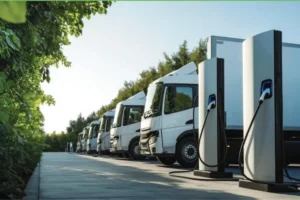
Beyond the immediate applications in electric vehicles, Kelty expressed considerable enthusiasm for the future potential of vehicle-to-grid (V2G) technologies. V2G systems, enabled by bidirectional chargers, allow EVs to not only draw power from the grid but also to send stored energy back. This capability transforms EVs into mobile energy assets.
"Customers can charge their vehicles at night when the electricity prices are really low, and they can discharge it during the day when electricity rates are really high," Kelty explained, illustrating a clear economic benefit for consumers. Furthermore, V2G technology has profound implications for grid stability and the integration of renewable energy sources. By providing a distributed network of energy storage, EVs can help balance supply and demand, reducing reliance on fossil fuel-powered peaker plants and supporting the intermittent nature of solar and wind power. This could lead to a more resilient, efficient, and cost-effective energy grid for everyone.
GM’s vision extends beyond the transportation sector, with the company actively exploring opportunities to leverage its battery expertise in grid-scale energy storage solutions. The burgeoning demand for large-scale storage is driven by several factors, most notably the exponential growth of data centers. These facilities require a constant and reliable power supply, making battery storage a critical component of their infrastructure. Kelty noted, "It’s a big market right now, but it’s growing very quickly because of the data center growth." Beyond data centers, grid-scale batteries are essential for modernizing the electricity grid, supporting the integration of renewables, and enhancing grid reliability in the face of extreme weather events.
A Resurgent American Battery Industry
Looking ahead, Kelty conveyed a strong sense of optimism regarding the future of battery manufacturing and EV adoption in the United States. He emphasized that the foundational elements for a thriving domestic battery industry are already in place. "We’ve got the technology here to make it happen. We’ve always had the innovation here. Now, we’re getting more and more of the manufacturing. We’re getting that all together." This sentiment reflects a broader trend of reshoring and onshoring critical manufacturing capabilities, a key policy objective for many governments seeking to enhance economic security and technological independence.
The convergence of technological innovation, manufacturing investment, and strategic vision, Kelty believes, presents a "tremendous opportunity" for the United States. His hope is that this opportunity will be fully realized, leading to the establishment of a "massive battery industry here." Such an industry would not only bolster national security and environmental sustainability but also create a significant number of high-skilled jobs and drive economic growth across the nation. The successful commercialization of technologies like LMR batteries and the widespread adoption of V2G systems are crucial steps in this envisioned future.
The MITEI Presents speaker series continues to be a pivotal forum for highlighting experts and leaders who are at the vanguard of developing the solutions necessary for a profound transformation of our energy systems. By fostering dialogue and sharing cutting-edge research and industrial strategies, the series plays an indispensable role in shaping a more sustainable and prosperous energy future. Information on upcoming events and related discussions can be found on MITEI’s Events page, offering a continuous stream of insights into the evolving energy landscape.