The world of horology, often perceived as a realm of intricate mechanisms and storied heritage, is increasingly defined by a growing appreciation for the human element. In this context, the "Twelve on Time" series from Monochrome Watches offers a unique window into the minds of industry leaders, delving beyond their professional achievements to explore their personal philosophies and profound relationships with time itself. This installment shines a spotlight on Peter Speake, a veteran independent watchmaker whose journey from servicing modern timepieces to restoring antique treasures has profoundly shaped his perspective on the enduring art of watchmaking.
Speake’s insights reveal a deep-seated respect for the craft’s historical roots, a critical view of contemporary trends, and a visionary outlook on the challenges and opportunities facing the industry today. Through a series of twelve probing questions, the conversation unfolds, offering a compelling narrative of a watchmaker who sees time not merely as a measurement, but as a palpable legacy imbued with the spirit of its creators.
The Epiphany of Antique Restoration: A Shift from Job to Calling
Speake’s pivotal moment in understanding watchmaking did not arrive with a specific timepiece, but rather through a significant period of transition in his career. "It wasn’t a watch; it was a period," he explains. His early professional life involved servicing modern watches, a task that provided technical proficiency but lacked a deeper resonance. The turning point came when he found himself immersed in the world of restoring antique and vintage pieces in Piccadilly.
This experience, Speake elaborates, "showed me the sheer scale of what watchmaking had been: centuries of development, enormous creativity, technical and aesthetic diversity that I simply hadn’t been exposed to before." The exposure to horology’s vast historical tapestry, from its origins to its multifaceted expressions, fundamentally altered his perception. "Seeing where it all came from, and the range of it, changed something. It stopped being a job." This shift signifies a transformation from a vocational pursuit to a deeply personal and passionate calling, driven by an appreciation for the art form’s historical depth and inherent human narrative. This period can be loosely contextualized within the broader resurgence of interest in traditional crafts during the late 20th and early 21st centuries, where a growing segment of the population began to seek authenticity and historical connection in an increasingly digitized world.

The Intrinsic Value of "Human Time" in Watchmaking
When asked about the quality he values most in a watch, Speake’s answer is unequivocally focused on the intangible essence of its creation: "The human time in it." This concept transcends mere craftsmanship; it speaks to the dedication, skill, and personal investment of the individuals who brought the timepiece into existence. He vividly paints a picture of historical artisans: "Working at benches before CAD existed, before CNC existed, drawing on paper, cutting by hand." This imagery evokes a time when every component was meticulously shaped by human hands, a stark contrast to the automated processes of today.
Speake draws a parallel with early Cartier case makers in New York, London, and Paris, emphasizing their manual approach to creation, which ultimately resulted in a lasting legacy. He finds encouragement in the contemporary watchmaking landscape, noting a "return to that" across both independent and mainstream sectors. The deliberate act of "makers, decorators, allied trades spending real time on things with their hands rather than pressing a button and calling it done" is what imbues a watch with profound value. "That time is in the object. You can feel it, even if you can’t always see it." This philosophy underscores a core tenet of independent watchmaking: the belief that true value lies not solely in the final product, but in the journey of its creation, a journey steeped in human touch and dedicated effort. This perspective aligns with a growing consumer desire for provenance and artisanal quality, a trend that has seen niche brands gain significant traction against mass-produced goods.
The Tourbillon: A Mesmerizing Dance of Time
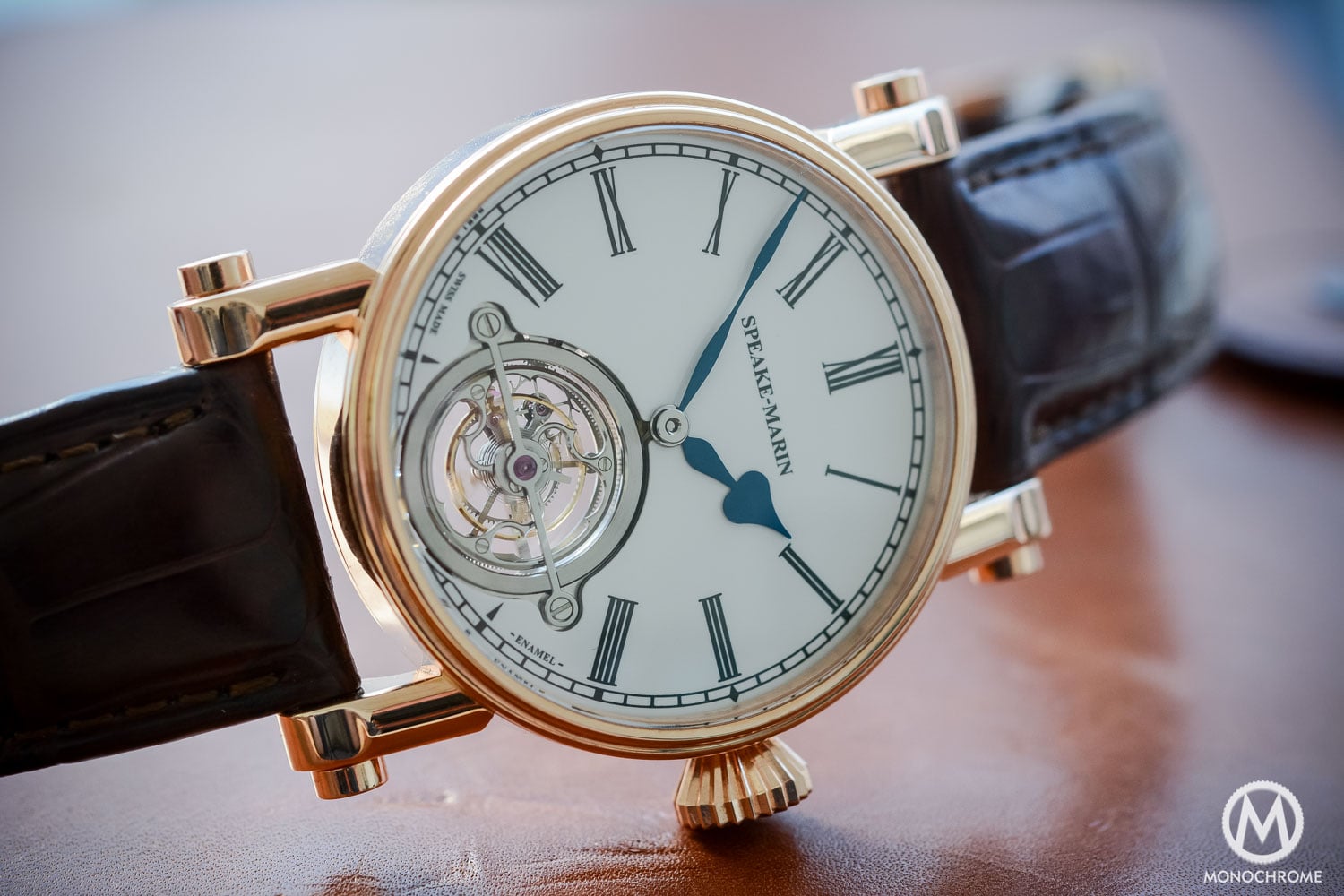
Regarding his favorite complication, Speake’s choice is the tourbillon, lauded not for its technical complexity alone, but for its visual appeal. He describes it as "a visually mesmerising animation of the passing of time." The tourbillon, invented by Abraham-Louis Breguet in 1795, was initially designed to counteract the effects of gravity on the balance wheel in pocket watches. Today, while its practical necessity in wristwatches is debatable due to modern conditions of wear, it remains a pinnacle of mechanical watchmaking artistry, celebrated for its intricate, moving parts that offer a captivating spectacle. Speake’s appreciation highlights how the aesthetic and emotional impact of a complication can be as significant as its functional purpose, transforming a watch into a miniature kinetic sculpture.
A Skeptical View on Overrated Trends
Speake expresses a measured skepticism towards current trends in modern watchmaking, admitting he "don’t follow the general market closely enough to have a useful opinion on this." While acknowledging the cyclical nature of trends such as the popularity of sports watches, dress watches, and vintage-inspired designs, he posits that "trends describe what most people are doing, and that’s not where watchmaking tends to move forward." This statement suggests that true innovation and progress in horology often emerge from the periphery, from those who deviate from the prevailing currents, rather than from those who simply follow the market’s lead. His focus remains on the intrinsic qualities of watchmaking rather than its commercial ebb and flow.
Coherence as the Hallmark of Care
When questioned about the detail that instantly signifies a watch made with care, Speake offers a nuanced perspective. He states that "care isn’t located in a single detail and it isn’t correlated with price." His experience at the bench has taught him that superficial details can be misleading. Instead, he looks for "coherence," an overarching quality where "the decisions reinforce each other or contradict." This coherence, he believes, is the true indicator of thoughtful creation, reflecting "someone with an actual point of view." This implies that a watch made with care is not merely assembled but conceived, with each element contributing to a unified and purposeful whole, a testament to the maker’s vision and meticulous execution.
The Industrial Revolution’s Enduring Impact
Speake identifies the "industrialisation of manufacture at the turn of the twentieth century" as the moment that most fundamentally shaped watchmaking as we know it today. This era marked a profound shift from the individual craftsman creating entire timepieces to rationalized factory production, characterized by divided labor and interchangeable parts. While this revolution brought about unprecedented scale and consistency, Speake notes that "something else was lost." He suggests that the move of skill from human hands to machines and written specifications, while efficient, diminished a certain artisanal essence. He views the resurgence of independent watchmaking over the past thirty years as "partly an attempt to recover it," a movement seeking to reintegrate the human touch and traditional craftsmanship into the production of timepieces. This historical context is crucial for understanding the current landscape of watchmaking, where the tension between industrial efficiency and artisanal integrity continues to be a defining theme.
Bridging the Generational Divide: The Challenge of Relevance
The greatest challenge facing the watch industry today, according to Speake, is "convincing younger generations there’s genuine value here and doing it honestly, in terms they’ll actually find credible." He argues that the industry’s traditional arguments—heritage, craft, and investment—while not inherently flawed, are often presented "on the industry’s own terms." For a younger demographic accustomed to the ubiquity of smartwatches and digital interfaces, these arguments may not resonate. Speake believes the narrative needs to adapt: "The argument needs to be made differently." While acknowledging that some are successfully navigating this shift, he observes that "most aren’t." This points to a critical need for the luxury watch industry to evolve its communication strategies to connect with a new generation of potential collectors, emphasizing aspects of personal expression, sustainable craftsmanship, and enduring value that align with contemporary sensibilities. The data from luxury market reports consistently highlights the increasing importance of digital engagement and authentic storytelling in capturing the attention of younger consumers, reinforcing Speake’s observation.
Japanese Seriousness and the Spirit of Shokunin
Speake’s external sources of inspiration are significantly influenced by Japan. He notes the "seriousness with which detail is treated" across various facets of Japanese culture, from food and metalwork to packaging and textiles. He specifically highlights the concept of "shokunin," a term that describes a craftsperson who dedicates their life to mastering a single skill, viewing this mastery as carrying "moral weight, not just technical weight." This ideal resonates deeply with Speake’s own philosophy, aligning with his recognition of "what I recognise in watchmaking at its best." The Japanese approach to meticulousness, dedication, and the inherent dignity of skilled labor provides a powerful framework for understanding and striving for excellence in his own craft. This admiration for Japanese craftsmanship echoes a broader global appreciation for the country’s commitment to quality and artisanal excellence, a phenomenon often studied in the fields of design and manufacturing.
The Unmade Watch and the Process of Creation
When contemplating which watch he wishes he had created, Speake offers a profound reflection on the nature of ownership and artistic intent. He finds the question difficult to engage with because, for him, "the value of another maker’s work is inseparable from the process that produced it, the specific problem they identified, the decisions they made over months or years. That process belongs to them." Instead of dwelling on past achievements of others, Speake shifts his focus to the future: "What I can say is that the watch I most want to have made is the next one I’ll make. That’s the only one whose process is mine." This perspective underscores his commitment to the creative journey and the personal satisfaction derived from his own evolving work, emphasizing the ongoing nature of his artistic endeavor.
Personal Time: A Private Affair
In a surprising yet telling response, Speake states that he wears no watch "when nobody is watching." This suggests a detachment from the notion of wearing a watch purely for display or external validation. For Speake, the act of wearing a watch might be intrinsically linked to its function or a moment of personal engagement with his craft, rather than a constant declaration of his profession or status. This understated approach further highlights his focus on the intrinsic value and personal meaning of timepieces.
The Enduring Influence of Nicole Nielsen
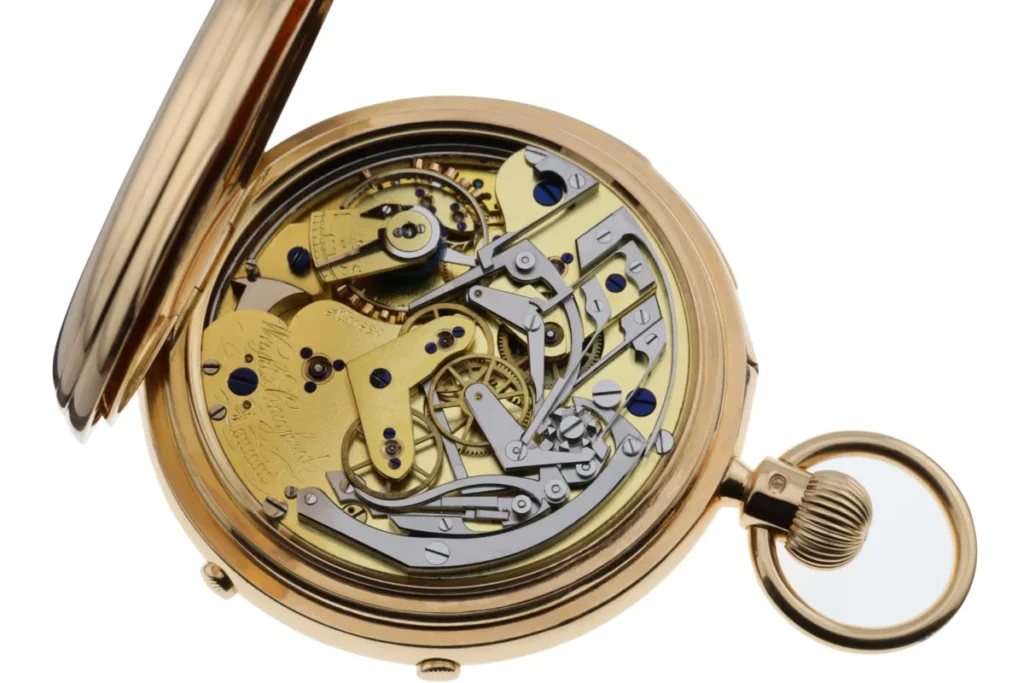
Speake identifies Nicole Nielsen as the personality who has most shaped his view of watchmaking, not as a public figure but as a maker. Nielsen, whose public presence was minimal, left a significant mark through the "design language… in the movements made for Dent, Smith and Frodsham through the nineteenth century." Speake points to the "angularity," the "geometry of the bridges," and the "proportions of the components relative to each other" as hallmarks of Nielsen’s consistent aesthetic vision. He finds this consistency remarkable, especially in an era when individual attribution was not commercially prioritized. Nielsen’s work, in Speake’s eyes, represents a powerful example of sustained artistic integrity and a clear point of view, demonstrating that true mastery lies in the unwavering pursuit of a distinct aesthetic and technical philosophy. This focus on historical makers underscores Speake’s deep immersion in the lineage of horology and his admiration for those who prioritized craft and design over commercial recognition.
The Twenty-Year Test: A Discipline for Collectors
For younger collectors contemplating their next acquisition, Speake offers a powerful guiding principle, echoing a friend’s pertinent question: "Will this still be relevant in twenty years?" He advocates for this discipline as a means to shift focus "away from wanting, which is immediate and unreliable, toward the things that tend to hold coherence of design, quality of execution, clarity of purpose." He adds a crucial second question: "Does it bring you genuine satisfaction to live with, not just to own?" Speake concludes that a watch failing either of these tests, even if it possesses enduring relevance, has "still failed somehow." This advice encourages a thoughtful and long-term approach to collecting, prioritizing pieces that offer lasting aesthetic and emotional value, rather than succumbing to fleeting trends or purely speculative investment. It champions the idea that a watch should be a companion, bringing joy and satisfaction over the long haul, a testament to its enduring design and the personal connection it fosters. This perspective is increasingly relevant in a market where speculative collecting can sometimes overshadow the intrinsic appreciation of horological art.